Motors & solenoids (Edexcel GCSE Physics): Revision Notes
📚Revision Notes
Motors & solenoids
Note
What is Electromagnetic Induction?
Imagine you have a wire, and you move it through a magnetic field (like moving it between the poles of a magnet). This movement creates electricity in the wire. This process is called electromagnetic induction.
- This is super important because it's the basic idea behind many electrical devices, including motors and solenoids.
Magnetic Field Around a Current-Carrying Wire
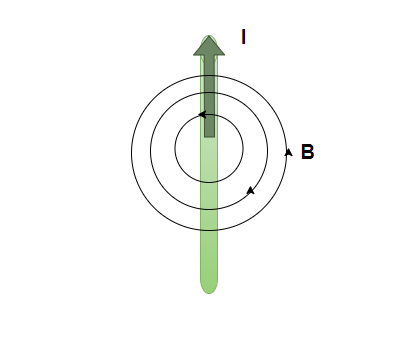
When electric current flows through a wire, it creates a circular magnetic field around the wire. This field can deflect the needle of a magnetic compass. The strength of the magnetic field is stronger closer to the wire and increases if the current is stronger.
Note
- If the current flows upward (from bottom to top), the magnetic field goes in an anticlockwise direction.
- If the current flows downward (from top to bottom), the magnetic field goes in a clockwise direction**.**
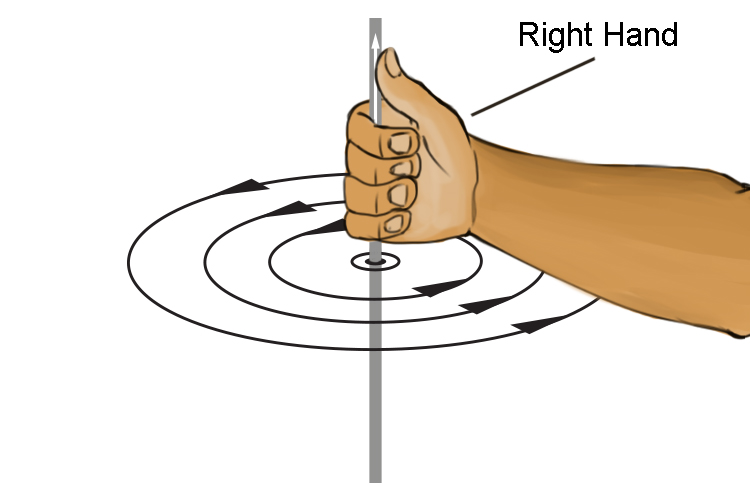
Right-Hand Grip Rule:
You can figure out the direction of the magnetic field using the right-hand grip rule:
- Imagine holding the wire like a bike handlebar with your thumb pointing in the direction of the current.
- Your fingers curl in the direction of the magnetic field.
Electric Motors – How Do They Work?
An electric motor takes electrical energy (from a battery or power source) and turns it into movement.
Here's how:
- When electric current (flow of electrons) goes through a wire that's in a magnetic field, something interesting happens: the wire feels a push or a pull. This is called the motor effect.
Note
Think of it like this: if you hold a wire and run a current through it while it's in a magnetic field, the wire will try to move!
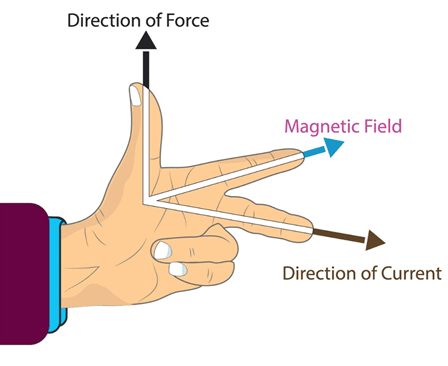
Fleming's Left-Hand Rule
We have covered Flemming's left-hand rule in the previous note.
This rule helps you remember the direction in which the wire will move.
Key points
- Thumb = Direction of the Force (how the wire moves)
- First Finger = Magnetic Field (from North to South)
- Second Finger = Direction of Current (from positive to negative)
Motor Parts:
- Armature (rotor): A coil of wire that spins.
- Magnets: Create a magnetic field around the armature.
- Commutator and Brushes: These clever parts keep switching the direction of the current in the armature so it keeps spinning.
Note
The motor spins because the wire (or coil) experiences a force when the current flows through it in a magnetic field. When the current direction changes, the force changes too, and that keeps the coil spinning around!
Solenoids – What Are They?
Note
A solenoid is basically a long coil of wire. When you pass a current through it, something cool happens – it creates a magnetic field! This magnetic field acts just like the one around a bar magnet.
How a Solenoid Works:
When the current is switched on, the solenoid becomes like a magnet. The magnetic field inside the solenoid is strong and uniform. The small magnetic fields created by the current in each coil add up to create a stronger overall magnetic field. Outside the solenoid, the magnetic fields cancel each other out, making the magnetic field much weaker.
Note
Real-Life Examples:
- Motors: In things like fans, toys, or even electric cars – motors make them move!
- Solenoids: You'll find solenoids in electric door locks, where they pull the lock open when a button is pressed.