Spirometers (OCR GCSE Physical Education): Revision Notes
📚Revision Notes
Spirometers
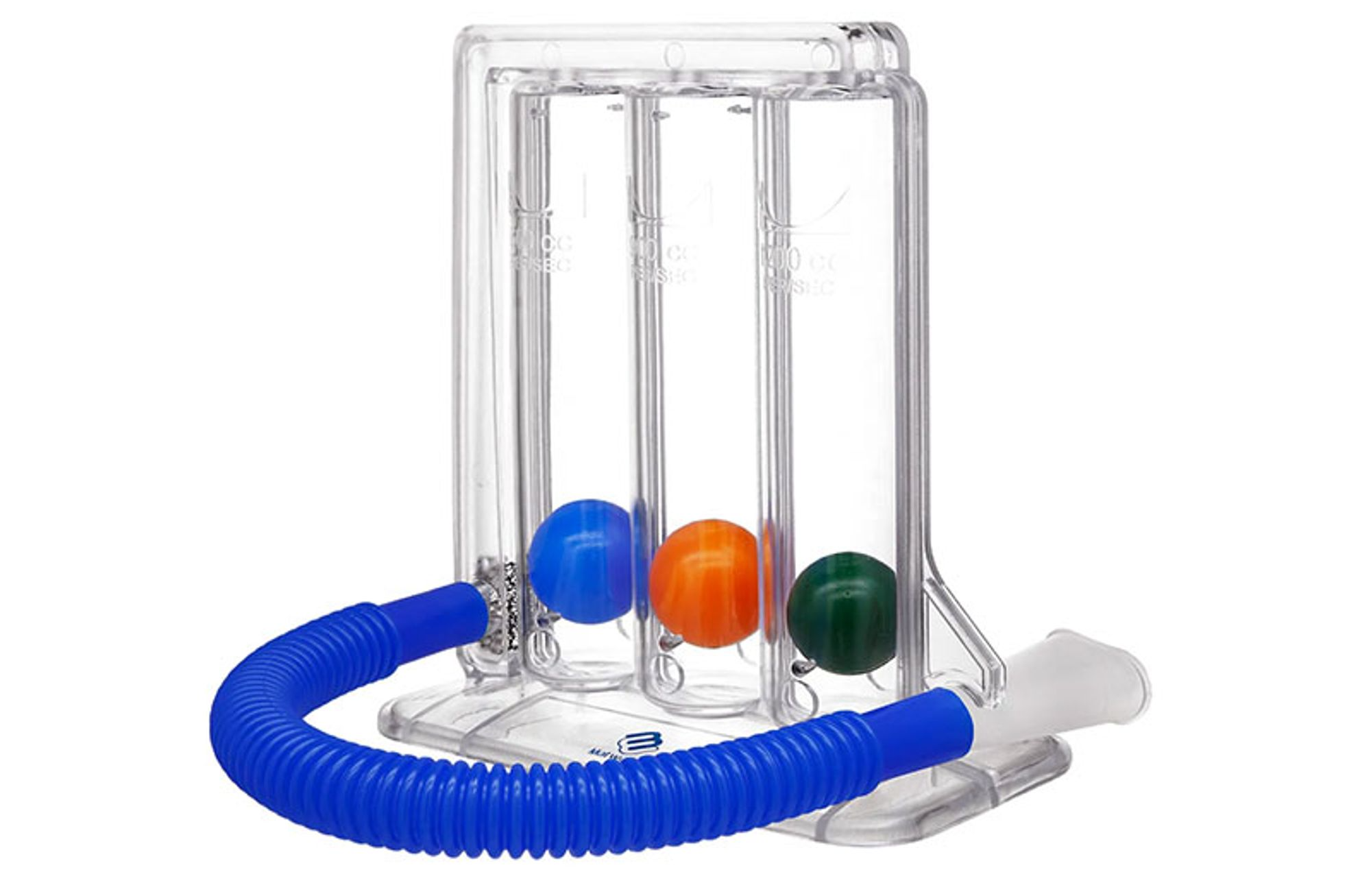
What is a Spirometer?
A spirometer is a device used to measure lung function, specifically the volume and speed of air that can be inhaled and exhaled. It is commonly used in sports science and medical settings to assess respiratory health and fitness
Key Measurements
Tidal Volume (TV):
-
The amount of air inhaled or exhaled during a normal breath. Vital Capacity (VC):
-
The maximum amount of air a person can exhale after a maximum inhalation. Residual Volume (RV):
-
The amount of air remaining in the lungs after a maximum exhalation. Total Lung Capacity (TLC):
-
The total volume of the lungs when fully inflated (VC + RV). Forced Vital Capacity (FVC):
-
The amount of air that can be forcibly exhaled after taking the deepest breath possible. Forced Expiratory Volume in 1 second (FEV1):
-
The amount of air that can be forcibly exhaled in one second after taking the deepest breath possible.
Importance in Physical Education
- Assessing Fitness: Spirometry can help determine an athlete's lung capacity and respiratory efficiency.
- Monitoring Health: Regular spirometry tests can monitor changes in lung function, helping to detect respiratory conditions like asthma.
- Training Impact: Understanding lung function can help tailor training programmes to improve aerobic capacity and overall performance.
How to Use a Spirometer
Preparation:
Ensure the spirometer is calibrated and the mouthpiece is clean.

Procedure:
- The subject takes a deep breath in, filling their lungs completely.
- The subject then exhales into the mouthpiece as forcefully and completely as possible.
- The process may be repeated several times to ensure accuracy.
Application in Physical Education
- Testing Aerobic Capacity: Measuring lung volumes can help evaluate an athlete's ability to perform prolonged exercise.
- Designing Training Programs: Data from spirometry can guide the development of personalised training regimens to enhance respiratory efficiency.