Underground Mining (Leaving Cert Engineering): Revision Notes
📚Revision Notes
Underground Mining
What is underground mining?
Underground mining is a method of extracting valuable ores and minerals that are located deep beneath the Earth's surface. While it is not always the most cost-effective approach, underground mining becomes necessary when valuable ore deposits are situated too far below ground for surface mining methods to be practical.
The process begins with the construction of a mine shaft - a vertical tunnel that provides access to the underground ore deposits. From this main shaft, engineers create a network of horizontal tunnels and drifts to reach and extract the ore. This method has less visual impact on the landscape compared to open-pit mining, making it more environmentally acceptable in many situations.
Note
Underground mining is typically chosen when valuable ores are located at depths where surface mining would be impractical or when minimising surface environmental impact is a priority.
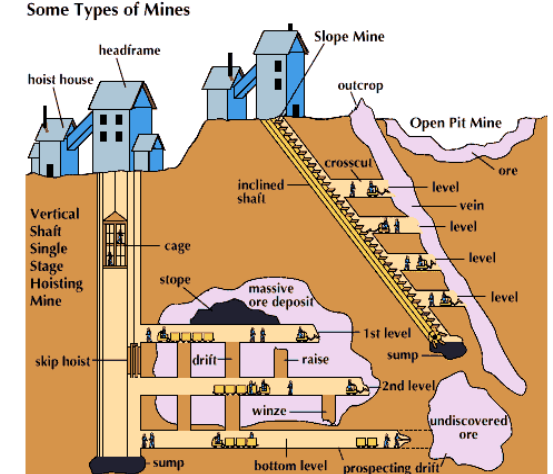
The diagram above shows various types of underground mining operations, including shaft mines with multiple levels, inclined access routes, and the complex network of tunnels required for efficient ore extraction.
Underground mining equipment and methods
Modern underground mining relies heavily on specialised machinery to extract ore efficiently and safely. Continuous mining machines are powerful pieces of equipment designed specifically for underground operations.
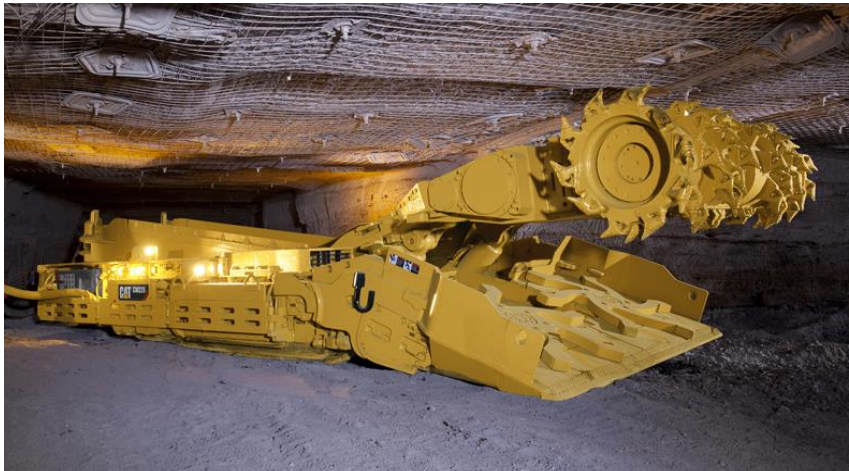
These machines feature rotating cutting heads with multiple cutting teeth that can break away ore and rock from the tunnel face. The extracted material is then transported via built-in conveyor systems. The bright operational lights and robust construction allow these machines to work effectively in the challenging underground environment.
Types of underground mine structures
Underground mines can be categorised into several types based on their access methods:
- Vertical shaft mines: Use straight-down shafts with horizontal levels
- Slope mines: Feature inclined access tunnels following the ore deposit
- Drift mines: Horizontal tunnels driven directly into hillsides
Each type includes essential components such as headframes (surface structures supporting lifting equipment), levels (horizontal working areas), and crosscuts (connecting tunnels between main passages).
Note
The choice of mine structure depends on factors such as ore deposit geometry, depth, geological conditions, and economic considerations.
Safety considerations in underground mining
Safety remains a primary concern in underground mining operations due to several inherent risks:
Important
Critical Safety Hazards in Underground Mining:
- Tunnel collapses: Rock falls and structural failures pose constant threats
- Gas pockets: Dangerous gases can accumulate in enclosed spaces
- Limited escape routes: Emergency evacuation can be challenging
However, technological advances in engineering have significantly improved safety standards through better support systems, ventilation, and monitoring equipment.
Summary
Key Points to Remember:
- Underground mining is used for valuable ores located deep below the surface, accessed through shafts and tunnel networks
- Continuous mining machines are essential equipment featuring rotating cutting heads and built-in transport systems
- Safety concerns include tunnel collapses and gas accumulation, but modern engineering has improved safety standards significantly