Lipids (Leaving Cert Home Economics): Revision Notes
📚Revision Notes
Lipids
Introduction
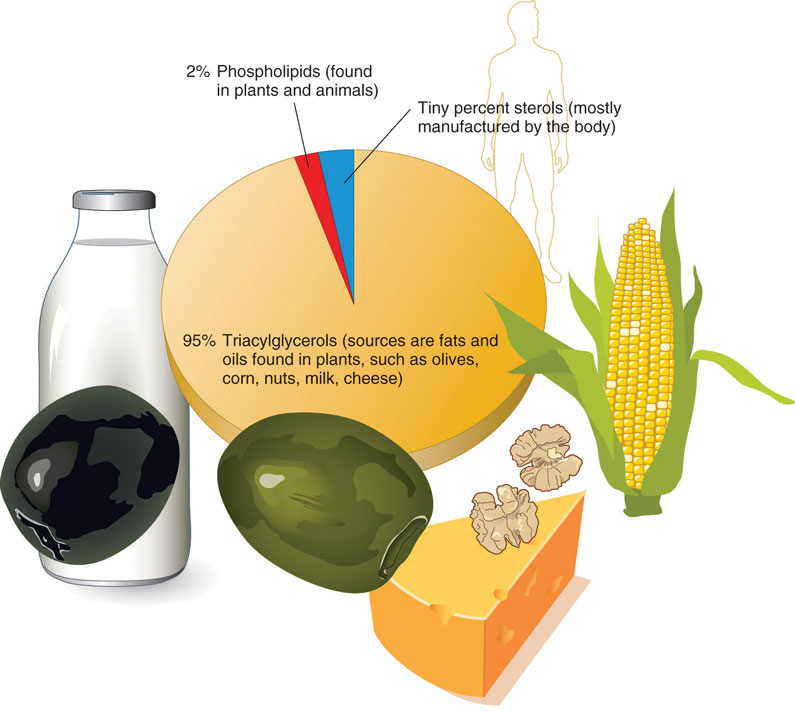
Lipids are a class of organic compounds that are fatty acids or their derivatives and are insoluble in water but soluble in organic solvents. They include many natural oils, waxes, and steroids.
They form a diverse group of organic compounds that are essential for human health. They play vital roles in numerous biological functions and are fundamental components of our diet. Understanding lipids is crucial for grasping key concepts in nutrition and food science.
Classification of fatty acids
Fatty acids are the building blocks of many lipids, and they can be classified based on their chemical structure, particularly the presence or absence of double bonds.
Saturated fatty acids
Important
Saturated fatty acids contain no double bonds between carbon atoms. Each carbon atom is fully "saturated" with hydrogen atoms.
These fatty acids have some distinctive characteristics that affect their behaviour in food:
- They are typically solid at room temperature
- They are commonly found in animal fats and dairy products
- Some plant oils like coconut and palm oil also contain high levels
- Stearic acid (found in beef fat) is a common example
The straight-chain structure of saturated fatty acids allows them to pack tightly together, which explains why they tend to be solid at room temperature.
Monounsaturated fatty acids
Important
Monounsaturated fatty acids contain exactly one double bond within the carbon chain.
Key features of monounsaturated fatty acids include:
- They are liquid at room temperature but may solidify when chilled
- The single double bond creates a kink in the molecular structure
- They are found in various foods and cooking oils
- Oleic acid (the main component of olive oil) is a prime example
This single kink prevents the molecules from packing as tightly as saturated fats, resulting in their liquid state at room temperature.
Polyunsaturated fatty acids
Important
Polyunsaturated fatty acids are characterised by having more than one double bond in their molecular structure.
These fatty acids demonstrate specific properties:
- They remain liquid even when refrigerated
- Multiple double bonds create several kinks and bends in the structure
- They are predominantly found in plant-based oils
- Linoleic acid (abundant in sunflower oil) serves as a typical example
The multiple kinks make these molecules even less able to pack together tightly, keeping them liquid across a wider temperature range.
Essential fatty acids
Important
Essential fatty acids are polyunsaturated fats that the human body cannot manufacture and must be obtained through dietary sources.
There are two main types that are crucial for health:
- Alpha-linolenic acid - an omega-3 fatty acid
- Linoleic acid - an omega-6 fatty acid
These fatty acids are vital for proper brain function, growth and development, and inflammation control.
Cis and trans fatty acids
The arrangement of hydrogen atoms around double bonds creates two different structural forms:
Cis fatty acids: The hydrogen atoms are positioned on the same side of the double bond, creating a pronounced bend or "cis" formation in the molecule.
Trans fatty acids: The hydrogen atoms are located on opposite sides of the double bond, resulting in a straighter molecular chain. These are often found in partially hydrogenated oils and have been associated with various health concerns.
Structure and composition of lipids
Molecular structure of fatty acids
The structural differences between fatty acid types directly impact their physical properties:
Note
Saturated fatty acids consist of long carbon chains connected by single bonds only. Each carbon atom bonds with the maximum number of hydrogen atoms possible, creating straight, flexible chains.
Monounsaturated fatty acids feature one double bond within the carbon chain, which introduces a kink at that specific point. This structural change affects how the molecules interact with each other.
Polyunsaturated fatty acids contain multiple double bonds throughout the carbon chain, creating several kinks and bends. This highly kinked structure significantly influences their physical behaviour.
Triglycerides
Important
A triglyceride is a type of lipid molecule formed from three fatty acids attached to one glycerol molecule.
Understanding triglyceride composition is essential:
Structure: The glycerol backbone remains constant across all triglycerides, whilst the attached fatty acids can vary greatly. This variation determines the specific properties of different fats and oils.
Formation: Triglycerides form through a condensation reaction where three fatty acid molecules bind to one glycerol molecule, releasing three water molecules in the process.
Variability: The nature of the fatty acids (whether saturated, monounsaturated, or polyunsaturated) directly impacts the triglyceride's physical properties, including melting point and health implications.
Properties of lipids
Melting, smoke and flash points
Understanding these temperature-related properties is crucial for cooking and food safety:
Melting point
Important
The melting point is the temperature at which a solid lipid transforms into a liquid state.
Example
Example: Butter Melting Point
Butter typically melts around 32-35°C (90-95°F). This property is particularly important in baking, where the melting behaviour of butter contributes significantly to the texture and richness of baked goods.
Smoke point
Important
The smoke point is the temperature at which a lipid begins producing continuous bluish smoke, indicating the breakdown of glycerides.
Example
Example: Olive Oil Smoke Point
Olive oil has a smoke point ranging from 190-220°C (374-428°F), making it suitable for medium-heat cooking methods like sautéing, but not ideal for high-temperature frying applications.
Flash point
Important
The flash point is the temperature at which lipid vapours can ignite in air.
Note
Vegetable oils such as canola oil generally have flash points around 327°C (620°F). This temperature is significantly higher than their smoke points, providing a crucial safety margin during cooking processes.
Emulsions
Emulsions represent the process of combining two normally immiscible liquids (such as oil and water) to create a stable mixture.
Emulsifying agents are substances that help stabilise these emulsions by reducing surface tension between the two liquids.
Stabilisers are additives that help maintain the emulsified state whilst improving shelf-life and texture of the final product.
Example
Example: Mayonnaise Emulsion
Mayonnaise serves as a classic example of an oil-in-water emulsion, stabilised by the emulsifying properties of lecithin found naturally in egg yolk.
Plasticity
Important
Plasticity refers to the ability of a fat to be shaped or moulded without breaking.
Margarine demonstrates excellent plasticity, allowing it to be easily spread on bread at room temperature without tearing or crumbling.
Rancidity
Rancidity describes the degradation of lipids that leads to unpleasant flavours and odours. There are two main types:
Hydrolytic rancidity: Occurs when water causes the breakdown of triglycerides into individual fatty acids. This process can happen when fats are exposed to moisture over time.
Oxidative rancidity: Results from the reaction of fats with oxygen in the air, leading to off-flavours and undesirable odours. This type of rancidity is more common and problematic in food storage.
Hydrogenation
Important
Hydrogenation is a chemical process where unsaturated fats are converted into saturated fats.
During this process, hydrogen gas is forced through the double bonds in unsaturated oils, typically in the presence of a nickel catalyst. This converts the liquid unsaturated oil into a more solid, saturated fat. Margarine is often produced through hydrogenation of vegetable oils, solidifying them at room temperature.
Antioxidants
Important
Antioxidants are substances that prevent oxidative rancidity in lipids by donating electrons to free radicals, thereby neutralising them.
Example
Example: Vitamin E as Natural Antioxidant
Vitamin E serves as a natural antioxidant found in vegetable oils, nuts, and seeds. It protects these foods from rancidity, helping maintain both flavour quality and nutritional value over extended periods.
Formation of emulsions
Basic components of an emulsion
Important
An emulsion is a mixture of two or more liquids that are normally immiscible (unable to mix naturally).
Common examples in food include mayonnaise, milk, and vinaigrettes.
Every emulsion contains two essential phases:
Dispersed phase: This is the liquid distributed as small droplets within another liquid.
Continuous phase: This is the liquid in which the droplets are dispersed and suspended.
The role of emulsifiers
Emulsifiers are crucial substances that help stabilise emulsions by reducing the surface tension between two different liquids.
Function of emulsifiers
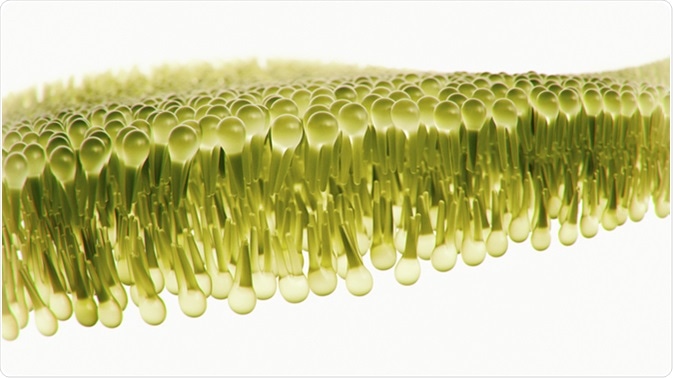
Emulsifiers work because they possess both hydrophilic (water-loving) and hydrophobic (water-fearing) parts, allowing them to interact effectively with both water and oil.
- Hydrophilic part: This portion is attracted to water and usually consists of polar groups like hydroxyl (-OH) or carboxyl (-COOH)
- Hydrophobic part: This portion is attracted to oils and fats and typically consists of long carbon chains or non-polar groups
Mechanism of emulsification
The emulsification process occurs in two key stages:
Dispersion: When an emulsifier is added to a mixture of oil and water, the hydrophobic end aligns towards the oil whilst the hydrophilic end aligns towards the water.
Stabilisation: The emulsifier forms a protective barrier around oil droplets, preventing them from joining together (coalescing) and separating from the water. This action keeps the droplets stable within the continuous phase, successfully forming an emulsion.
Types of emulsions
There are two primary types of emulsions:
- Oil-in-water: Oil droplets dispersed in water (examples include milk and mayonnaise)
- Water-in-oil: Water droplets dispersed in oil (examples include butter and margarine)
Factors influencing emulsion formation
Several factors affect the success of emulsion formation:
- Amount of emulsifier: Adequate emulsifier must be present to cover all dispersed droplets effectively
- Mixing: Vigorous mixing or agitation is required to disperse droplets properly and allow the emulsifier to function
- Temperature: Some emulsions are temperature-sensitive and may break or separate when exposed to very high or low temperatures
Applications in food
Example
Example: Mayonnaise Formation
Mayonnaise: This represents a classic oil-in-water emulsion where egg yolk serves as the emulsifier. The lecithin naturally present in egg yolk acts as an effective natural emulsifying agent.
Example
Example: Salad Dressing Emulsification
Salad dressings: Vinaigrettes demonstrate emulsification where vinegar (the water phase) combines with oil using emulsifiers such as mustard to create a temporary stable mixture.
Functions, energy value, digestion and absorption
Functions of lipids in the diet
Lipids serve multiple crucial roles in human nutrition and body function:
Energy storage: Lipids provide a highly concentrated source of energy, delivering - more than double the energy provided by carbohydrates or proteins.
Cell structure: Lipids are key components of cell membranes, providing structural integrity and controlling what enters and exits cells.
Insulation and protection: Fats act as natural insulators, helping maintain body temperature and cushioning vital organs against physical shock or injury.
Transport of fat-soluble vitamins: Lipids are essential for the absorption and transportation of fat-soluble vitamins (A, D, E, K) throughout the body.
Hormone production: Lipids are necessary for the synthesis of various hormones, including sex hormones and corticosteroids that regulate many body functions.
Energy value of lipids
Note
High caloric density: In a balanced diet, lipids typically provide about 30-35% of the total daily caloric intake.
Satiety and flavour: Fats contribute significantly to the feeling of fullness after eating and enhance both the flavour and texture of foods, making meals more satisfying and enjoyable.
Digestion and absorption of lipids
Hydrolysis of lipids
Lipid digestion is a complex process that occurs in stages:
- Initial breakdown: The process begins in the mouth with lingual lipase and continues in the stomach with gastric lipase, though these contribute minimally to overall digestion
- Major digestion: The primary digestion occurs in the small intestine, where bile salts emulsify large fats into smaller droplets, and pancreatic lipase breaks them down into fatty acids and glycerol
Digestion sequence
Emulsification: Bile salts emulsify large fat globules into much smaller droplets, increasing the surface area available for enzyme action.
Enzymatic action: Pancreatic enzymes work on these smaller droplets, breaking them down further into free fatty acids and mono-glycerides that can be absorbed.
Absorption mechanism
The end products of lipid digestion are absorbed through the intestinal lining into the lymphatic system before eventually entering the bloodstream for distribution throughout the body.
Utilisation of triglycerides
Once absorbed, triglycerides are reassembled within the body's cells and are either used immediately for energy or stored in adipose tissue for future energy needs.
Remember!
Summary
Key Points to Remember:
-
Saturation matters: Saturated fats have no double bonds and are solid at room temperature, whilst unsaturated fats have one or more double bonds and are typically liquid
-
Energy powerhouse: Lipids provide , making them the most energy-dense macronutrient - more than double that of carbohydrates or proteins
-
Essential functions: Beyond energy, lipids are crucial for cell membranes, vitamin absorption (A, D, E, K), hormone production, and body insulation
-
Emulsification enables mixing: Oil and water can mix when emulsifiers with both water-loving and oil-loving parts create stable emulsions like mayonnaise
-
Temperature properties guide cooking: Understanding melting points, smoke points, and flash points helps determine the best cooking applications for different fats and oils