Edward Said (Leaving Cert Politics and Society): Revision Notes
📚Revision Notes
Edward Said
Edward Said (1935-2003) was one of the most influential postcolonial theorists of the 20th century, whose work fundamentally challenged how the West understood and represented the East. His theories remain highly relevant for understanding contemporary global politics, cultural relations, and media representation.
Background and context
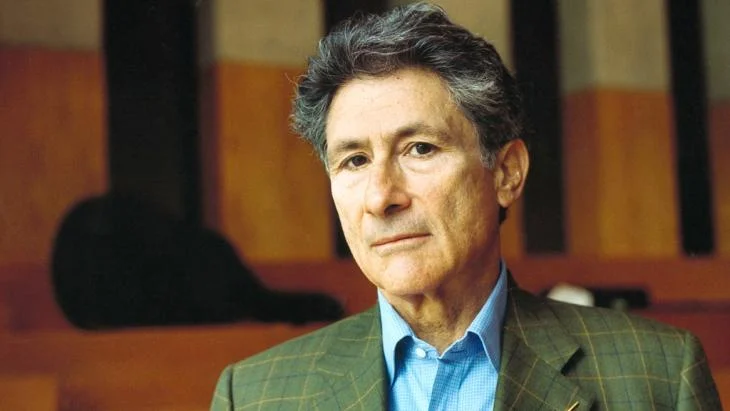
Edward Said was born into a Palestinian Christian family in Jerusalem, which gave him a unique perspective on Middle Eastern politics and Western attitudes towards the region. His family later relocated to New York, where Said received his education and eventually became a prominent lecturer at Columbia University.
Note
Said's unique position as a Palestinian intellectual living in the West gave him insider knowledge of both cultures, allowing him to critically examine Western attitudes towards the Middle East from a perspective that few scholars possessed.
While Said's academic work focused primarily on literature rather than Middle Eastern politics, he became a passionate political activist who wrote extensively about Palestinian rights and the need for Palestinian statehood. His vocal criticism of both US and Israeli policies in the Middle East made him a controversial figure, particularly in Western academic and political circles. This personal experience of displacement and marginalisation deeply influenced his theoretical work on how power structures shape cultural representation.
Orientalism (1978)
Said's groundbreaking book Orientalism fundamentally challenged how Western societies understood and portrayed Eastern cultures. The work demonstrated that Western representations of the East were not based on objective facts, but rather on stereotypes shaped by colonialism and imperialism.
Core arguments
Said argued that the West deliberately constructed the East as fundamentally "other" - portraying Eastern societies as irrational, backwards, threatening, despotic, or exotic. These representations served a clear political purpose: they justified colonial rule, military intervention, and Western dominance over Eastern societies.
Important
The Political Function of Stereotypes
Said revealed that Orientalist representations weren't innocent academic observations but served specific political functions - they justified Western colonial control by portraying Eastern societies as inherently inferior and in need of Western guidance.
As Said famously wrote: "The Orient was almost a European invention... a place of romance, exotic beings, haunting memories and landscapes, remarkable experiences."
This romanticised yet patronising view allowed Western powers to present themselves as superior and civilised, while claiming a mission to "civilise" non-Western societies. The stereotypical portrayals created through art, literature, academic study, and media reports became tools of power that legitimised imperial control.
Contemporary relevance
Orientalism revealed how knowledge production can serve power structures and enable domination. Said's analysis remains highly relevant today, particularly in understanding debates about Islamophobia, Western media coverage of the Middle East, and whether concepts like human rights reflect universal values or represent a form of Western cultural imperialism.
Cultural identity theory
In his later work, Said developed sophisticated ideas about cultural identity that challenged rigid, essentialist thinking. He argued that identity should be understood as dynamic, hybrid, and constantly evolving rather than fixed or predetermined by categories like race, religion, or nationality.
Key principles
Said wrote: "No one today is purely one thing. Labels like Indian, or woman, or Muslim, or American are not more than starting-points... Survival in fact is about the connections between things."
This perspective emphasises several crucial points:
- Imperialism created global cultural mixing while simultaneously reinforcing dangerous separations between "West" and "East"
- Human experience cannot be reduced to simple categories or single identities
- Identity should be understood contrapuntally - as interconnected, overlapping, and relational rather than isolated
- This approach challenges both nationalism and cultural exclusivity, instead promoting empathy, dialogue, and coexistence
Note
Contrapuntal Analysis
Said borrowed the term "contrapuntal" from music, where different melodies are played simultaneously to create harmony. Similarly, he argued that cultures and identities should be understood as interconnected and overlapping rather than separate and distinct.
Criticism of Samuel Huntington
Said strongly opposed Samuel Huntington's influential theory presented in The Clash of Civilizations and the Remaking of World Order (1996). Huntington argued that post-Cold War global politics would be defined by conflicts between major "civilisations" such as Western, Islamic, and Sinic/Chinese cultures, with inevitable confrontation particularly between the West and Islam.
Said's counter-argument
Said rejected Huntington's thesis as simplistic, dangerous, and rooted in Orientalist stereotypes. He argued that Huntington's work was not scholarly analysis but rather "a crudely articulated manual in the art of maintaining a wartime status in the minds of Americans."
Instead of accepting the inevitability of civilisational conflict, Said proposed: "Rather than the manufactured clash of civilizations, we need to concentrate on the slow working together of cultures that overlap, borrow from each other, and live together in far more interesting ways."
Said demonstrated that Huntington's portrayal of "Islam" was not based on reality but was a construction that reinforced fear and hostility, serving Western political and military agendas rather than promoting genuine understanding.
Example
Contrasting Approaches: Said vs Huntington
Huntington's View: Civilisations are fixed, distinct entities that inevitably clash
- Western civilisation vs Islamic civilisation
- Conflict is predetermined and unavoidable
- Cultures are separate and incompatible
Said's Counter-Argument: Cultures are interconnected and hybrid
- No "pure" civilisations exist
- Cultures constantly borrow from and influence each other
- Cooperation and coexistence are possible and preferable
Legacy and influence
Edward Said is widely recognised as the founder of postcolonial studies, inspiring subsequent scholars like Homi Bhabha and Gayatri Spivak. His work encourages critical thinking about how knowledge, power, and culture intersect to shape global relationships.
Said remains a central figure in contemporary debates about:
- Cultural imperialism and how dominant cultures impose their values on others
- Representation of non-Western peoples in Western media and political discourse
- The continuing relevance of colonial stereotypes in shaping international relations and public opinion
His theories provide essential tools for understanding how historical power relationships continue to influence contemporary global politics and cultural exchange.
Important
Exam Guidance: Understanding Said
When discussing Said in examinations, ensure you can clearly explain Orientalism as a system of stereotypes that served imperial power structures rather than reflecting genuine cultural understanding.
Use key quotes to demonstrate understanding: "No one today is purely one thing..." when discussing identity, and the "manufactured clash of civilizations" quote when contrasting Said's approach with Huntington's.
Connect Said's ideas to current issues such as Islamophobia, refugee debates, and Western military intervention in the Middle East. Always contrast his emphasis on coexistence with Huntington's focus on conflict between civilisations.
Summary
Key Points to Remember:
- Orientalism demonstrated how Western stereotypes of the East served imperial power rather than reflecting reality
- Said argued that identity is dynamic and hybrid rather than fixed by single categories
- He criticised Huntington's "clash of civilizations" as dangerous Orientalist thinking
- Said promoted cultural dialogue and coexistence instead of inevitable conflict
- He founded postcolonial studies and remains influential in debates about cultural imperialism and representation