Seán McDonagh (Leaving Cert Politics and Society): Revision Notes
📚Revision Notes
Seán McDonagh
Introduction
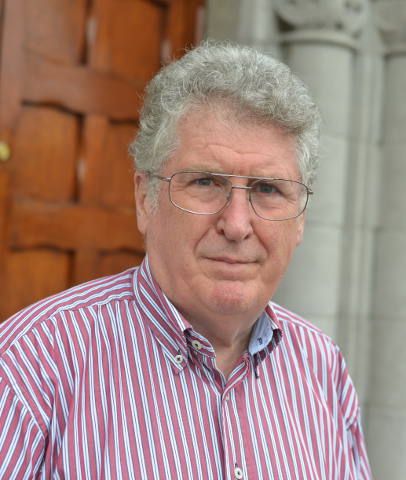
Fr. Seán McDonagh (1935-) is a Roman Catholic missionary priest who has become one of Ireland's most prominent voices linking environmental activism with religious thinking. His work focuses on the relationship between ecological destruction, social justice, and Catholic theology, making him a key figure in understanding how religious perspectives can address modern environmental challenges.
Note
McDonagh represents a unique intersection between traditional Catholic missionary work and contemporary environmental activism, making him particularly significant for understanding how religious institutions respond to global ecological crises.
Background and early influences
McDonagh's environmental consciousness was shaped through direct experience:
- Born in Nenagh, County Tipperary, ordained as a Columban Father in 1969
- Worked as a missionary in Mindanao, Philippines for four years
- Studied linguistics and anthropology in Washington DC before returning to the Philippines
- Spent time with the T'boli mountain people near Lake Sibu in 1978
- Witnessed firsthand the destruction of rainforests and its devastating impact on indigenous communities
This experience of seeing environmental destruction directly harming the world's poorest people became central to McDonagh's thinking. He observed how the loss of biodiversity and forest destruction threatened the livelihoods of indigenous communities who depended on these ecosystems.
Important
McDonagh's missionary experience in the Philippines was the crucial turning point that connected his religious vocation with environmental activism. This direct witnessing of how ecological destruction harmed vulnerable communities became the foundation of his life's work.
Key ideas and activism
Challenging Catholic Church teaching on ecology
During the 1970s and 1980s, environmental concerns were not prominent in Catholic teaching. The Church traditionally viewed the physical earth as less important than spiritual matters. McDonagh challenged this perspective by:
- Arguing that Catholic theology needed to emphasise ecological awareness
- Criticising the Church's focus on humanity as separate from the rest of creation
- Insisting that the wellbeing of people and the planet are interconnected
- Writing eight influential books starting with Care for the Earth (1980)
McDonagh was frustrated by the Church's initial response to his environmental message. As he explained: "During 1984 I did two days [teaching] on ecology and the response from pastors was that ecology is a middle-class preoccupation and we need to help the poor; but I told them of how the poor were the ones who suffered from environmental degradation".
Example
Challenging Traditional Church Thinking
When McDonagh tried to teach about ecology in 1984, Catholic pastors dismissed it as a "middle-class preoccupation." His response demonstrated his core insight: environmental destruction disproportionately harms the poor, making ecological concern essential to the Church's mission of social justice.
Tensions over sustainable population
McDonagh's views on population control created significant tension within the Catholic Church:
- Argued that sustainable development requires addressing population levels alongside consumption
- Criticised Pope Paul VI's 1968 encyclical Humane Vitae which forbade artificial birth control
- Stated that "the most effective way of reducing population levels is to educate women"
- Warned that Earth's population could reach 9 billion by 2050, putting unsustainable pressure on ecosystems
His position directly challenged official Catholic teaching on birth control, arguing that environmental sustainability required a more flexible approach to population policies.
Important
McDonagh's stance on population control put him in direct conflict with official Catholic doctrine, demonstrating how environmental concerns can challenge traditional religious teachings and create tension within religious institutions.
Embracing Pope Francis and Laudato Si
McDonagh has praised Pope Francis' 2015 encyclical Laudato Si as revolutionary:
- Described it as "the finest document to come out of Rome in 500 years"
- Highlighted how it addresses climate change, biodiversity loss, and social justice together
- Noted that it speaks to all people, not just Catholics
- Argued it represents "a huge revolution in ideas" within the Catholic Church
The encyclical marked a dramatic shift from viewing Earth as humanity's dominion to seeing environmental destruction as sinful. McDonagh particularly appreciated how Pope Francis connected the "cry of the poor and the cry of the Earth" as one interconnected crisis.
Critique of multinational corporations
McDonagh's activism extends to challenging corporate power in agriculture:
- Monsanto and GM crops: Opposes the patenting of seeds and genetic modification technology
- Bio-piracy: Criticises how multinational corporations exploit traditional knowledge and resources
- Indigenous rights: Advocates for protecting communities from corporate exploitation
- Highlighted how the US occupation of Iraq in 2004 included reversing laws that protected Iraqi farmers' rights to save seeds
His work connects with activists like Vandana Shiva, who campaigns against corporate control of agriculture and its impact on poor farming communities.
Note
McDonagh's criticism of corporate agricultural practices demonstrates how his environmental theology extends beyond abstract concerns to concrete issues of economic justice and indigenous rights.
Key concepts and exam relevance
Liberation theology and environment
McDonagh represents how liberation theology - traditionally focused on social justice - has expanded to include environmental concerns. This shows how religious thought can evolve to address contemporary challenges.
Global justice perspective
His work demonstrates the connection between global inequality and environmental degradation. Climate change and biodiversity loss disproportionately affect the world's poorest people, making environmental protection a justice issue.
Religious responses to modernity
McDonagh exemplifies how traditional religious institutions can both resist and adapt to modern challenges like climate change and globalisation.
Note
For Exam Success
Understanding McDonagh helps demonstrate how religious figures can bridge traditional theology with contemporary global challenges. His work shows the evolution of Catholic social teaching and the growing recognition of environmental issues as moral concerns.
Exam tips
Important
Essential Points for Exam Success:
- Remember that McDonagh bridges religious thinking and environmental activism
- His missionary experience in the Philippines was crucial in shaping his environmental consciousness
- He represents tension between traditional Catholic teaching and progressive environmental theology
- His support for Pope Francis shows how religious institutions can change over time
- Connect his ideas to broader themes of global justice and sustainable development
Summary
Key Takeaways About Seán McDonagh:
- Missionary experience in the Philippines shaped his understanding of how environmental destruction harms the poor
- Pioneered the connection between Catholic theology and ecological activism in the 1980s
- Challenged traditional Catholic teaching on both environmental issues and population control
- Praised Pope Francis' Laudato Si as revolutionary for connecting environmental and social justice
- Opposes multinational corporations like Monsanto that exploit agricultural resources and harm farming communities
Essential Quote: "The most effective way of reducing population levels is to educate women" - demonstrates his progressive stance on population and development issues.