Metals, Metalloids, and Non-Metals (Grade 10 NSC Matric Physical Sciences): Revision Notes
📚Revision Notes
Metals, Metalloids, and Non-Metals
Introduction to element classification
Elements in the periodic table can be organised into three main categories based on their properties: metals, metalloids, and non-metals. These groups are separated by a distinctive zigzag line that runs through the periodic table.
Note
The zigzag line acts as a boundary that separates metals from non-metals. Metals are located to the left of this line, whilst non-metals are positioned to the right. Metalloids are found along the zigzag line itself, creating a bridge between the two main categories.
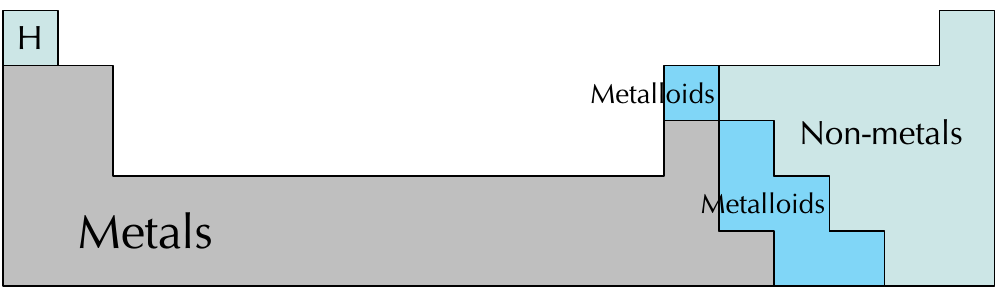
An important observation is that there are significantly more metals than non-metals in the periodic table. Each category possesses unique characteristics that determine their behaviour and applications.
Metals
Definition and examples
Metals are elements that typically exhibit specific physical and chemical properties that distinguish them from other element types. Common examples of metals include copper (Cu), zinc (Zn), gold (Au), silver (Ag), tin (Sn), and lead (Pb).
Properties of metals
Metals share several characteristic properties that make them valuable for various applications:
Thermal conductors: Metals efficiently transfer heat energy, which explains why they are commonly used to manufacture cooking equipment like pots and pans.
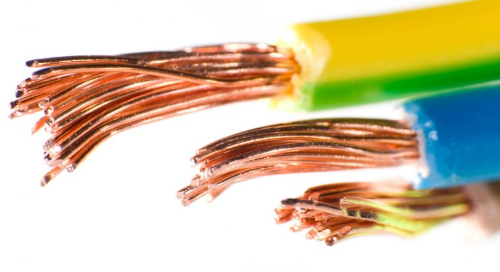
Electrical conductors: Metals allow electrical current to flow through them easily. This property makes them essential for electrical wiring and conducting systems.
Shiny metallic lustre: Metals possess a distinctive shiny appearance that makes them attractive for decorative purposes, particularly in jewellery making.
Malleable and ductile: These properties mean metals can be shaped without breaking. Malleable refers to the ability to be hammered or pressed into different shapes, whilst ductile means they can be stretched into thin wires, such as copper wire.
Example
Practical Example: Malleability and Ductility
- Malleability: Aluminium foil can be easily shaped and folded because aluminium is malleable
- Ductility: Copper wire used in electrical cables demonstrates ductility - copper can be drawn into long, thin wires without breaking
Melting point: Most metals have relatively high melting points, allowing them to withstand elevated temperatures without being damaged. This characteristic is crucial for cooking equipment and industrial applications.
Density: Metals typically have high density values compared to other materials.
Important
Magnetic properties: Only three main metals exhibit magnetic behaviour: iron, cobalt, and nickel. All other metals are non-magnetic.
These properties explain why metals are extremely useful for specific applications in our daily lives and industrial processes.
Non-metals
Definition and properties
Non-metals display properties that are generally opposite to those of metals. They serve as poor thermal conductors, meaning they do not transfer heat effectively. Additionally, non-metals act as good electrical insulators, preventing the flow of electrical current.
Unlike metals, non-metals are neither malleable nor ductile, meaning they cannot be easily shaped or stretched without breaking. Examples of non-metals include sulphur (S), phosphorus (P), nitrogen (N), and oxygen (O).
Note
The properties of non-metals make them valuable as insulators and protective materials, contrasting with the conductive and malleable nature of metals.
Metalloids
Definition and characteristics
Metalloids (also called semi-metals) exhibit predominantly non-metallic properties, but they possess one distinguishing feature: their electrical conductivity increases as temperature rises. This behaviour contrasts with typical metals, where conductivity often decreases with increasing temperature.
Important
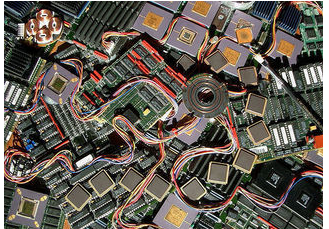
This unique temperature-dependent conductivity property makes metalloids particularly valuable in digital electronics and computer technology. Important metalloids include silicon (Si) and germanium (Ge), which are essential components in semiconductor devices.
The property exhibited by metalloids is called semi-conductance, and materials displaying this behaviour are known as semi-conductors. Semi-conductors play crucial roles in modern electronic devices such as computers and digital equipment.
Summary
Key Points to Remember:
-
Elements are classified into three categories: metals (left of zigzag line), metalloids (along zigzag line), and non-metals (right of zigzag line) in the periodic table
-
Metals have distinctive properties: they conduct heat and electricity well, are malleable and ductile, have high melting points and density, and show shiny metallic lustre
-
Only three metals are magnetic: iron, cobalt, and nickel - all other metals are non-magnetic
-
Metalloids are semi-conductors: their electrical conductivity increases with temperature, making them valuable in electronics