Creative Thinking to Address Business Problems (Grade 11 NSC Matric Business Studies): Revision Notes
📚Revision Notes
Creative Thinking to Address Business Problems
Introduction
Building on the problem-solving techniques you learnt in Grade 10, this unit focuses on how creative thinking can be applied to solve business challenges. You'll learn about important frameworks like Force Field Analysis and the Delphi Technique, which help businesses identify problems and develop innovative solutions.
Note
Creative thinking is essential in today's competitive business world because it allows companies to find unique approaches to challenges that others might not consider. This gives them a significant advantage over their competitors.
The meaning of creative thinking
Creative thinking occurs when people develop fresh and original approaches to solve problems and overcome challenges. It involves being resourceful and applying artistic, imaginative, and clever ideas to create something new or different.
Think of creative thinking as looking at a problem from angles that others haven't considered before. Instead of following the usual path, creative thinkers explore alternative routes that might lead to better solutions.
Example
Real-World Application: Food Delivery Innovation
When most restaurants were focusing on dine-in experiences, some creative entrepreneurs developed food delivery apps, completely changing how people access meals. This demonstrates how creative thinking can transform entire industries by approaching familiar problems from new angles.
Creative thinking requires you to use your imagination, draw from different experiences, and combine ideas in ways that haven't been done before. It's about being open to possibilities and not being limited by how things have always been done.
Routine thinking versus creative thinking
Understanding the difference between these two thinking styles is crucial for recognising when to apply each approach in business situations.
Routine thinking
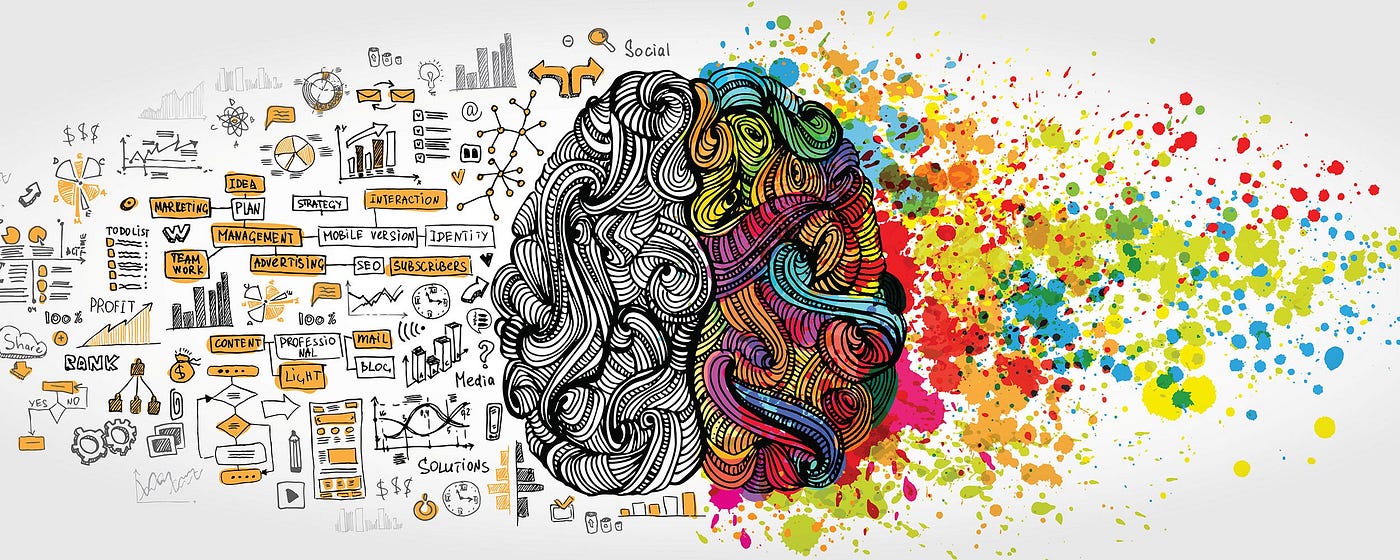
Routine thinking is connected to left-brain functions and focuses on logical, methodical approaches to problem-solving. This type of thinking involves:
- Following consistent, normal procedures when dealing with situations
- Using the same methods repeatedly because they've worked before
- Relying on past decisions and experiences to solve current problems
- Generating predictable ideas and following established patterns
Note
Routine thinking is valuable for day-to-day operations and standard procedures, but it can limit innovation when businesses face new or complex challenges.
Creative thinking
Creative thinking is associated with right-brain functions and emphasises generating new ideas through imagination and insight. This approach involves:
- Using artistic, musical, and visual awareness to find unique solutions to challenges
- Developing unusual and different approaches to problems
- Exploring innovative ideas and different ways of doing things to achieve better results
- Breaking away from traditional patterns to discover fresh possibilities
Important
Creative thinking becomes especially important when routine approaches aren't working or when businesses need to differentiate themselves from competitors.
Conventional solutions versus non-conventional solutions
Businesses must understand when to use expected approaches and when to think outside the box.
Conventional solutions
These are solutions that most people expect and accept as normal responses to problems. Conventional solutions have several characteristics:
- They represent what everyone believes should be done in a particular situation
- Most people expect these solutions because they appear logical and normal
- They focus on being relevant and appropriate to the immediate situation
- Usually, there's only one standard solution for each problem or challenge
Example
Conventional Solution Example: Wine Farm Visitor Attraction
If a wine farm wanted to attract more visitors, a conventional solution would be adding a restaurant that offers wine tasting experiences. This follows the expected approach that most people would consider logical and appropriate.
Non-conventional solutions
These solutions break away from normal expectations and don't follow generally accepted practices. Non-conventional solutions are characterised by:
- Being creative and unique rather than following established norms
- Resulting from creative thinking processes that explore unusual possibilities
- Often being interrupted or changed when better ideas emerge
- Offering diverse solutions that can be applied to various problems or challenges
These solutions often surprise people because they approach problems from unexpected angles, but they can be incredibly effective in solving complex business challenges.
Ways in which businesses can create an environment that stimulates creative thinking in the workplace
Creating the right environment is essential for encouraging creative thinking among employees. Businesses can implement several strategies:
Communication and recognition strategies
- Emphasise the importance of creative thinking so all staff understand that their innovative ideas are valued and will be listened to
- Inspire employees to develop new ideas by showing appreciation for creativity
- Keep communication channels open by placing suggestion boxes around the workplace
Training and development approaches
- Plan regular workshops and brainstorming sessions to generate fresh ideas
- Train staff members to think creatively, solve problems effectively, and use techniques like mind mapping and lateral thinking
- Encourage job exchanges within the organisation and with other businesses to expose employees to different perspectives
Note
Training programmes should focus on practical creative thinking techniques that employees can immediately apply to their daily work challenges.
Workplace culture initiatives
- Encourage alternative ways of working and approaching tasks
- Accommodate employees' ideas and ensure no one feels less important or valued in the workplace
- Create a collaborative environment where different people work together effectively to complete tasks
Important
These strategies help build a culture where creativity is not just allowed but actively encouraged and rewarded. Without the right culture, even the best creative thinking techniques will fail to produce results.
The advantages of creative thinking in the workplace
When businesses successfully implement creative thinking, they experience numerous benefits that improve their overall performance:
Enhanced participation and teamwork
- Creative thinking increases staff participation, ensuring the generation of many new ideas
- Employees demonstrate more confidence as they perform their duties
- Teams develop stronger morale as staff members feel their contributions are valued
Competitive advantages
- Businesses gain competitive advantages over other companies through unique strategies
- Companies become more capable of solving complex problems that competitors cannot handle
- Creative approaches lead to improved productivity, saving both time and money
Important
Critical Business Impact:
Creative thinking provides companies with sustainable competitive advantages that are difficult for competitors to replicate, making it one of the most valuable business capabilities in today's market.
Leadership and efficiency improvements
- Managers become inspired to lead their teams more efficiently
- Both managers and employees apply their knowledge in a collaborative manner when performing duties
- Staff members stay updated with the latest technological developments
Innovation and problem-solving benefits
- Creative thinking leads to new inventions that improve general living standards
- Employees feel they have meaningfully contributed towards problem-solving
- Managers and employees become more creative as they're challenged to work beyond their comfort zones
- Companies develop more positive attitudes as everyone feels involved in finding solutions
Personal and professional development
- Managers and employees feel they have contributed towards solving important problems
- Creative thinking encourages people to explore new possibilities and expand their skills
- It builds confidence and job satisfaction among team members
Summary
Key Points to Remember:
- Creative thinking involves developing new and original approaches to solve business challenges through imagination and resourcefulness
- Routine thinking uses logical, methodical approaches, while creative thinking generates innovative ideas through right-brain functions
- Conventional solutions follow expected, normal approaches, while non-conventional solutions break away from traditional methods
- Businesses can stimulate creative thinking through communication strategies, training programmes, and building collaborative workplace cultures
- The advantages of creative thinking include improved teamwork, competitive advantages, better leadership, increased innovation, and enhanced personal development