Strategic Role of Operations Management (HSC SSCE Business Studies): Revision Notes
📚Revision Notes
Strategic Role of Operations Management
Introduction to the strategic role
Operations management plays a crucial role in shaping a business's overall direction and success. When we describe a business function as strategic, we mean it has long-term, broad aims that affect all areas of the business. Operations managers contribute to the strategic plan by making decisions that impact not only production processes but also marketing, finance, and human resources.
Note
The interconnected nature of business functions means that decisions made in operations have ripple effects throughout the organisation. For example, when a company decides to expand its operations by acquiring another business, this affects financial resources, marketing strategies, and workforce requirements. Understanding these connections is essential for effective operations management.
Important
Strategic operations management involves making decisions that align with and support the business's overall goals, rather than focusing solely on day-to-day production activities.
Profit centres and cost centres
To understand the strategic role of operations, it's important to distinguish between different parts of a business in terms of revenue generation and cost management.
Profit centres are business areas that directly generate income and contribute to profits. These typically include sales and marketing functions that bring money into the business.
Cost centres are areas, departments, or sections that do not directly generate revenue but incur expenses. Operations and human resources are typically considered cost centres because they support the business but don't directly sell products to customers.
While all business functions incur costs, not all generate revenue directly. This is why operations management has a strong focus on cost control and efficiency. The general goal is to:
- Maximise revenue – bring in the greatest possible volume of money
- Minimise costs – reduce overall expenses to acceptable levels
Note
Since operations is primarily a cost centre, a key strategic focus is managing and reducing costs without compromising quality or customer satisfaction.
Cost leadership
Understanding operational costs
Operations management involves managing various types of costs across the production and delivery process. These costs can be categorized into five main areas:
Input costs:
- Facilities and land
- Raw materials and resources
- Interest on investments
- Equipment leases
- Installation and testing
- Energy consumption
Labour costs:
- Full-time, part-time, and casual employees
- Subcontractors
- Overtime payments
- Recruitment and training expenses
- Redundancy costs
- Rostering and scheduling
Processing costs:
- Machinery maintenance
- Electricity for operations
- Production scheduling
- Product design
- Templates and tooling
- Prototyping
Inventory costs:
- Back orders
- Logistics and distribution
- Storage facilities
- Inventory management systems
- Insurance
- Deterioration of goods
- Shrinkage and theft
- Damaged goods
Quality management costs:
- Prevention through quality planning and training
- Inspection and sampling procedures
- Error remediation including warranty claims
- Sales returns and complaint handling
- Machine downtime and injury costs
Cost leadership strategy
Cost leadership is a competitive strategy where a business aims to have the lowest costs or be the most price-competitive in the market. The crucial aspect is maintaining profitability while operating with the lowest costs. This requires operations managers to identify and implement ways to minimize expenses across all operational areas.
Example
Business Example – Walmart
Walmart demonstrates cost leadership through its slogans "Every Day Low Prices" and "Save money. Live better". The company achieves low costs through:
-
Supplier relationships – Negotiating with over 2,800 suppliers for large volume orders, creating economies of scale while guaranteeing suppliers minimum returns
-
Inventory management – Using cross-docking systems to keep inventory moving constantly, reducing warehouse costs and storage time. Cross-docking transfers products directly from incoming shipments to outgoing deliveries without long-term storage
-
Strategic warehousing – Recently establishing warehouses to compete in e-commerce while maintaining efficiency
Example
Business Example – Samsung
Samsung relocated production from Korea and China to Vietnam in 2016, investing ``220 million in a research and development centre to explore additional cost advantages.
Balancing cost and quality
There is a direct relationship between cost and quality that operations managers must carefully navigate. Higher quality materials, skilled labour, and advanced equipment increase costs, which are typically reflected in higher product prices. Conversely, using cheaper inputs may reduce quality.
Note
Operations managers must decide what level of quality is appropriate for their target market and what costs they can justify. This balance between cost and quality is a critical strategic decision that affects competitive positioning.
Important
Exam Tip
When analysing cost leadership strategies, consider both the methods used to reduce costs and the potential impact on quality. Evaluate whether cost reductions are sustainable and how they affect other business functions like marketing and human resources.
Good/service differentiation
Understanding goods versus services
Products can be classified as either goods or services, and they have distinct characteristics that affect how they can be differentiated.
Key differences between goods and services:
| Characteristic | Goods | Services |
|---|---|---|
| Tangibility and perishability | Physical items that can be seen, touched, moved, and stored. Some goods may spoil if not used (e.g. fresh fruit) | Intangible – only exist while being performed, though effects may last beyond completion |
| Customisation | Generally standardised but can sometimes be customised | Typically customised, though can be standardised to ensure consistency |
| Ownership | Can be owned and ownership transferred through sale | Cannot be owned |
| Time between production and consumption | Can be considerable – goods can be made and stored before being sold | Production and consumption are simultaneous |
| Determination of value | Value determined by costing inputs (labour, materials, transformation) plus profit margin | Value is subjective, depending on what the market will pay. Increases with higher skill, expertise, education, and time invested |
Note
In reality, goods and services are often closely linked. For example, buying pizza involves both the tangible good (the food) and the service (customer treatment, customisation, chef's skill, store environment). This combination is common in modern business.
Standardisation
Standardisation involves producing goods or services that are homogeneous or identical. This typically means:
- Mass production of high volumes
- No variety in the product
- Low cost per unit
- Economies of scale
Standardisation is directly related to cost savings through economies of scale. Services can also be standardised to ensure quality consistency. For example, fast-food franchises deliver menu items in the same reliable manner regardless of location, which becomes their competitive advantage.
Product differentiation strategy
Product differentiation involves distinguishing goods or services from competitors' offerings. This strategy allows businesses to compete on factors other than price alone.
Differentiating goods
Goods can be differentiated through several approaches:
1. Varying actual features: Products are offered in basic forms with more sophisticated options available at higher prices. Examples include:
- Breakfast cereals sold plain or with added dried fruit and nuts
- Sony televisions available in 8K, 4K, HD, or OLED formats with various screen sizes
- Each option starts at a low price point that increases with additional features
2. Varying product quality: Businesses create low-quality, affordable models and higher-quality premium options. Sometimes premium versions are sold under different brand names so consumers perceive them as separate products. For example:
- Supermarket private label brands produced by the same manufacturer that makes branded versions
- The expensive option distinguished by innovation that justifies the higher price
3. Varying augmented features: Additional benefits or add-ons that enhance the product. Common in electronics and motor vehicles, such as:
- Car features like spoilers, GPS systems, self-parking (autopilot)
- These are not standard but optional extras that significantly vary the product
Note
From an operations perspective, the strategic approach assesses which differentiation options can be achieved while maintaining cost leadership principles.
Differentiating services
Services can be differentiated through various methods:
1. Varying time spent on service: Time differentiates service providers. Amazon Prime offers same-day delivery to some metropolitan areas, providing a competitive advantage.
2. Varying expertise level: Higher qualifications and experience allow service providers to offer more specialised services. Medical specialists and barristers bring different levels of expertise reflected in their qualifications and experience.
3. Developing self-service options: Customers increasingly want flexibility in when and where they access services. Financial services available 24/7 via mobile apps instead of traditional banking hours meet this demand.
4. Offering flexibility: Ride-share services allow customers to choose pickup times, locations, and vehicle types, creating differentiation from traditional taxis.
5. Providing "no fuss" experiences: Online retailers offering "no questions asked" returns with free postage differentiate themselves through hassle-free policies.
6. Using quality materials or technology: Computer-based technologies significantly affect service quality and provide differentiation. Examples include:
- Accounting software like MYOB providing speed, cost savings, taxation compilation, record accessibility, and greater accuracy
- CAD and CAM programs in design and manufacturing
- Medical technologies in healthcare
- ICTs across various service sectors
Operations managers must assess which aspects of the service mix to emphasize to meet customer needs while maintaining cost efficiency.
Cross branding
Both goods and services can be differentiated through cross branding or strategic alliances. This approach adds value by offering consumers additional benefits from partnership arrangements. Examples include:
- Woolworths–Caltex alliance
- Coles–Shell alliance
In these cases, differentiation comes not from the product itself but from external partnerships that enhance customer value.
Important
Exam Tip
When evaluating differentiation strategies, assess whether the differentiation is meaningful to customers and creates sustainable competitive advantage. Consider how differentiation affects costs and whether it can be maintained alongside cost leadership objectives.
Real-world application: Virgin Australia strategic directions
Virgin Australia provides an excellent example of strategic operations management in action. Starting operations in Australia in 2000, the airline became the second largest domestic carrier after Qantas. Strategic operations decisions have shaped the company's direction:
Example
Real-World Case Study – Virgin Australia
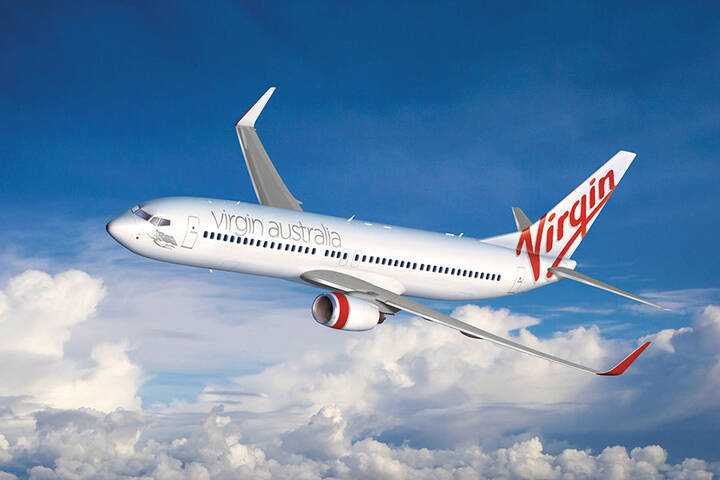
Pre-COVID expansion:
- Acquired Skywest Airlines (early 2013) and 60% of Tiger Australia (mid-2013)
- Established strong presence in domestic regional markets and South-East Asia
- Expanded international routes to South Pacific, USA, Middle East, and Europe
- Implemented technology to reduce duplication and create efficiencies saving $200 million annually
- Increased scale leading to 15% growth in Velocity membership loyalty rates (2013)
COVID-19 restructure:
- Entered voluntary administration (April 2020) to recapitalize
- New owners Bain Capital took control
- Reduced workforce by one-third (from 9,000 staff)
- Reduced aircraft fleet by one-half
- Cancelled new aircraft orders
- Relocated and reduced office space
- Focused on domestic routes
- Temporarily discontinued Tiger Australia brand while retaining low-cost carrier option
Six key strategic areas for recovery:
- Realising cost efficiencies
- Focusing on customer value
- Harnessing company culture
- Ongoing investment in digital and data technologies
- Financial security through strong balance sheet and investment capital
- Jobs and future growth
New strategic positioning: Moving from full-service to mid-market airline, requiring customers to pay for food, with business class targeting luxury holiday travellers.
Note
This case demonstrates how operations decisions directly impact financial results, marketing objectives, and human resources requirements. It shows that strategic operations management integrates across all business functions.
Remember!
Summary
Key Points to Remember:
-
Strategic operations management involves contributing to the business's overall strategic direction, affecting all key business areas including marketing, finance, and human resources
-
Cost leadership aims to achieve the lowest costs or be the most price-competitive in the market while remaining profitable, requiring careful management of input, labour, processing, inventory, and quality costs
-
Product differentiation distinguishes goods or services from competitors through features, quality, expertise, time, flexibility, or technology
-
Goods versus services have distinct characteristics: goods are tangible, can be owned, and can be stored; services are intangible, cannot be owned, and are produced and consumed simultaneously
-
Standardisation produces homogeneous products at high volume and low cost, while differentiation creates unique products that command premium prices
Key terms:
- Strategic – long-term, broad aims affecting all key business areas
- Profit centres – business aspects that directly generate revenue and profits
- Cost centres – areas that incur costs but don't directly generate revenue
- Cost leadership – having the lowest costs or being the most price-competitive
- Product differentiation – distinguishing products from competitors
- Standardisation – producing homogeneous or identical products
- Cross branding – strategic alliances that add value through partnerships
Critical framework: Operations management decisions must balance cost leadership and differentiation strategies while considering impacts on quality, customer satisfaction, and other business functions. Successful businesses often find ways to achieve both low costs and meaningful differentiation.