Regulation of Blood Glucose (VCE SSCE Biology): Revision Notes
📚Revision Notes
Regulation of Blood Glucose
Introduction
Just as vehicles need fuel to operate, the human body requires a constant supply of energy to function properly. The body's primary fuel source is glucose, a simple sugar that powers all cellular activities. Our bodies have sophisticated mechanisms to ensure glucose availability remains within precise limits at all times.
Glucose in the body
What is glucose?
Glucose is a six-carbon carbohydrate molecule that serves as the main energy source for all cells in the human body. This vital molecule must be carefully regulated because both too much and too little glucose can cause serious problems. The body maintains blood glucose levels between 4.0 and 7.8 mmol/L under normal circumstances.
Note
This narrow range is equivalent to approximately one teaspoon of glucose circulating in the bloodstream of an average adult - demonstrating just how precise blood glucose regulation needs to be.
Obtaining glucose from food
The body primarily obtains glucose through the consumption of dietary carbohydrates. Carbohydrates are biomacromolecules composed of carbon, hydrogen, and oxygen atoms arranged in various configurations.
When you consume carbohydrate-containing foods, your digestive system breaks these complex molecules down into simpler forms using specialised enzymes. This breakdown process converts carbohydrates into monosaccharides (simple sugars), including glucose. The small intestine then absorbs these glucose molecules and releases them into the bloodstream using glucose transporters - specialised membrane proteins that facilitate glucose movement across cell membranes.
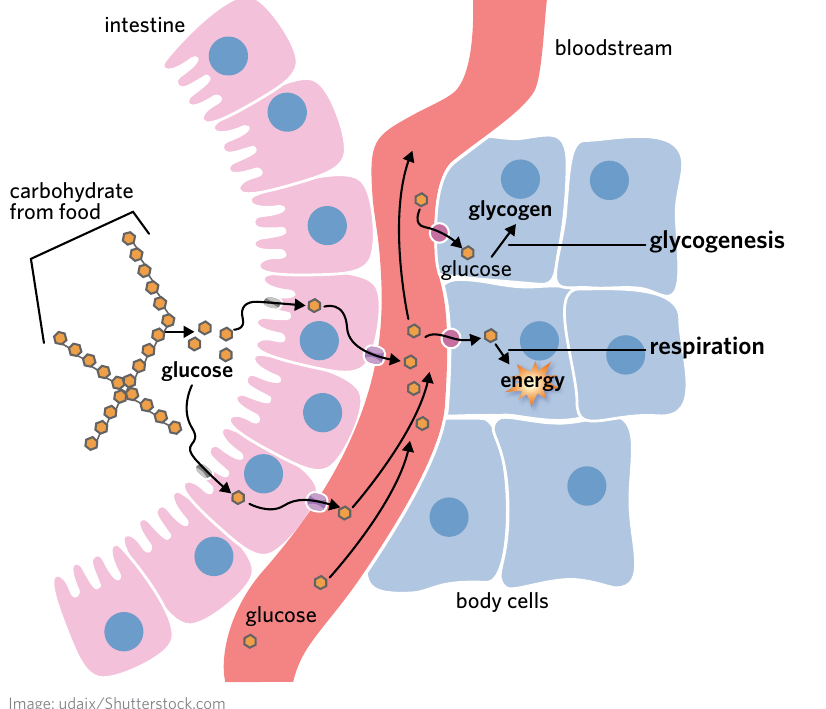
Once glucose enters the bloodstream, it travels throughout the body where cells can take it up and use it. Inside cells, the process of cellular respiration breaks down glucose molecules to produce ATP (adenosine triphosphate), which provides energy for all cellular functions and processes.
Glucose storage as glycogen
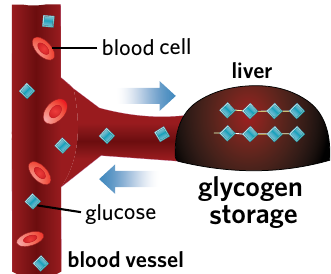
The body doesn't rely solely on immediate food intake for glucose. It maintains backup energy reserves in the form of glycogen - a polysaccharide consisting of many glucose molecules linked together in long chains.
Through a process called glycogenesis, liver cells and skeletal muscle cells convert excess glucose into glycogen for storage. This allows the body to store glucose for extended periods without it interfering with normal cellular function. When blood glucose levels drop during periods without food intake or during intense physical activity, the body breaks down glycogen back into glucose through a process called glycogenolysis. The released glucose then re-enters the bloodstream where it can be transported to cells that need energy.
Note
Memory Aid: Think of glycogengenesis as glycogen creation (genesis means creation), and glycogenolysis as glycogen breakdown (lysis means breaking down). Also remember: "Insulin gets glucose INTO the cell, glucagon makes glycogen be GONE."
Blood glucose levels
Glucose travels through the body dissolved in blood plasma, the liquid component of blood that supports red and white blood cells. The concentration of glucose in the blood at any given moment is referred to as the blood glucose level.
Normal blood glucose levels range from 4.0 to 7.8 mmol/L. The body works constantly to maintain levels within this narrow range because deviations can cause harm:
- Hyperglycaemia occurs when blood glucose rises above 7.8 mmol/L. Persistently elevated glucose levels can damage blood vessels, nerves, and organs throughout the body.
- Hypoglycaemia occurs when blood glucose falls below 4.0 mmol/L. Insufficient glucose means cells cannot produce enough energy, potentially leading to weakness, confusion, and in severe cases, loss of consciousness.
Important
Why Precise Regulation Matters:
Maintaining blood glucose within the narrow 4.0-7.8 mmol/L range is critical. Values outside this range can cause immediate symptoms and long-term damage. Hyperglycaemia damages tissues over time, whilst hypoglycaemia can cause rapid energy depletion leading to potentially dangerous symptoms.
The body's ability to maintain stable blood glucose levels despite varying food intake and energy demands demonstrates the power of homeostasis.
Regulating blood glucose
Homeostasis and the stimulus-response model
Homeostasis refers to the maintenance of a relatively stable internal environment despite changes in external conditions. The regulation of blood glucose is a prime example of homeostatic control operating through negative feedback loops.
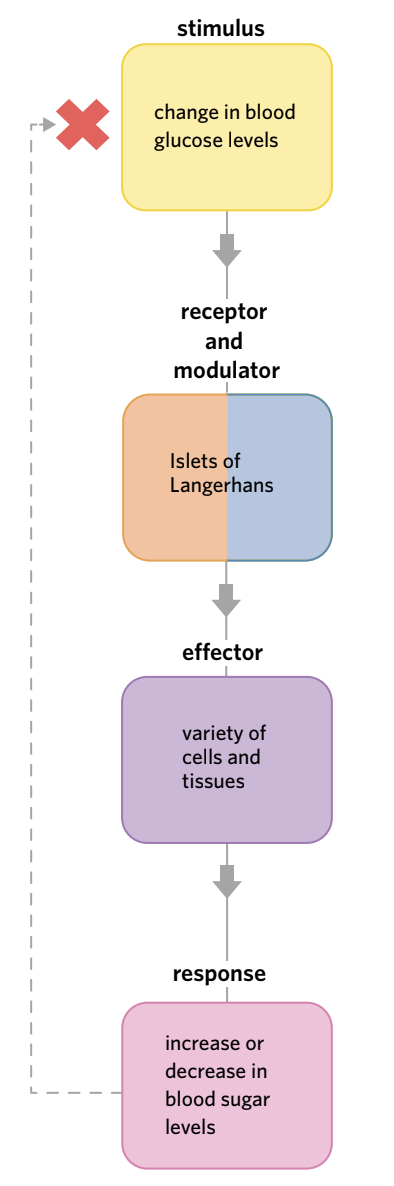
The stimulus-response model provides a framework for understanding blood glucose regulation:
Note
The Stimulus-Response Framework:
- Stimulus: A change in blood glucose levels away from the normal range (approximately 5 mmol/L serves as the regulatory threshold)
- Receptor and Modulator: Specialised cells in the pancreas detect glucose changes and release appropriate hormones
- Effector: Various tissues and cells throughout the body respond to hormonal signals
- Response: Blood glucose levels return toward the normal range
The pancreas and islets of Langerhans
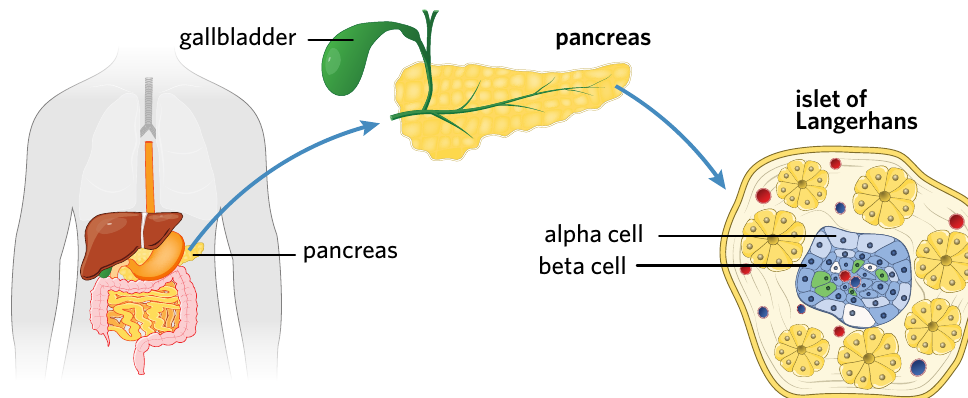
The pancreas plays a central role in blood glucose regulation. This organ functions as part of both the digestive and endocrine systems, producing digestive enzymes as well as important hormones.
Within the pancreas lie clusters of specialised cells called the islets of Langerhans. These islets contain two main cell types that detect blood glucose levels and respond accordingly:
- Beta cells detect when blood glucose rises above approximately 5 mmol/L and respond by secreting the hormone insulin
- Alpha cells detect when blood glucose falls below approximately 5 mmol/L and respond by secreting the hormone glucagon
Responding to high blood glucose levels
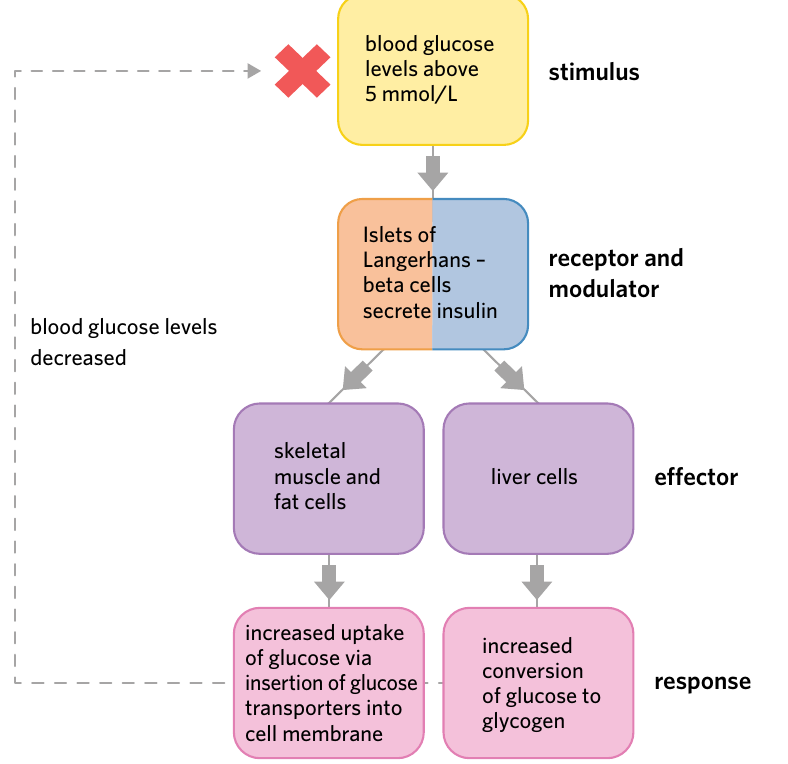
When blood glucose levels rise above the normal range - such as after eating a meal - beta cells in the islets of Langerhans detect this change and secrete insulin into the bloodstream. Insulin then travels to various tissues where it triggers two main responses:
Response 1: Increased glucose uptake by cells
Insulin binds to receptors on skeletal muscle cells and fat cells, triggering these cells to insert glucose transporters into their cell membranes. Glucose transporters are necessary because glucose is hydrophilic (water-loving) and cannot easily pass through the lipid-based cell membrane on its own.
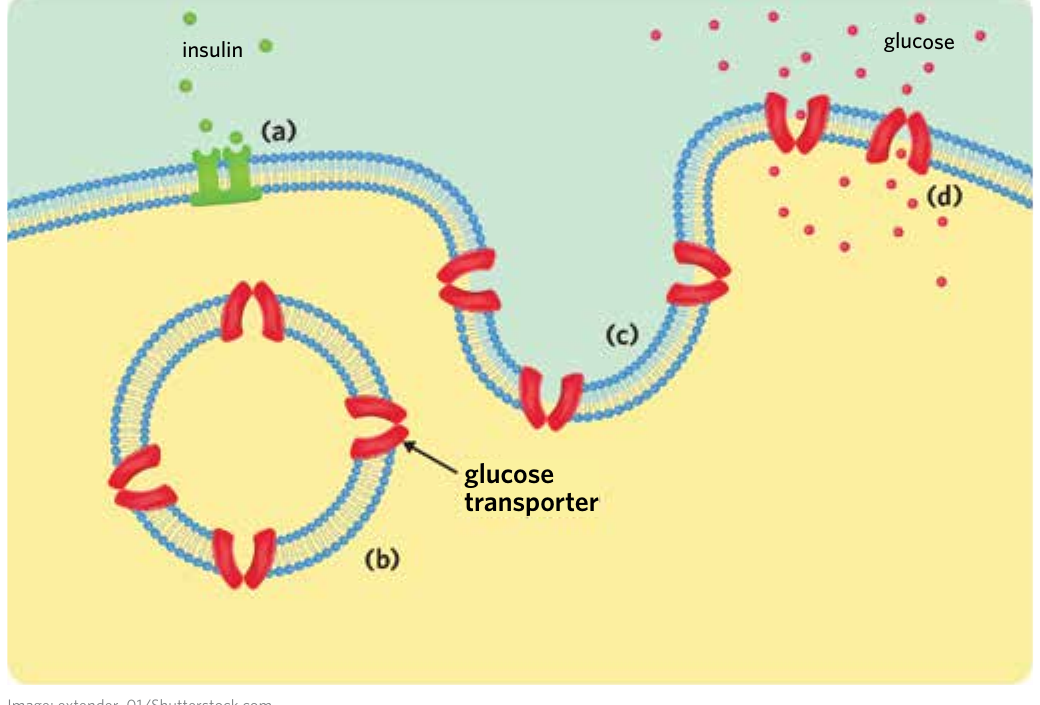
With more glucose transporters present in the membrane, cells can absorb much more glucose from the bloodstream through facilitated diffusion. Once inside the cell, mitochondria can use this glucose to generate energy through cellular respiration. Skeletal muscle cells also convert some absorbed glucose into glycogen for storage, whilst fat cells convert excess glucose into fatty acids for long-term energy storage.
Response 2: Increased glycogen production in the liver
Insulin also stimulates liver cells to increase glycogenesis - the conversion of glucose into glycogen. The liver naturally maintains a relatively high glucose uptake rate that insulin doesn't affect directly. However, insulin activates various enzymes responsible for linking glucose molecules together to form glycogen, thereby increasing the rate of glycogen synthesis.
Example
How Insulin Lowers Blood Glucose:
Step 1: Blood glucose rises above 5 mmol/L (stimulus)
Step 2: Beta cells detect the increase and release insulin
Step 3: Insulin triggers two simultaneous responses:
- Muscle and fat cells increase glucose uptake from the bloodstream
- Liver cells accelerate glycogen synthesis from glucose
Step 4: Blood glucose concentration decreases back toward 5 mmol/L (response)
Step 5: Beta cells stop releasing insulin once normal levels are restored (negative feedback)
As cells absorb glucose and convert it to glycogen, the concentration of glucose in the bloodstream decreases. Once blood glucose levels return to approximately 5 mmol/L, beta cells stop releasing insulin. Without insulin signalling, cells stop increasing glucose uptake and glycogen production, and blood glucose levels stabilise. This demonstrates negative feedback - the response (decreased blood glucose) opposes and eventually stops the initial stimulus (elevated blood glucose).
Responding to low blood glucose levels
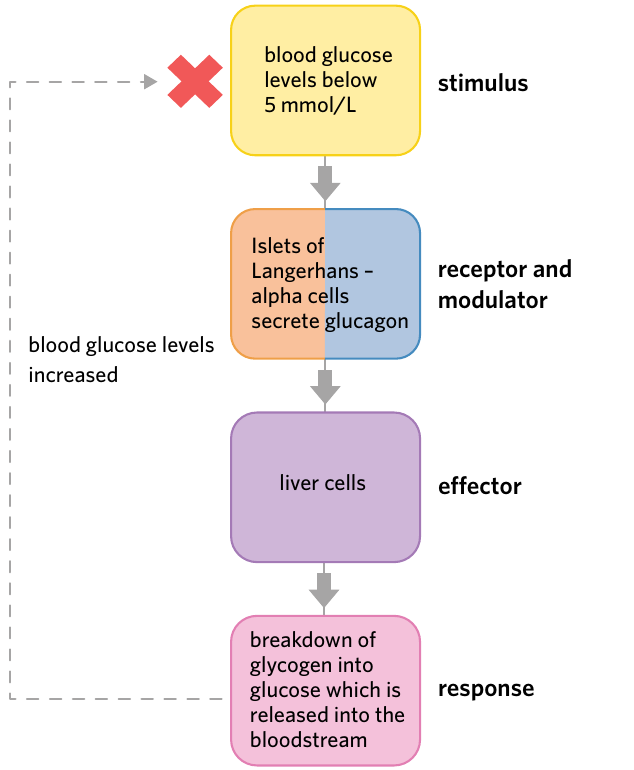
When blood glucose levels fall below the normal range - such as during exercise or between meals - alpha cells in the islets of Langerhans detect this decrease and secrete glucagon into the bloodstream.
Glucagon travels to the liver where it stimulates liver cells to break down stored glycogen into individual glucose molecules through glycogenolysis. The liver then releases this glucose into the bloodstream, raising blood glucose levels.
Example
How Glucagon Raises Blood Glucose:
Step 1: Blood glucose drops below 5 mmol/L (stimulus)
Step 2: Alpha cells detect the decrease and release glucagon
Step 3: Glucagon triggers liver cells to break down glycogen into glucose
Step 4: Liver releases glucose into the bloodstream
Step 5: Blood glucose concentration increases back toward 5 mmol/L (response)
Step 6: Alpha cells stop releasing glucagon once normal levels are restored (negative feedback)
As glucose enters the bloodstream from glycogen breakdown, blood glucose levels rise. Once levels approach 5 mmol/L again, alpha cells stop secreting glucagon. Without glucagon stimulation, liver cells cease breaking down glycogen and stop releasing glucose into the blood. Blood glucose levels stabilise through this negative feedback mechanism.
Summary of blood glucose regulation
| Blood glucose level | Cell stimulated | Hormone released | Effector | Response |
|---|---|---|---|---|
| Elevated (>5 mmol/L) | Beta cells | Insulin | Liver cells and skeletal muscle cells | Increased production of glycogen |
| Skeletal muscle and fat cells | Increased uptake of glucose | |||
| Decreased (<5 mmol/L) | Alpha cells | Glucagon | Liver cells and skeletal muscle cells | Breakdown of glycogen into glucose and release into bloodstream |
Note
The Two-Hormone System:
Notice how insulin and glucagon work as antagonistic hormones - they have opposite effects on blood glucose. Insulin lowers blood glucose when levels are too high, whilst glucagon raises blood glucose when levels are too low. Together, they maintain precise control around the 5 mmol/L threshold.
Remember!
Summary
Key Points to Remember:
-
Glucose is essential: All cells depend on glucose as their primary energy source, obtained from dietary carbohydrates or stored glycogen.
-
Normal range matters: Blood glucose must stay between 4.0-7.8 mmol/L for optimal body function. Levels above this range cause hyperglycaemia; levels below cause hypoglycaemia.
-
Two hormones regulate glucose: Insulin (from beta cells) lowers blood glucose by promoting cellular uptake and glycogen storage. Glucagon (from alpha cells) raises blood glucose by triggering glycogen breakdown.
-
The pancreas is the control centre: Islets of Langerhans within the pancreas contain alpha and beta cells that detect glucose changes and release appropriate hormones.
-
Negative feedback maintains balance: When blood glucose rises, insulin brings it down. When blood glucose falls, glucagon brings it up. The response always opposes the initial change, creating stable regulation around 5 mmol/L.