Food Trends and Marketing Tactics and Their Impact (VCE SSCE Health and Human Development): Revision Notes
📚Revision Notes
Food Trends and Marketing Tactics and Their Impact
Introduction to modern food marketing
Marketing has evolved dramatically with the digital age. Young people no longer passively view television commercials and print advertisements. Instead, they actively interact with products and brands online every day. This two-way relationship allows companies to track online interactions carefully and collect vast amounts of data to build detailed digital profiles of their customers.
Important
This shift has significant implications for youth health and wellbeing. One in four Australian teenagers is either overweight or obese, and this rate is projected to rise. The online world is saturated with marketing of processed, energy-dense foods.
According to the Australian Bureau of Statistics' Australian Health Survey 2011-12, four out of ten young people consume burgers and soft drinks on any given day. The teenage years are critical for forming lifelong healthy eating habits, and the unhealthy diet of many teenagers puts them at risk of developing chronic health conditions later in life.
Overview of marketing strategies
Multinational companies use a wide variety of strategies and tactics to promote their food products to young consumers, who may lack the information and ability to understand the consequences of their decisions.
The main marketing strategies include:
- Immersive marketing: Creating complete brand experiences
- Social influence/blogger marketing: Using trusted online personalities
- Infiltration of social media: Advertising through platforms like Instagram and Facebook
- Collection of personal data: Building customer profiles for targeted marketing
- Location-based mobile marketing: Using GPS technology to send targeted messages
- Celebrity endorsements: Associating products with famous personalities
- Product placement: Subtly featuring products in entertainment media
Immersive marketing
Immersive marketing is a technique that blends advertising naturally into a complete experience for the consumer. The aim is to create an emotional relationship between the consumer and a particular brand.
Examples of immersive marketing
Example
Worked Example: Coke Sip and Scan Programme
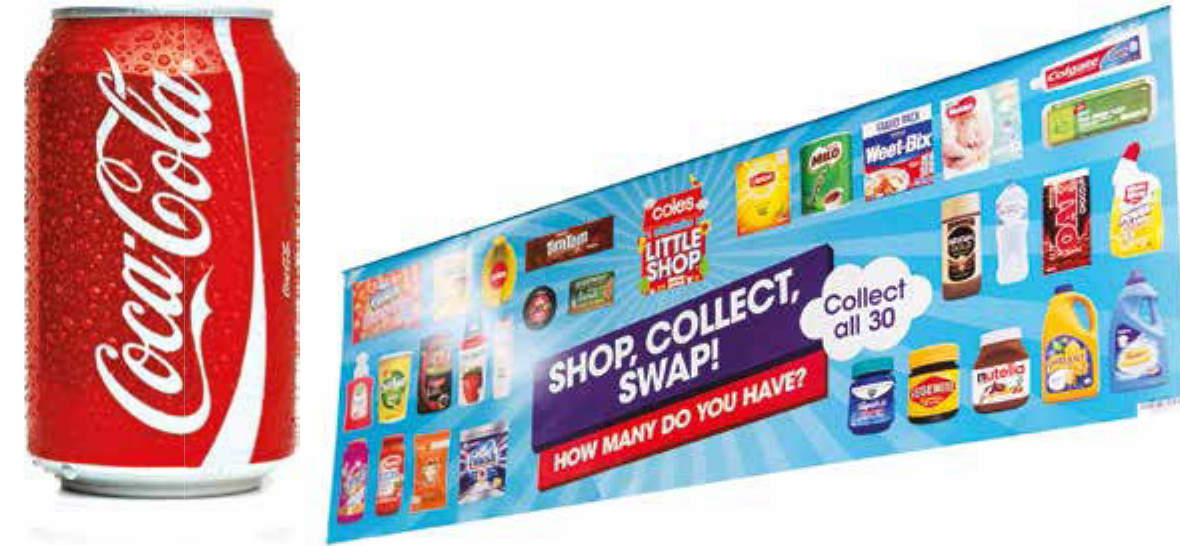
This programme encourages users to scan icons on Coca-Cola products or enter product codes found on any Coca-Cola product. The points earned can be used to receive rewards, including:
- Gift cards
- Experiences
- More Coke products
- Online games
- Donations to specific charities
The longer users stay connected to this programme, the stronger the relationship they build with the brand.
Example
Worked Example: Coles Little Shop Promotion
This popular supermarket promotion aimed to turn regular supermarket trips into an 'experience' whilst promoting and building brand alliances with 30 different supermarket products. Customers received miniature collectible versions of products with their shopping.
Important
Whilst the promotion was hugely successful for Coles, health advocates criticised the inclusion of unhealthy products such as Nutella, chocolate milk and Tim Tams as part of the collectable range. The campaign won the 2018 National Parents Voice 'Shame Awards' for its huge impact on children's pester power (children persistently requesting products from parents). Through children playing with the mini shop products, parents found pester power for the items to be at an all-time high, encouraging the creation of unhealthy food habits.
Industry perspective on targeting youth
Carol Kruse, a Coca-Cola executive, revealed how companies deliberately target young people through online marketing:
Note
We're especially targeting a teen or young adult audience. They're always on their mobile phones and they spend an inordinate amount of time on the internet. We did some online consumer studies with Yahoo! and Nielsen that determined yes, indeed, an online ad unit can make an emotional connection and encourage consumers to buy more of our products.
This quote demonstrates the deliberate and calculated nature of targeting youth in modern marketing campaigns.
Infiltration of social media
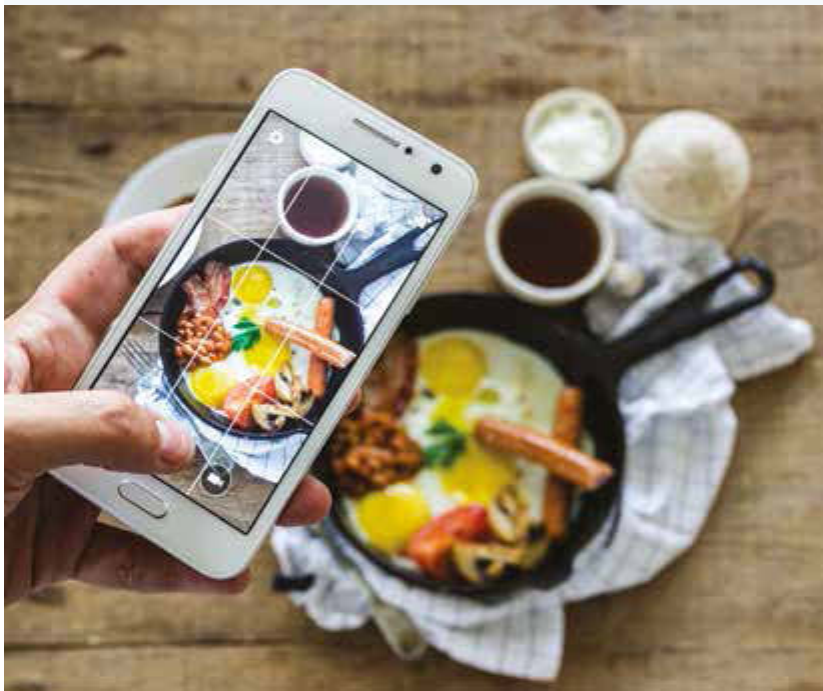
Marketers constantly advertise new food and drink promotions via Facebook, YouTube, Instagram, Twitter and other popular digital platforms. They regularly tempt young people with various competitions, either offering free products or prize money.
How social media marketing works
Example
Worked Example: Social Media Competition Strategy
Step 1: A young person finds a code on a product they have bought with an invitation to enter a draw to win $1000 in prize money.
Step 2: They enter the code and register online, providing personal details such as name, address, phone number, year of birth and email address.
Step 3: They are encouraged to share with their friends on social media so their friends can also enter the competition.
Without realising it, the young person has become a promoter of the product.
To register for such a competition, the young person usually provides personal details such as their name, address, phone number, year of birth and email address. This is all the information the marketer needs to build up a profile of the young person so they can include them in future marketing campaigns.
Collection of personal data
Data collection is vitally important to many multinational food and beverage companies. Consumers are tagged with unique identifiers when they go online and can be easily tracked and profiled. Their patterns of behaviour can be analysed, and more targeted and personalised marketing techniques can be used.
Important
Exam tip: Be able to explain how companies use personal data to create targeted marketing campaigns that influence youth food choices.
Location-based mobile marketing
Through the collection of a mobile phone number, marketers can follow young people throughout their daily lives. This is done via sophisticated tracking techniques such as Geofencing.
Note
Geofencing is targeted digital marketing that links a retailer to a particular geographical area and then targets clients through alerts and messages on their phone when they enter that particular area.
These companies can offer enticing marketing offers, aiming to take advantage of the impulsive nature of youth when they are in close proximity to particular food outlets, particularly at times of the day when food cravings may increase.
Celebrity endorsements
Along with online strategies and techniques, marketers use methods such as celebrity endorsements to develop a relationship between the consumer and the products they are trying to sell. According to research, the use of celebrity endorsements in marketing can enhance brand recognition and increase the desirability of the product, leading to a positive association, particularly among youth aged 13-15.
Research findings on celebrity endorsements
Example
Research Study: Celebrity Endorsements and Nutrition
A study undertaken in April 2016 by Melissa Bragg at the Department of Population Health, New York University School of Medicine, found that:
- Popular celebrities (defined as those who had won teen choice awards) were associated with 26 different food products
- 81 per cent were nutrient poor
- Music celebrity endorsement is particularly effective because youth spent almost two hours listening to music each day
Examples and health implications
The most commonly advertised food products were sugary foods, lollies and soft drinks. When young people associate products with popular celebrities such as:
- Beyoncé (Pepsi)
- LeBron James (Coke)
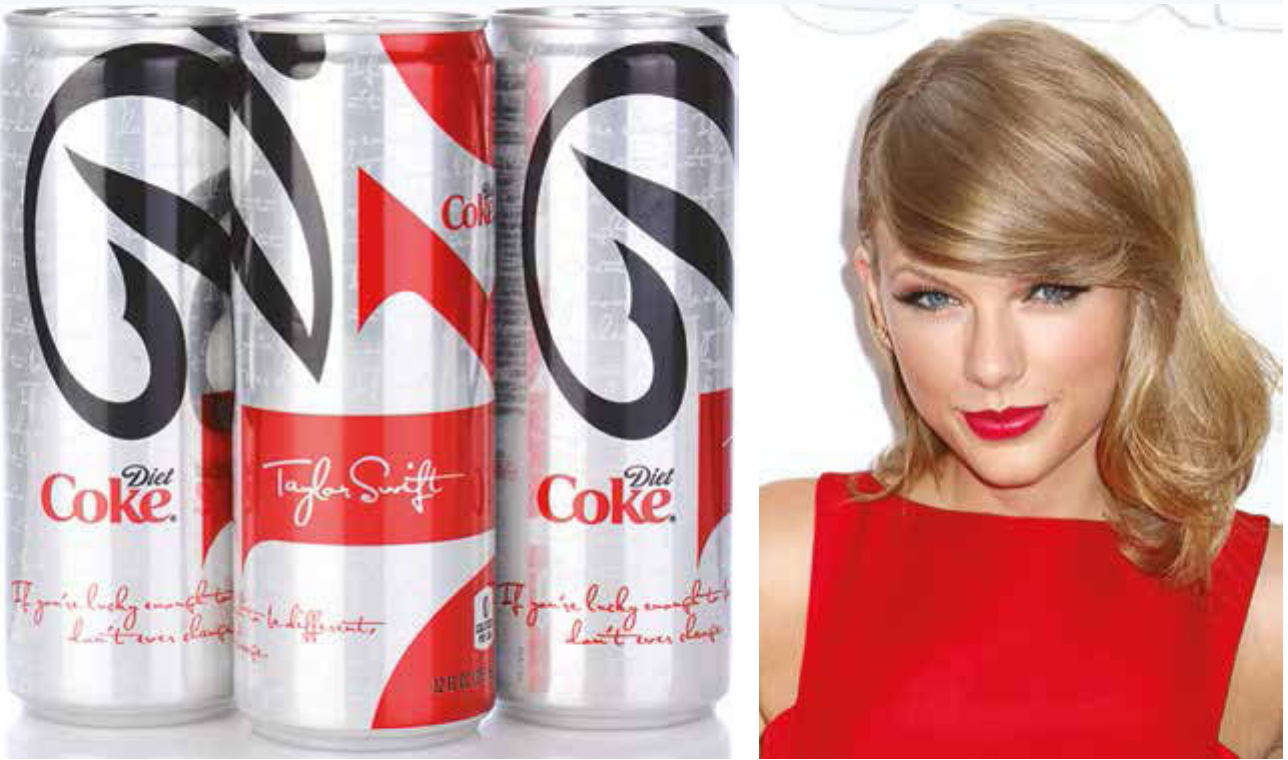
- Taylor Swift (Diet Coke)
- Will.i.am (Doritos, Dr Pepper, Pepsi and Coke)
They are more likely to consume such foods. This leads to an increase in the already high numbers of youth experiencing overweight and obesity, and the potential of developing type 2 diabetes and even cardiovascular disease later in life.
Important
Although Taylor Swift is linked to 'the healthier alternative' of Diet Coke, the artificial sweeteners in this product can have negative health outcomes in the long term, including links to dehydration, type 2 diabetes and cancer.
Product placement
Product placement is an advertising technique used by food and drink companies to subtly promote their products through appearances in television, film or other media. It is often seen as a beneficial way to promote a product without interrupting the viewer, the way traditional advertising does.
American Idol case study
Example
Worked Example: American Idol and Coca-Cola Partnership
American Idol had one of the most obvious examples of product placement with their big red Coke cups sitting on display in front of the celebrity judges, who were also endorsing the products.
- Coke signed on as the major sponsor in 2002 with a $10 million fee
- The cups became such a part of the show that they were even used on tour in a campaign across America
- Coke ended its 13-year sponsorship with the TV show in 2014, reflecting the show's decline in popularity

Why product placement is effective
Product placement is a clever marketing technique because the viewer is in contact with the brand for extended periods. They are less likely to change channel, as they would if the product was in a Coke commercial. This technique can create a subconscious emotional connection with the product, increasing its desirability.
Marketing by social influencers and bloggers
Social influencers are not necessarily celebrities, but are people who are influential in the online world, particularly on Instagram and Twitter. They attract large numbers of followers because people turn to them as a 'trusted' source of information.

How influencer marketing works
Note
Marketing companies realise the power these social influencers have when it comes to selling their brands, and are tapping into this market. There are companies, including TRIBE (a Melbourne-based organisation), that link social influencers with brands and brands with social influencers.
This means it is becoming more difficult to determine whether a product being endorsed by a social influencer is simply another advertisement.
Important
Exam tip: Be prepared to discuss how the blurred line between genuine recommendations and paid advertising can influence youth food choices without their awareness.
Impact of food trends on health and wellbeing: clean eating
The health and wellbeing trend of 'clean eating' is now widespread in the marketing of food products. The idea behind the clean eating phenomenon is relatively simple: eating whole or real foods which have not been manufactured, refined or over-handled, and are therefore as close to their natural state as possible.
How companies respond to clean eating
Companies tap into this trend by tailoring their products to be healthier. As consumers' interest in healthy eating increases, they become willing to pay more for healthier options. Examples include:
- McDonald's investigating how to create fries that still taste good, but without the fat
- Natural sweeteners such as stevia (found in Coke Life) beginning to replace sugar and artificial sweeteners
- Growth in the market for certified organic food
Note
Stevia: A shrub native to tropical and subtropical America, the leaves of which may be used as a calorie-free substitute for sugar.
Social media and clean eating
'Clean eating' has experienced long-term trending on many popular social media platforms. Instagram, Twitter and Facebook are full of beautifully crafted photos of food perfection. Many young people choose to follow the trends of their favourite food bloggers and opt for the food they recommend. It is also commonplace for youth to upload photographs of their food and gain instant approval from their friends.
Positive impacts of clean eating
Note
'Clean eating' is usually associated with considerable physical health and wellbeing benefits to young people, including:
- Decreases in weight over time
- A reduction in the risk of developing type 2 diabetes
- A reduction in the risk of developing some cancers
Negative impacts of clean eating
However, according to Rhiannon Lambert, a registered nutritionist in London who treats young people with eating disorders, the number of clients presenting at her clinic has doubled over the past year due to the 'clean eating' trend.
Important
Mental health and wellbeing impacts:
- The pressure to be seen consuming wholesome foods can lead to increased anxiety and stress in young people
- Feelings of guilt may emerge when consuming so-called 'bad' foods, negatively impacting emotional health and wellbeing
Development of orthorexia: According to experts, young people can start following this movement in an innocent attempt to eat more healthily, but can easily become fixated and obsessive about food quality and purity. When food is associated with terms such as 'good', 'bad', 'clean' and 'dirty', it can become linked to choices about morality, and this is when obsessive behaviours can start.
Note
Orthorexia: An eating disorder characterised by an excessive preoccupation with eating 'healthy' food.
Social health and wellbeing impacts: Such obsessive behaviour can negatively impact social health and wellbeing as relationships are tested when a family or friend may try to provide support.
Nutritional concerns with clean eating
If a product comes from a package, box or can, it is usually considered off limits for people following this trend. Having these kinds of food restrictions is unsustainable and often involves people eliminating entire food groups from their diet, such as dairy or meat. In such cases, these must be replaced with protein-rich beans or tofu and fortified soy products for health and wellbeing to be maintained.
Important
If there is a dietary imbalance due to underconsumption of essential nutrients such as iron, a person is at risk of anaemia, which negatively impacts physical health and wellbeing as the body and its systems are compromised.
Misunderstanding about food processing
Many people following this diet are unaware that the processing of foods can improve the safety of the food supply. It eliminates and prevents microbes from multiplying and spoiling food, potentially causing disease.
Note
Pasteurisation: A process that kills microbes (mainly bacteria) in food and drink, such as milk, juice and canned food.
Sterilisation: The procedure of making an object free of live bacteria or other microorganisms.
Impact of food trends on health and wellbeing: food delivery services
Young people are drawn to the convenience of using delivery apps such as menulog, Deliveroo, Foodora and the most popular, Uber Eats, for their midweek dinners.

Statistics on food delivery services
Note
Research by comparison website 'finder.com.au' revealed that Australians are spending $2.6 billion every year on such convenience. In 2020, a Halal snack pack was one of the most ordered menu items in Melbourne, whilst in Sydney, Pad Thai was most popular. Although searches for healthy food items has increased, hot chips are still the most popular single menu item ordered.
Takeaway sales, predominantly due to the rise in popularity of Uber Eats, grew by 18 per cent in just three years, according to the Australian Bureau of Statistics.
Health and wellbeing impacts of food delivery services
Whilst these delivery apps address immediate needs of quick easy solutions to midweek meals, their use may have negative implications on physical, mental and social health and wellbeing.
Physical health and wellbeing:
- Increase in the consumption of energy-dense foods
- Higher risk of overweight and obesity
Important
Mental and social health and wellbeing:
For the family, eating at the dinner table promotes social and mental health and wellbeing benefits. It is:
- A great way to spend quality time together
- Develops communication and social skills for children
- Provides time to build positive and productive relationships
- A time when discussions lead to problem solving, reducing levels of stress and anxiety of family members
Takeaway food is packaged conveniently to be consumed on the go or often in front of the television, promoting passive, anti-social behaviour that diminishes opportunities for social interactions and may impact on relationships in a negative manner.
For couples or friends, the act of cooking is also a form of teamwork and important for promoting healthy relationships, leading to improved emotional health and wellbeing.
Impact of food trends on health and wellbeing: meal kits
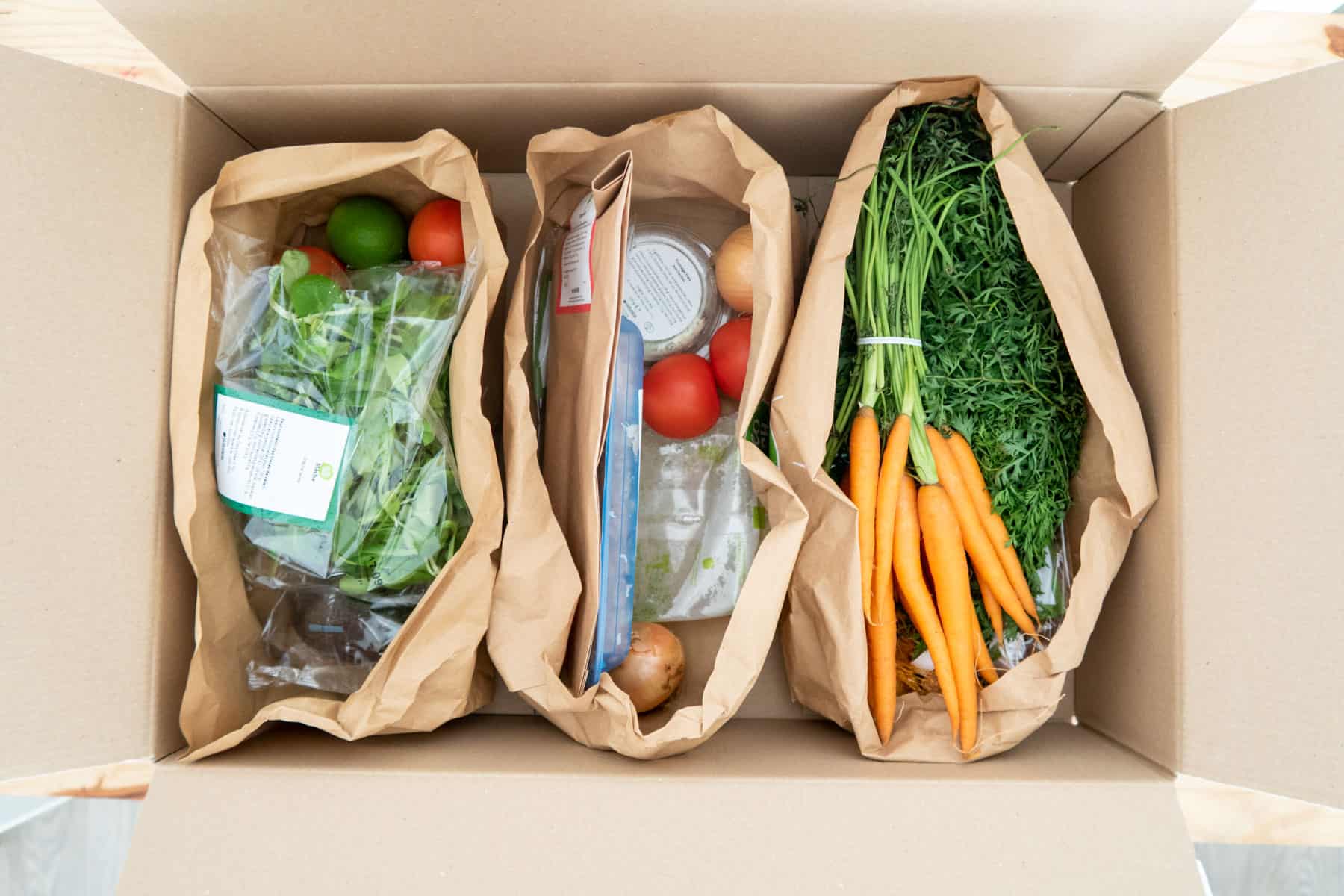
The last few years have the rise in the popularity of meal kits, which are recipes and pre-packaged ingredients delivered directly to consumers, often on a weekly or fortnightly basis.
Growth of meal kit services
Companies such as Hello Fresh (a German company) experienced bumper demand during the COVID-19 pandemic as this trend in food service eliminated the need for grocery shopping. They were forced to close to new customers and trimmed their menu to cope with the influx in demand.
Other companies that increased in popularity are Dinnerly and Marley Spoon, who also were able to capitalise on the pandemic lockdowns and closure of restaurants and cafes. Many families have stayed with the meal kit food trend, mainly due to:
- Its convenience
- Focus on fresh, healthy ingredients
- Ability to choose menus and meal preferences, such as vegetarian or flexitarian (a sometimes vegetarian, sometimes non-vegetarian diet)
Health and wellbeing benefits of meal kits
Note
Overall, these meal kits can be healthy alternatives to traditional 'takeaway' foods, offering more fresh, healthy ingredients in appropriate portions. In the long term, this could:
- Reduce energy intake of Australians
- Reduce the risk of overweight and obesity
- Improve physical health and wellbeing
Summary
Key Points to Remember:
Modern food marketing has evolved from one-sided advertising to two-way interactive relationships where companies collect data to build detailed customer profiles and target youth with sophisticated techniques.
Eight main marketing strategies affect youth food choices: immersive marketing, social media infiltration, personal data collection, location-based marketing, celebrity endorsements, product placement, and social influencer marketing. These tactics create emotional connections with brands and can influence consumption of nutrient-poor foods.
The 'clean eating' trend has both positive impacts (weight reduction, lower risk of chronic diseases) and negative impacts (orthorexia, increased anxiety, social isolation, potential nutritional deficiencies).
Food delivery services like Uber Eats have grown significantly (18% in three years) and whilst convenient, they promote consumption of energy-dense foods and reduce opportunities for social interaction and relationship building that occur during family meals and cooking together.
Meal kit services like Hello Fresh offer healthier alternatives to traditional takeaway with fresh ingredients and appropriate portions, potentially reducing overweight and obesity rates whilst maintaining convenience for busy families.