How Do Enzymes Work? (AQA A-Level Biology): Revision Notes
📚Revision Notes
How Do Enzymes Work?
Understanding activation energy
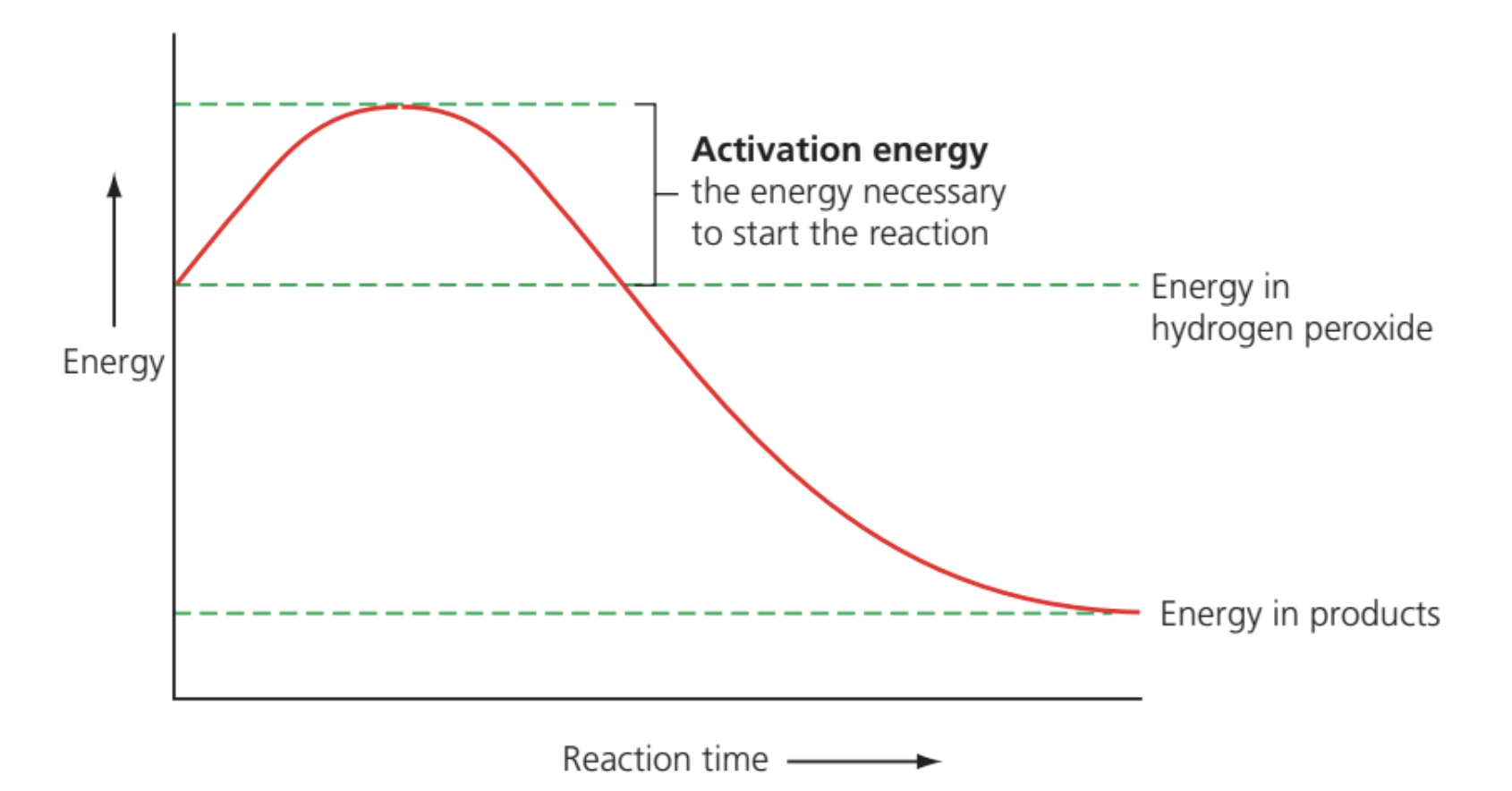
Chemical reactions need energy to get started, even when they release energy overall. This initial energy requirement is called activation energy - the minimum energy needed to break existing bonds and allow new ones to form.
Think of a reaction like rolling a ball over a hill. The ball naturally wants to roll downhill (releasing energy), but first it needs enough energy to reach the top of the hill. Without this initial push, the reaction simply won't happen, even though it would be energetically favourable once started.
Note
This explains why some reactions occur very slowly under normal conditions. For example, paper gradually turns yellow-brown as it reacts with oxygen, but this process takes months or years because the activation energy barrier is high.
How enzymes reduce activation energy
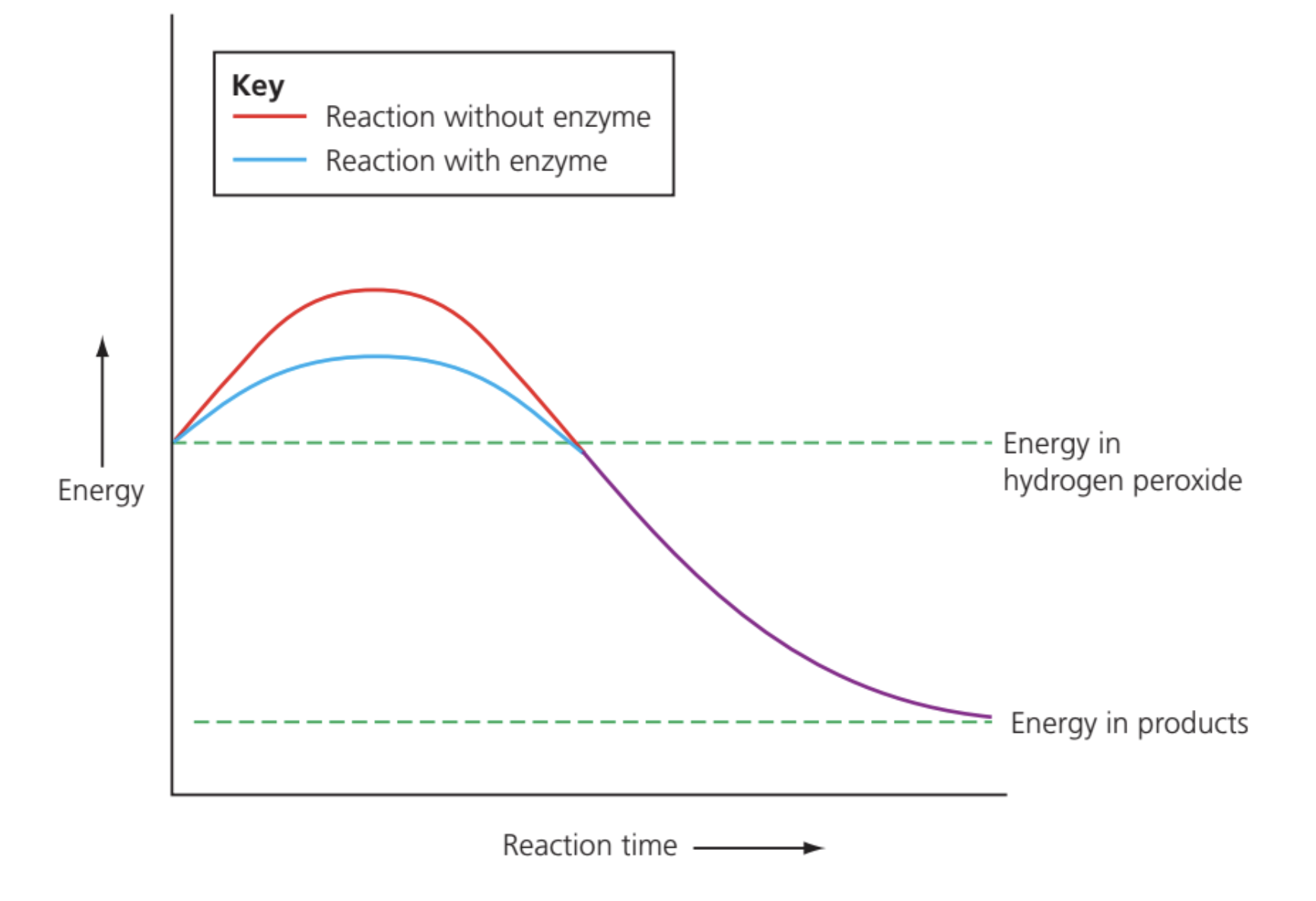
Enzymes are biological catalysts that speed up reactions by lowering the activation energy required. They provide an alternative reaction pathway that requires less energy to get started.
Important
Importantly, enzymes do not change:
- The overall energy change of the reaction
- The final products formed
- Whether a reaction releases or absorbs energy overall
They simply make it easier for the reaction to begin by reducing the energy barrier that must be overcome.
Energy profiles show enzyme action
Energy profile diagrams illustrate how enzymes work. These graphs plot energy against reaction time, showing key components that help us understand the process:
- Reactants start at a higher energy level
- Activation energy appears as a peak that must be reached
- Products end at a lower energy level (for energy-releasing reactions)
When an enzyme is present, the activation energy peak is much lower, though the starting and ending energy levels remain the same. This means the reaction can proceed much more rapidly at body temperature.
Hydrogen peroxide breakdown - a biological example
Example
Biological Example: Hydrogen Peroxide Breakdown
Living cells produce hydrogen peroxide (H₂O₂) as a by-product of metabolism. This compound is harmful to cells, so it must be removed quickly. However, its natural breakdown is extremely slow:
The enzyme catalase solves this problem. Catalase dramatically lowers the activation energy for hydrogen peroxide breakdown, allowing this reaction to occur rapidly at body temperature. The substrate (hydrogen peroxide) binds to the enzyme, breaks down into harmless water and oxygen, then releases from the enzyme.
Without catalase, hydrogen peroxide would accumulate and damage cellular components. With catalase present, the harmful substrate is quickly converted into useful products that the cell can safely handle.
Summary
Key Points to Remember:
- Activation energy is the energy barrier that must be overcome for any reaction to start
- Enzymes lower activation energy by providing alternative reaction pathways, making reactions proceed faster
- Enzymes don't change the overall energy change or final products of reactions
- Catalase is a vital enzyme that breaks down harmful hydrogen peroxide into water and oxygen
- Enzyme structure is precisely shaped to bind specific substrates and catalyse particular reactions