Structure of Mammalian Kidney (AQA A-Level Biology): Revision Notes
📚Revision Notes
Structure of Mammalian Kidney
The mammalian kidney serves as the primary organ for osmoregulation - the homeostatic control of water potential in blood. Understanding its detailed structure is essential for comprehending how it maintains water and salt balance in the body.
Overall kidney structure and position
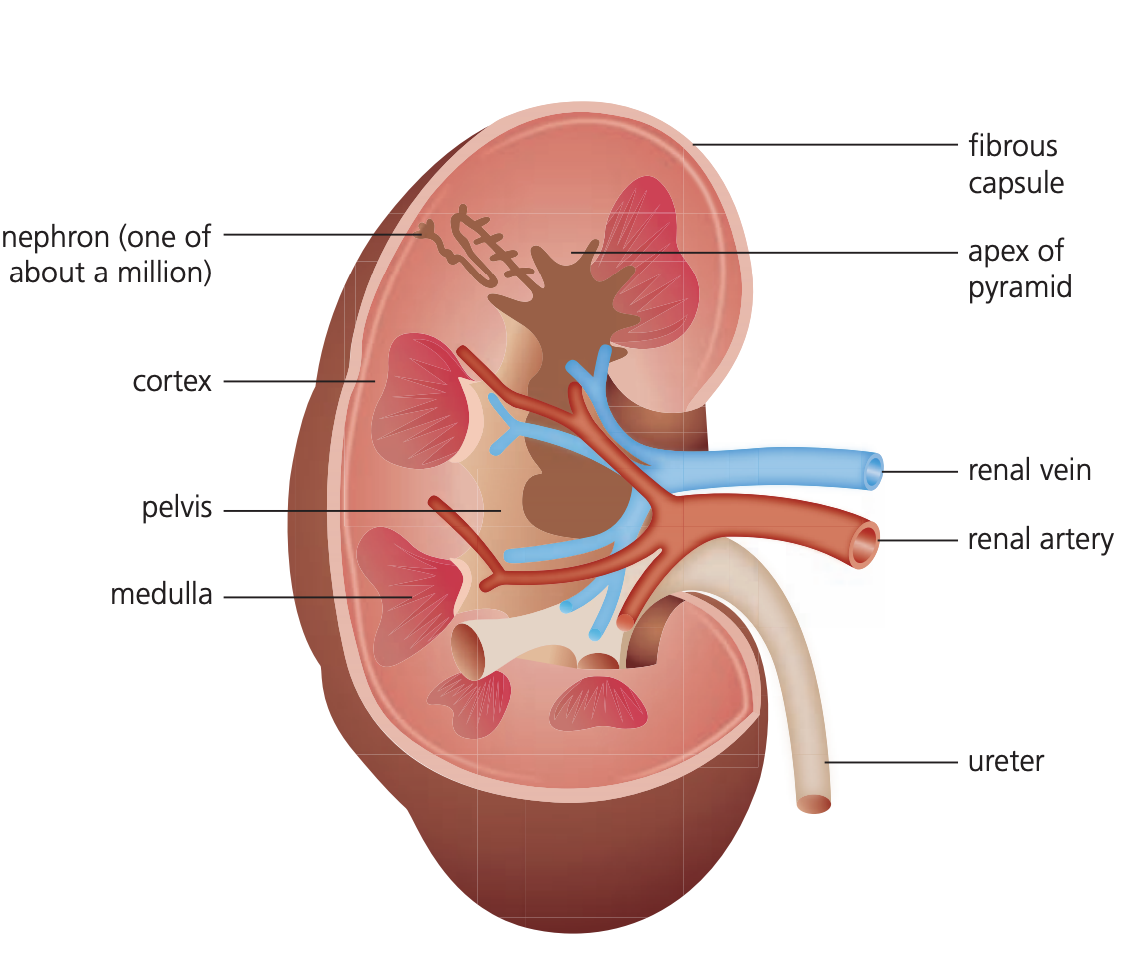
Mammals possess two kidneys positioned at the back of the abdominal cavity, one on each side of the spinal cord. Each kidney connects to major blood vessels and the urinary system through several key structures:
- Renal artery - delivers oxygenated blood from the heart via the aorta
- Renal vein - returns deoxygenated blood to the heart via the vena cava
- Ureter - transports urine from the kidney to the bladder
- Renal pelvis - funnel-shaped cavity that collects urine before it enters the ureter
Note
The strategic positioning of kidneys at the back of the abdominal cavity provides protection while allowing efficient connection to the body's major circulatory and excretory systems.
Regions of the kidney
Each kidney contains three distinct anatomical regions, each with specific roles in the filtration and concentration process:
Fibrous capsule
The outermost protective membrane that surrounds and protects the entire kidney from damage.
Cortex
The lighter-coloured outer region containing numerous renal (Bowman's) capsules, convoluted tubules and associated blood vessels. This region appears granular due to the high density of nephron components.
Medulla
The darker-coloured inner region composed primarily of loops of Henle, collecting ducts and blood vessels. The medulla has a striated appearance due to the parallel arrangement of these tubular structures.
Important
The structural organisation from cortex to medulla reflects the functional progression from filtration (cortex) to concentration (medulla). This arrangement is crucial for the kidney's ability to produce concentrated urine and conserve water.
Summary
Key Points to Remember:
- The kidney has three main regions: fibrous capsule (protection), cortex (filtration), and medulla (concentration)
- Each kidney contains approximately one million nephrons as functional units
- The renal (Bowman's) capsule surrounds the glomerulus and contains specialised podocytes for filtration