Addition (AQA GCSE Design and Technology): Revision Notes
📚Revision Notes
Metal-based materials: Addition
What is addition?
Addition involves connecting metals by melting and fusing them together to create strong, permanent joints. This process creates bonds that are typically as strong as the original metal pieces. There are three main addition processes used in metalworking: welding, brazing, and hard soldering.
Note
Addition processes are fundamental techniques in metalworking that create permanent connections between metal components. Understanding these methods is essential for selecting the right joining technique for different applications.
Welding
Welding creates the strongest type of joint by melting and fusing two pieces of metal, usually of the same type. The resulting connection matches the strength of the original materials. There are two main welding techniques you need to understand.
Arc (electrical) welding
Arc welding uses electrical energy to create intense heat for melting metals. A metal electrode connects to the workpiece and generates a low voltage but high current between amps. This electrical current creates an arc that produces enough heat to melt both the electrode and the base metals.
The process works by creating a pool of molten metal where the materials fuse together. Shielding gas protects the weld area from contamination by preventing oxygen from reaching the hot metal. The electrode melts during the process and becomes part of the final joint.
Important
Proper shielding gas coverage is critical in arc welding. Without adequate protection, oxygen contamination can weaken the weld and create defects in the joint.
Oxy-fuel (acetylene) welding
This welding method uses a flame created by burning acetylene gas mixed with oxygen. The acetylene torch produces intense heat that melts the metals being joined. Like arc welding, this creates a pool of molten metal where the pieces fuse together.
A filler rod adds extra material to strengthen the joint and fill any gaps between the metal pieces. The flame provides precise heat control, making this method suitable for various metal thicknesses and types.
Brazing
Brazing creates permanent metal joints using a different approach than welding. Instead of melting the base metals, brazing uses a copper and zinc alloy that melts at a lower temperature to form the connection.
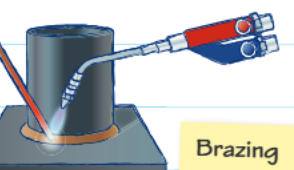 This process requires heating the joint area to approximately , which is hot enough to melt the brazing alloy but not the base metals themselves. The molten alloy flows between the metal pieces and creates a strong bond when it cools and solidifies.
Note
Brazing is particularly useful when you need to join dissimilar metals or when the base materials would be damaged by the high temperatures required for welding.
Stages in the brazing process
Example
Worked Example: Complete Brazing Process
Step 1: Surface Preparation Clean the steel surfaces with abrasive paper to remove any rust, paint, or other contaminants. Clean surfaces allow the brazing alloy to bond properly with the base metal.
Step 2: Apply Flux Apply flux (borax) around the joint area. This flux prevents oxidation during heating and helps the molten brazing alloy flow smoothly around the joint.
Step 3: Position Components The steel pieces need to be held securely in position using wire or clamps. Proper positioning ensures the joint forms correctly during the heating process.
Step 4: Heat the Joint Heat the joint area evenly until it reaches the correct temperature of . Consistent heating prevents warping and ensures the brazing alloy melts completely.
Step 5: Add Filler Material Add the filler rod containing the copper and zinc alloy. The molten alloy flows into the joint by capillary action, creating a strong bond between the metal surfaces.
Hard soldering
Hard soldering works well for joining metals with low melting points, such as copper components. This process uses special alloys that act as fillers and have a range of melting points suitable for different applications.
The technique allows for complex constructions to be assembled in stages, as different alloys can be used at different temperatures. This prevents previously soldered joints from melting when additional connections are made.
Note
Hard soldering provides strong connections while requiring less heat than brazing or welding, making it ideal for delicate work or situations where high temperatures might damage the base materials.
Key differences between addition methods
Welding creates the strongest joints by actually melting and fusing the base metals together. The filler material comes from melted electrodes or filler rods made of similar metal to the workpiece.
Brazing uses a dissimilar filler metal that melts at lower temperatures than the base materials. This creates strong, permanent joints without melting the original metal pieces.
Hard soldering works at even lower temperatures and uses various alloy fillers. This method suits delicate materials and allows for staged assembly of complex structures.
Important
Temperature control is crucial in all addition processes. Using temperatures that are too high can damage the base materials, while temperatures that are too low will result in weak, unreliable joints.
Summary
Key Points to Remember:
- Addition processes create permanent metal joints through controlled heating and melting
- Welding produces the strongest connections by fusing the actual base metals together
- Brazing uses copper/zinc alloy fillers at without melting the base materials
- Hard soldering works at lower temperatures and suits metals with low melting points
- Proper surface preparation and flux application are essential for strong, reliable joints
- Each method has specific applications based on material types and strength requirements