Identifying negative ions - Carbonates test (Edexcel GCSE Chemistry Combined Science): Revision Notes
📚Revision Notes
Identifying negative ions - Carbonates test
Note
The carbonate test is used to identify the presence of carbonate ions (CO₃²⁻) in a substance. When carbonates react with acids, they produce carbon dioxide gas, which can be detected using the limewater test.
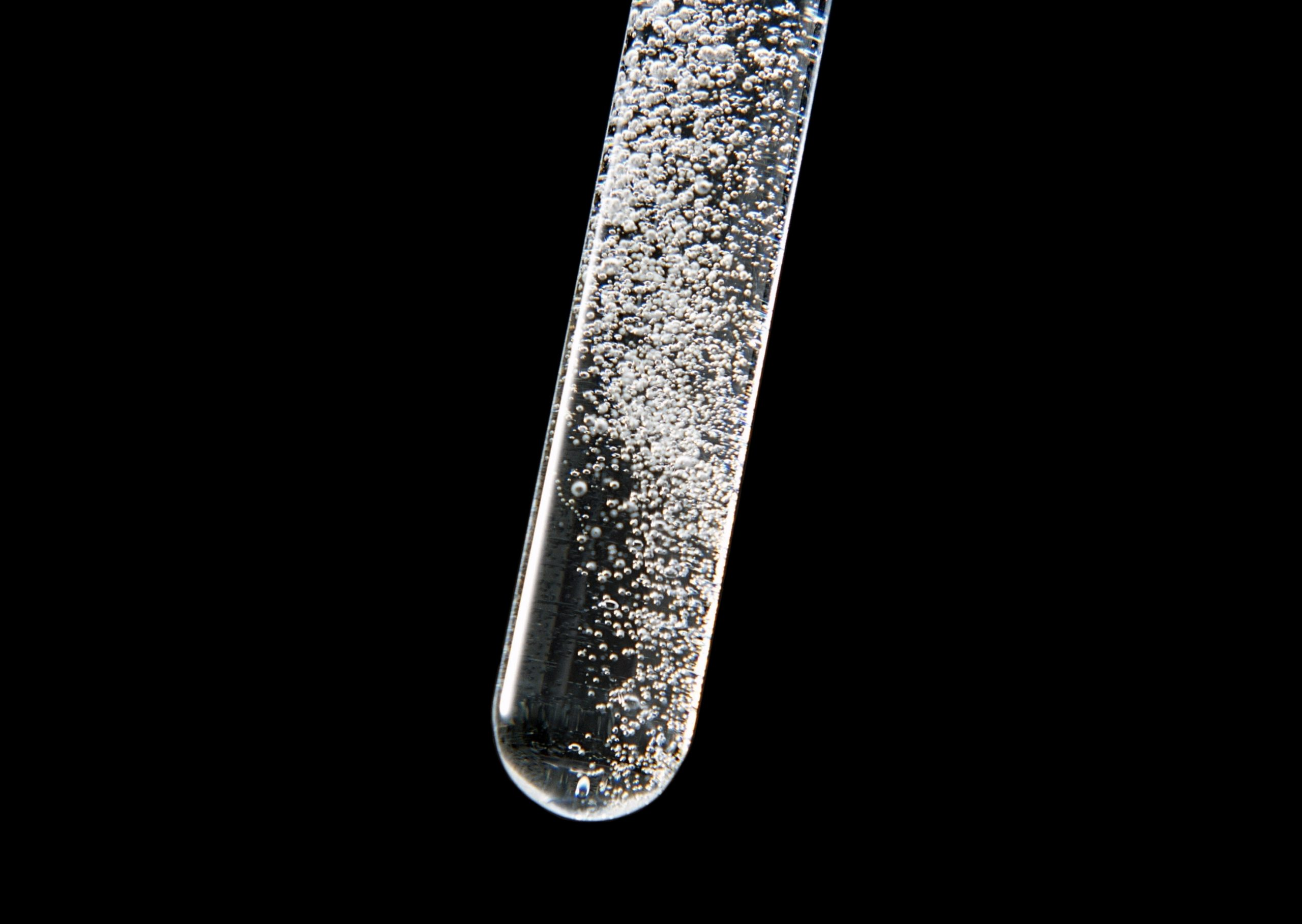
Method for Carbonate Test
- Add Dilute Hydrochloric Acid (HCl):
- Carefully add dilute hydrochloric acid to the substance being tested.
- Observe for Fizzing:
- If the substance contains carbonate ions, it will start to fizz as carbon dioxide (CO₂) gas is produced.
- Test for Carbon Dioxide:
- To confirm the presence of CO₂, bubble the gas through limewater. If the limewater turns cloudy, it means carbon dioxide is present, confirming that the substance is a carbonate.
Safety and Technique Tips
- Avoid sucking up acid into the pipette, as this can neutralise the limewater and ruin the test.
- Don't suck up any carbonate with the pipette, as it could contaminate the test.
- Use minimal limewater for the test; the smaller the amount, the more sensitive and accurate the test will be.
Chemical Equation for the Reaction
In this reaction:
- Calcium carbonate (CaCO₃) reacts with hydrochloric acid (HCl).
- The products are calcium chloride (CaCl₂), carbon dioxide (CO₂), and water (H₂O).