Cardiac Output, Stroke Volume & Heart Rate (Edexcel GCSE Physical Education): Revision Notes
📚Revision Notes
Cardiac Output, Stroke Volume & Heart Rate
Cardiac Output = Stroke Volume X Heart Rate
Cardiac Output = amount of blood leaving the heart per minute Stroke Volume = amount of blood ejected from the heart per beat Heart Rate = the number of times the heart beats per minute
Note
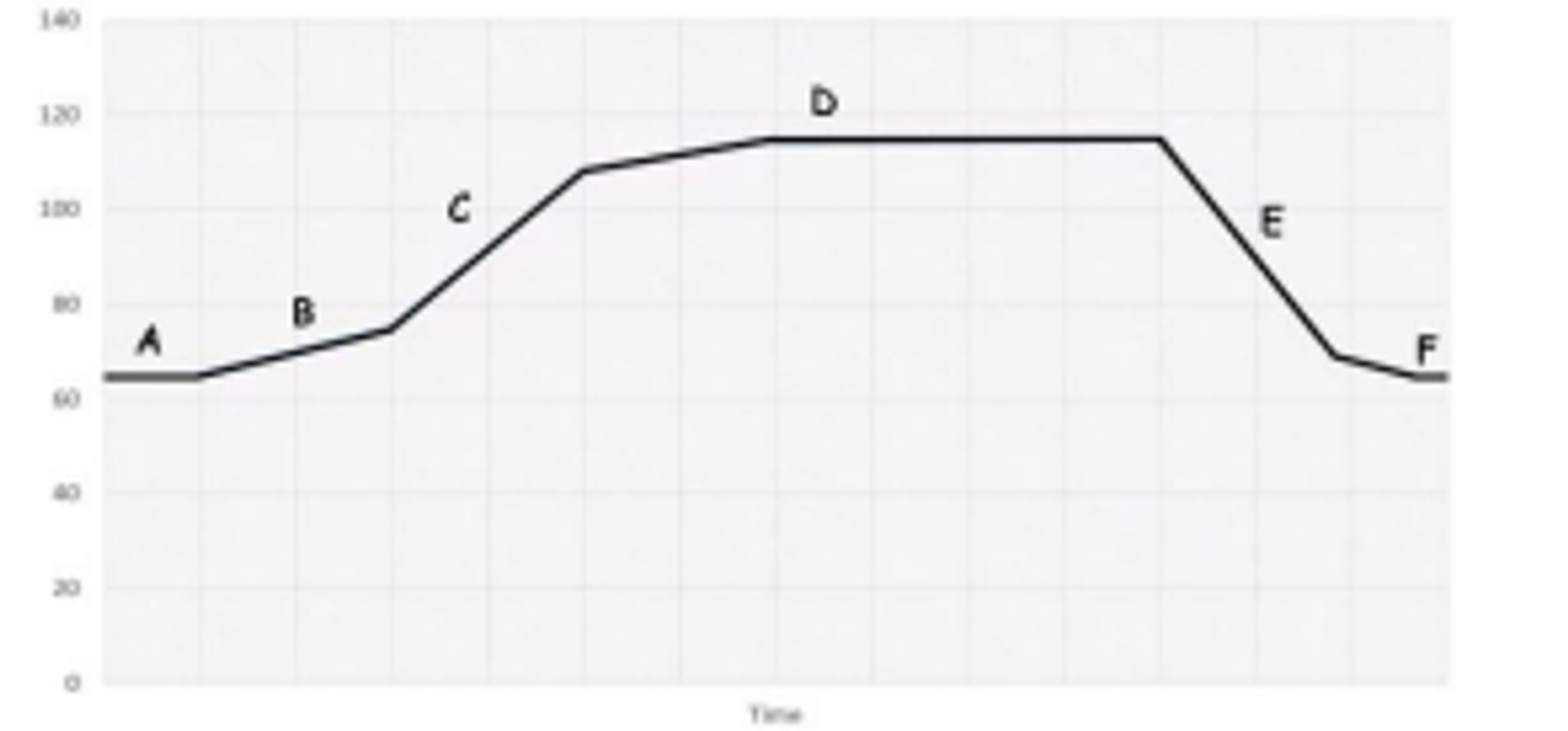
Interpreting Heart Rate Graphs: A = Heart rate is at its lowest at rest B = Immediately before exercise resting heart rate will increase. This is called an anticipatory rise; this is due to the release of the hormone adrenaline. C = When you start to exercise the heart rate increases sharply. This is due to the demand for oxygen. Cardiac output increases D = During continuous exercise heart rate levels because the heart rate is sustaining the amount of oxygen needed. E = Immediately after exercise heart rate decreases sharply, this is because exercise has stopped and the demand for oxygen has reduced. F = Heart rate slowly returns to its resting rate
Lung Volumes:
Tidal Volume: The amount of air inspired (inhaled) or expired (exhaled) in a normal breath Vital Capacity: The maximum amount of air the lungs can expire (breathe out) after the maximum inspiration (breathe in) Expiratory Reserve Volume: The maximum volume of air that can be exhaled. In addition to tidal volume Inspiratory Reserve Volume: The maximum volume of air that can be inhaled. In addition to tidal volume
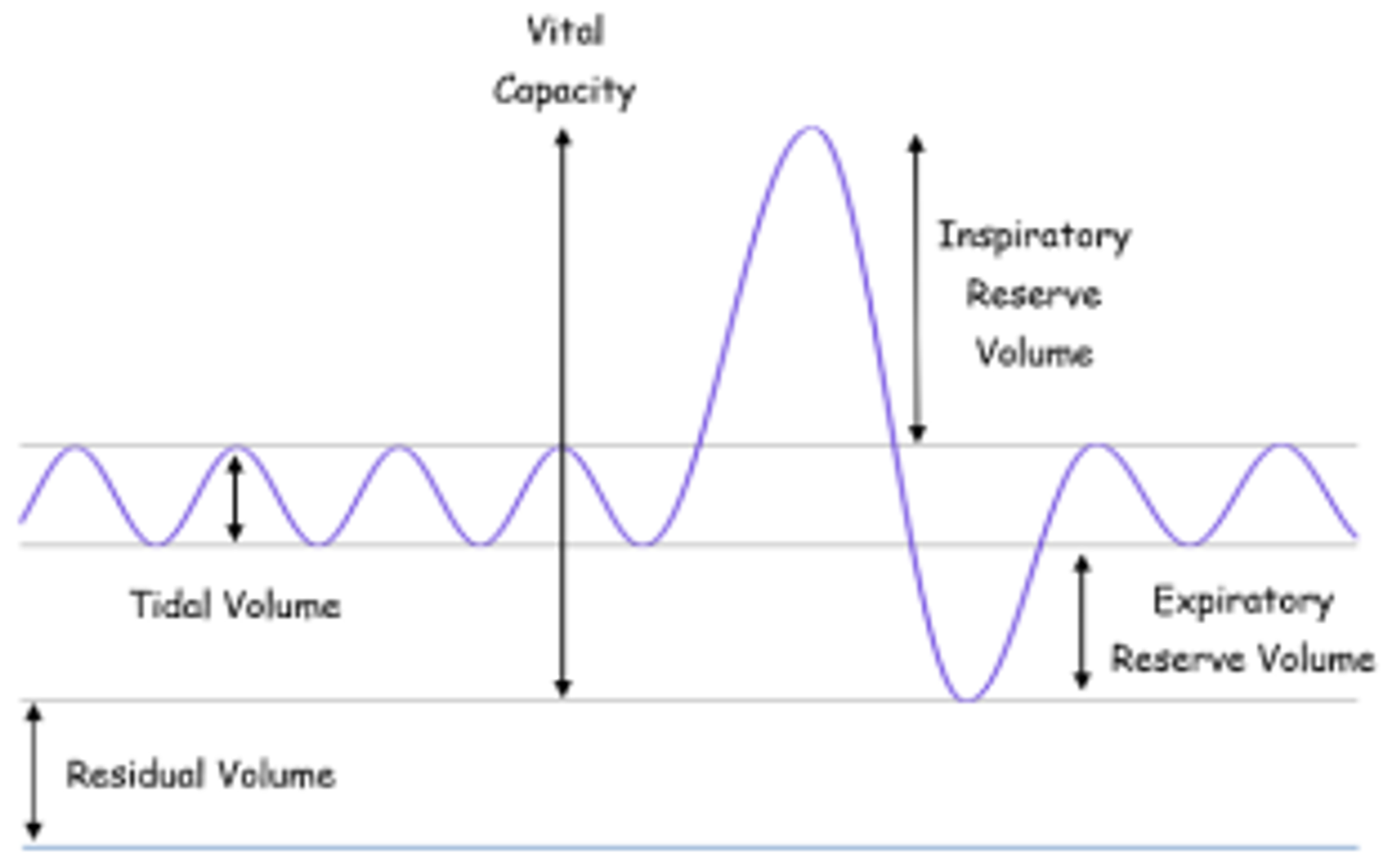
Residual Volume: The amount of air that remains in the lungs even after a forced maximal exhalation
Tidal volume during exercise increases. Breathing rate and depth increase to meet the demand for oxygen, carbon dioxide is also removed