Circuit devices & IV Graphs (Edexcel GCSE Physics Combined Science): Revision Notes
📚Revision Notes
Circuit devices & IV Graphs
Circuit Devices & IV Graphs
Note
IV graphs show how the current (I) flowing through a component changes as you vary the potential difference (V) across it. These graphs help us understand the relationship between voltage, current, and resistance in different components.
Linear Components (Straight Line Graphs)
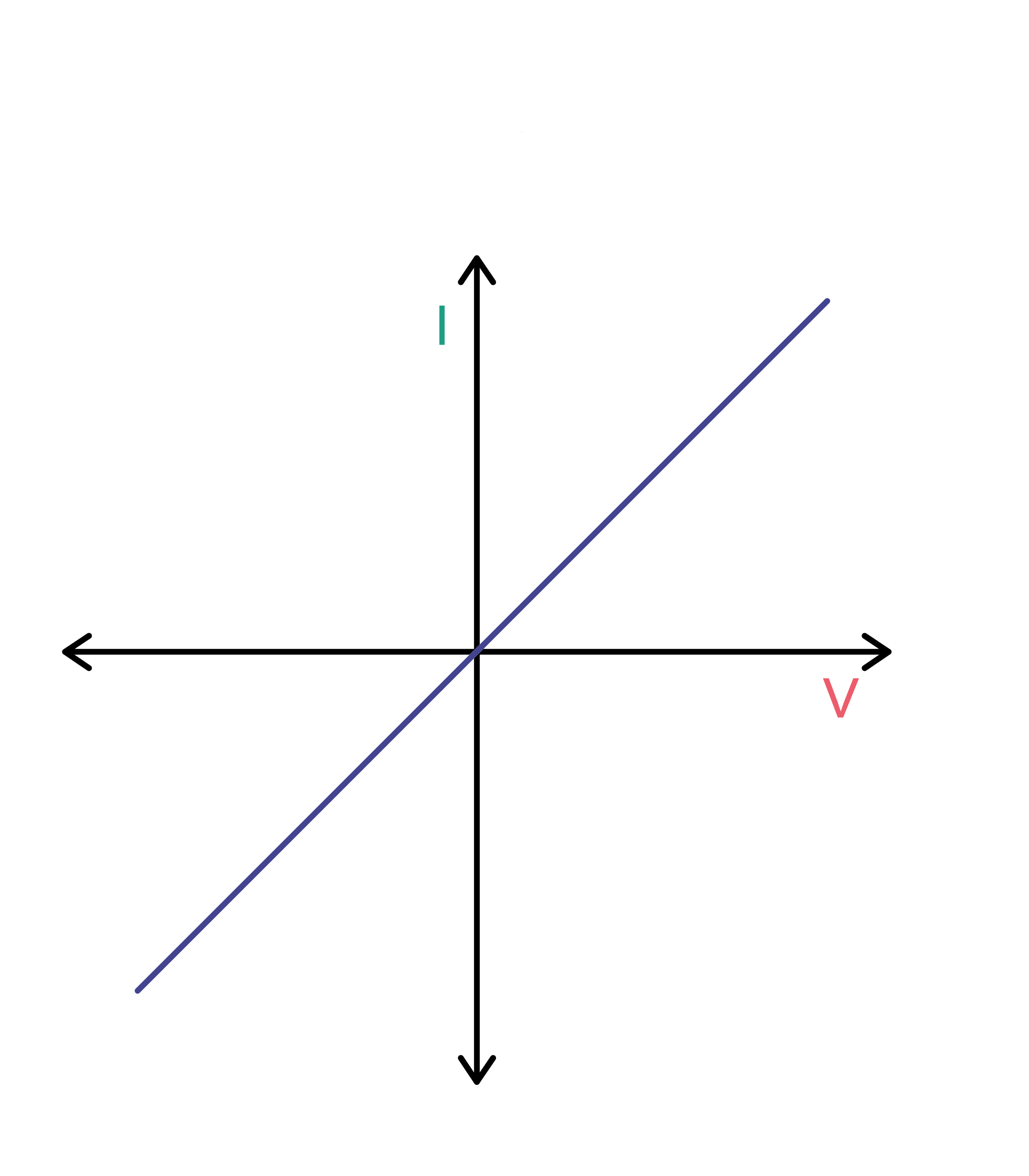
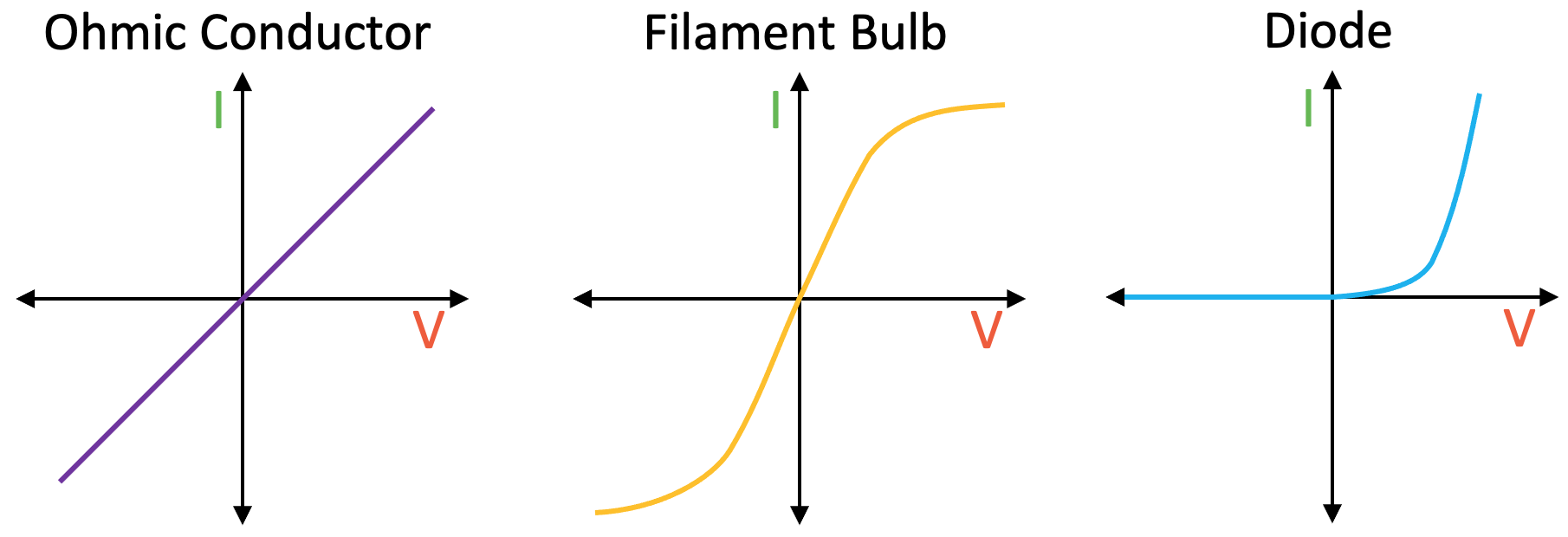
- Linear components have a straight line IV graph, meaning the current through the component is directly proportional to the potential difference across it.
Example
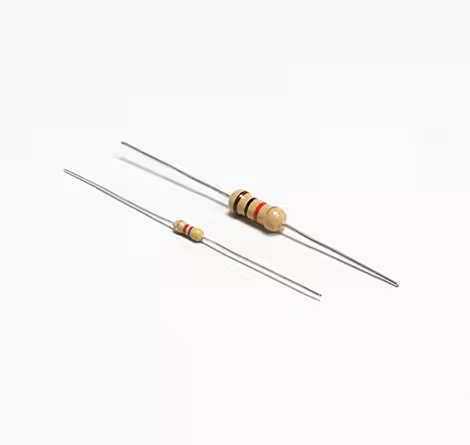
Example: A fixed resistor.
Note
Key Features:
- The line goes through (0,0), showing that if there's no potential difference, there's no current.
- The steeper the graph, the lower the resistance (a steep line means a large current for a small voltage).
- Resistance can be calculated as the inverse of the gradient of the line.
- A shallow slope means higher resistance because it takes more voltage to push the same amount of current.
Non-Linear Components (Curved Graphs)
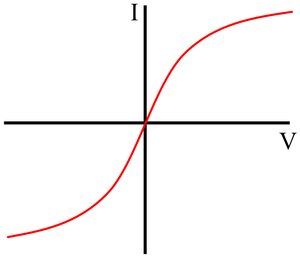
- Non-linear components have a curved IV graph, meaning the resistance changes as the current and voltage change.
Example
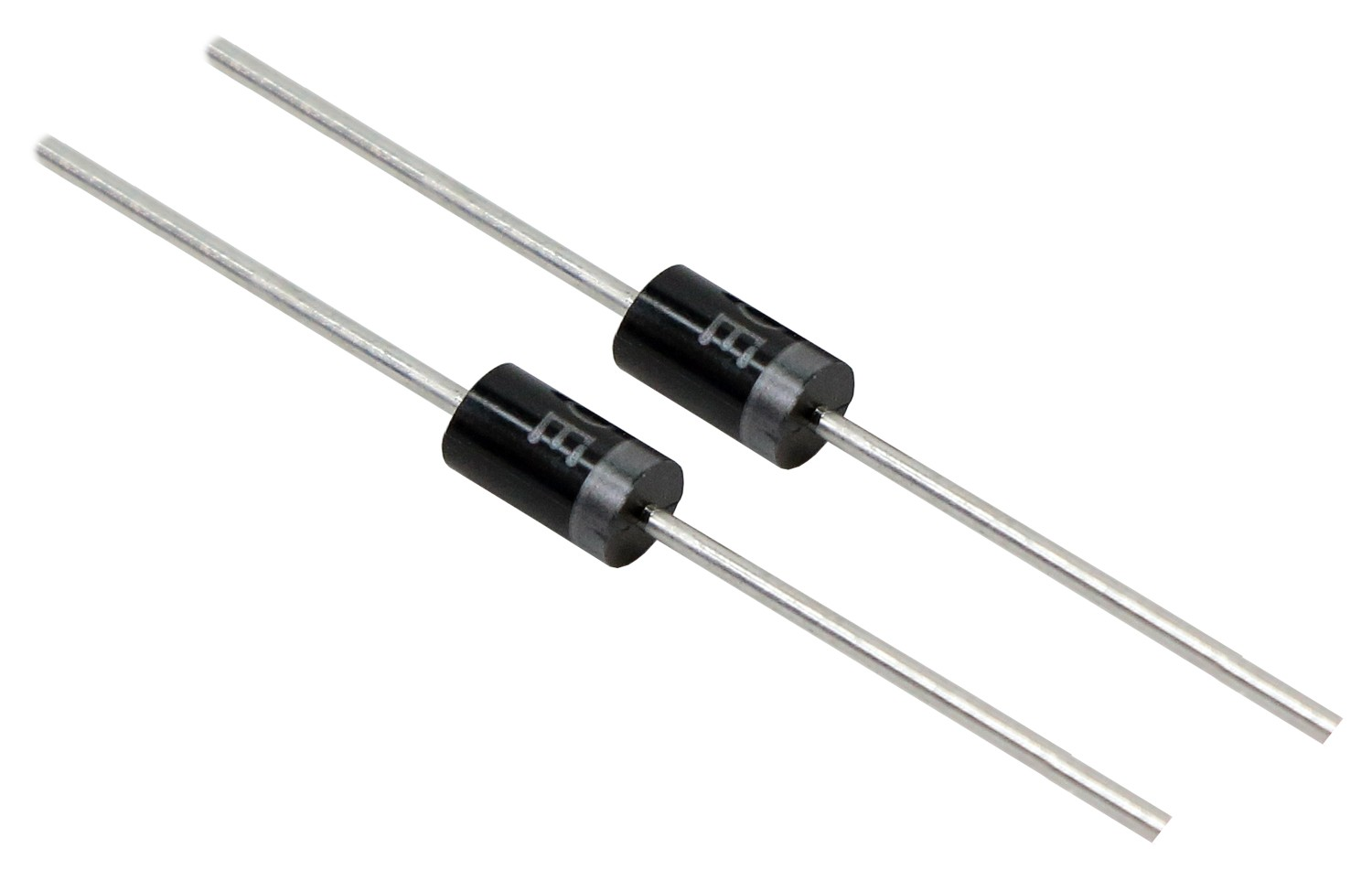
Examples: Filament Lamp, Diode.
Note
Key Features:
- The resistance at any point on the graph can be found by using Resistance = Potential Difference / Current (R = V/I).
- These components don't follow Ohm's Law (where current and voltage are directly proportional).
Filament Lamp:
- As the current increases, the filament gets hotter, causing the resistance to increase.
- This results in a curve where the current increases less at higher voltages (the graph flattens out).
Diode:
- A diode only allows current to flow in one direction.
- The IV graph for a diode shows no current until a certain threshold voltage is reached, after which current flows rapidly.
Special Components
- LDR (Light Dependent Resistor):
- An LDR's resistance depends on the light level.
- In bright light, the resistance falls.
- In darkness, the resistance is highest.
- Common uses: Automatic night lights, outdoor lighting, burglar detectors.
- Thermistor (Temperature Dependent Resistor):
- A thermistor's resistance depends on temperature.
- In hot conditions, the resistance drops.
- In cool conditions, the resistance increases.
- Common uses: Temperature sensors, such as in car engines or thermostats.