Series & parallel circuits (Edexcel GCSE Physics): Revision Notes
📚Revision Notes
Series & parallel circuits
Series and Parallel Circuits
Series Circuits
Note
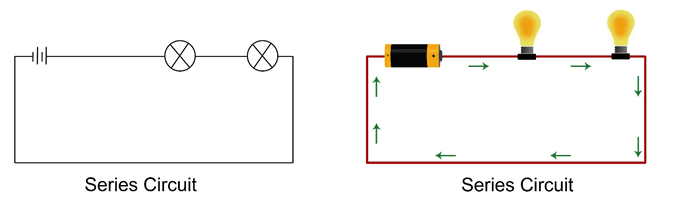
A series circuit is one in which all components are connected in a single loop. For example, in the circuit diagram below, both lamps and the cell are in the same loop of wire. You can add as many components as you like to a series circuit, but they must all be part of this loop. These components can be lamps, resistors, motors, or any other electrical devices.
Circuit Rules
- Component Failure: In a series circuit, electrons must pass through all components. If one component fails or is removed, the entire circuit is broken, and none of the other components will work.
Current in a Series Circuit
- Current Flow: The current in a series circuit depends on the number of cells (batteries). Adding more cells increases the current.
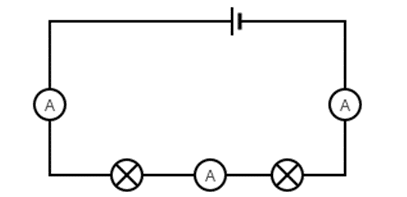
- Constant Current: The current is the same at every point in the circuit. We measure current using an ammeter, which is connected in series with the components. Current is measured in amperes (A).
Note
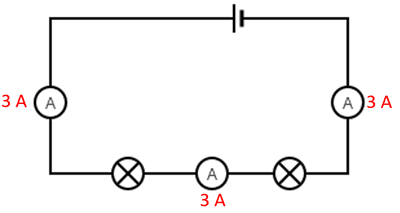
For example, if ammeters can be placed at different points in the circuit the current reading will be the same everywhere. If the current between the lamps is 3 A, it will also be 3 A on both sides of the cell.
Potential Difference in a Series Circuit
- Shared Potential Difference: The potential difference (voltage) in a series circuit is shared among the components. The sum of the potential differences across all components equals the total potential difference provided by the cell or battery:
Note
Formula:
Example
Example If the cell provides 4 V and there are two identical lamps in the circuit, each lamp would have a potential difference of 2 V, adding up to the total 4 V.
Parallel Circuits
Note
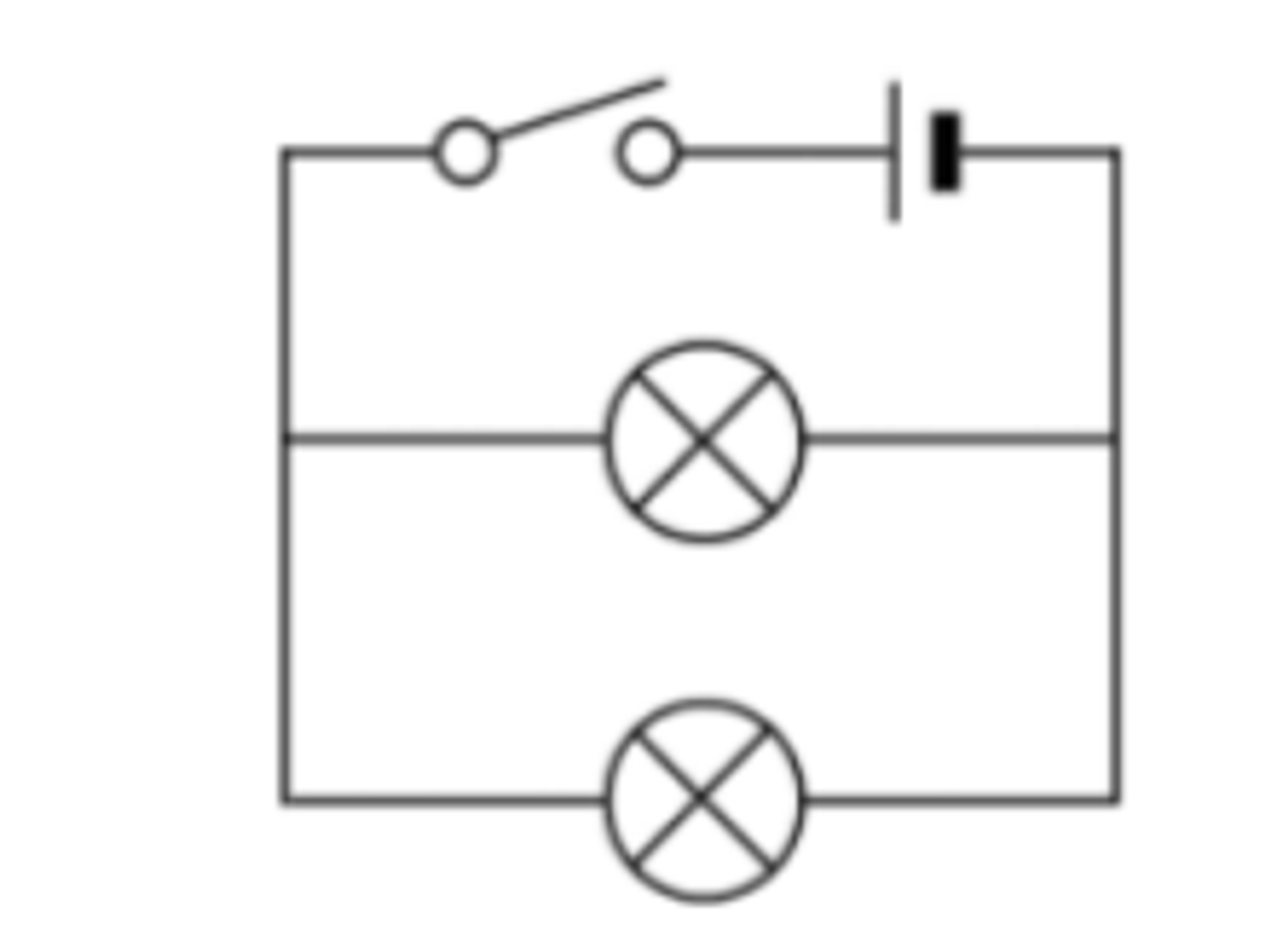
In a parallel circuit, there are multiple paths for the charge to flow, with each component placed in its own loop or branch. This setup allows different parts of the circuit to operate independently.
Note
In a parallel circuit, electrons don't need to pass through every component. If one component in a branch fails, the components in other branches will continue to work.
Current in a Parallel Circuit
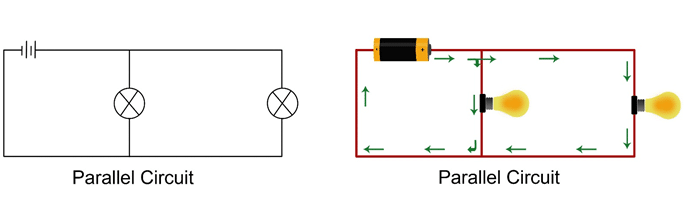
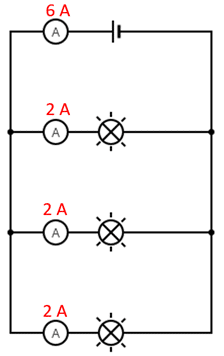
- Shared Current: The total current in a parallel circuit is divided among the different branches. The current flowing into each branch adds up to the total current provided by the power source:
Note
Formula
Note
If the total current is 6 amperes, and there are three identical branches, each branch would carry 2 amperes. The sum of the currents in all branches equals the total current.
- Measuring Current: The current is measured using an ammeter, which should be placed in series with the component being measured.
Potential Difference in a Parallel Circuit
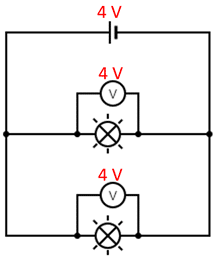
- Equal Potential Difference: In a parallel circuit, the potential difference (voltage) across each branch is the same as the potential difference across the power source:
Note
Formula:
Example
Example If the potential difference across the battery is 4 volts, then each branch, including any lamps or other components, will also have a potential difference of 4 volts.