Materials (Grade 10 NSC Matric Physical Sciences): Revision Notes
📚Revision Notes
Materials
What are materials?
Everything we observe in our environment consists of matter. Matter forms the air we breathe, the ground beneath our feet, the food we consume, and even the living organisms around us, including our own bodies.
Objects can be constructed from different types of materials, which refer to the specific matter from which things are made.
Example
Worked Example: Understanding Material Composition
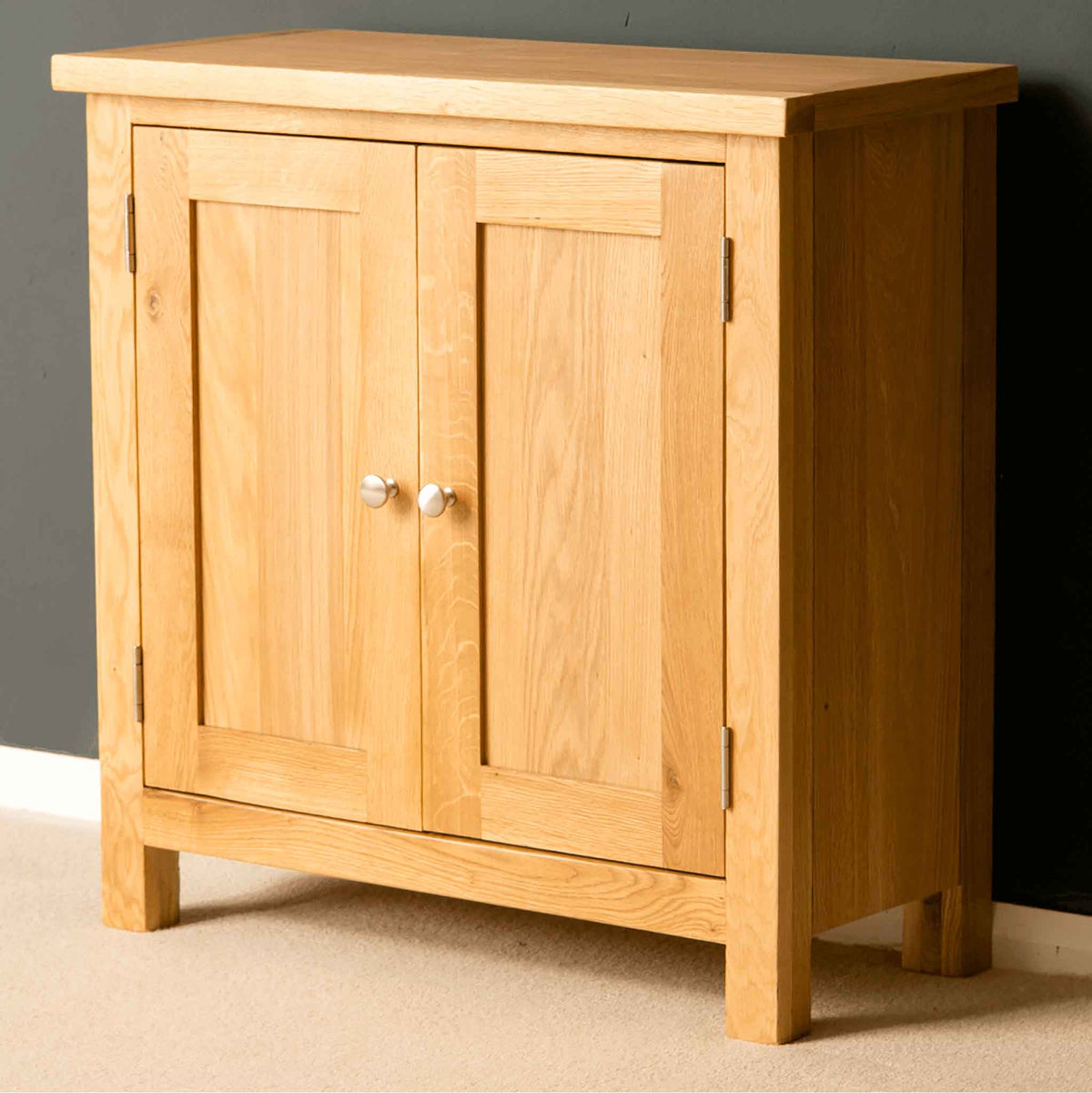
Consider a cupboard - this single object is constructed from various materials including:
- Wood (for the main structure)
- Metal nails (for joining pieces together)
- Metal hinges (for door movement)
- Plastic or metal knobs (for opening doors)
Each material contributes specific properties that make the cupboard functional and durable.
Understanding how these different materials work together is essential for practical applications.
Important
The properties of materials directly influence the characteristics of the finished object. In the cupboard example, the strength properties of wood and metals contribute to making the cupboard sturdy and long-lasting.
This demonstrates why understanding material properties is crucial for their use in homes, industry, and other applications.
Properties of materials
Materials possess various properties that determine their suitability for different purposes. Here are the key properties you need to understand:
Strength properties
Materials can be classified as strong or weak based on their ability to resist forces:
- Strong materials resist bending and breaking (examples: bricks, rocks)
- Weak materials bend easily under pressure (examples: clothes, paper)
Thermal and electrical conductivity
- Thermal conductors are materials that allow heat to pass through them easily (examples: metals like iron and copper)
- Electrical conductors allow electricity to flow through them (examples: copper wire used in electrical systems)
Note
Both thermal and electrical conductivity are often found together in the same materials, particularly metals. This is why copper is used both for cooking pots (thermal conductivity) and electrical wiring (electrical conductivity).
Malleability and brittleness
- Brittle materials break easily when force is applied (examples: plastic, glass)
- Malleable materials can be shaped and formed into different configurations without breaking (examples: clay, dough)
Ductility
Ductile materials can be stretched and formed into long, thin wires without breaking (examples: copper used for electrical wiring)
Magnetic properties
Magnetic materials possess magnetic fields and are attracted to magnets (examples: iron, steel)
Density
Density represents the mass per unit volume of a material:
Dense materials feel heavy for their size (examples: concrete, stones)
Boiling and melting points
The boiling and melting points indicate the temperatures at which substances change from one state to another. These properties help scientists classify substances as solids, liquids, or gases at specific temperatures.
Classification of matter
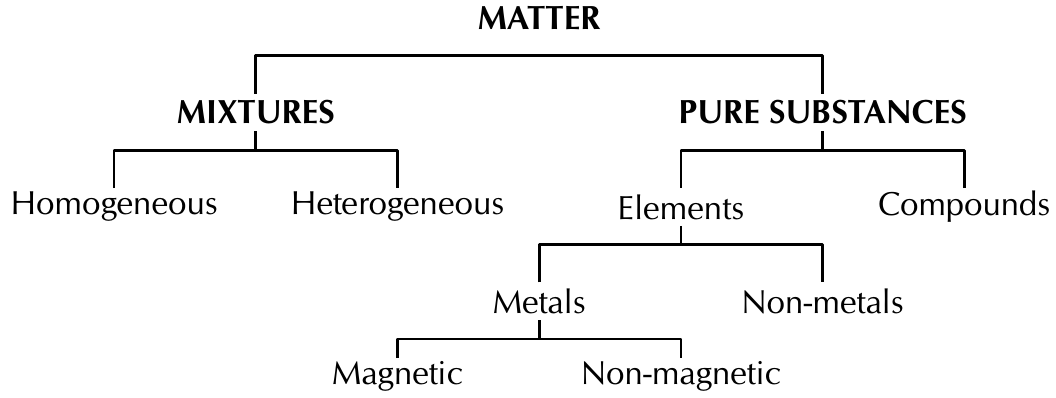
Matter can be systematically organised according to its properties and composition. This classification system helps us understand the relationships between different types of materials.
Note
Understanding the Classification Hierarchy
The classification follows this systematic approach:
- Matter divides into two main categories: mixtures and pure substances
- Mixtures are further classified as homogeneous (uniform composition) or heterogeneous (non-uniform composition)
- Pure substances include elements and compounds
- Elements can be metals or non-metals
- Metals are further classified as magnetic or non-magnetic
This classification system provides multiple ways to categorise materials. For example, materials can be grouped based on whether they conduct electricity effectively or poorly.
Practical application: analysing food products
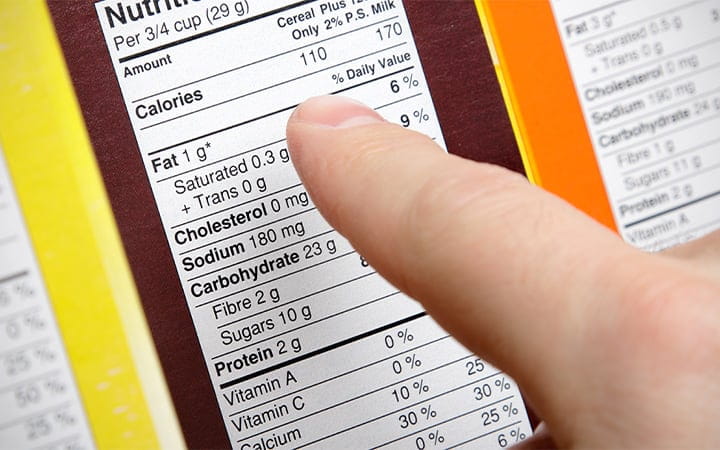
Understanding materials becomes practical when examining everyday items like food products. Food labels provide valuable information about the materials (ingredients) used in manufacturing.
Example
Practical Example: Reading Food Labels
When examining food labels, you can identify various materials including:
- Natural ingredients from plants and animals
- Preservatives and additives for extending shelf life
- Flavouring compounds for taste enhancement
- Artificial alternatives to natural ingredients
This analysis helps consumers make informed choices about nutrition and health.
This demonstrates the practical importance of understanding material composition in everyday life.
Summary
Key Points to Remember:
- Materials are the matter from which all objects are constructed, and their properties determine the object's characteristics
- Key material properties include strength, thermal/electrical conductivity, malleability, ductility, magnetic behaviour, density, and phase transition temperatures
- Matter classification follows a hierarchy from general (mixtures vs pure substances) to specific (magnetic vs non-magnetic metals)
- Understanding material properties is essential for practical applications in construction, industry, and everyday life
- Food labels provide real-world examples of how different materials (ingredients) combine to create products we use daily