Mixtures (Grade 10 NSC Matric Physical Sciences): Revision Notes
📚Revision Notes
Mixtures
When you look around your everyday environment, almost everything you see consists of mixtures rather than pure substances. The air you breathe contains multiple gases blended together, while the food you eat combines various ingredients in different ways.
What is a mixture?
A mixture is a blend of two or more different substances that are not chemically joined together. No chemical reaction takes place when substances form a mixture, which means each substance maintains its original properties.
Note
Understanding mixtures is essential because they can be found everywhere in nature and in manufactured products. From the soil beneath your feet to the fizzy drinks you enjoy, mixtures surround us constantly.
Key properties of mixtures
All mixtures share three important characteristics that distinguish them from pure substances:
Substances are not in a fixed ratio
When creating a mixture, you can combine substances in any proportion you choose. For instance, if you add sand to water, it doesn't matter whether you use 20g, 40g, or 100g of sand - the result will still be called a sand-water mixture. This flexibility in proportions is a defining feature of all mixtures.
Each substance keeps its physical properties
The individual components in a mixture retain their original characteristics completely. When sand mixes with water, the sand remains sand with all its properties intact, and the water stays water with its properties unchanged. This means you could theoretically identify each component by testing its individual properties.
Important
Since no chemical bonds form between substances in a mixture, each component maintains its identity completely. This is the key difference between mixtures and compounds.
Components can be separated by mechanical means
Since no chemical bonds form between the substances in a mixture, you can separate them using physical methods. The sand and water mixture mentioned earlier can be separated simply by filtering - the water passes through while the sand remains behind. This separation doesn't require any chemical processes, just physical techniques.
Types of mixtures
Mixtures can be classified into two main categories based on their appearance and the distribution of their components.
Heterogeneous mixtures
A heterogeneous mixture is one where the different substances are not evenly distributed, creating a non-uniform appearance throughout the mixture. When you examine a heterogeneous mixture, you can usually identify the separate components with your naked eye.
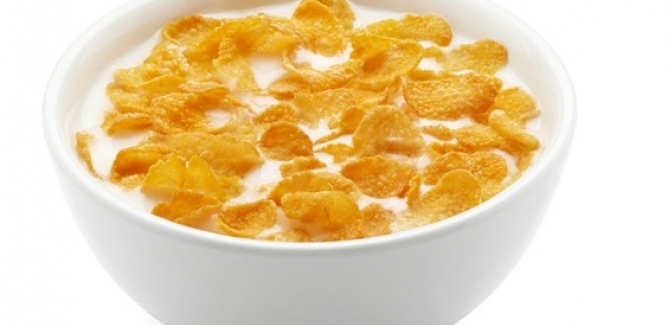
Consider cereal in milk as a perfect example. You can clearly see the individual cereal pieces floating in the milk, and different areas of your bowl contain different amounts of cereal. The mixture lacks uniformity because the components remain visibly distinct.
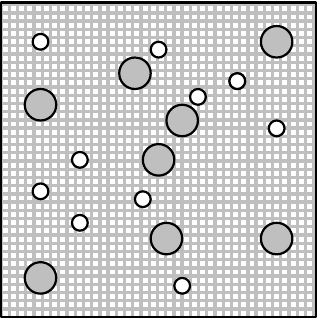
The particle distribution in heterogeneous mixtures shows clear separation between different substances. Some areas contain more of one component while other areas contain more of another component, creating the non-uniform characteristic.
Note
Soil provides another excellent example of a heterogeneous mixture. It contains pebbles, plant matter, sand, and various other components that remain separate and visible when you examine a handful closely.
Special names for heterogeneous mixtures
Depending on the phases of matter involved, heterogeneous mixtures receive specific names:
| Phases of matter | Name of mixture | Example |
|---|---|---|
| liquid-liquid | emulsion | oil in water |
| solid-liquid | suspension | muddy water |
| gas-liquid | aerosol | fizzy drinks |
| gas-solid | smoke | smog |
These specialized terms help scientists communicate precisely about different types of heterogeneous mixtures they encounter in research and everyday life.
Homogeneous mixtures
A homogeneous mixture appears uniform throughout, with components so evenly distributed that you cannot distinguish individual substances visually. The different parts blend together completely, creating a consistent appearance and composition.

Coffee without milk demonstrates a perfect homogeneous mixture. The dissolved coffee particles spread evenly through the water, creating a uniform brown liquid where you cannot see individual components.
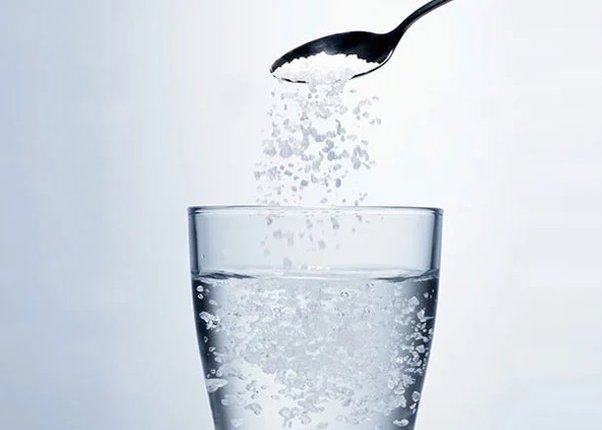
When salt dissolves in water, it creates another classic homogeneous mixture. The salt particles distribute evenly throughout the water, making every part of the solution identical. You cannot see separate salt crystals because they have dissolved completely and spread uniformly.
Note
The air we breathe represents another important homogeneous mixture. Different gases like nitrogen, oxygen, and carbon dioxide exist in a constant ratio and blend so thoroughly that we cannot distinguish them without special equipment.
Alloys provide an interesting example of solid homogeneous mixtures. Steel consists mainly of iron combined with small amounts of carbon for hardness, manganese for strength, and chromium to prevent rusting. These elements blend so thoroughly during manufacturing that the resulting material appears uniform throughout.
Important
Remember the key difference: if you can see separate components with your naked eye, it's heterogeneous. If it looks the same throughout, it's homogeneous.
Worked example: Identifying mixture types
Example
Worked Example: Classifying Mixtures
Question: For each of the following mixtures, state whether it is homogeneous or heterogeneous: a. sugar dissolved in water b. flour and iron filings (small pieces of iron)
Solution approach:
Step 1: Review the definitions
- Heterogeneous: non-uniform, components visible
- Homogeneous: uniform appearance, components not visible
Step 2: Examine each mixture for visible components
- a. When sugar dissolves in water, you cannot see the individual sugar crystals
- b. You can easily identify both flour particles and iron pieces in the mixture
Step 3: Determine uniformity
- a. Sugar water appears the same throughout - uniform composition
- b. Some areas contain more flour while others contain more iron filings - non-uniform
Step 4: Classify each mixture
- a. Sugar dissolved in water = homogeneous mixture
- b. Flour and iron filings = heterogeneous mixture
This systematic approach works for any mixture classification problem you encounter in exams.
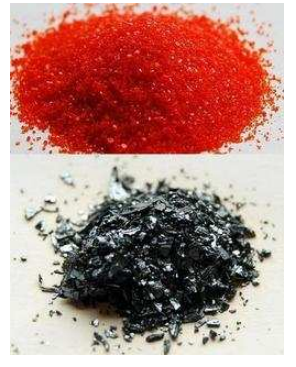
When different substances exist separately before mixing, you can often predict whether the resulting mixture will be homogeneous or heterogeneous based on their properties and how they interact.
Summary
Key Points to Remember:
- Mixtures contain two or more substances that are not chemically bonded together
- Heterogeneous mixtures have visible, separate components and non-uniform appearance
- Homogeneous mixtures appear uniform throughout with invisible individual components
- All mixture components can be separated using physical methods, not chemical reactions
- Special names exist for heterogeneous mixtures: emulsions, suspensions, aerosols, and smoke