Consequences of Nutritional Imbalance (VCE SSCE Health and Human Development): Revision Notes
📚Revision Notes
Consequences of Nutritional Imbalance
Introduction
Good nutrition is vital for everyone, but it becomes especially important during youth. This period represents the third fastest stage of growth and development across the entire lifespan. During the adolescent growth spurt, young people experience significant physical changes.
Note
On average, females grow approximately 16 cm in height and gain 16 kg in weight, whilst males typically grow about 20 cm in height and gain 20 kg in weight. These rapid changes demonstrate why adolescence is such a critical developmental period.
These rapid changes mean that a balanced diet rich in nutritious foods is essential to fuel the body during this critical time.
Unfortunately, many young Australians do not consume a balanced diet and therefore fail to get sufficient nutrients during this important developmental period. The major nutrients needed during youth can be found in various food sources, including fruits and vegetables.
Current dietary patterns among Australian youth
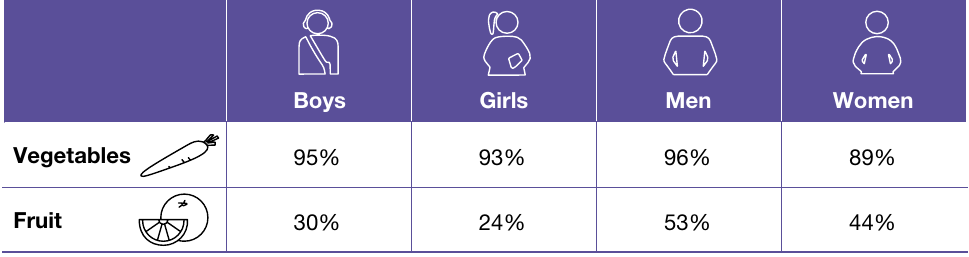
According to the Australian Institute of Health and Welfare (AIHW) report Australia's Health 2020, many Australians are not eating the recommended amount of fruit and vegetables on a daily basis. The recommendation states that Australians should consume two serves of fruit and five serves of vegetables per day.
Important
Concerning Statistics on Fruit and Vegetable Consumption
The data reveals concerning patterns:
- 95 per cent of boys and 93 per cent of girls aged 5–14 did not eat the recommended daily serves of vegetables
- 30 per cent of boys and 24 per cent of girls did not meet the recommended daily serves of fruit
- For adults aged 18–64, 96 per cent of men and 89 per cent of women did not eat the recommended daily serves of vegetables
- 53 per cent of men and 44 per cent of women did not eat the recommended serves of fruit
A lack of sufficient fruit and vegetables may lead to deficiency in certain nutrients. For example, fruits and vegetables provide excellent sources of B vitamins (including folate), iron, water and fibre. A low intake of fruits and vegetables may therefore result in underconsumption of these essential nutrients.
Note
According to the Better Health Channel, one in three teenagers purchases unhealthy takeaway food every day. When comparing meals prepared at home to those purchased outside the home, takeaway food is almost always higher in fat, salt and sugar. It is also usually lower in nutrients such as calcium and iron, and served in larger portions, which means more kilojoules.
If nutritional intake during youth is not balanced and nutrients are not consumed in appropriate proportions, the risk of a range of negative consequences increases. These consequences can occur as a result of over-consumption or under-consumption of specific nutrients and can happen in both the short and long term.
Short-term consequences of nutritional imbalance
Short-term consequences are those that can occur relatively quickly after nutritional imbalances develop. These effects may appear within days, weeks or months of poor dietary habits.
Important
Main Short-term Consequences
The main short-term consequences of nutritional imbalance include:
- Fatigue
- Constipation
- Dehydration
- Hypertension
- High blood cholesterol
Each of these conditions can significantly impact youth health and wellbeing across multiple dimensions.
Insufficient B-group vitamins and iron
B-group vitamins and iron are essential nutrients that contribute to energy production in the body. When these nutrients are not consumed regularly, energy levels may decrease, initially affecting physical health and wellbeing.
Apart from the inability to perform everyday tasks due to extreme feelings of fatigue, a young person may be less likely to participate in exercise. This reduction in physical activity will decrease fitness levels, further affecting physical health and wellbeing.
Note
The Cascade Effect of Fatigue
Feelings of fatigue create a domino effect across all dimensions of health:
- Physical: Reduced ability to exercise and perform daily tasks
- Social: Less likely to socialise with friends
- Mental: Decreased concentration levels in school
- Spiritual: Reduced sense of belonging when withdrawing from group activities
Insufficient fibre
Insufficient fibre increases the risk of constipation. There are two types of fibre, each playing an important role in digestive health:
- Soluble fibre allows more water to remain in the stools, making waste softer and easier to pass through the intestines
- Insoluble fibre adds bulk to faeces, assisting in the removal of waste products
Constipation interrupts the efficient functioning of the body and its systems, affecting physical health and wellbeing. However, it could also become quite embarrassing for the individual and lead to increased stress levels, decreasing mental health and wellbeing.
Insufficient water
Water is essential for the optimal functioning of body systems throughout the lifespan. Common symptoms of dehydration include:
- Thirst and dry mouth
- Headaches
- Decreased blood pressure
- Dizziness and fainting
- Tiredness
- Constipation
Important
In the most severe cases, dehydration can lead to unconsciousness and death. Dehydration ultimately impacts negatively on the efficient functioning of the body and its systems, therefore decreasing physical health and wellbeing.
Excessive sodium consumption
Hypertension, otherwise known as high blood pressure, can result from excessive salt or sodium intake. Sodium draws fluid from the cells into the bloodstream, increasing blood volume and therefore increasing blood pressure.
Hypertension predominantly affects physical health and wellbeing as it reduces the efficient functioning of the heart and blood vessels, potentially causing long-term damage. Long-term hypertension increases the risk of cardiovascular disease and stroke.
Excessive saturated and trans fat
Excessive saturated and trans fats in the diet can increase the body's cholesterol level. Too much cholesterol circulating within the bloodstream leads to fatty deposits developing in the arteries.
Note
An individual may be unaware they have high cholesterol, and therefore its impacts are on physical health and wellbeing in the same way that hypertension impacts the body. Over time, this can contribute to more serious cardiovascular problems.
Glycaemic index
The amount of glucose contained within carbohydrate-rich foods, and how much such foods affect the levels of blood glucose, is measured using a system called the glycaemic index (GI). This system rates foods from 1 to 100 based on how quickly they cause blood glucose levels to rise.
Understanding GI categories
- High GI foods (score of more than 70): These cause blood glucose to increase sharply. Examples include white bread
- Low GI foods (score less than 55): These have a more sustained impact on blood glucose. Examples include milk
- Medium GI foods (score between 55 and 70): Examples include basmati rice
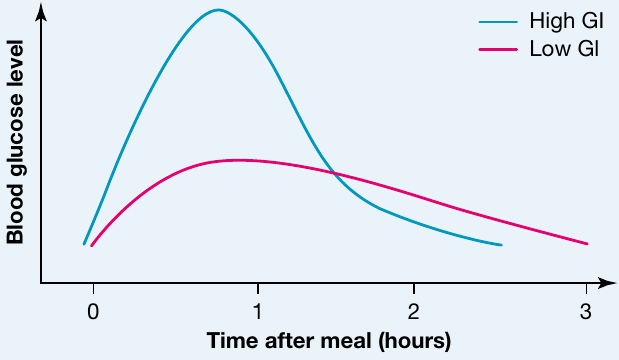
Eating foods with a low GI rating gives a more sustained energy release and can therefore assist in carrying out the biological processes required during the day. In contrast, high GI foods give the body a quick hit of glucose that then drops off just as quickly. As blood glucose levels decrease, hunger increases. As a result, high GI foods can contribute to overeating.
Example
Practical Example: Comparing GI Impact
Scenario: A student eats white bread (high GI) for breakfast versus porridge (low GI).
White bread (High GI - 75):
- Blood glucose spikes rapidly within 30 minutes
- Energy peaks quickly but drops sharply by mid-morning
- Hunger returns quickly, leading to snacking before lunch
Porridge (Low GI - 55):
- Blood glucose rises gradually over 1-2 hours
- Sustained energy release throughout the morning
- Feeling of fullness maintained until lunch time
This demonstrates why low GI foods provide better sustained energy for students during school hours.
Long-term consequences of nutritional imbalance
As well as contributing to short-term consequences, nutrient imbalance is associated with many long-term health consequences. Many of these long-term consequences are associated with overconsumption of nutrients.
Important
Critical Period for Habit Formation
The teenage years are critical in forming lifelong eating habits. However, many teenagers are forming unhealthy food consumption habits. For example, four out of ten young people consume burgers and soft drinks on any given day (ABS, 2014). This teenage diet is putting young people at risk of developing chronic health conditions later in life.
The main long-term consequences include tooth decay, overweight or obesity, cardiovascular disease, osteoporosis, anaemia, underweight and colorectal cancer.
Tooth decay
Overconsumption of sugar (simple carbohydrates)
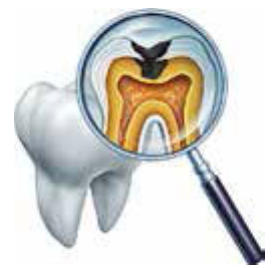
Sugars are a type of simple carbohydrate found naturally in some foods such as fruit and honey, and added to many processed foods such as cakes and soft drinks. Sugars are a food source for bacteria in the mouth. These bacteria produce acids that can contribute to dental decay and the development of dental caries.
Dental caries refers to the decay of teeth caused by a breakdown in the tissues that make up the tooth. Dental caries impact physical health and wellbeing as they may cause periodontitis (inflammation and infections of tissue in the mouth) and can also lead to loss of teeth.
Note
Impact Across Health Dimensions
An individual suffering tooth decay may feel embarrassed and have low self-esteem, impacting negatively on mental health and wellbeing. They may also withdraw from social activities, reducing opportunities for communication and the development of relationships, impacting on social health and wellbeing.
Overweight and obesity

Overconsumption of saturated and trans fats, carbohydrates and proteins
Carbohydrates, fats and proteins are essential for energy production, but if eaten to excess can be stored as adipose (fat) tissue. Over time, this can lead to weight gain, overweight and obesity.
The most immediate consequences of overweight and obesity in youth include:
- Social discrimination (associated with poor self-esteem and depression)
- Negative body image
- Eating disorders
These all have an impact on mental health and wellbeing.
Overweight youth are more likely to develop sleep apnoea and have a reduced ability to exercise, which decreases fitness levels and has a negative impact on physical health and wellbeing.
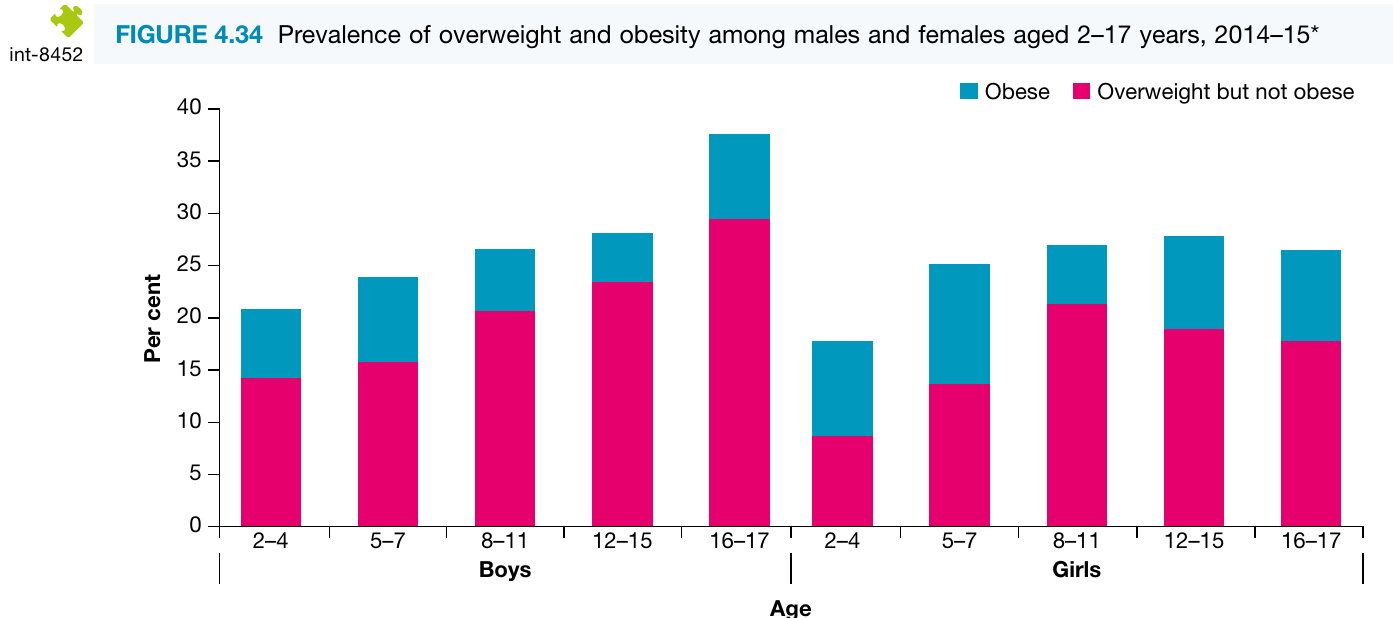
Note
Overweight and obesity rates have been steadily increasing for youth over time. The data shows that the highest combined overweight and obesity rates occur in the 16-17 year age group for boys (approximately 37 per cent).
Cardiovascular disease
Saturated and trans fats increase the process of atherosclerosis by increasing levels of low-density lipoprotein (LDL) in the blood. LDL is a type of cholesterol that can stick to the walls of blood vessels and cause the blood vessels to narrow. This process can eventually restrict blood flow or stop it completely.
Important
Atherosclerosis is the underlying cause of many types of cardiovascular disease, including heart attack and stroke, negatively affecting physical health and wellbeing.
Hypertension and cardiovascular disease
Overconsumption of sodium
Excessive sodium in the diet can lead to hypertension. Long-term hypertension increases the risk of stroke and heart attack and therefore cardiovascular disease, as well as kidney disease.
Apart from the obvious physical health and wellbeing impacts, chronic disease may impact on an individual's relationships and opportunities for socialisation, as well as causing stress and anxiety, therefore impacting on both social and mental health and wellbeing.
Osteoporosis
Excess sodium intake is also responsible for calcium excretion into the urine, and therefore leads to demineralisation of bones and osteoporosis, affecting physical health and wellbeing. Women are at a higher risk than men later in life.
Note
Osteoporosis sufferers are often anxious about falling and may restrict their social activities, impacting on social and mental health and wellbeing.
Underconsumption of calcium
Calcium is an essential nutrient during the growth periods of youth. It is responsible for building bone strength by increasing bone density. If calcium is underconsumed during this period, an individual is at risk of having porous, weak bones later in life, as well as an increased risk of osteoporosis. This increases the risk of fractures and breaks, impacting negatively on physical health and wellbeing.
Anaemia
Underconsumption of iron, folate, vitamin C, vitamin B12
These vitamins and iron are required for the production of red blood cells. Youth is a period of rapid growth and red blood cells are required to keep up with energy demands. If these nutrients are underconsumed, anaemia can occur.
Note
Anaemia causes tiredness and weakness and may also lead to withdrawal from activities, impacting on physical and social health and wellbeing. Constant feelings of tiredness may also impact negatively on emotional health and wellbeing, as they may generate feelings of isolation and helplessness.
Underweight
Although overweight and obesity are significant issues for youth, underweight is also a concern. Underweight often indicates undernourishment, which means the nutrients required for optimal health and wellbeing are not present.
Severe undernourishment, which occurs in many individuals with an eating disorder, can contribute to long-term developmental problems. Growth may be slowed as the nutrients required for hard tissue formation are not present. Although peak bone mass is not reached until early adulthood, bone density increases significantly during youth.
Important
Essential Nutrients for Bone Development
Calcium, phosphorus and vitamin D are all essential nutrients for this process. If the intake of these nutrients is deficient, weakened bones may be the result. In many cases, this will develop into osteoporosis later in life.
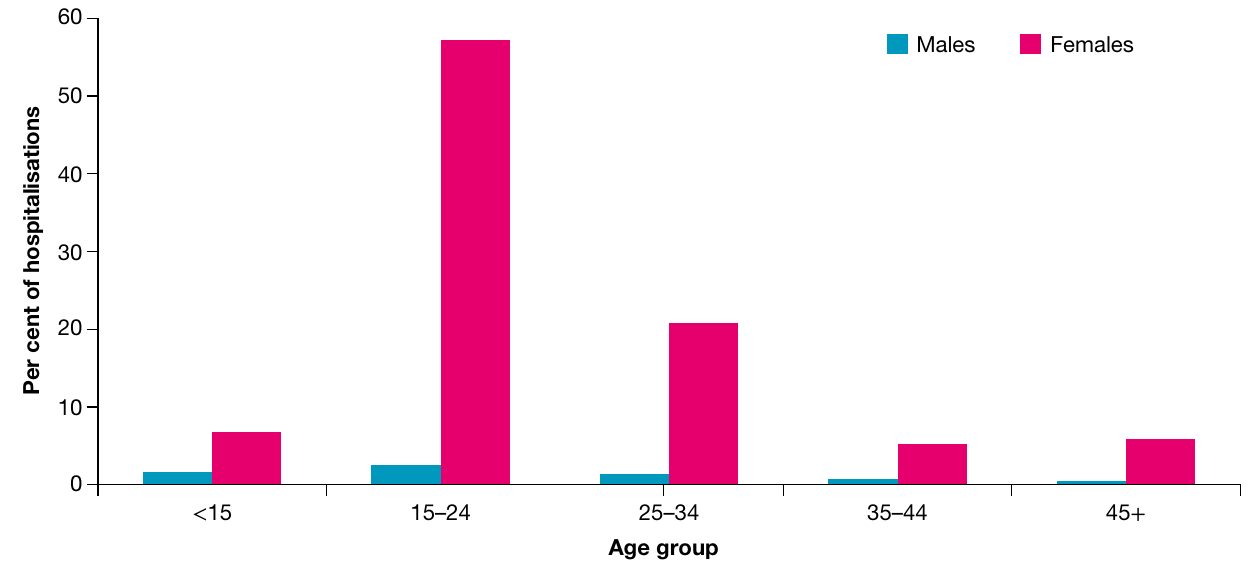
Eating disorders may occur at any stage of life, but research suggests that they occur most often among young women. The data shows that females aged 15-24 have the highest hospitalisation rates for eating disorders (approximately 57 per cent of hospitalisations in this age group).
Colorectal cancer
Underconsumption of fibre
Insoluble fibre adds bulk to faeces, assisting in the removal of waste products. If these waste products are not removed, there is a greater risk of abnormal and uncontrolled cell growth and risk of tumours and colorectal cancer.
Remember!
Summary
Key Points to Remember:
-
Nutritional imbalance can have both short-term and long-term consequences on youth health and wellbeing. Short-term effects may appear within days or weeks, whilst long-term effects may not manifest for years.
-
Short-term consequences include fatigue, constipation, dehydration, hypertension and high blood cholesterol. Each of these can affect multiple dimensions of health and wellbeing, not just physical health.
-
Long-term consequences include tooth decay, overweight and obesity, cardiovascular disease, osteoporosis, anaemia, underweight and colorectal cancer. The teenage years are critical for forming lifelong eating habits that can prevent these conditions.
-
The glycaemic index (GI) measures how quickly carbohydrate-rich foods affect blood glucose levels. Low GI foods provide sustained energy release, whilst high GI foods cause rapid spikes and drops in blood glucose, potentially contributing to overeating.
-
Many young Australians are not meeting recommended dietary guidelines. The vast majority do not consume enough vegetables (93-96 per cent), and significant numbers fall short on fruit consumption (24-53 per cent). This puts them at risk of nutrient deficiencies and associated health consequences.