Key Skills (VCE SSCE Health and Human Development): Revision Notes
📚Revision Notes
Key Skills
This revision note covers the key skills you need to master for understanding nutrition and its impact on youth health and wellbeing. These skills are essential for your VCE Health and Human Development studies and will help you analyse how nutrients, food choices, and various factors influence the health of young people.
Note
These key skills form the foundation of your nutrition knowledge and will be tested throughout your assessments. Mastering these skills requires practice in linking concepts together and applying them to real-world scenarios.
Understanding nutrient functions and their health impacts
One of the most important skills in nutrition is being able to explain what different nutrients do in the body and how they affect overall health and wellbeing. This requires you to understand both the primary functions of nutrients and their broader impacts on physical, mental, social, and emotional health.
Important
When examining how nutrients affect health and wellbeing, you should consider three key categories:
- Protective nutrients: These have positive effects on health outcomes (such as fibre reducing disease risk)
- Risk nutrients: These can have negative effects when consumed in excess (such as saturated fats increasing cardiovascular disease risk)
- Essential nutrients: These are necessary for normal bodily functions but require balance
Identifying nutrients and their functions
When answering questions about nutrients, you need to link three elements together: the food source, the major nutrient it contains, and the function of that nutrient including its health impact.
Example
Worked Example: Analysing Breads and Cereals
If asked about breads and cereals, you would:
- Identify the major nutrient: carbohydrates
- State the function: serve as the body's primary energy source
- Include the health implication: excessive carbohydrate consumption can lead to weight gain and obesity
This three-step approach ensures you address all components of the question.
Protective nutrients and their benefits
Protective nutrients are those that have demonstrable positive effects on health and wellbeing. Fibre is an excellent example of a protective nutrient.
Fibre performs multiple beneficial functions in the body:
- Slows glucose absorption in the digestive system, providing more stable energy levels
- Creates a feeling of fullness, which helps prevent overeating and assists with weight management
- Absorbs water in the digestive tract, adding bulk to waste material
- Promotes regular bowel movements, reducing the risk of constipation
- Decreases the likelihood of developing colorectal cancer in the long term
Note
Exam tip: When explaining nutrient functions, always connect the biological function to a specific health outcome. Don't just say "fibre aids digestion" - explain that it "promotes regular bowel movements, thereby preventing constipation and supporting physical health and wellbeing."
Food sources and fortification
You need to be familiar with various food sources for each nutrient and be able to identify sources from different food groups. For instance, if asked to name a non-dairy source of calcium, you might mention fortified plant-based milk, leafy green vegetables, or tinned fish with edible bones.
Important
When a food has nutrients artificially added to it, you must specify that it is a fortified food. For example, breakfast cereals are often fortified with vitamin D, and some plant-based milks are fortified with calcium.
Creating effective study tools
To master this skill, consider creating summary tables that link nutrients with their functions and food sources. Use colour coding to distinguish between the biological function (e.g., highlighted in blue) and the health and wellbeing impact (e.g., highlighted in green).
Note
You might also create flashcards with:
- Front: Nutrient name and food source
- Back: Function and link to health and wellbeing
This active revision strategy helps reinforce the connections between nutrients, their roles, and their health impacts.
Consequences of nutritional imbalance in youth
Understanding the effects of consuming too much or too little of various nutrients is crucial for analysing youth nutrition. Both under-consumption and over-consumption can have significant consequences for health and wellbeing, affecting young people in the short term and potentially causing long-lasting health problems.
Understanding short-term and long-term consequences
Nutritional imbalances don't affect everyone in the same way or at the same time. The consequences can be categorised as:
Short-term consequences: These typically appear relatively quickly and primarily affect physical health and wellbeing. For example:
- Insufficient carbohydrate intake can lead to fatigue and low energy levels
- Inadequate iron consumption may cause tiredness and difficulty concentrating
- Excess sodium intake might result in bloating and increased thirst
Long-term consequences: These develop over extended periods of nutritional imbalance and can affect all dimensions of health and wellbeing:
- Persistent calcium deficiency during youth can lead to reduced peak bone mass, increasing osteoporosis risk later in life
- Chronic overconsumption of saturated fats raises the risk of cardiovascular disease and type 2 diabetes
- Long-term inadequate fibre intake increases the likelihood of developing colorectal cancer
Predicting health impacts
By understanding what nutrients do in the body, you can predict the likely consequences of nutritional imbalance. Consider this example:
If a young person consumes insufficient carbohydrates (which provide energy), they will likely feel tired and lethargic (affecting physical health and wellbeing). This tiredness can have ripple effects: they may not want to participate in sports or physical activities, which could impact their social health and wellbeing by reducing interaction with peers. They might also struggle to concentrate in class, affecting their mental health through increased stress about academic performance.
Note
Notice how a single nutritional imbalance can create a cascade of effects across multiple dimensions of health and wellbeing. This interconnected impact is crucial to understand and explain in your responses.
Analysing nutritional imbalance
When examining someone's diet, you need to identify where imbalances exist and explain the potential consequences. Use a structured approach:

This table structure helps you organise your thinking about both under-consumption and over-consumption for each nutrient.
Case study approach
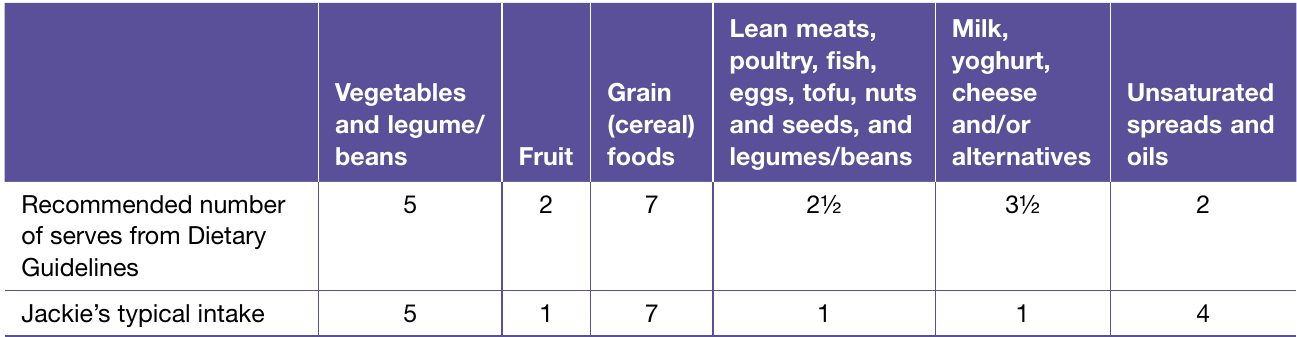
Consider this example of dietary analysis:
Example
Worked Example: Analysing Jackie's Dietary Intake
Jackie, a 17-year-old female, is consuming insufficient amounts of fruit, lean proteins, and dairy products, while consuming excess unsaturated spreads and oils. The consequences of these imbalances include:
Insufficient fruit consumption: May lead to inadequate vitamin C intake, potentially affecting immune function (physical health) and increasing susceptibility to illness. Long-term, this could increase the risk of certain cancers and cardiovascular disease.
Insufficient lean proteins: Could result in inadequate protein for growth and repair of tissues during this crucial developmental stage. This might affect muscle development and recovery from physical activity (physical health). Iron deficiency from insufficient meat consumption could lead to anaemia, causing fatigue and reduced cognitive function (physical and mental health).
Excess unsaturated oils: While unsaturated fats are healthier than saturated fats, excessive consumption of any fat type provides surplus energy. This could lead to weight gain (physical health), potentially affecting self-esteem (mental health) and social interactions (social health).
Note
Exam tip: When discussing consequences, always specify which dimension of health and wellbeing is affected and explain the connection clearly. Link short-term effects to potential long-term outcomes where relevant.
Evaluating food-selection models and tools
Food-selection models are educational tools designed to help people, including youth, make healthier food choices. Your ability to evaluate these models critically is essential for understanding how effective they are in promoting healthy eating among young people.
Common food-selection models
The main food-selection models used in Australia include:
Australian Guide to Healthy Eating: A visual tool developed by the federal government that uses a pie chart format to show the proportions of different food groups that should be consumed daily. The five food groups are represented in segments of varying sizes, with the largest section devoted to grain foods (about one-third of daily intake), followed by vegetables and legumes (about one-third), then smaller portions of fruits, dairy products, and lean proteins.
Healthy Eating Pyramid: A hierarchical model showing foods that should be eaten most frequently at the base, with those to be consumed less often at the top. It emphasizes plant-based foods, water, and physical activity.
Health Star Rating Program: A front-of-pack labelling system that rates packaged foods from ½ to 5 stars based on their nutritional profile, helping consumers make quick comparisons between similar products.
Evaluating effectiveness
When evaluating food-selection models, you need to consider both their strengths and limitations:

Note
Strengths of the Australian Guide to Healthy Eating:
- Uses a simple visual format that is easy to understand at a glance
- Based on scientific evidence and current dietary guidelines
- Shows relative proportions of food groups, making it clear which foods to prioritize
- Includes recommendations for limiting discretionary foods
- Freely available and widely promoted by health authorities
- Suitable for the general population, including youth
Limitations of the Australian Guide to Healthy Eating:
- Doesn't specify exact serving sizes, which can make it difficult to know how much to eat
- May be challenging to apply when eating composite foods (like pizza or pasta dishes) that contain multiple food groups
- Doesn't account for individual needs based on age, gender, activity level, or health conditions
- Requires nutrition knowledge to break down packaged or restaurant meals into food groups
- May not address cultural food preferences or dietary restrictions
Applying models to real situations
Consider this scenario: Simon is a 16-year-old representative footballer who trains intensively and purchases many meals from the school canteen and takeaway outlets. How could the Australian Guide to Healthy Eating help him?
The guide's visual format makes it relatively easy for Simon to grasp the basic principles of balanced eating. He can quickly see that he should be prioritising grain foods and vegetables over other food groups. However, Simon faces several challenges:
- Without specific serving sizes, he may struggle to know whether his portions match the recommendations, especially given his high energy needs as an athlete
- When buying composite foods from takeaway outlets, he'll need to mentally break down items into their component food groups (a challenging skill)
- The canteen and takeaway options near his training venue may not offer foods from all food groups in appropriate proportions
Example
Worked Example: Overcoming Model Limitations
To overcome these limitations, Simon could:
- Keep a food diary to track what he's eating over a week
- Practice categorizing common takeaway items into the five food groups
- Choose menu items that more closely align with the guide's proportions (such as grain-based meals with plenty of vegetables)
- Seek guidance from his club's nutritionist or sports dietitian for personalized advice
Important
Exam tip: When evaluating food-selection models, avoid being purely positive or purely negative. Real evaluation requires balanced analysis that acknowledges both strengths and weaknesses, then considers how these play out in specific contexts.
Evaluating the validity of nutrition information
In the digital age, nutrition information comes from countless sources - websites, social media, magazines, apps, and podcasts. Not all of this information is accurate, evidence-based, or trustworthy. Learning to evaluate the validity of nutrition information is a critical skill for protecting your own health and advising others.
The R.E.A.L. strategy
When evaluating nutrition information from websites, use the R.E.A.L. strategy as your systematic approach:
Important
R - Read the URL
Examine the web address carefully. The domain extension can tell you a lot about the source:
- .gov or .gov.au: Government websites are generally reliable and evidence-based
- .edu or .edu.au: Educational institutions typically provide research-backed information
- .org: Non-profit organizations, though quality varies - check their funding and mission
- .com or .com.au: Commercial websites may have conflicts of interest or be selling products
- .net: General domain with no quality guarantee
E - Examine the site's content
Look closely at the information provided:
- Is it written by qualified health professionals?
- Does it cite scientific research and studies?
- Is the information current and recently updated?
- Are claims realistic, or do they promise miracle results?
- Does the site sell products or supplements that might create bias?
A - Ask about the author's name and credentials
Identify who wrote the information:
- What are their qualifications (dietitian, nutritionist, doctor, researcher)?
- What organization do they work for?
- Can you verify their expertise independently?
- Are clear contact details provided?
- Have they published other credible material?
L - Look at the links
Examine where the website directs you:
- Do links lead to reputable sources and research?
- Are they connecting to government health agencies or universities?
- Do they link to commercial sites selling products?
- Are references to scientific studies genuine and verifiable?
Practical application
Let's apply the R.E.A.L. strategy to evaluate the Better Health Channel website (betterhealth.vic.gov.au):
Example
Worked Example: Evaluating Better Health Channel
Read the URL: The address ends in .gov.au, immediately indicating it's an official government website. It's funded by the Victorian government without commercial sponsorship, suggesting independence from commercial interests.
Examine the content: The authors work for the digital strategy services team within the Victorian Department of Health and Human Services. This government department has health expertise and a mandate to provide accurate public health information.
Ask about authors: Clear contact details are available on the website. The content is produced by qualified health professionals working within a government health department, lending credibility to the information.
Look at links: The website links to other government health agencies (such as Nurse on Call) rather than private companies or commercial organizations, suggesting the information is not influenced by commercial interests.
Conclusion: Based on this analysis, the Better Health Channel appears to be a valid, trustworthy source of nutrition information.
Evaluating print sources
When assessing nutrition information from magazines or printed materials, ask:
- What are the author's qualifications and credentials?
- Are scientific studies or research cited to support claims?
- Has the author published other reputable material in the field?
- If research is mentioned, how large was the study and was it properly conducted?
- Is the publication known for evidence-based health reporting?
- Are there potential conflicts of interest (such as supplement company advertising)?
Note
Exam tip: Be specific when evaluating sources. Don't just say "it's a government website so it's good" - explain why government sources are typically more reliable (evidence-based, no commercial bias, produced by qualified health professionals).
Factors influencing healthy eating among youth
A young person's ability to make healthy food choices is influenced by numerous interconnected factors. These factors can act as enablers (supporting healthy eating) or barriers (hindering healthy eating), and they often interact with each other in complex ways.
Categories of influencing factors
Factors affecting youth nutrition fall into three main categories:
Note
Social factors include:
- Income and socioeconomic status: Household income affects the ability to purchase fresh, nutritious foods versus cheaper, energy-dense processed options
- Education level: Higher education is associated with better nutrition knowledge and healthier food choices
- Peer influence: Friends and social groups significantly impact food preferences and eating behaviors
- Family environment: Parents' food choices, meal patterns, and attitudes toward nutrition
- Work environment: The availability of healthy food options near workplaces and what colleagues eat
Cultural factors include:
- Gender: Research shows males often consume fewer fruits and vegetables than females and eat more energy-dense processed foods
- Ethnicity and cultural background: Traditional foods, religious dietary requirements, and cultural celebrations
- Religious beliefs: Dietary restrictions or food preparation requirements based on faith
- Family traditions: Long-standing family eating patterns and food preferences
Political factors include:
- Health promotion campaigns: Government and organization initiatives to encourage healthy eating
- Food labelling requirements: Regulations requiring nutritional information on packaged foods
- School canteen policies: Guidelines for foods sold in educational settings
- Subsidies and pricing: Government policies affecting food costs
- Food standards and safety regulations: Rules governing food production and marketing
How factors can be both enablers and barriers
The same factor can act differently depending on circumstances. Consider income as an example:
Income as an enabler: Young people from households with relatively high income can easily afford fresh fruits, vegetables, lean proteins, and whole grains. They have access to a wide variety of nutritious foods and aren't forced to choose based solely on price. This financial flexibility enables healthier eating patterns.
Income as a barrier: Conversely, youth from low-income households may struggle to afford fresh, nutritious foods. They might be more inclined to purchase cheaper, energy-dense processed foods that provide more calories per dollar but fewer essential nutrients. Financial constraints create a barrier to healthy eating.
Interaction between factors
Factors rarely operate in isolation - they interact and influence each other, creating compound effects on healthy eating behaviors.
Example
Example 1: Political and Social Factors Interacting
Health promotion campaigns (political factor) tend to be more effective among people with higher education levels (social factor). Those with more education are more likely to:
- Read and understand health promotion materials
- Apply the information to their food choices
- Understand food labels and nutritional information
- Seek out evidence-based nutrition advice
This interaction means that health promotion, while potentially an enabler for educated populations, may be less effective as an enabler for those with lower education levels.
Example
Example 2: Cultural and Social Factors Interacting
Gender (cultural factor) influences eating patterns, with males generally consuming fewer fruits and vegetables. This tendency can be amplified when peer groups (social factor) share similar attitudes toward food. For instance:
A young male working on a construction site (work environment - social factor) may be surrounded by other males (gender - cultural factor) who prioritize energy-dense, convenient foods. Food trucks visiting the site often sell items high in energy, saturated fats, and salt, with limited healthy options available. The combined influence of the male-dominated workplace culture and the food environment creates a strong barrier to healthy eating.
The same young man might make different choices in a different social context - such as when eating with family members who prioritize nutrition, or when his female partner who is health-conscious influences meal planning.
Example
Example 3: Multiple Factors Interacting
Consider a more complex scenario:
Tom is an apprentice carpenter (work environment - social factor) living at home with his sister who is studying dietetics (family influence - social factor). He's earning good wages (income - social factor) and plays VFL football (sports culture - cultural factor). His nutritional knowledge is high (education - social factor) due to his sister's influence and sports nutrition advice.
However, when Tom attends trade school with friends (peer influence - social factor), he often chooses McDonald's for lunch despite being able to afford healthier options and knowing better nutritional choices. In this case:
- Enablers: Good income, nutrition knowledge, family support, sports participation
- Barriers: Peer pressure, convenient fast-food location, male group culture
The barrier of peer influence temporarily overrides the enablers, demonstrating how social context can be the deciding factor even when other conditions support healthy eating.
Important
Exam tip: When analyzing factors affecting healthy eating, always explain how they work as enablers or barriers in specific contexts. Show the interaction between factors rather than listing them independently. Use phrases like "this can be enhanced when..." or "this barrier is amplified by..." to demonstrate understanding of factor interaction.
Remember!
Summary
Key Points to Remember:
-
Nutrient functions must always be linked to health outcomes: Don't just state what a nutrient does biologically - explain how this affects physical, mental, social, or emotional health and wellbeing
-
Distinguish between protective and risk nutrients: Protective nutrients (like fibre) have positive health effects, while risk nutrients (like saturated fats) can harm health when over-consumed
-
Consider both short-term and long-term consequences: Nutritional imbalances affect youth immediately but can also create health problems that persist into adulthood
-
Evaluate food-selection models with balance: All models have both strengths and weaknesses - effective evaluation requires discussing both and considering how they apply in real situations
-
Use the R.E.A.L. strategy systematically: Read the URL, Examine the content, Ask about authors, Look at the links - this structured approach ensures thorough evaluation of online nutrition information
-
Factors interact in complex ways: Social, cultural, and political factors don't work in isolation - they combine and influence each other, sometimes amplifying effects or creating contradictions. Always explain these interactions when analyzing barriers and enablers to healthy eating