Sources of Nutrition Information and Strategies to Evaluate Their Validity (VCE SSCE Health and Human Development): Revision Notes
📚Revision Notes
Sources of Nutrition Information and Strategies to Evaluate Their Validity
Introduction
Locating trustworthy nutrition information can be challenging in today's media-saturated world. With so many different sources available, including television programs, magazines, websites, social media platforms and healthcare professionals, it's important to understand where to find reliable information and how to evaluate its validity.
Note
Research from the United States Academy of Nutrition and Dietetics found that television, magazines and the internet were the most commonly consulted sources for nutrition advice, whilst medical professionals such as doctors, dietitians and nutritionists were less frequently used.
Understanding the strengths and limitations of each source, and knowing how to assess their credibility, is essential for making informed decisions about your health.
Main sources of nutrition information
There are several key sources where people typically seek nutrition information:
- Television and print media: News programs, health segments, magazines and newspapers frequently feature nutrition stories and dietary advice.
- Internet, social media and nutrition apps: Online platforms, social networking sites and mobile applications provide easy access to nutrition information and tools.
- Medical practitioners: Doctors and other healthcare providers can offer nutrition guidance as part of general health care.
- Nutritionists and dietitians: Qualified nutrition professionals who specialise in food, diet and health.
Each of these sources has different levels of reliability and usefulness, which we'll explore in more detail.
Dietitians and nutritionists: understanding the difference
Many people use the terms 'nutritionist' and 'dietitian' interchangeably, but in Australia there are important distinctions between these two professions. Because professional nutrition practice is not regulated by the government in Australia, it's crucial to understand what qualifications and expertise each role involves.

Nutritionists
A nutritionist has completed tertiary-level qualifications in fields related to food science, nutrition and public health. Their primary role is to help individuals achieve optimal health and wellbeing by providing information about how food choices affect health. Nutritionists typically work in community or public health settings, where they may:
- Conduct research on nutrition and health
- Design and coordinate health promotion programs
- Implement initiatives aimed at improving healthy eating patterns across the Australian population
- Work with groups and communities rather than providing individualised medical treatment
Important
Nutritionists are not qualified to provide medical treatment to individuals or groups for specific health conditions.
Dietitians
A dietitian also holds tertiary-level qualifications in food, nutrition and dietetics, but has completed additional study that involves practical work in professional settings. This includes experience in public health programs, hospitals and medical therapy environments. The additional training means dietitians can:
- Provide dietary treatments for medical conditions such as diabetes, food allergies, and overweight and obesity
- Offer individualised nutritional advice tailored to specific health needs
- Work in clinical settings alongside other healthcare professionals
- Prescribe therapeutic diets as part of medical treatment
Note
Key Difference: Whilst nutritionists generally work with broader community programs and health promotion, dietitians are better qualified to provide individual nutritional advice and medical dietary treatment.
Television and print media as nutrition information sources
Food and nutrition advice frequently appears in television broadcasts and magazine articles. However, it's important to approach these sources with a critical eye.
Evaluating television nutrition information
Television programs often feature stories about the latest dietary research or nutrition trends. Whilst these can be informative, there are several limitations to be aware of:
- TV presenters may report findings from recent studies, but often provide only a snapshot of the research without explaining the study's scope, limitations or how it compares to other similar research.
- Television reporters typically are not qualified nutrition professionals and cannot provide expert dietary advice.
- Information presented in the media is often sensationalised to capture viewer attention and boost ratings, which can lead to misleading or exaggerated claims.
Important
Critical Evaluation is Essential
When evaluating nutrition information on television, the best approach is to ask questions:
- Is this a factual report based on scientific evidence, or is it a testimonial? (A testimonial is a personal endorsement for a product, often given in exchange for payment.)
- Is the information supported by qualified experts?
- Are the claims realistic or do they seem too good to be true?
- Where can I find additional information to verify these claims?
Remember that testimonials and advertisements cannot be assumed to be based on scientific fact, so you'll need to seek further verification from reliable sources.
Evaluating print media nutrition information

Magazines are another popular source of nutrition information, but their reliability varies considerably. Whilst some magazines employ qualified nutrition professionals to write their articles, many do not. When reading nutrition articles in magazines, consider the following questions:
- What are the author's nutrition credentials? Do they have relevant qualifications and expertise?
- How large was the study population? Small studies may not provide reliable evidence that applies to the general population.
- Has the author written other relevant material? This can help you assess their expertise and credibility.
- Are there references to back up the claims? Credible articles should cite scientific research or expert sources.
Beware of sensational headlines
Whether in print media or online, health and nutrition stories often use attention-grabbing headlines and scare tactics to attract readers. It's crucial to read the entire article, not just the catchy headline, to ensure you understand the full context and accurate information. Over recent years, there have been many headlines about substances that supposedly cause cancer, such as processed meat in 2015, 'very hot' drinks in 2016, and common weed killers in 2018. However, these headlines often fail to explain the actual level of risk involved.
Case study: understanding cancer headlines
The following case study demonstrates why it's important to understand how information can be misinterpreted or sensationalised by the media.
Example
Case Study: Things that cause cancer are all around us, if you believe the news — how worried should we be?
Recent years have seen numerous alarming headlines about cancer-causing substances. In 2015, processed meat was declared carcinogenic to humans, and red meat was labeled as probably carcinogenic. More recently in 2018, glyphosate (the active ingredient in common weed killers) was also classified as 'probably carcinogenic'. But what do these classifications really mean, and should we be worried?
Cancer science misreported and misinterpreted
These alerts typically come from the International Agency for Research on Cancer (IARC) at the World Health Organization (WHO), which brings together scientific experts to identify things that cause cancer based on available scientific evidence. However, as cancer biologist Darren Saunders from the University of New South Wales points out, these reports are often misunderstood and misinterpreted by the media and public.
The main problem is how the information is communicated. The IARC releases technical reports that require careful interpretation, but the media often oversimplifies or sensationalises the findings without explaining the crucial details.
Understanding hazard versus risk
When the IARC releases a report, potentially carcinogenic agents are placed into one of these groups:
- Group 1 — Carcinogenic to humans (e.g. solar radiation/sunlight, smoking, eating processed meat)
- Group 2A — Probably carcinogenic to humans (e.g. eating red meat, glyphosate)
- Group 2B — Possibly carcinogenic to humans (e.g. coffee)
- Group 3 — Carcinogenicity not classifiable (e.g. tea)
- Group 4 — Probably not carcinogenic to humans (e.g. caprolactam, a chemical used to make synthetic fibres)
Important
Critical Distinction: Evidence vs. Risk Level
These groupings only describe the amount of evidence that a substance is carcinogenic — not how carcinogenic it is. This is a crucial distinction that media coverage often misses.
This means two different substances can be in the same IARC group, but one might hugely increase your cancer risk whilst the other might only slightly increase it. For example, processed meat (including salami, sausages and bacon) is in Group 1, alongside tobacco smoke, plutonium, asbestos and sunlight. Whilst eating processed meat might slightly increase your chances of getting cancer, exposure to tobacco smoke or plutonium creates a much greater cancer risk.
Dr Saunders explains: 'Even though the evidence puts smoking and processed meat in the same [IARC] group, the relative risk of those carcinogens causing cancer is not equivalent.' This important point is often overlooked in media coverage.
Comparing salami and cigarettes
The Cancer Council must consider these different risk levels when planning education campaigns. Unlike occasionally eating sausages or ham, there is no safe level of smoking — this is a critical distinction for communicating risk to the public. As Anita Dessaix, director of cancer prevention and advocacy at Cancer Council New South Wales, states: 'The relative risk of consuming too much processed meat is a lot smaller compared to something like tobacco.'
Note
Key Tips for Interpreting News About Cancer
To avoid being misled by sensational headlines, use these strategies:
- Read the whole story, not just the headline. Important details and context are often buried in the body of the article.
- Look for caveats. Research on carcinogens often includes important qualifications that explain why a substance might not be harmful in certain amounts or circumstances.
- Distinguish between hazard and risk. Understand whether the research is about the evidence that something causes cancer (hazard) or the actual likelihood that it will cause cancer (risk).
- Remember that strong evidence doesn't always equal high risk. Just because there's good evidence that an agent can cause cancer doesn't mean there's a high probability it will give you cancer.
Strategies to evaluate online nutrition information
The internet provides access to vast amounts of nutrition information through websites, social media and mobile apps. However, not all of this information comes from credible sources. To help you determine whether online nutrition information is reliable, you can use the R.E.A.L. strategy.
The R.E.A.L. strategy explained
This four-step approach helps you systematically evaluate the credibility of online nutrition sources:
Example
Using the R.E.A.L. Strategy to Evaluate Online Sources
R — Read the URL
Pay attention to the web address and what it tells you about the source. Non-commercial sites, such as those ending in .org, .edu and .gov, are generally more reliable sources of information. These include:
.gov— government websites.edu— educational institutions.org— non-profit organisations
Websites with URLs ending in .com may be commercial sites that are primarily trying to sell a product. Whilst not all .com sites are unreliable, they should be viewed more critically as they may have a financial interest in promoting certain products or services.
E — Examine the site's contents
Look carefully at who created the information:
- Who is the author? What are their qualifications and credentials?
- Who is the publisher or organisation behind the website?
- Who funds the website or app? This can reveal potential biases or conflicts of interest.
- Is the material current and up-to-date? Nutrition science evolves, so older information may no longer be accurate.
A — Ask about the author's name
Can you easily find contact details for the author or publisher? Credible sources should be transparent about who is providing the information and how you can reach them if you have questions. If an author or organisation is hiding their identity, this is a red flag.
L — Look at the links
Examine what other websites the source links to:
- Do the links lead to credible sources?
- Do the web addresses of linked pages end in
.gov,.edu, or.org? - Are the linked sources relevant and trustworthy?
The quality of links can tell you a lot about the overall credibility of the source.
Evaluating nutrition apps
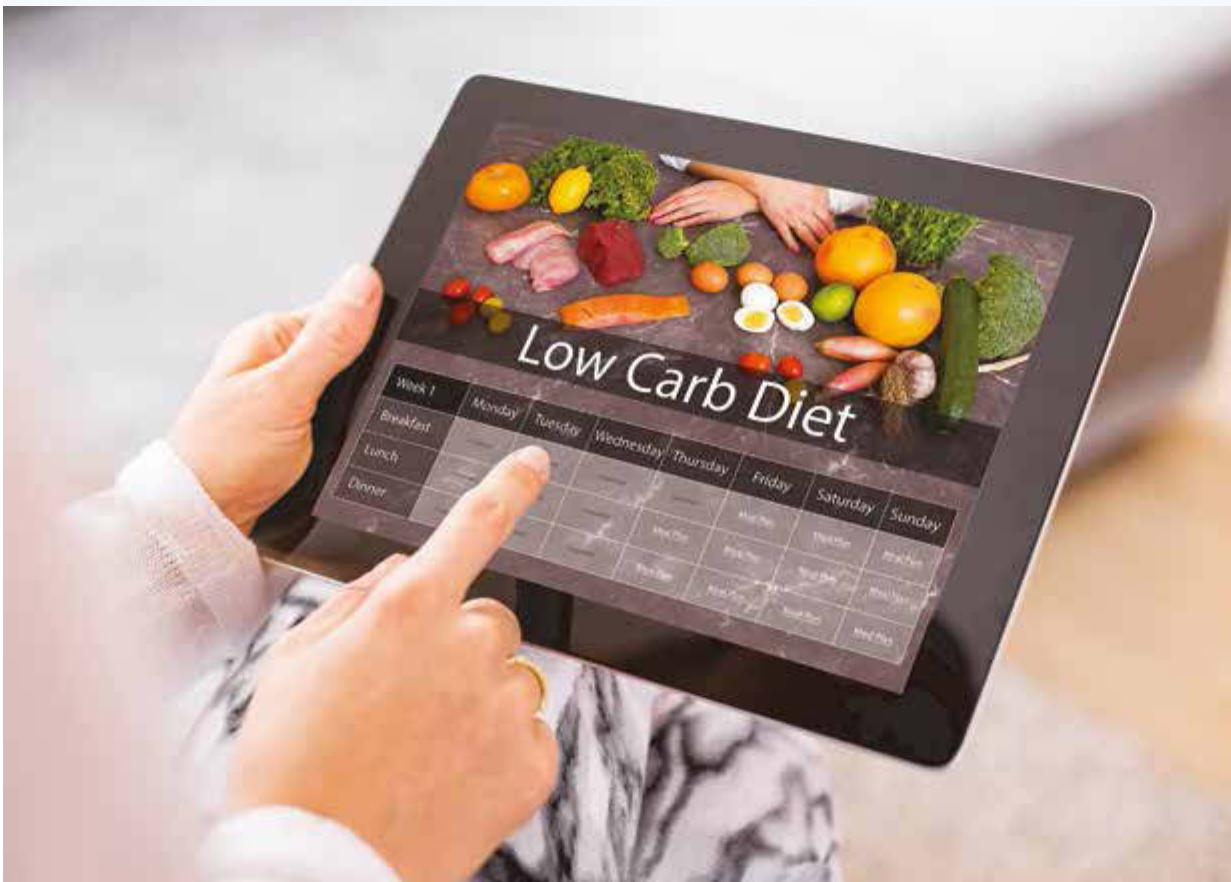
Many nutrition-related apps allow you to scan product barcodes to reveal nutritional information, helping you identify 'good' and 'bad' products and compare alternatives. Whilst these can be useful tools, it's important to evaluate them critically using the R.E.A.L. strategy. Additionally, consider:
- Who developed the product? Are they qualified nutrition professionals?
- Are they affiliated with specific brands? The app may be biased towards certain products if it's funded by a particular company.
- Are they connected to supplement companies or dieting programs? This could influence the advice provided.
Warning signs of unreliable nutrition information
Beyond using the R.E.A.L. strategy, be alert to these red flags that indicate a source of information may be unreliable:
Important
Red Flags of Unreliable Nutrition Information
- Unrealistic claims: Statements like 'this natural product speeds up metabolism and leads to weight loss' without scientific evidence to support them.
- Quick and easy remedies: Products that claim to cause weight loss without the need for dietary changes or physical activity are almost certainly too good to be true.
- Testimonials as evidence: Personal stories like 'I lost 15 kg using this product' are not scientific evidence of effectiveness. Individual results don't prove a product works for everyone.
- Online diagnosis and treatment: Websites that offer to diagnose health conditions or prescribe treatments without proper medical consultation are dangerous.
- Elimination of entire food groups: Advice that requires you to completely eliminate fruits, vegetables or wholegrains (unless medically necessary) is nutritionally unsound.
- Single food diets: Recommendations to eat only a single food or drink for extended periods will result in nutritional deficiencies.
By being aware of these warning signs and consistently applying evaluation strategies, you can become a more informed and critical consumer of nutrition information.
Remember!
Summary
Key Points to Remember:
- Different nutrition sources have varying levels of reliability: Qualified dietitians and nutritionists are more reliable than television presenters or magazine articles written by non-experts.
- Dietitians and nutritionists have different qualifications: Dietitians have additional training and can provide individualised medical dietary treatment, whilst nutritionists typically work in community health promotion.
- Media often sensationalises nutrition stories: Read full articles, not just headlines, and look for evidence-based information rather than scare tactics.
- Use the R.E.A.L. strategy for online sources: Read the URL, Examine the contents, Ask about the author, and Look at the links to evaluate credibility.
- Be alert to warning signs: Unrealistic claims, testimonials, quick fixes, and advice to eliminate entire food groups are indicators of unreliable sources.