Stability & Function of DNA (AQA A-Level Biology): Revision Notes
📚Revision Notes
Stability & Function of DNA
DNA structure overview
DNA exists as a double helix structure, resembling a twisted ladder. The molecule consists of two antiparallel strands that run in opposite directions to each other. The "uprights" of this ladder structure are formed by alternating deoxyribose sugars and phosphate groups, creating the phosphodiester backbone. The "rungs" of the ladder consist of complementary base pairs held together by hydrogen bonds.
Note
Base Pairing Rules
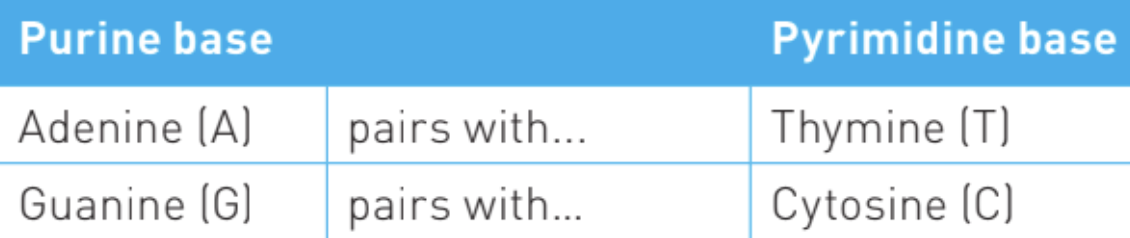
The four nitrogenous bases follow strict base pairing rules:
- Adenine pairs with thymine
- Cytosine pairs with guanine
This complementary base pairing ensures that the two strands fit together perfectly within the helical structure.
Stability of DNA
DNA demonstrates remarkable stability as a biological molecule, which stems from several key structural features.
Important
Three Key Sources of DNA Stability
DNA's stability comes from three main structural features:
- Hydrogen bonding between complementary base pairs
- Protective positioning of the phosphodiester backbone
- Base stacking interactions between adjacent bases
Hydrogen bonding between bases
Hydrogen bonds form between the complementary base pairs, creating stable connections across the double helix. Adenine and thymine form two hydrogen bonds, while cytosine and guanine form three hydrogen bonds. The presence of three hydrogen bonds in cytosine-guanine pairs makes these connections stronger than adenine-thymine pairs. Therefore, DNA molecules with a higher proportion of C-G base pairs exhibit greater overall stability than those with more A-T pairs.
Phosphodiester backbone protection
The phosphodiester backbone runs along the outside of the double helix, effectively shielding the more chemically reactive nitrogenous bases from external environmental factors. This protective arrangement prevents the organic bases from being damaged by chemical or physical forces that could otherwise disrupt the genetic information stored within the molecule.
Base stacking interactions
Additional stability comes from base stacking forces - weak intermolecular forces that occur between adjacent base pairs along the length of the DNA molecule. These interactions work alongside hydrogen bonding to maintain the structural integrity of the double helix.
Function of DNA
Hereditary material
DNA serves as the hereditary material in living organisms, carrying genetic information from one cell to another and from one generation to the next. A typical mammalian cell contains approximately 3.2 billion base pairs, providing an enormous capacity for storing genetic information.
Genetic diversity
The sequence of base pairs along the DNA molecule creates an almost infinite variety of possible genetic combinations. This vast diversity in base sequences provides the foundation for genetic variation within and between different species. Each unique sequence of bases represents different genetic instructions that determine an organism's characteristics.
Structural adaptations for function
DNA's structure is perfectly adapted to fulfil its biological roles:
- Size and information storage: DNA is an extremely large molecule, allowing it to carry large amounts of genetic information within each cell.
- Hydrogen bond separation: The two strands are joined only by relatively weak hydrogen bonds, permitting them to separate during DNA replication and transcription processes when genetic information needs to be copied or transferred to mRNA.
- Protected information: By housing the genetic information within the helical structure, with the phosphodiester backbone on the outside, the vital base sequence remains protected from external damage.
- Base pairing mechanism: The complementary base pairing system enables DNA to replicate accurately and transfer information effectively during protein synthesis.
The remarkable functionality of DNA depends entirely on its precise base pair sequence, which determines every aspect of an organism's biology and, ultimately, life itself.
Summary
Key Points to Remember:
- DNA stability comes from hydrogen bonding between complementary bases, protective phosphodiester backbone positioning, and base stacking forces
- Cytosine-guanine pairs form three hydrogen bonds, making them more stable than adenine-thymine pairs with only two bonds
- DNA functions as the hereditary material by storing genetic information in its base pair sequences
- The double helix structure allows strand separation for replication and transcription while protecting genetic information
- Genetic diversity arises from the vast number of possible base pair sequence combinations in DNA molecules