Organic Synthesis (OCR A-Level Chemistry A): Revision Notes
📚Revision Notes
Synthetic routes
What is organic synthesis?
Organic synthesis is the process of building complex molecules from simpler starting materials. This technique is fundamental to modern chemistry and has enormous practical applications, particularly in the pharmaceutical industry. When you take medicine for a headache or illness, there's a good chance that drug was created through organic synthesis.
The key idea is that chemists can transform simple, readily available chemicals into sophisticated molecules with specific properties. This might involve just one step, but more often requires multiple steps where functional groups are systematically changed or added to build up the desired structure.
Note
Real-world application: The pharmaceutical industry relies heavily on organic synthesis to create new medicines. Complex drug molecules are built up step-by-step from simple, inexpensive starting materials. This allows chemists to design and manufacture compounds that don't exist in nature but have specific therapeutic properties.
Recognising functional groups
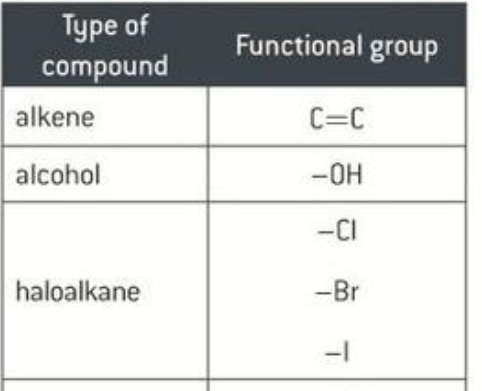
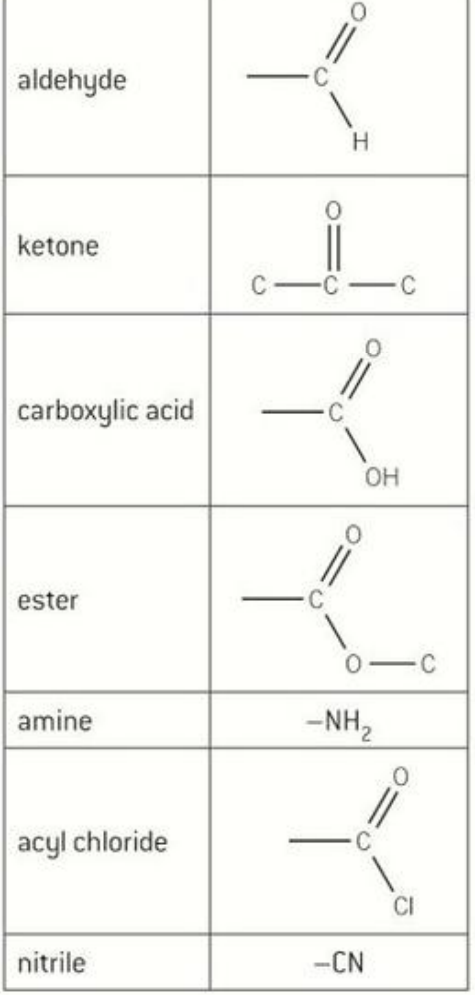
Before you can plan any synthesis, you must be able to identify the different functional groups present in both your starting materials and target molecules. A functional group is the reactive part of a molecule that determines its chemical properties and reactions.
Here are the key functional groups you need to know for A-Level chemistry:
Important
Being able to spot these functional groups quickly is essential for synthesis planning. Many organic molecules contain multiple functional groups, and you need to identify all of them to predict reactivity and plan synthetic routes effectively.
Identifying functional groups in complex molecules
When you look at a molecule, scan through it systematically to find each functional group. Let's look at an example:
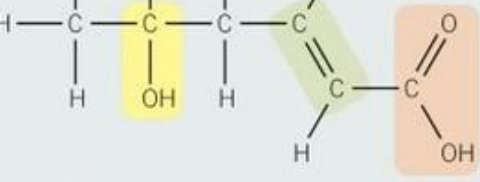
This molecule contains three functional groups:
- An alcohol group () - highlighted in yellow
- An alkene group () - the carbon-carbon double bond
- A carboxylic acid group () - highlighted in peach/orange
Another example:
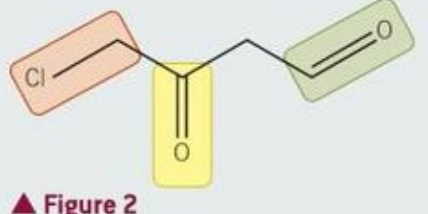
This molecule contains:
- An acyl chloride group (the bonded to ) - highlighted in coral
- Additional reactive sites shown in the colour coding
Being able to spot all functional groups present is the first critical step in planning any synthesis route.
Understanding synthetic routes
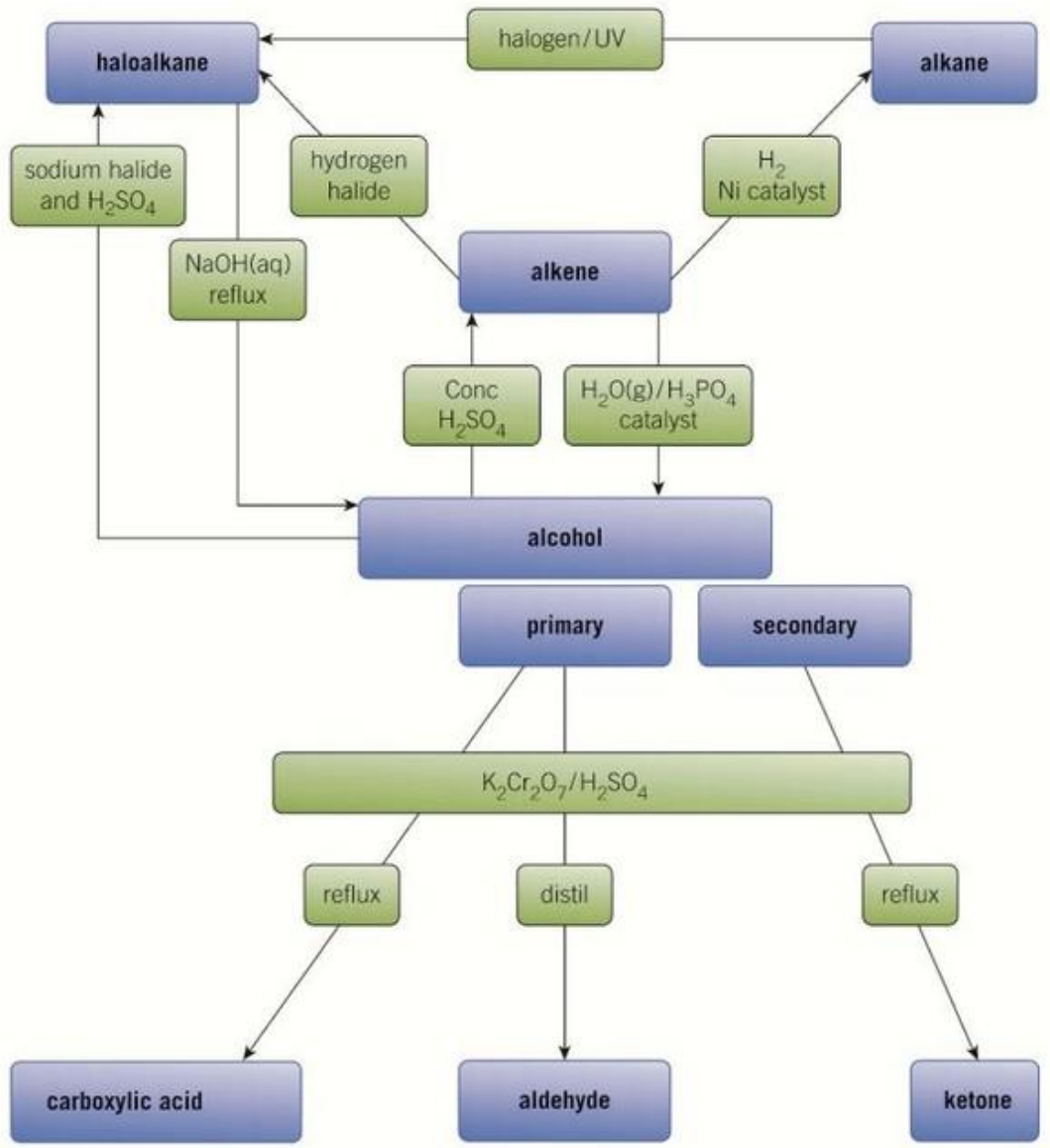
The flowchart below shows all the main interconversions between functional groups that you've studied. This is one of the most important diagrams you'll use in organic chemistry:
Important
Master this flowchart! This is your roadmap for organic synthesis. The blue boxes show different types of organic compounds (functional groups), and the green boxes show the reagents and conditions needed to convert from one functional group to another. The arrows indicate the direction of transformation.
You should be able to recall this flowchart from memory and use it to plan synthetic routes in exams.
Key features to notice:
- Alcohols sit at the centre because they can be converted to many other functional groups
- Primary alcohols can be oxidised to aldehydes (with distillation) or carboxylic acids (with reflux)
- Secondary alcohols can be oxidised to ketones
- Alkenes are versatile starting points that can form alkanes, haloalkanes, or alcohols
- Haloalkanes can be converted to alcohols through nucleophilic substitution
Predicting properties and reactions
Understanding what reactions each functional group undergoes helps you predict synthetic routes. For example, consider the compound prenol, which contains both an alkene and a primary alcohol:
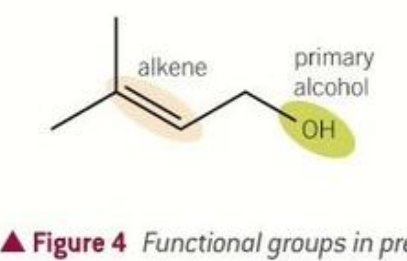
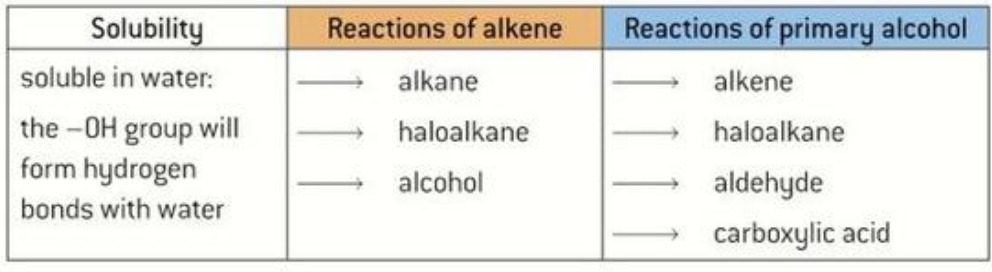
Because prenol contains multiple functional groups, it can undergo different types of reactions:
Note
Multiple functional groups mean multiple reaction possibilities:
From the alkene group:
- Reaction with hydrogen ( with Ni catalyst) → forms an alkane
- Reaction with hydrogen halide → forms a haloalkane
- Reaction with steam and acid catalyst → forms an alcohol
From the primary alcohol group:
- Elimination with conc. → forms an alkene
- Substitution with hydrogen halide → forms a haloalkane
- Oxidation with and distillation → forms an aldehyde
- Oxidation with and reflux → forms a carboxylic acid
Solubility:
- Prenol is soluble in water because the group can form hydrogen bonds with water molecules
Planning two-stage syntheses
What is a target molecule?
A target molecule is the compound you're trying to make through organic synthesis. In a simple synthesis, you might be able to make the target molecule directly from your starting material in just one step. However, most syntheses require multiple steps because you need to change functional groups or add carbon atoms to build up the structure you want.
The two-stage synthesis method
For A-Level, you'll typically work with two-stage syntheses. To plan these successfully, you need to:
- Identify the functional groups in both your starting molecule and target molecule
- Identify the intermediate compound that links the starting and target molecules together
- State the reagents and conditions needed for each step of the synthesis
The intermediate is the "stepping stone" molecule - it's what you make in the first step so that you can then convert it to your target in the second step.
Important
The systematic approach to planning syntheses:
Step 1: Identify what functional groups you have in your starting material
Step 2: Identify what functional groups you need in your target molecule
Step 3: Use the flowchart to find an intermediate that connects them
Step 4: Write out the reagents and conditions for each stage
Always work backwards from your target molecule - ask yourself "what could I make this from?" to identify suitable intermediates.
Worked examples of two-stage synthesis
Example
Worked Example 1: Converting a haloalkane to an aldehyde
Task: Plan the synthesis of propanal from 1-chloropropane.
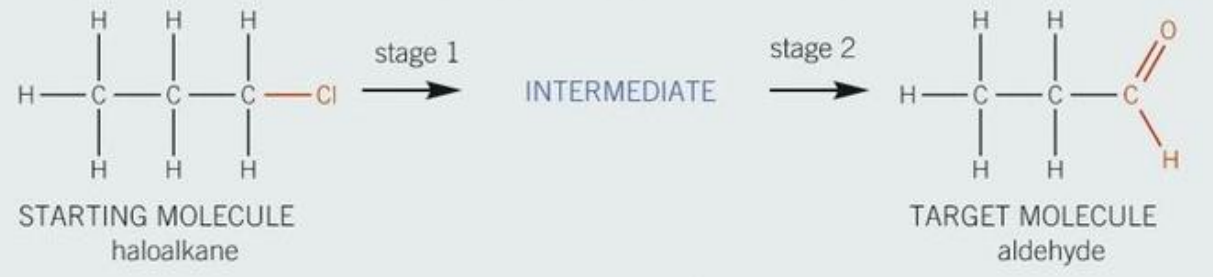
Step 1: Identify the functional groups
Starting molecule (1-chloropropane): Contains a haloalkane group ()
Target molecule (propanal): Contains an aldehyde group ()
Step 2: Identify the intermediate
Looking at the flowchart, you can't convert a haloalkane directly to an aldehyde in one step. You need an intermediate.
From the flowchart:
- An aldehyde (TARGET) can be made from the oxidation of a primary alcohol
- A primary alcohol can be made from the hydrolysis of a haloalkane (STARTING MOLECULE)
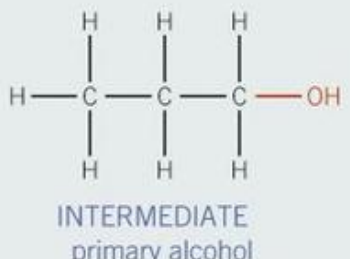
Therefore, the intermediate must be a primary alcohol:
Step 3: State the reagents and conditions
Stage 1: Convert haloalkane → primary alcohol

Reagents and conditions: , reflux
Full equation:
Stage 2: Convert primary alcohol → aldehyde

Reagents and conditions: Potassium dichromate(VI) () and sulfuric acid (), distil
Full equation:
The symbol [O] represents the oxidising agent. Distillation is essential here because it removes the aldehyde as soon as it forms, preventing further oxidation to a carboxylic acid.
Example
Worked Example 2: Converting an alkene to a ketone
Task: Plan the synthesis of butanone from but-2-ene.

Step 1: Identify the functional groups
Starting molecule: Contains an alkene group ()
Target molecule: Contains a ketone group ( with carbons on both sides)
Step 2: Identify the intermediate
From the flowchart:
- A ketone can be made from oxidation of a secondary alcohol
- A secondary alcohol can be made by hydration of an alkene
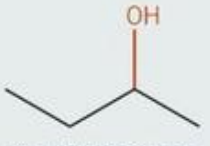
Therefore, the intermediate is a secondary alcohol.
Step 3: State the reagents and conditions
Stage 1: Convert alkene → secondary alcohol

Reagents and conditions: Steam (), acid catalyst (e.g. or )
This is an addition reaction where water adds across the double bond:
Stage 2: Convert secondary alcohol → ketone

Reagents and conditions: Potassium dichromate(VI) () and sulfuric acid (), reflux
The secondary alcohol is oxidised to a ketone. Unlike primary alcohols, secondary alcohols can only be oxidised to ketones (they cannot be oxidised further), so you use reflux conditions here, not distillation.
Important points about oxidation conditions
Important
Critical distinction: Distillation vs Reflux in alcohol oxidation
The conditions used for oxidising alcohols are crucial:
-
Primary alcohol + oxidising agent + DISTIL → Aldehyde (+ )
- Distillation removes the aldehyde before it can be oxidised further
-
Primary alcohol + oxidising agent + REFLUX → Carboxylic acid (+ )
- Reflux ensures complete oxidation to the carboxylic acid
-
Secondary alcohol + oxidising agent + REFLUX → Ketone (+ )
- Ketones cannot be oxidised further, so reflux is fine
Common mistake: Using reflux when you want to stop at the aldehyde stage - this will give you a carboxylic acid instead!
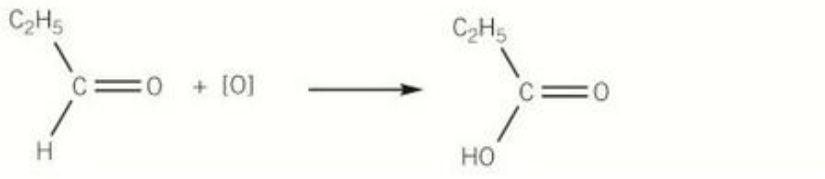
This equation shows the further oxidation of an aldehyde to a carboxylic acid, which is why distillation is used when you want to stop at the aldehyde stage.
Advanced technique: ozonolysis
Note
Ozonolysis: Breaking carbon-carbon double bonds
Ozonolysis is a technique used to break open carbon-carbon double bonds (). This reaction is particularly useful in organic synthesis for preparing aldehydes and ketones from alkenes.
The reaction works by treating an alkene with ozone () followed by water:
General reaction:
Example: Ozonolysis of but-2-ene produces two molecules of ethanal:
The ozone cleaves the double bond, and each carbon of the original double bond becomes part of a carbonyl group () in the product.
This technique can be incorporated into multi-step syntheses. For example, to make propanoic acid from pent-3-ene:
Step 1: Ozonolysis
This breaks the double bond to form propanal (an aldehyde).
Step 2: Oxidation
Reagents and conditions: Reflux with acidified potassium dichromate(VI) ()
This oxidises the aldehyde to propanoic acid (a carboxylic acid).
Remember!
Summary
Key Points to Remember:
-
Organic synthesis is the step-by-step construction of complex molecules from simple starting materials - essential for making new drugs and materials
-
Know your functional groups - you must be able to recognise all the key functional groups (alkene, alcohol, haloalkane, aldehyde, ketone, carboxylic acid, ester, amine, acyl chloride, nitrile) even in complex molecules
-
Learn the synthetic routes flowchart - this shows all the conversions between functional groups with the required reagents and conditions. It's your essential tool for planning syntheses
-
The two-stage synthesis method:
- Identify functional groups in start and target
- Find the intermediate that links them
- State reagents and conditions for each step
-
Oxidation conditions matter: Use distillation when oxidising primary alcohols to aldehydes (to prevent further oxidation), but use reflux when making carboxylic acids from primary alcohols or ketones from secondary alcohols