Recruitment process (AQA GCSE Business): Revision Notes
📚Revision Notes
Recruitment process
What is recruitment and selection?
Note
Recruitment and selection is a systematic process that businesses use to find and hire the right people for their organisation. This process involves several key stages: identifying when a job needs to be filled, defining what the role requires and what kind of person would be suitable, advertising the position to attract candidates, and finally selecting the most appropriate person for the job.
The recruitment process is extremely important for businesses of all sizes. The success of any organisation largely depends on having quality staff with the right skills. When businesses recruit employees who have the correct abilities, they can add significant value to the company. Additionally, recruiting workers at appropriate wage levels helps businesses control their costs effectively. This is why employees should be carefully selected, managed, and retained - they are valuable resources just like any other business asset.
The recruitment process steps
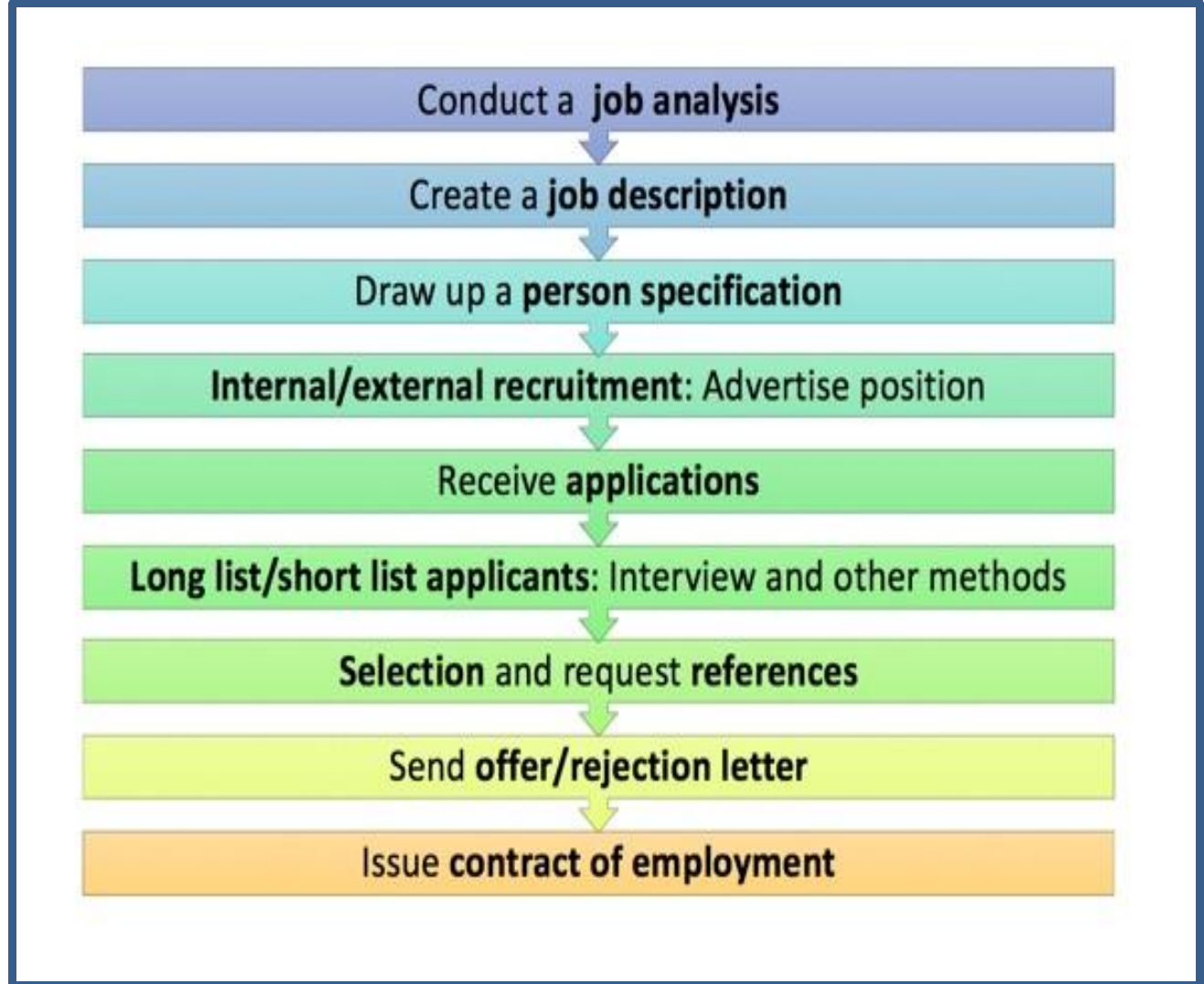
The recruitment process follows a logical sequence of nine main steps that guide businesses from identifying a staffing need through to employing a new worker.
Important
This systematic approach ensures that businesses make informed decisions about hiring and reduces the risk of selecting unsuitable candidates. Each step builds upon the previous one, creating a thorough evaluation process that benefits both the employer and potential employees.
Job analysis
When a vacancy arises in an organisation - perhaps because someone has left for a position elsewhere - the business must first determine whether the job is still actually needed. This initial stage is called job analysis, and it's a crucial first step before beginning the actual recruitment process.
Many smaller businesses operate with just one worker, whilst larger organisations may choose not to replace employees who leave. If the business decides that a vacant position still needs to be filled, the next stage involves determining exactly what type of worker is required. To support this decision-making process, two important documents are created: a job description and a person specification.
Job description
Note
A job description provides a comprehensive explanation of the roles and responsibilities associated with the advertised position. Most candidates will request this information before applying, as they want to understand exactly what the job involves.
Creating a detailed job description makes the recruitment process much more efficient for the organisation because it helps prevent unsuitable candidates from applying for vacant positions.
The job description focuses on the position itself rather than the specific type of person the organisation seeks. It outlines the duties, responsibilities, and expectations that come with the role.
Person specification
Note
A person specification outlines the qualifications, skills, experience, and personal attributes that a successful candidate should possess. This document serves as a vital tool for comparing and assessing the suitability of job applicants during the selection process.
Unlike the job description, the person specification focuses on the person rather than the position. It helps recruiters identify the ideal candidate profile and provides a framework for evaluating applicants against specific criteria.
Internal and external recruitment
When businesses need to fill a vacancy, they have two main options for finding suitable candidates. The choice between these approaches can significantly impact the recruitment process and its outcomes.
Internal recruitment
Internal recruitment occurs when a business looks for suitable candidates among its existing employees. This approach involves promoting or transferring current staff members to fill vacant positions. Internal recruitment is often used alongside external recruitment, particularly for senior management appointments where a combination of internal knowledge and external expertise may be valuable.
External recruitment
External recruitment becomes necessary when there are no suitable internal candidates available. This approach involves seeking applicants from outside the organisation. Businesses have several methods available for external recruitment:
Job centres are government agencies that help unemployed people find work or access training opportunities. They provide a free service for both job seekers and employers.
Job advertisements represent the most common form of external recruitment. The choice of where to advertise depends on factors such as the cost of advertising and the coverage needed - essentially, how far away potential applicants might be willing to travel for the position.
Recruitment agencies provide employers with details of suitable candidates for vacancies. These agencies sometimes work on a fee basis and are occasionally referred to as "head-hunters". They often specialise in particular employment sectors, such as nursing, financial services, or teacher recruitment.
Personal recommendation is often called "word of mouth" recruitment. This might involve a recommendation from a current colleague. While a full assessment of the candidate is still required, this method can potentially reduce advertising costs.
Websites include general job sites such as Fish4Jobs and MonsterJobs. Most agencies and major employers also maintain their own websites with specific sections for current vacancies. Additionally, there are specialist vacancy websites for particular professions, including farming, nursing, and teaching.
Benefits and drawbacks of recruitment approaches
Understanding the advantages and disadvantages of internal versus external recruitment helps businesses make informed decisions about their hiring strategies.
Important
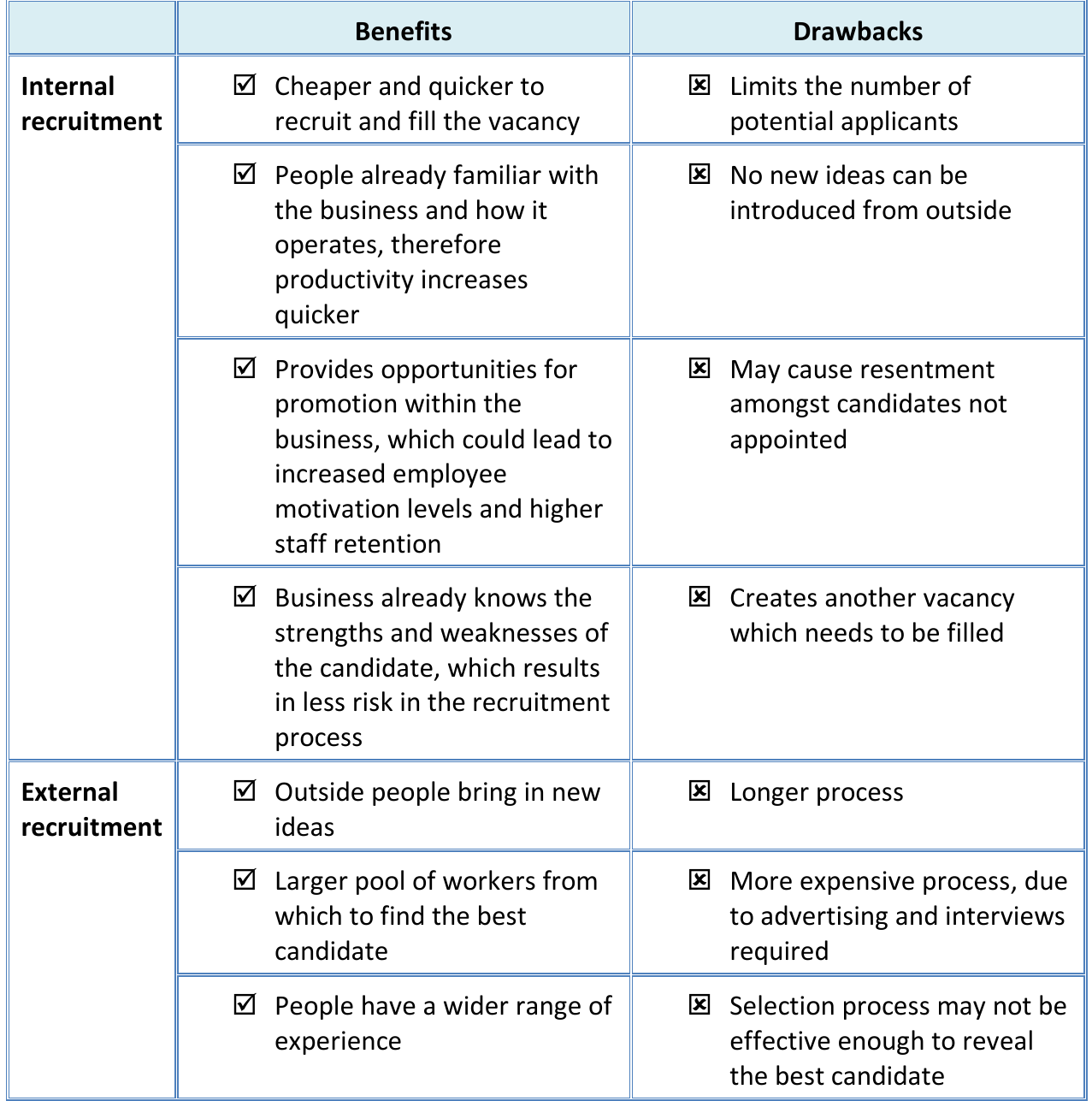
Internal recruitment offers several advantages including cost-effectiveness and speed, as existing employees are already familiar with the business operations, leading to quicker productivity gains. It also provides promotion opportunities that can boost employee motivation and retention, while reducing hiring risks since the candidate's qualities are already known.
However, internal recruitment limits the pool of potential applicants and may not bring fresh external perspectives. It can also create resentment among employees who aren't selected and results in creating additional vacancies that need to be filled.
Note
External recruitment brings distinct benefits such as introducing new ideas and perspectives to the organisation, providing access to larger talent pools, and attracting candidates with diverse experience ranges.
The drawbacks include longer recruitment timelines, higher costs due to advertising and interview processes, and the potential for less effective selection methods when dealing with unknown candidates.
Summary
Key Points to Remember:
- The recruitment process follows nine systematic steps from job analysis through to issuing employment contracts
- Job descriptions focus on the role and its responsibilities, while person specifications focus on the ideal candidate's qualities
- Internal recruitment promotes existing employees, whilst external recruitment seeks candidates from outside the organisation
- Each recruitment approach has distinct advantages and disadvantages that businesses must consider
- Effective recruitment is vital for business success as it ensures the right people are in the right roles