Identifying and understanding customers (AQA GCSE Business): Revision Notes
📚Revision Notes
Identifying and understanding customers
Introduction to customer-focused marketing
In today's competitive business world, customers are considered the most crucial stakeholders for any organisation. Without customers, there simply wouldn't be a business to run! Understanding this fundamental principle is what separates successful companies from those that struggle to survive.
Important
Customer-focused marketing can be defined as the process of discovering what customers want and then fulfilling those needs whilst making a profit.
This approach represents a significant shift from how businesses operated in the past, when many companies were more focused on what they could produce rather than what customers actually wanted.
The key to successful marketing lies in understanding that customers now have countless choices available to them. This means businesses must work harder to attract and retain customers by truly understanding their needs and preferences.
The marketing process
Effective marketing follows a logical sequence that begins with understanding customers and ends with delivering value to them. This process ensures that businesses create products and services that people actually want to buy.
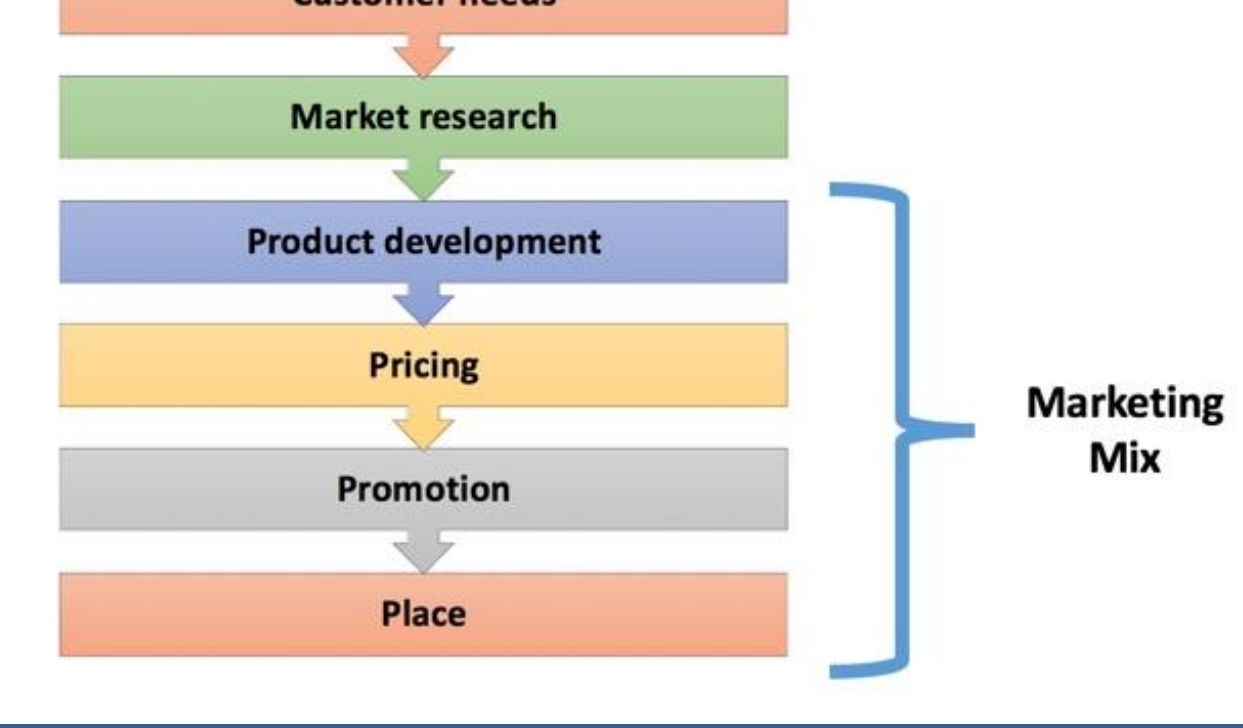
The marketing process starts by identifying what customers need and want. This leads to conducting market research to gather detailed information about these needs. Once this research is complete, businesses can develop products or services that meet these identified needs.
Note
The final three steps - pricing, promotion, and place - form what's known as the marketing mix. These elements work together to ensure customers can access, afford, and learn about the products or services being offered.
Benefits of being customer-focused
When businesses adopt a customer-focused approach, they gain several important advantages that help them succeed in competitive markets:
Note
Four Key Advantages of Customer Focus:
Staying competitive: In our global economy, companies that don't provide what customers want will quickly find themselves losing market share to competitors who do. Being customer-focused helps businesses stay ahead of the competition.
Reducing costs: When businesses create products that customers don't want, they end up with unsold stock and unused facilities. This wastes money that could be better spent elsewhere. Customer focus helps avoid these costly mistakes.
Building brand loyalty: When companies get their products right - offering the right quality at the right price - customers are more likely to return and make repeat purchases. They may even buy other products from the same business.
Choosing the right marketing mix: A customer-focused approach helps businesses make better decisions about pricing, promotion, and distribution. When the marketing mix aligns with customer expectations, sales are more likely to increase.
Market segmentation
Understanding segmentation
Rather than trying to appeal to everyone, most successful businesses choose to focus on specific segments of the market. Market segmentation involves dividing the total market into smaller groups of customers who share similar characteristics or needs.
This strategic approach allows businesses to concentrate their efforts on serving particular customer groups more effectively. By understanding these segments better, companies can develop more targeted products and marketing strategies.
Important
Market segmentation is the process of choosing smaller parts of the market to concentrate on, rather than trying to appeal to everyone.
Benefits of market segmentation
Market segmentation offers several key advantages that can significantly improve a business's performance:
Note
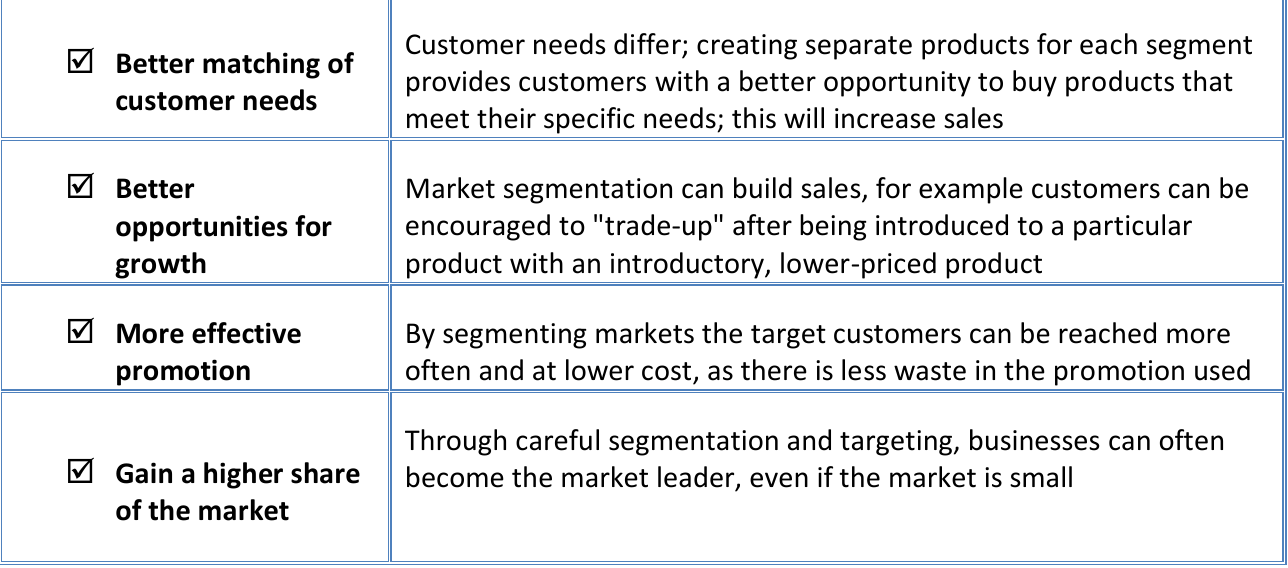
Four Main Benefits of Market Segmentation:
Better matching of customer needs: When businesses create separate products for different segments, they can better meet the specific requirements of each group. This focused approach typically leads to higher customer satisfaction and increased sales.
Better opportunities for growth: Segmentation can help build sales by encouraging customers to upgrade to higher-value products. For example, a business might introduce customers to a basic product and then encourage them to purchase more advanced versions later.
More effective promotion: By targeting specific segments, businesses can reach their ideal customers more efficiently and at lower cost. This reduces wasted spending on advertising to people who aren't interested in the product.
Gaining a higher market share: Through careful segmentation and targeting, businesses can often become market leaders within their chosen segments, even if the overall market is quite small.
Summary
Key Points to Remember:
- Customer-focused marketing means identifying and fulfilling customer needs whilst making a profit
- The marketing process follows a logical sequence from customer needs through market research to the marketing mix
- Being customer-focused helps businesses stay competitive, reduce costs, build loyalty, and choose the right marketing mix
- Market segmentation involves focusing on specific customer groups rather than trying to appeal to everyone
- Segmentation benefits include better customer matching, growth opportunities, more effective promotion, and higher market share