Hormones (Edexcel GCSE Biology): Revision Notes
📚Revision Notes
Hormones
Note
Hormones are chemical messengers produced by endocrine glands and transported through the bloodstream to specific target organs where they regulate various bodily functions. Each gland in the endocrine system produces different hormones with specific roles.
Reproductive Hormones
Note
During puberty, reproductive hormones begin to be released. These causes secondary sexual characteristics to develop in men and women and eggs to mature in women.
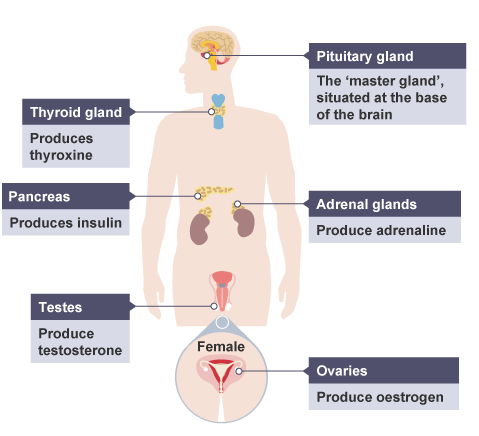
The main male reproductive hormone is testosterone.
- Produced by the testes
- Stimulates sperm production
The main female reproductive hormone is oestrogen.
- Produced in the ovary
- Produces physical changes and is involved in the menstrual cycle
Note
The menstrual cycle is the process the body undergoes each month to prepare for a potential pregnancy.
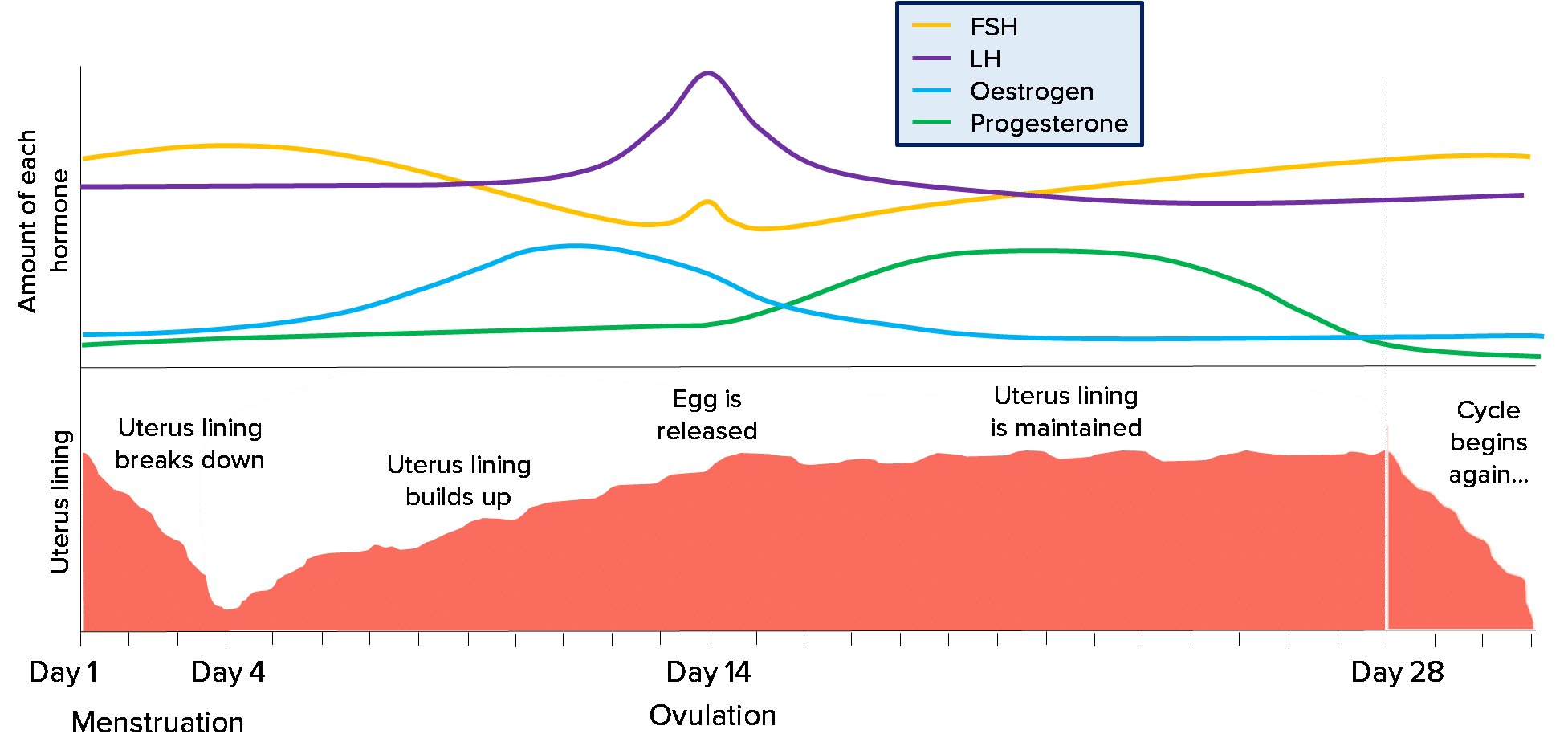
It begins with the lining of the uterus breaking down, and the woman has her period. The layer then builds up again, until ovulation (day 14) occurs- an egg is released from the ovary and moves to the uterus via the fallopian tube.
If a fertilised egg has not been embedded in the lining after 28 days, it begins to break down and the cycle continues.
The events of the cycle are controlled by four hormones.
- Follicle stimulating hormone (FSH) causes the maturation of an egg in the ovary, within a structure called a follicle
- Produced in the pituitary gland
- Stimulates the ovaries to produce oestrogen
- Oestrogen causes the lining of the uterus to grow again
- Produced in the ovaries
- Secreted as a result of FSH
- Stimulates the production of LH and inhibits the secretion of more FSH
- Luteinising hormone (LH)
- Produced in the pituitary gland
- Produced as a result of the hormone oestrogen
- Its release results in ovulation
- Progesterone
- Produced in the ovaries and secreted from the egg follicle.
- Maintains the lining of the uterus, and supports a pregnancy if the egg is fertilised
- Inhibits the release of both FSH and LH
Pituitary Gland:
Location: The base of the brain.
Hormones Produced:
Growth hormone: Stimulates growth and development.
ADH (antidiuretic hormone): Controls water balance in the body by affecting the kidneys.
TSH (thyroid-stimulating hormone): Stimulates the thyroid gland to produce thyroid hormones.
Target Organs: Kidneys, bones, muscles, and the thyroid gland.
Function: Known as the "master gland" because it controls many other glands in the endocrine system.
Thyroid Gland:
Location: In the neck, around the trachea.
Hormones Produced:
- Thyroxine: Regulates metabolism, heart rate, and temperature.
Target Organs: Most body cells.
Function: Controls the body's metabolism, growth, and energy usage.
Pancreas:
Location: Behind the stomach.
Hormones Produced:
- Insulin: Lowers blood glucose levels by allowing cells to take in glucose.
- Glucagon: Raises blood glucose levels by causing the liver to release stored glucose.
Target Organs: Liver, muscles, and fat cells.
Function: Regulates blood sugar levels, which is critical for maintaining energy balance in the body.
Adrenal Glands:
Location: On top of the kidneys.
Hormones Produced:
- Adrenaline: Prepares the body for "fight or flight" by increasing heart rate and boosting energy.
- Cortisol: Helps the body manage stress and control blood sugar levels.
Target Organs: Heart, blood vessels, liver, and muscles.
Function: Adrenaline prepares the body for emergency responses, while cortisol helps with long-term stress management.
Ovaries (in females):
Location: In the lower abdomen.
Hormones Produced:
- Oestrogen: Regulates the menstrual cycle and promotes the development of female secondary sexual characteristics.
- Progesterone: Prepares the uterus for pregnancy.
Target Organs: Uterus, breasts, and other reproductive organs.
Function: Controls the female reproductive system and plays a crucial role in pregnancy.
Testes (in males):
Location: In the scrotum.
Hormones Produced:
- Testosterone: Controls the development of male secondary sexual characteristics and sperm production.
Target Organs: Muscles, skin, bones, and reproductive organs.
Function: Regulates male reproductive functions and promotes muscle and bone growth.
Note
Hormone Transport:
- Hormones are produced by the endocrine glands and released into the bloodstream.
- They travel through the blood to target organs, where they bind to specific receptors and trigger a response.
- Because hormones travel in the blood, their effects can be widespread and can last for varying lengths of time, depending on the hormone and the body's needs.
Note
Summary:
Hormones are produced by endocrine glands such as the pituitary, thyroid, pancreas, adrenal glands, ovaries, and testes. These hormones are transported via the bloodstream to target organs, where they regulate essential body functions like growth, metabolism, blood sugar control, and reproduction. Each hormone has a specific function and plays a critical role in maintaining the body's internal balance.