Thyroxin (negative feedback) (Edexcel GCSE Biology): Revision Notes
📚Revision Notes
Thyroxin (negative feedback)
Note
Thyroxine is a hormone produced by the thyroid gland, which plays a key role in controlling the body's metabolic rate (speed which chemical reactions in body occur). The metabolic rate is the speed at which the body uses energy from food and oxygen. Thyroxine also supports growth and development. Its levels are regulated by a process called negative feedback.
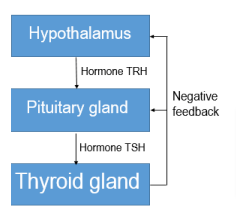
Detected by hypothalamus in brain which makes TRH which acts on pituitary gland making TSH, makes blood travel to thyroid gland (in neck) so makes thyroxin.
When thyroxin increases it sends signals to stop producing TSH & TRH
How Thyroxine Controls Metabolic Rate
Low Levels of Thyroxine:
-
When thyroxine levels are low in the bloodstream, the hypothalamus in the brain detects this and responds by releasing a hormone called TRH (thyrotropin-releasing hormone).
-
TRH signals the pituitary gland to release TSH (thyroid-stimulating hormone). Release of TSH:
-
TSH is released from the pituitary gland and travels through the bloodstream to the thyroid gland.
-
TSH stimulates the thyroid gland to produce and release more thyroxine. Increasing Thyroxine Levels:
-
As thyroxine levels increase in the blood, they stimulate the body's metabolic processes, increasing the rate at which food is broken down to release energy. Negative Feedback Mechanism:
-
When thyroxine levels return to normal, they inhibit the release of TRH from the hypothalamus and the production of TSH by the pituitary gland.
-
This stops the production of excess thyroxine, ensuring that the metabolic rate remains balanced.
-
The Negative Feedback Process:
- Low thyroxine levels trigger the release of TRH from the hypothalamus.
- TRH causes the pituitary gland to release TSH.
- TSH stimulates the thyroid gland to produce more thyroxine.
- Once thyroxine levels return to normal, the production of TRH and TSH is inhibited, preventing further thyroxine production.
Note
This negative feedback mechanism helps maintain a stable level of thyroxine in the bloodstream, ensuring that the body's metabolic rate is properly regulated.
Underactive thyroid gland
Weight gain can occur as less thyroxin made so metabolic rate drops (Less glucose broken down for respiration so stored as fat)