Carbon cycle (Edexcel GCSE Biology): Revision Notes
📚Revision Notes
Carbon cycle
Note
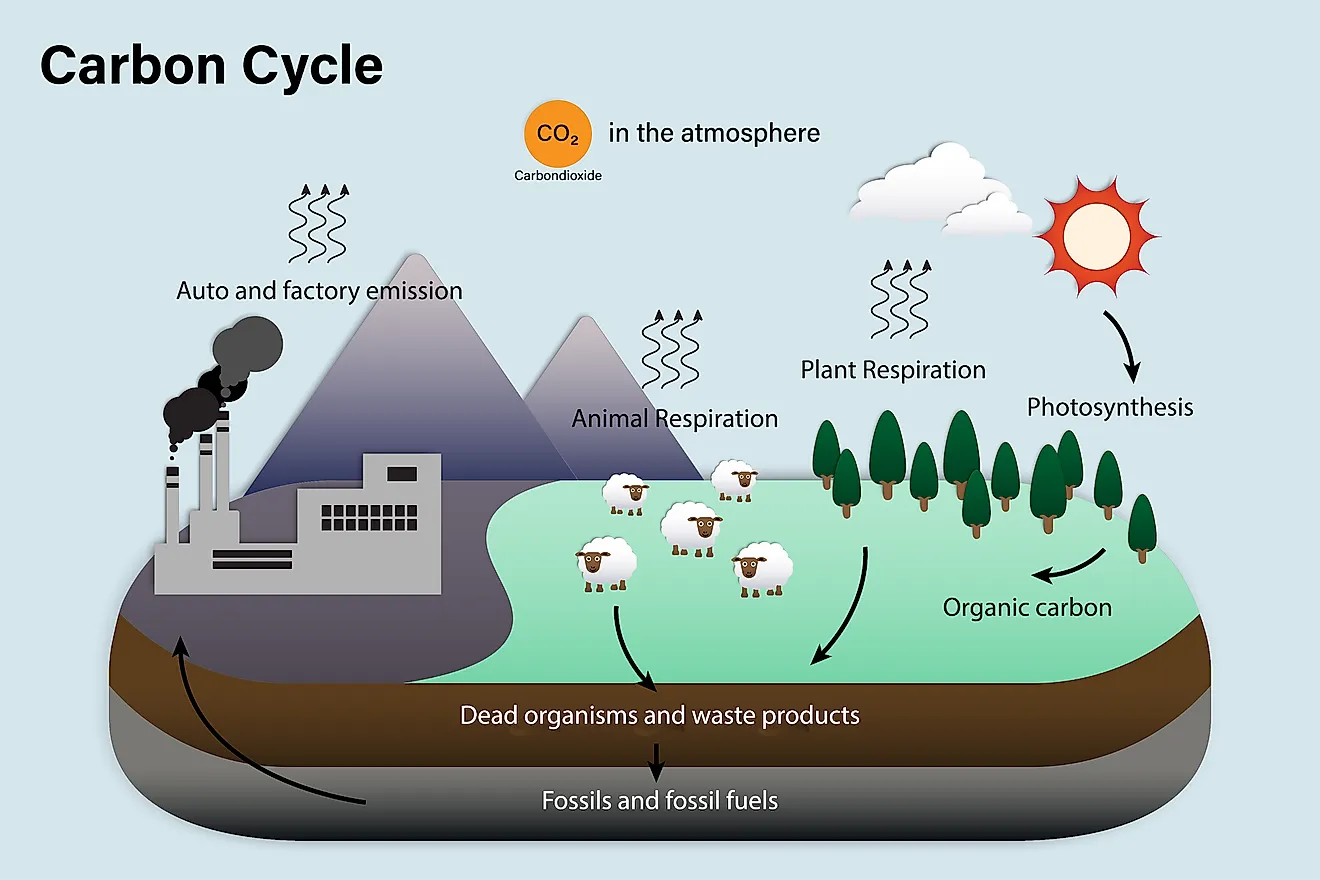
The carbon cycle is essential for maintaining life on Earth, as carbon is a fundamental component of all living organisms. Carbon atoms move through different forms and compounds in the environment, cycling between the atmosphere, organisms, and back into the atmosphere. This continuous movement is known as the carbon cycle.
Why Carbon is Important
Carbon is a key element in proteins, carbohydrates, and fats, which are the building blocks of cells in all living organisms, including animals, plants, and microorganisms. For instance, plant cell walls are made of cellulose, a type of carbohydrate that contains carbon.
1. Removing Carbon Dioxide from the Atmosphere
- Photosynthesis: Green plants remove carbon dioxide from the atmosphere during photosynthesis. During this process, plants convert carbon dioxide and water into glucose (a carbohydrate) and oxygen. The carbon from carbon dioxide becomes part of complex molecules, such as carbohydrates, proteins, and fats, in the plants.
2. Returning Carbon Dioxide to the Atmosphere
- Respiration: All living organisms—plants, animals, and microorganisms—return carbon dioxide to the atmosphere through respiration. In respiration, glucose is broken down with oxygen to release energy, producing carbon dioxide as a waste product.
- Combustion: Human activities like burning fossil fuels (coal, oil, and natural gas) release significant amounts of carbon dioxide into the atmosphere. Combustion of organic materials, such as wood or fossil fuels, releases the carbon stored in them back into the atmosphere as carbon dioxide.
3. Passing Carbon Between Organisms
- Feeding: When animals consume plants, the carbon in the plants becomes part of the animal's proteins, fats, and carbohydrates. This process passes carbon along the food chain.
- Decomposers and Detrivores: When plants and animals die, their bodies are broken down by decomposers (such as bacteria and fungi) and some animals known as detrivores. These organisms feed on dead organic material and release the carbon back into the environment, primarily as carbon dioxide during respiration.
4. Role of Microorganisms as Decomposers
- Decomposition: Microorganisms, such as bacteria and fungi, play a critical role in the carbon cycle by breaking down dead plants and animals. During decomposition, microorganisms consume the carbon compounds in the dead matter and return carbon dioxide to the atmosphere through their own respiration.
- Fossilisation: In some cases, the process of decomposition is slowed or blocked (e.g., due to a lack of oxygen or in cold environments). Under these conditions, dead organic matter may not decompose fully and can become fossilised over millions of years, eventually forming fossil fuels. When these fossil fuels are burned, the carbon is released back into the atmosphere.
The Three Key Processes of the Carbon Cycle
| Process | Carbon Starts As | Carbon Ends As |
|---|---|---|
| Photosynthesis | Carbon dioxide | Glucose |
| Respiration | Glucose | Carbon dioxide |
| Combustion | Fuel (e.g., wood, methane) | Carbon dioxide |
Summary of the Carbon Cycle
- Photosynthesis: Plants absorb carbon dioxide and convert it into organic compounds (glucose).
- Feeding: Carbon moves through food chains as animals eat plants and each other.
- Respiration: Living organisms release carbon dioxide back into the atmosphere by breaking down glucose for energy.
- Decomposition: Dead organisms are broken down by decomposers, and carbon is released back into the atmosphere.
- Combustion: Burning fossil fuels or organic matter releases carbon dioxide into the atmosphere.
Note
By cycling carbon through different forms, the carbon cycle ensures a continuous supply of carbon to support life on Earth.
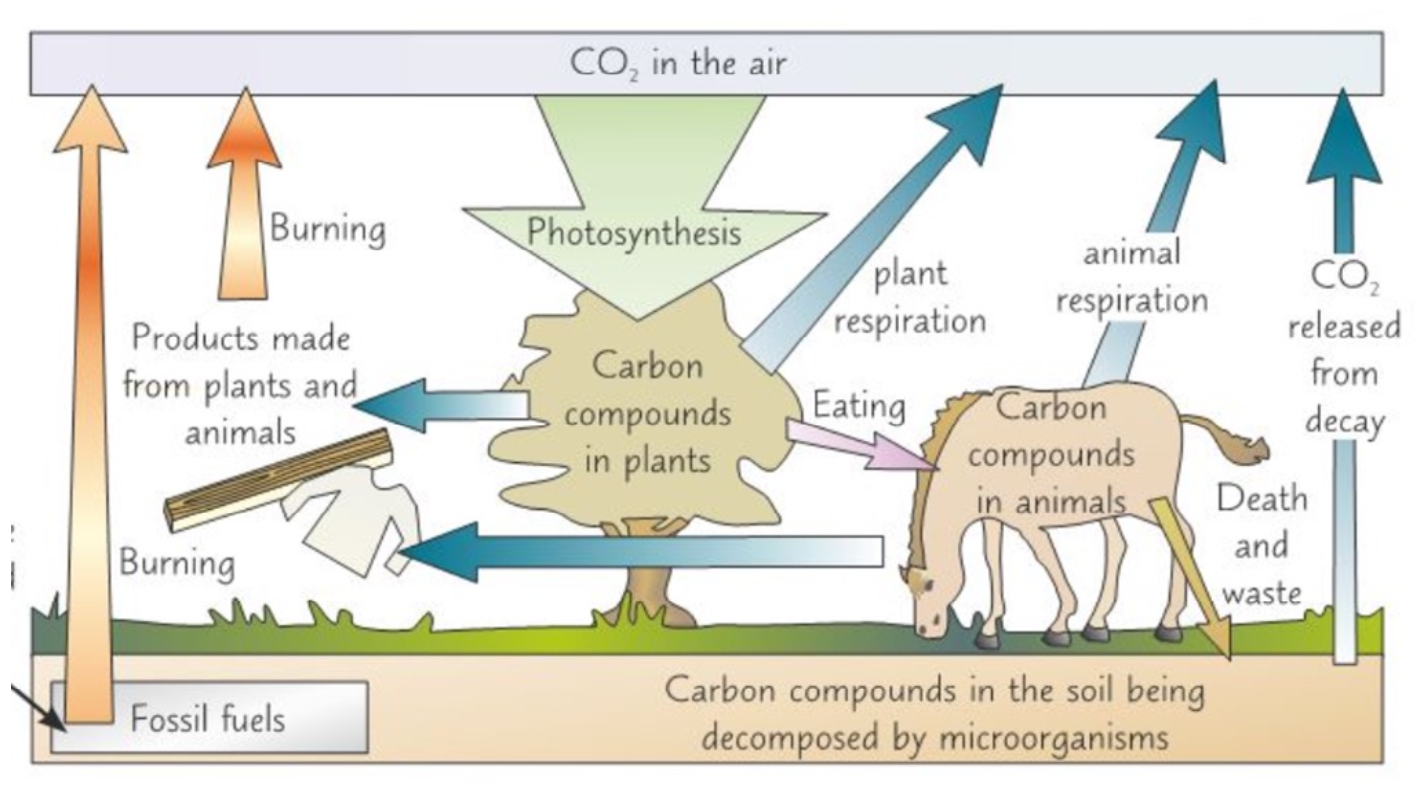
Only one arrow going down from Co2 to air. (whole thin powered by photosynthesis)