Water cycle (Edexcel GCSE Biology): Revision Notes
📚Revision Notes
Water cycle
Note
The water cycle is essential for maintaining life on Earth, as all living organisms rely on water to survive. The cycle ensures that water is continuously recycled through the environment. In areas of drought, special processes like desalination are used to produce potable water (safe drinking water).
Note
Importance of the Water Cycle
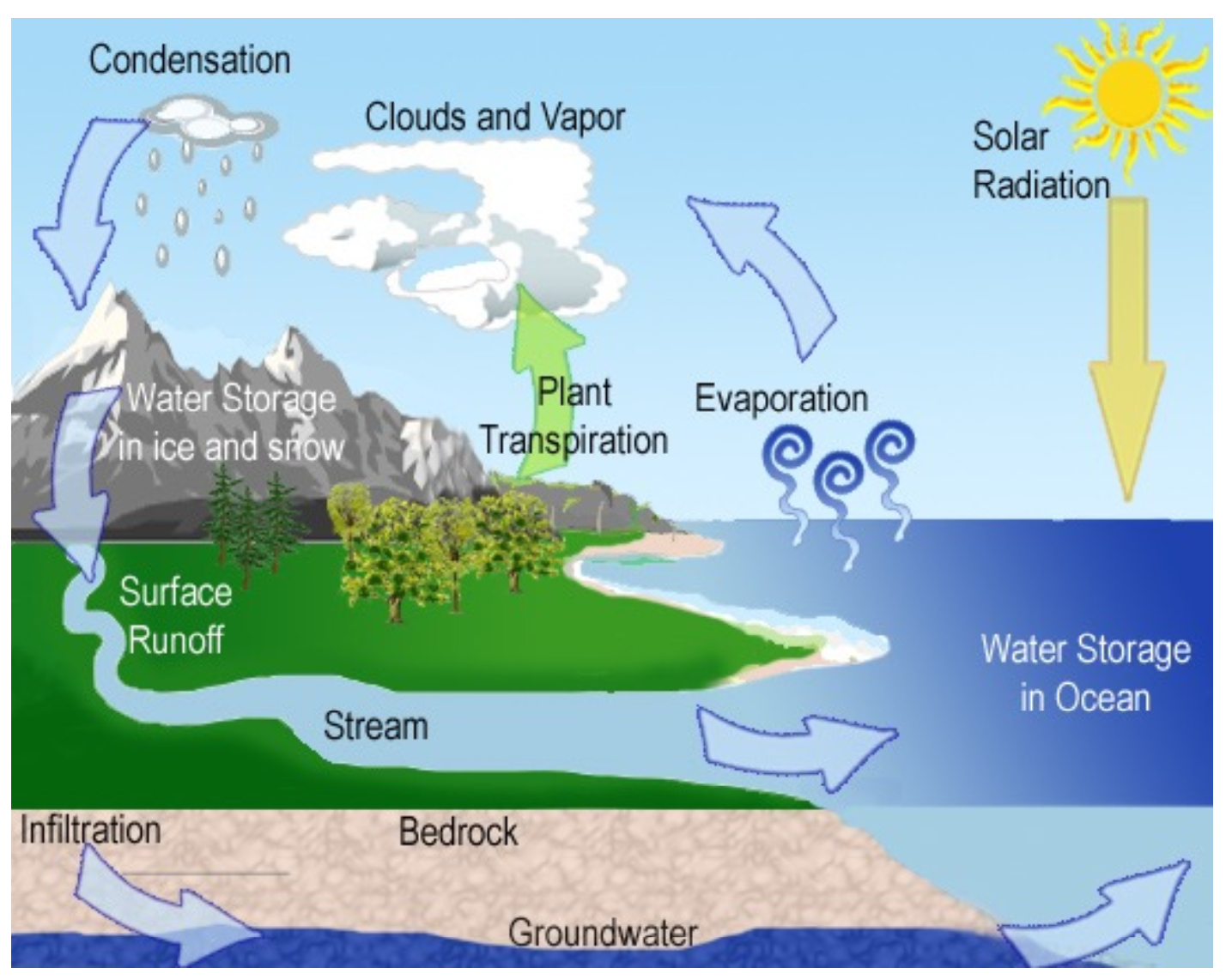
Water is constantly recycled through the water cycle, ensuring that it is available for organisms and ecosystems. The water cycle involves several key processes that move water through different parts of the environment.
Key Processes of the Water Cycle
- Evaporation:
- Energy from the Sun heats water in oceans, lakes, rivers, and ponds, turning it from a liquid into water vapour (gas). This process happens on all Earth's water surfaces, including puddles and soil moisture.
- Condensation:
- As the water vapour rises, it cools and condenses back into liquid water to form clouds. This process is essential for cloud formation and preparing water to fall back to Earth.
- Transport:
- Once in the clouds, water can be transported by strong winds to other areas, sometimes across vast distances. This is how water vapour can travel from oceans to land, where it falls as rain.
- Precipitation:
- When the water droplets in clouds grow large enough, they fall to Earth as precipitation (rain, snow, sleet, or hail). This brings water back to land, replenishing rivers, lakes, and soil.
- Surface Runoff:
- After precipitation, water may run along the surface of the land, especially when there is too much water for the ground to absorb. This excess water eventually flows into rivers and lakes, eventually reaching the sea.
- Infiltration:
- Water that falls on the ground can soak into the soil and be stored underground in aquifers. Aquifers are layers of rock that can hold water and release it slowly back into rivers or the ocean over time.
- Transpiration:
- Plants absorb water from the soil through their roots and release water vapour through small pores in their leaves during transpiration. This helps transport water from the ground to the atmosphere and plays an essential role in the water cycle.
Potable Water Production in Areas of Drought
In regions where freshwater is scarce due to drought, special techniques are used to produce potable water for drinking and agriculture. One of the most important methods is desalination, which involves removing salt and other impurities from seawater to make it drinkable.
Desalination:
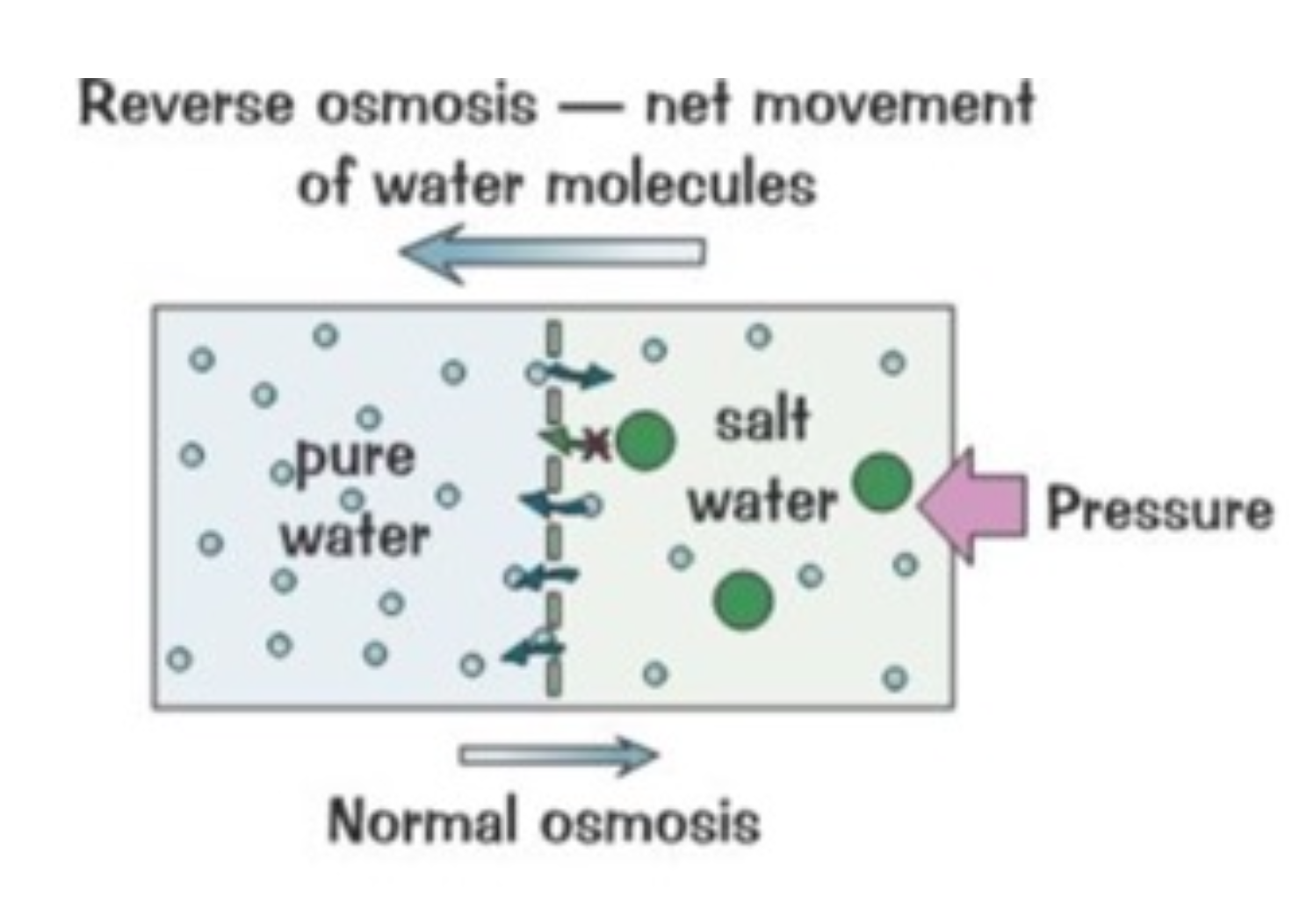
- Reverse Osmosis: In this process, seawater is forced through a semipermeable membrane, which allows water molecules to pass through while leaving salt and other contaminants behind.
- Distillation: Seawater is heated until it evaporates, and then the water vapour is condensed back into liquid water, leaving the salt behind. This purified water can then be used for drinking and irrigation.
- Challenges: Desalination requires a lot of energy and can be expensive, which limits its use in many areas. Additionally, the by-product of desalination is highly concentrated saltwater, which can harm marine environments if not properly managed.
Role of Microorganisms as Decomposers in the Water Cycle
Microorganisms, such as bacteria and fungi, play a crucial role in the water cycle by breaking down dead organic matter in ecosystems. Through decomposition, these microorganisms recycle nutrients and return water to the environment.
- Decomposition:
- Microorganisms decompose dead plants, animals, and waste products, breaking down the complex molecules in organic matter. This process releases water and nutrients back into the soil and the atmosphere, supporting plant growth and maintaining the balance of ecosystems.
- Carbon and Nitrogen Recycling:
- Microorganisms also help recycle carbon and nitrogen in the environment, which are essential for plant growth. This supports the water cycle by ensuring that ecosystems remain healthy and productive.
If it wasn't for the water cycle:
- We would run out of water - allows water to constantly be renewable
- Causes big problems - we rely on precipitation to get fresh drinking water. There are methods used to make potable water during drought desalination: Desalination- process that removes salt (mineral ions) from salt water. Thermal desalination water boiled in a vessel so that water evaporates. Steam rises to top and then condenses to form pure water.
Reverse osmosis- modern method of desalination osmosis- net movement of water across partially permeable membrane from a high concentration to a low concentration reverse osmosis- reverses this process to get rid of impurities in water
- Salt water is first treated to remove solids before being fed at a very high pressure into a vessel containing a partially permeable membrane
- Pressure causes water molecules to move in opposite direction to osmosis from a higher salt concentration to a lower salt concentration
- As water is forced through membrane salts are left behind, removing them from water.