Energy in circuits (Edexcel GCSE Physics Combined Science): Revision Notes
📚Revision Notes
Energy in circuits
Energy Transferred in Circuits:
The amount of energy transferred in a circuit depends on the current (I), potential difference (V), and the time (t) the current flows.
When an electrical charge passes through a component and experiences a change in potential difference (V), energy is transferred.
- The energy is supplied by the power source to raise the charge through a potential difference.
- The charge then gives up this energy when it falls through a potential drop in components elsewhere in the circuit.
Note
Formula for Energy Transfer:
The energy transferred (E) in a circuit can be calculated using the following formula:
Where:
- E is energy in joules (J).
- V is the potential difference (voltage) in volts (V).
- I is the current in amperes (A).
- t is time in seconds (s).
Energy Transfer in Components:
- The larger the current or potential difference across a component, the more energy is transferred to it.
- This energy can be transferred into different energy stores, depending on the device.
- Example: In a light bulb, electrical energy is transferred into light and thermal energy.
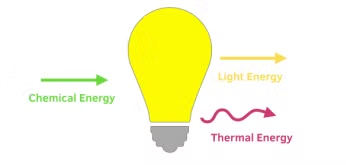
Electrical Appliances:
- Electrical appliances are designed to transfer energy from cells and other sources to useful forms of energy when a current flows.
Note
For example:
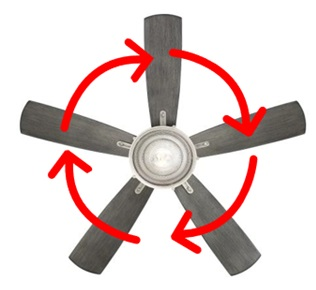
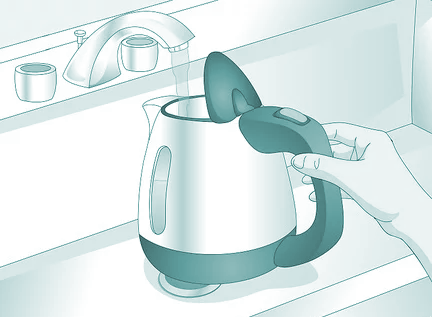
Heating Effects in Circuits
When a current flows, some energy is always transferred to the thermal energy stores of the components, as the resistance in the circuit generates heat.
- The higher the current, the more energy is transferred to heat the components, increasing their temperature. Heating a circuit usually increases the resistance of the components (e.g., the wire becomes hotter, and resistance rises).
Advantages and Disadvantages of Heating Circuits
| Disadvantages | Advantages |
|---|---|
| • Reduced efficiency: When components get hot, less energy is transferred to useful energy stores (like light or motion). Most of the energy is transferred to thermal energy instead. | • Heating circuits can be useful in some appliances: ◦ Toasters: The wire inside the toaster has a high resistance, so it heats up when a current flows. This transfers energy to the bread, cooking it. ◦ Filament bulbs and electric heaters work in a similar way: they heat up and transfer energy to thermal energy stores, providing light or warmth. |
| Damage to components: If a component heats up too much, it can melt or become damaged, causing the circuit to stop working. | |
| To protect circuits, we use fuses, which melt and break the circuit if the current gets too high. |