Pigs (Leaving Cert Agricultural Science): Revision Notes
📚Revision Notes
Pigs
Pig terminology
Understanding the basic vocabulary used in pig farming is essential for studying pig production systems. These terms form the foundation for all further learning about swine management.
Note
Mastering these basic terms is crucial as they appear throughout all aspects of pig production and form the foundation for understanding more complex breeding and management concepts.
Sow - A female pig that has given birth to at least one litter. These are the breeding females in a pig production system and form the core of any commercial operation.
Boar - A male pig used for breeding purposes. Boars are carefully selected for their genetic qualities and ability to pass on desirable traits to their offspring.
Bonham - The Irish term for a piglet or baby pig. This is the standard term used in Irish agricultural contexts when referring to young pigs from birth until weaning.
Gilt - A young female pig that has not yet given birth to her first litter. Gilts are potential breeding stock that will eventually become sows once they have their first litter.
Weaner - A bonham that has been separated from the sow and moved onto solid feed, typically at 4–5 weeks of age.
Fattener (finisher) - A pig being grown on from weaning to slaughter weight.
Hybrid vigour (heterosis) - The improved performance of crossbred offspring (growth rate, litter size, survivability) compared to the average of their purebred parents.
The pig as a monogastric animal
Unlike cattle and sheep, pigs are monogastric — they have a single-chambered stomach and cannot digest large quantities of fibrous material like grass or silage. This has major implications for how they are fed and managed:
- Pigs require concentrated, cereal-based rations (barley, wheat, soya) rather than forage-based diets.
- They cannot synthesise certain essential amino acids, so diets must supply lysine, methionine, threonine and tryptophan directly.
- Because the digestive tract is short, feed quality and balance directly determine growth rate and FCR — there is no rumen to buffer a poor diet.
Dental formula - The adult pig dental formula is 2(I 3/3, C 1/1, P 4/4, M 3/3) = 44 teeth. The sharp "needle teeth" of newborn bonhams are the reason teeth are traditionally reduced shortly after birth (see welfare note below).
Pig breeds
Different pig breeds have been developed for specific production purposes and environmental conditions. In Ireland, both indoor and outdoor systems use different breeds optimised for their respective environments.
Indoor pig breeds
Landrace This breed represents one of the primary indoor pig breeds used in Irish production systems. Landrace pigs are long-bodied, white in colour, with lop ears and are known for their excellent maternal abilities, large litters and good meat production qualities. They are the standard maternal line in Irish indoor units.

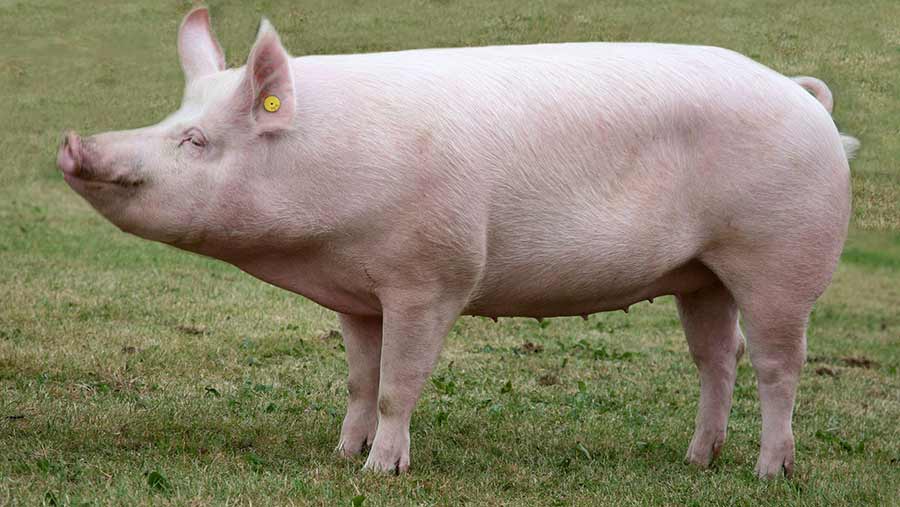
Large White (Yorkshire) The Large White is a British breed originating in Yorkshire, England. These pigs are large, entirely white in colour, with erect ears and a slightly dished face. They produce high quality lean meat, have large litters and excellent milk production, and cross extremely well with Landrace. They are one of the most widely used breeds in commercial pig production worldwide.
Outdoor pig breeds
Duroc The Duroc breed has American origins and shows several characteristics that make it particularly suitable for outdoor production systems. These pigs have distinctive lop ears that hang down over their eyes. They are dark red/brown in colour, which helps protect them from sun damage in outdoor environments. Duroc pigs are notably hardy and can withstand various weather conditions. They produce lean meat with good marbling and are excellent terminal sires, meaning they pass on desirable meat qualities to their offspring.

Large White The Large White breed is versatile enough to be used in both indoor and outdoor systems, demonstrating its adaptability to different production environments.
Breeding strategy: Criss-cross breeding
Ireland predominantly uses a criss-cross breeding system (sometimes written "cross-cross"), which has become the most common approach due to its economic and genetic advantages. This system works by reducing the cost of producing quality pigs while maintaining the benefits of hybrid vigour in the offspring.
Important
The criss-cross breeding system is Ireland's predominant breeding strategy because it maintains hybrid vigour while keeping costs low by requiring only purebred boars rather than maintaining entire purebred herds.
The system operates by mating crossbred gilts with purebred boars. The boars used are typically either Landrace or Large White breeds. The resulting gilts inherit approximately 50% Landrace genes and 50% Large White genes, creating a balanced genetic combination.
The best performing females from the first generation cross are retained for breeding purposes. These selected females are then mated with a Large White boar to maintain hybrid vigour in their offspring. In subsequent generations, the best females are again selected for breeding, but this time the boar breed is switched - a Landrace would be used instead of Large White, and so on in alternating fashion.
To prevent inbreeding and maintain genetic diversity, boars must be replaced every two years. This regular replacement ensures that genetic quality is maintained and inbreeding depression is avoided.
A Duroc terminal sire is sometimes used on these crossbred females to produce pigs purely for slaughter, combining maternal traits (Landrace × Large White) with the Duroc's superior meat quality.
Advantages of criss-cross breeding
Note
Economic Benefits of Criss-Cross Breeding
This breeding system offers significant cost advantages because only the boar needs to be purebred, dramatically reducing the expense of maintaining breeding stock while still achieving the benefits of hybrid vigour in offspring.
This breeding system offers significant economic benefits because only the boar needs to be purebred, reducing the overall cost of maintaining breeding stock. Additionally, hybrid vigour is maintained in the offspring produced, ensuring good performance characteristics in terms of growth rates, feed conversion efficiency, and overall productivity.
Pig production systems in Ireland
Integrated (indoor) pig production unit
Modern pig farming in Ireland is dominated by integrated production units that combine multiple stages of pig production on the same farm. These units consist of a breeding and rearing unit alongside a fattening unit, all located on the same property.
Note
Benefits of Integrated Production Systems
Integrated units provide superior biosecurity and animal welfare by keeping all production stages on one site, eliminating the stress and disease risks associated with transporting pigs between different farms.
Integrated units offer several important advantages for pig producers. They are self-contained systems, which significantly reduces the risk of disease entry onto the farm from external sources. This biosecurity advantage is crucial for maintaining herd health. Additionally, these systems eliminate transport stresses on the pigs, as animals do not need to be moved between different farms at various stages of their production cycle.
Outdoor pig production
Outdoor systems are smaller scale in Ireland but are increasingly important for welfare-labelled and organic pork markets. Key features:
- Sows are kept on free-draining pasture in paddocks, with individual arcs (huts) for shelter and farrowing.
- Paddocks are rotated regularly to prevent soil poaching and parasite build-up.
- Breeds used are hardy and pigmented — most commonly Duroc, Saddleback or crosses — to cope with weather and sunlight.
- Sows may be nose-ringed in some systems to limit rooting damage (though this is controversial on welfare grounds).
- Higher welfare outcomes and strong consumer appeal, but lower stocking density, greater weather dependence and higher piglet mortality are drawbacks compared to indoor systems.
Oestrous and gestation details
Understanding the reproductive cycle of pigs is crucial for effective breeding management and production planning.
The oestrous cycle in pigs lasts 21 days, with the duration of oestrous itself being 2 to 3 days. During this fertile period, sows can be successfully mated.
The gestation period is 114 days, which can be easily remembered as 3 months, 3 weeks, and 3 days. Following birth, the lactation period lasts 28 days, during which bonhams depend on their mother's milk for nutrition.
Note
Easy Memory Aid for Gestation
The pig gestation period of 114 days can be remembered as "3-3-3": 3 months, 3 weeks, and 3 days. This simple formula makes it easy to calculate due dates for farrowing.
The ultimate aim in pig production is to achieve more than two litters per sow per year, maximising productivity and efficiency of the breeding programme.
Dry sow house
The dry sow house serves as accommodation for sows and gilts during specific phases of their reproductive cycle. Sows that have recently weaned a litter are housed here and typically come back into heat within 5 to 7 days after weaning.
These females are serviced through artificial insemination or natural mating with a boar, using a double servicing approach to maximise conception rates. After mating, sows remain in the dry sow house until the end of their pregnancy period.
Under EU welfare legislation, sows must be kept in groups from 4 weeks after service until 1 week before farrowing — individual sow stalls for this period are banned. This is an important welfare improvement to be aware of.
Double servicing
Example
Worked Example: Double Servicing Process
Step 1: Initial service within 12 hours of detecting heat
- Gilt served by boar OR artificial insemination
Step 2: Second service 12-24 hours later
- Same or different method used
- This increases conception rates by 15-20%
Result: Higher conception rates and larger litter sizes
Double servicing involves serving sows twice within a 24-hour period, using either artificial insemination, natural mating with a boar, or both methods. This practice significantly increases conception rates and litter sizes. Gilts are typically served by the boar first, followed by artificial insemination.
Boar effect
The boar effect is a management technique that involves placing a boar within sight and smell of sows to stimulate their oestrous cycle and encourage them to come into heat. Pheromones in the boar's saliva (androstenone) are the active trigger. This natural stimulation helps synchronise breeding and improve overall reproductive efficiency.
Care during pregnancy
Proper care during pregnancy is essential for ensuring healthy bonhams and maintaining sow condition. In early pregnancy, some sows may be over-thin after rearing a large litter, requiring extra feed to restore body condition.
During the final four weeks of pregnancy, sows receive extra feed to ensure strong bonhams and adequate milk production after farrowing. Sows are moved to the farrowing house one week before they are due to farrow, allowing them to settle into the new environment.
Note
Pregnancy Feeding Strategy
Feeding management during pregnancy follows a two-phase approach: early pregnancy focuses on body condition recovery for thin sows, while the final month emphasises preparation for farrowing and milk production.
Farrowing house
The farrowing house is where sows give birth and care for their newborn bonhams. Before entering, sows are treated for parasites and washed to prevent transmission to their offspring and maintain hygiene in the disinfected farrowing environment.
Sows are placed in farrowing crates that allow movement while preventing them from accidentally crushing their bonhams. Infrared lamps and heat pads maintain appropriate temperatures for the young pigs in the creep area away from the sow.
The family unit remains in the farrowing house until bonhams are weaned at 4 to 5 weeks of age.
Note
Welfare issue — farrowing crates
Conventional farrowing crates are under increasing welfare scrutiny because they severely restrict sow movement. Several EU member states have moved towards free-farrowing or temporary confinement systems, which aim to reduce piglet crushing while still allowing the sow freedom of movement for most of the lactation period.
Bonham facts and care
Understanding bonham development and care requirements is crucial for successful pig production.
Bonhams weigh between 1 and 1.5 kg at birth, with an average litter size of 11 (modern prolific sows can exceed 14). They reach their slaughter weight of 82 kg at 6 months of age. Both male and female bonhams reach puberty at 6 months. The target number of bonhams weaned per sow per year ranges from 23 to 29.
Care of newborn bonhams
Important
Critical First Week Procedures
These procedures must be completed within the first week of life to ensure bonham health and welfare. However, under EU Council Directive 2008/120/EC, tail-docking and teeth reduction are not permitted as routine procedures — they may only be carried out where there is evidence of tail-biting or teat damage, and only after other measures (enrichment, reduced stocking density, better ventilation) have been tried first.
Immediately after birth, bonhams' needle teeth may be ground or clipped to protect the sow's teats during suckling — but only where damage is evident, not as a routine practice. Between days 2 and 3, bonhams receive iron injections to prevent anaemia, as they are born with limited iron stores and sow's milk is low in iron.
Tails may be docked during the first week after birth to prevent tail biting behaviours later in life, again only where other measures have failed. Ear notching is performed on future replacement gilts (female bonhams) for identification purposes. Male piglets not intended for breeding may be surgically castrated within the first 7 days to prevent boar taint — after day 7, castration may only be performed under anaesthetic and analgesia by a veterinarian.
Bonhams are allowed to suckle for 4 to 5 weeks while their mother receives a suckling ration. When bonhams are one week old, creep ration containing lysine and protein is introduced to supplement their diet.
Bonhams are weaned at 4 to 5 weeks old and moved to the first stage weaner house to begin the next phase of their development.
Weaner management
Weaner management begins when bonhams are moved to the first stage weaner house, where they remain for one month. Here, they are grouped according to size and weight to ensure even development and reduce competition.
Weaners receive a specialised weaner ration ad lib containing 18-20% protein and 1.3% lysine to support their rapid growth phase. After one month, they move to the second stage weaner house for another month, where they are regrouped based on their current size and weight.
Note
Weaner Housing Design Features
Weaner houses incorporate specific design elements to support young pig development: under-floor insulation and low roofs work together to conserve heat and maintain optimal growing conditions.
Weaner houses feature under-floor insulation and low roofs to conserve heat, maintaining a temperature of 24°C to support optimal growth and comfort.
Fattener management
At three months old, pigs are moved from weaner housing to fattener management systems. Like weaners, fatteners are grouped by weight and size to promote even growth and reduce competition for feed.
Fatteners receive a fattener ration ad lib containing 14-16% protein and 1.1% lysine. Feeding may be restricted before slaughter to prevent excessive fat deposition and ensure optimal carcase quality.
Pigs remain in fattener housing for three months until slaughter at 6 months old, weighing 82 kg. Gilts being kept for breeding remain in the system for two extra months to reach their target weight of 100-140 kg before being moved to the dry sow house for servicing.
Sows are typically culled at 4 to 5 years when litter size and health begin to decline.
Housing temperatures
Maintaining appropriate temperatures in different housing systems is critical for pig welfare and production efficiency.
Important
Temperature Requirements by Housing Type
Maintaining these specific temperature ranges is essential for optimal pig performance. Deviation from these temperatures leads to increased feed consumption, reduced growth rates, and poor feed conversion efficiency.
Different housing types require specific temperature ranges:
- Farrowing house (bonham creep area): 20-30 degrees Celsius
- Dry sow house: 20 degrees Celsius
- Weaner house: 24 degrees Celsius
- Fattener house: 22 degrees Celsius
Importance of critical temperature in pig rearing
Critical temperature represents the environmental temperature at which pigs can maintain their body temperature without losing weight. When temperatures fall below this critical point, pigs consume more feed to generate body heat, negatively impacting feed conversion efficiency. Maintaining proper critical temperatures helps achieve good feed conversion ratios and optimal production performance.
Sow production year
The annual production cycle for sows follows a carefully planned timeline that maximises productivity while ensuring animal welfare. This cycle involves alternating periods between dry sow houses and farrowing houses throughout the year.

Food Conversion Ratio (FCR)
Food Conversion Ratio measures the efficiency with which pigs convert feed into body weight gain. Understanding FCR is essential for evaluating production efficiency and profitability. Feed is around 70–80% of the total cost of producing a pig, so even small improvements in FCR have a large economic effect.
Example
Worked Example: FCR Calculation
Step 1: Determine feed consumed Weaner consumes 35 kg of feed over growth period
Step 2: Determine weight gain Weaner gains 20 kg in weight
Step 3: Calculate FCR FCR = Feed consumed ÷ Weight gain FCR = 35 kg ÷ 20 kg = 1.75
Result: This matches the target FCR of 1.75 for weaners
Different production stages have varying FCR values:
- Weaners: 1.75 kg of feed per kg of weight gain
- Fatteners: 3.25 kg of feed per kg of weight gain
A lower FCR is better — it means less feed is required per kg of liveweight gain.
Factors affecting FCR
Several factors influence feed conversion efficiency in pig production:
Diet - Feed rations should contain balanced amounts of protein, vitamins, minerals, and essential amino acids such as lysine. When pigs don't receive adequate nutrition, they consume more feed to meet their requirements, increasing FCR values and reducing efficiency.
Breed - Genetic factors play a significant role, as boars can pass on efficient feed conversion traits to their offspring through selective breeding programmes.
Health - Only healthy animals can achieve their full potential regarding feed conversion efficiency. Disease, parasites, or other health issues will negatively impact FCR.
Housing - Well-ventilated and properly heated houses help maintain optimal FCR values by reducing energy requirements for thermoregulation.
Age/stage of growth - Younger pigs lay down lean tissue more efficiently than older pigs, which is why weaner FCR is much lower than fattener FCR.
Biosecurity
Biosecurity is a critical management area on modern pig farms and is a common exam topic. It refers to all measures taken to prevent disease-causing organisms from entering or spreading within a unit. Irish pig farms operate under strict biosecurity because many of the most damaging pig diseases (African Swine Fever, Classical Swine Fever, PRRS, Swine Influenza) are either notifiable, exotic, or capable of devastating a herd.
Important
Key Biosecurity Measures on a Pig Unit
- Perimeter fencing to exclude wild pigs, dogs and unauthorised people
- "All-in, all-out" production — filling a house in one batch and emptying it fully before cleaning and disinfection
- Shower-in / shower-out and provision of farm-only clothing and boots for all staff and visitors
- Disinfectant boot dips at the entrance to every house
- Visitor restrictions — signed log book, minimum 48-hour "pig-free" period before entry
- Quarantine of incoming breeding stock for 4–6 weeks before joining the main herd
- Vermin and wild bird control, as rodents and birds spread disease
- Hygiene for lorries and trailers — cleaned and disinfected before and after use
- Carcase disposal through licensed renderers, never on-farm
The self-contained nature of integrated units is itself a biosecurity advantage, as it removes the need to bring pigs in from other sources.
Animal welfare
The new specification places significant weight on animal welfare across all enterprises. Pig welfare is commonly assessed against the Five Freedoms:
- Freedom from hunger and thirst
- Freedom from discomfort
- Freedom from pain, injury and disease
- Freedom to express normal behaviour
- Freedom from fear and distress
Note
Key EU pig welfare requirements (Council Directive 2008/120/EC)
- Routine tail docking and teeth clipping/grinding are prohibited — permitted only as a last resort with evidence of injury, after other measures have been tried.
- Sow stalls are banned from 4 weeks after service until 1 week before farrowing — pregnant sows must be housed in groups for most of gestation.
- Pigs must have permanent access to manipulable material (e.g. straw, wood, rope) to allow rooting and investigatory behaviour, which reduces tail biting and stress.
- Minimum space allowances and light levels are specified.
- Surgical castration after 7 days of age requires anaesthetic and prolonged analgesia.
Welfare problems in intensive pig production typically arise from high stocking density, slatted floors without enrichment, poor ventilation, and barren environments, which can lead to tail biting, aggression, and stereotypies. Addressing the underlying environment — rather than mutilating the pigs — is the direction both the law and consumer expectations are pushing.
Sustainability and environmental impact
Pig production has a significant environmental footprint, and the syllabus now expects students to understand and discuss these issues.
Important
Main environmental challenges in pig production
- Slurry (pig manure) management — pig slurry is high in nitrogen, phosphorus and potassium and must be stored in covered tanks and spread according to a Nutrient Management Plan under the Nitrates Directive (S.I. Good Agricultural Practice regulations).
- Ammonia emissions — Ireland has binding ammonia reduction targets under the National Emissions Ceilings Directive; pig units are a concentrated source.
- Greenhouse gas emissions — mainly methane from slurry and nitrous oxide from land-spread manure; reduced through low-emission slurry spreading (LESS) such as trailing shoe or injection, and covered slurry stores.
- Water quality — runoff from yards and over-application of slurry can cause eutrophication of rivers and lakes.
- Imported feed — soya in pig rations is linked to deforestation in South America; sustainability schemes require certified soya or home-grown protein alternatives (beans, peas, rapeseed).
Sustainability measures on a pig unit
- Anaerobic digestion of slurry to produce biogas and reduce emissions
- Nutrient Management Planning to match slurry application to crop requirements
- Phase feeding — adjusting ration protein levels to growth stage reduces N excretion
- Improved FCR — better feed efficiency directly reduces emissions per kg of pork produced
- Use of home-grown feed — reduces carbon footprint and reliance on imported soya
- Energy efficiency — insulation, LED lighting, heat recovery ventilation
Management
The overall health and productivity of pigs depends heavily on the skill and knowledge of the farmer (stockmanship). Proper management encompasses all aspects of production from breeding through to slaughter, and increasingly includes record-keeping, welfare auditing, environmental compliance and biosecurity planning as well as the traditional husbandry skills.
Carcase grading for pigs
Pig carcases are evaluated according to lean meat percentage content to determine their commercial value. The assessment uses the Hennessy Grading Probe, which measures specific carcase characteristics automatically on the slaughter line.
Note
SEUROP Grading System
The carcase grading system uses the classification SEUROP, where each letter represents a different quality grade based on measurable carcase characteristics. S = superior (≥60% lean), down to P = poor.
Carcases are classified using the grading system: S-E-U-R-O-P, with grades assessed based on:
- Depth of fat over the shoulder
- Depth of fat over the loin
- Length of carcase
These measurements help determine the quality and value of the carcase for commercial purposes — higher grades attract a price premium.
Diseases
Disease management is a critical aspect of successful pig production. Understanding common diseases, their causes, symptoms, and treatment options helps maintain herd health and productivity.
Important
Major Pig Diseases and Prevention
Disease prevention is always more cost-effective than treatment. These common diseases can be largely prevented through proper management, hygiene, and timely interventions.
Anaemia - This nutritional condition results from lack of iron in the diet. Affected pigs show pale skin, weakness, rapid breathing, and poor growth rates. Prevention involves giving iron injections to bonhams at 2-3 days old.
Pneumonia - This respiratory condition is caused by a combination of bacteria, viruses (such as PRRS and Swine Influenza) and predisposing factors like chills, poor ventilation and dust. Symptoms include coughing, fever, laboured breathing, reduced growth and possible death in severe cases. Prevention focuses on good housing, proper ventilation, temperature control and vaccination.
Coliform Scour - This bacterial disease (caused by E. coli) results from poor hygiene, chilling, and stress around weaning. It causes diarrhoea and dehydration in affected pigs, particularly young bonhams. Management requires strict attention to hygiene, particularly in farrowing houses, along with adequate colostrum intake.
Erysipelas - This bacterial condition (caused by Erysipelothrix rhusiopathiae) causes distinctive diamond-shaped skin rashes, fever and lameness, and can lead to abortion in pregnant sows. Control involves routine vaccination of breeding stock, good hygiene practices and antibiotic therapy in clinical cases.
African Swine Fever (ASF) - A notifiable viral disease with almost 100% mortality. Not present in Ireland, but has spread widely through wild boar and domestic pigs in Europe. Prevention is strict biosecurity, a ban on feeding food waste (swill) to pigs, and vigilance around wild boar.
Remember!
Summary
Key Points to Remember:
- Basic terminology: Sow (female), Boar (male), Bonham (piglet), Gilt (young female) - these terms are fundamental to all pig production discussions
- Pigs are monogastric: they need cereal-based, balanced rations with added lysine — they cannot thrive on grass alone
- Gestation is "3-3-3": 3 months, 3 weeks, and 3 days (114 days total) - easy to remember and crucial for breeding management
- Criss-cross breeding dominates in Ireland: This system maintains hybrid vigour while reducing costs by using only purebred boars
- FCR varies by stage: Weaners (1.75) are more efficient than Fatteners (3.25) - younger pigs convert feed more efficiently, and feed is ~70–80% of production cost
- Welfare law matters: Routine tail docking, teeth clipping and prolonged sow stalls are banned under EU Directive 2008/120/EC — only last-resort use is permitted
- Biosecurity is central: All-in/all-out, boot dips, visitor controls, quarantine of incoming stock protect against ASF and other devastating diseases
- Sustainability: Slurry management, LESS spreading, improved FCR and home-grown protein reduce the environmental footprint
- Disease prevention is key: Iron injections, proper housing temperatures, vaccination and strict hygiene prevent most common pig diseases