Poultry (Leaving Cert Agricultural Science): Revision Notes
📚Revision Notes
Poultry
Introduction to poultry farming
Poultry farming is a major intensive livestock enterprise in Ireland, producing chicken meat (broilers) and eggs (layers) as well as turkeys, ducks and geese. It provides high-quality animal protein — chicken is the most consumed meat in Ireland and eggs are a staple food.
The Irish poultry sector:
- Accounts for approximately 2% of agricultural output and supports around 6,000 jobs.
- Is concentrated in the Cavan–Monaghan border region (which produces around 70% of national output) and in Cork–Limerick.
- Is based on around 450 broiler farms and 240 egg farms supplying a small number of large vertically integrated processors (e.g. Manor Farm / Carton Bros, Western Brand, Silver Hill for duck).
- Produces over 100 million broilers per year and is a net importer of poultry meat despite strong domestic production.
Note
Unlike dairy or beef, Irish poultry production is dominated by vertical integration: the same company typically owns or contracts the breeders, hatchery, feed mill, growers and processing plant. This gives tight control over genetics, feed, biosecurity and traceability.
Poultry terminology
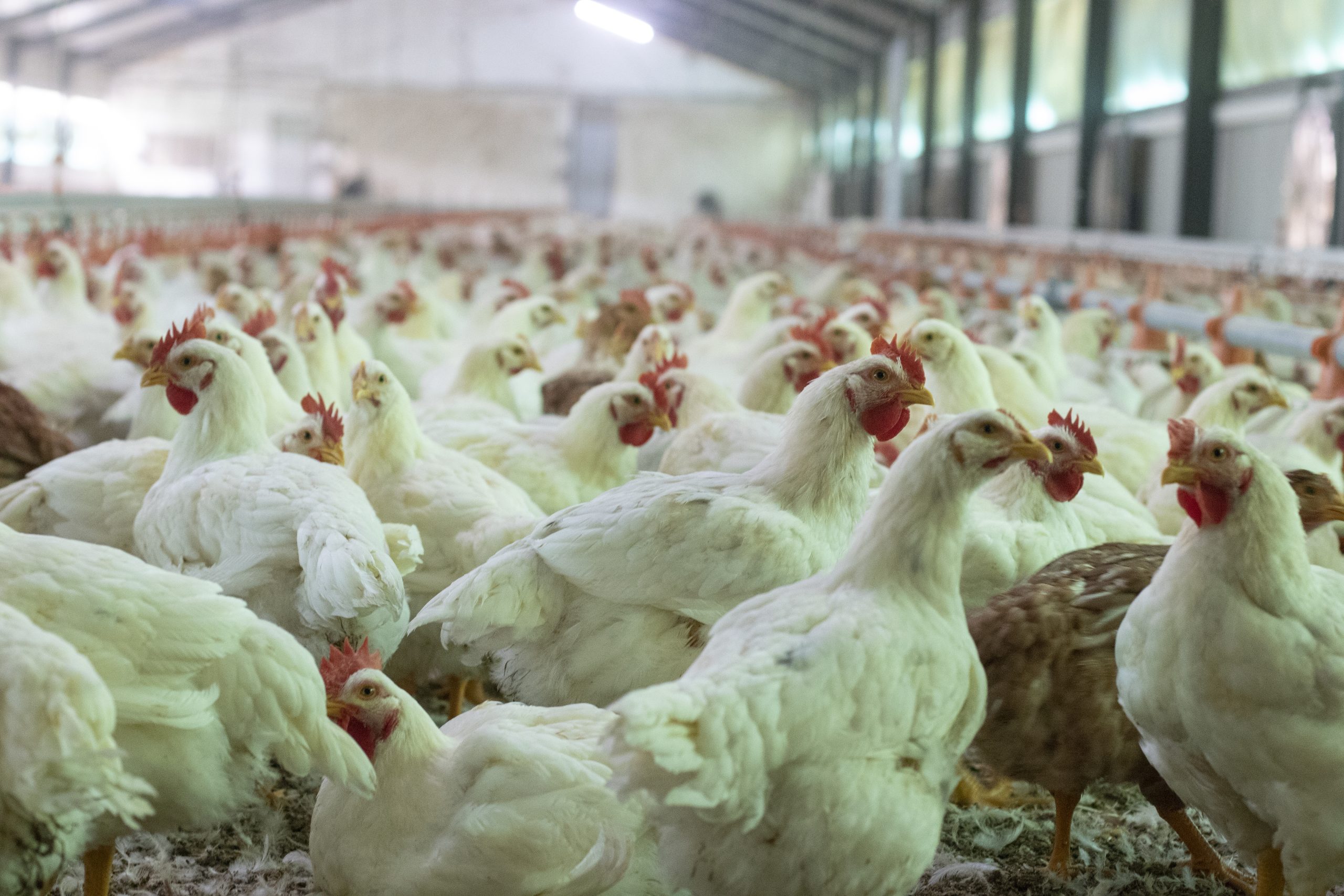
- Broiler — a chicken reared for meat, slaughtered at ~5–6 weeks.
- Layer (laying hen) — a hen kept for egg production, productive from ~18–20 weeks to ~72 weeks.
- Pullet — a young female bird that has not yet started laying.
- Cockerel — a young male bird.
- Cock / rooster — a mature male bird.
- Chick — a newly hatched bird.
- Breeder — a parent-stock bird kept to produce fertile eggs for hatching into broiler or layer chicks.
- Point of lay — the age (~18–20 weeks) at which a pullet begins laying her first eggs.
- Brooding — the care of newly hatched chicks until they can maintain their own body temperature (~3–4 weeks).
The commercial breeds used in Ireland
Traditional breeds (e.g. Rhode Island Red, Leghorn, Sussex) are almost never used commercially. Irish production relies on highly bred hybrid strains supplied by a few international breeding companies.
Broiler hybrids:
- Ross 308 and Cobb 500 are the dominant strains. They reach a slaughter weight of ~2.2 kg in 35–42 days with an FCR of around 1.6.
Layer hybrids:
- ISA Brown, Lohmann Brown and Hy-Line are the main strains. A modern commercial layer produces around 300–320 eggs in a 52-week laying cycle.
Note
Hybrid strains are produced by crossing specialised pure lines that have been selected for decades — broiler lines for rapid growth, feed conversion and breast-meat yield; layer lines for egg numbers, shell quality and feed efficiency. This is why farmers buy day-old chicks from hatcheries rather than breeding their own replacements.
Production systems
Irish poultry is overwhelmingly intensive indoor production. However, students must know the welfare-based system classifications because these are what consumers see on egg cartons and on processed chicken labels.
For broilers (meat chickens)
- Standard indoor (intensive) — the vast majority of Irish broilers. Birds are kept in large insulated, climate-controlled houses with deep litter (wood shavings), automatic feed and water, and controlled lighting. Stocking density is regulated under Council Directive 2007/43/EC (typically up to 33–39 kg/m² depending on welfare conditions).
- Free-range — continuous daytime access to an outdoor range; slower-growing strains; slaughtered at ~8 weeks.
- Organic — free-range plus organic feed, lower stocking density and later slaughter (up to ~12 weeks).
For layers (egg production)
Since 2012 the EU has banned conventional (barren) battery cages under Council Directive 1999/74/EC. The four permitted systems now match the egg marking code stamped on every Class A egg:
- Code 3 — Enriched (colony) cages: larger cages with perches, a nest area, scratching material and more space per hen.
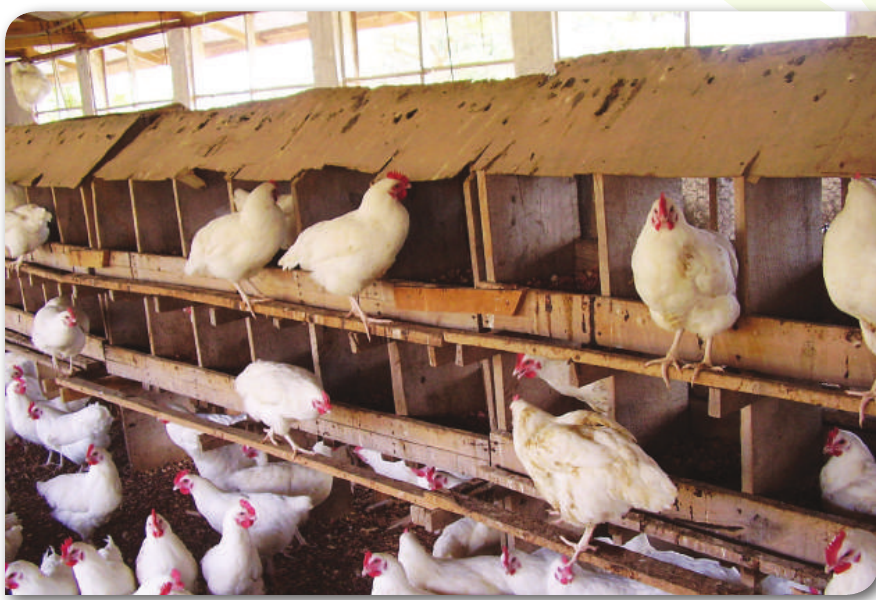
- Code 2 — Barn: hens kept loose inside a house with litter, perches and nest boxes but no outdoor access.
- Code 1 — Free-range: barn conditions plus continuous daytime access to an outdoor range (min. 4 m² per hen).
- Code 0 — Organic: free-range plus organic feed and stricter stocking limits.
Important
Reading an egg stamp
The code on every EU egg reads, for example, 1-IE-1234:
- 1 → production method (0 organic, 1 free-range, 2 barn, 3 enriched cage)
- IE → country of origin (Ireland)
- 1234 → unique producer/holding ID
This system provides full traceability from shelf to farm.
Housing requirements
Good poultry housing is the single biggest determinant of performance. A broiler or layer house must provide:
Important
Key housing features:
- Insulation in walls and roof to hold temperature and reduce heating costs
- Controlled ventilation (fans, inlets) to remove ammonia, CO₂, moisture and dust while avoiding draughts
- Concrete floors covered with deep litter (wood shavings) for broilers, or slats/floor systems with nest boxes for layers
- Automatic feed and drinking lines (nipple drinkers) to deliver clean water and fresh feed continuously
- Controlled artificial lighting — light programmes manage growth rate in broilers and stimulate laying in hens (layers require ~14–16 hours of light per day for peak production)
- Vermin-proof construction and bird-proof inlets to exclude rats and wild birds
- Drainage and easy-to-clean surfaces for the all-in/all-out sanitation cycle
- Separate biosecurity entrance / anteroom with footbaths and PPE storage
Brooding and chick management
Chicks arrive as day-old chicks from the hatchery and are placed into a pre-heated, pre-littered house. Because chicks cannot regulate their own body temperature, brooding temperature is the critical factor in the first weeks.
Important
Temperature programme for chicks:
- Day-old: 32–35 °C at chick height
- Reduced by ~2–3 °C per week
- By ~4 weeks: 20–22 °C, matching normal house temperature
Heat is provided by gas brooders, radiant heaters or warm-air systems. Correct temperature is judged by chick behaviour: evenly spread = correct; huddled under heater = too cold; spread to walls and panting = too hot.
Space allocation for very young chicks is about 20 chicks per square metre, rising as they grow.
Digestive system of the chicken
Chickens are monogastric with some specialised adaptations. Understanding the gut explains why feed formulation matters so much.
- Beak — no teeth; birds swallow food whole.
- Crop — a storage pouch where food is softened.
- Proventriculus — the true (glandular) stomach; secretes HCl and pepsin.
- Gizzard — a muscular organ that grinds food with the aid of grit, doing the job that teeth would do in a mammal.
- Small intestine — main site of digestion and absorption.
- Caeca, large intestine, cloaca — water reabsorption and excretion (droppings and urine leave together as the white-and-brown dropping).
Because the gizzard does the grinding, insoluble grit (for free-range or home-flock birds) and soluble grit like oyster shell or limestone (for layers — to provide calcium for eggshells) are both important.
Feeding programmes
Commercial rations are phase-fed — the ration changes with the bird's stage so that nutrient supply matches requirement exactly.
Broilers (the emphasis is on fast growth and low FCR):
- Broiler starter (0–10 days): very high protein (~22%) and energy
- Broiler grower (11–24 days): ~20% protein
- Broiler finisher (25 days to slaughter): ~18% protein, may be withdrawn of any medications before kill
Layers (the emphasis is on frame development then shell and egg quality):
- Chick starter (0–8 weeks): high protein for growth
- Pullet grower / developer (8–16/18 weeks): moderate protein for steady frame development — not overfed, so birds reach lay at the correct body weight
- Layer ration (from point of lay): balanced protein (~16–18%) with added calcium (~3.5–4%) for eggshell formation
Example
Why layer rations are special
A hen laying one egg per day deposits about 2 g of calcium in the shell every 24 hours. Her skeleton cannot supply this, so the ration must provide calcium continuously, usually as limestone flour or oyster shell. If calcium is inadequate, the result is thin shells, cracked eggs and bone weakness.
Water is equally critical — birds consume roughly twice as much water as feed by weight, and a drinker failure can wipe out a flock in hours.
Egg formation and anatomy
A hen's egg is formed in the oviduct, and the whole process takes about 24–26 hours — which is why a hen can only lay slightly less than one egg per day.
The oviduct — in order:
- Ovary — releases the yolk (ovum).
- Infundibulum — catches the yolk; fertilisation occurs here if a cock is present.
- Magnum — albumen (egg white) is added (~3 hours).
- Isthmus — shell membranes are added (~1 hour).
- Uterus (shell gland) — shell is deposited (~20 hours) — the longest step, and the reason calcium nutrition is so important.
- Vagina and cloaca — the egg is laid.
Egg anatomy:
- Shell — calcium carbonate, porous to allow gas exchange.
- Shell membranes — protect against bacterial entry.
- Air cell — forms at the blunt end as the egg cools after laying; enlarges with age (a test of freshness).
- Albumen — egg white; thick and thin layers; protein and water.
- Chalazae — twisted protein strands that hold the yolk centred.
- Yolk — energy and nutrient store for the developing embryo.
- Germinal disc (blastodisc) — the small white spot on the yolk; becomes the embryo if the egg is fertile.
Incubation
Eggs intended for hatching are collected from breeder flocks and incubated — either by a broody hen (non-commercial) or in a commercial incubator at the hatchery.
Important
Incubation conditions for chicken eggs
- Incubation period: 21 days
- Temperature: ~37.5 °C (close to hen body temperature)
- Relative humidity: ~55–60%, rising to ~70% during the final 3 days (hatching)
- Turning: several times a day for the first 18 days to prevent the embryo sticking to the shell membrane
- Ventilation: fresh air supply, because the embryo needs O₂ and gives off CO₂
- Candling (shining a bright light through the shell) at ~7–10 days checks for fertility and embryo development
Commercial hatcheries achieve hatchability rates of around 85–90% on fertile eggs set.
Layer management
A commercial laying flock is housed at ~18 weeks of age, begins laying at ~19–20 weeks, peaks at ~90–95% production around 28 weeks, and is typically depopulated at 72–80 weeks when shell quality and persistency drop.
Daily layer management:
- Feed ~120 g of layer ration per bird per day via automatic feeders.
- Constant access to clean water.
- Nest boxes: roughly 1 per 5 hens, kept clean and dark.
- Eggs are collected several times daily (automatically, on belts, in enriched and barn systems).
- Lighting programme of 14–16 hours of light maintains lay.
- Daily stockmanship checks — mortality removed, sick birds identified, feed/water/litter/ventilation inspected.
Important
Egg handling
- Store eggs small end down to keep the yolk centred and the air cell intact.
- Do not wash eggs in water — this removes the protective cuticle and lets bacteria enter through the pores.
- Keep cool (ideally below 20 °C) and sell within the 28-day best-before period required by EU rules for Class A eggs.
Broiler management
A broiler cycle in Ireland looks like this:
- Day-old chicks arrive and are placed on fresh deep litter in a pre-heated house (~32 °C).
- Temperature is stepped down each week; lighting programme controls activity and growth.
- Starter → grower → finisher ration, all fed ad lib.
- Birds reach ~2.2 kg at 35–42 days with FCR ~1.6 and mortality typically <4%.
- Before slaughter, feed is withdrawn for ~8–12 hours to empty the gut.
- Catching and transport to the processor.
- House is cleared, cleaned, disinfected and rested (downtime) before the next batch — the all-in / all-out system.
Biosecurity and Avian Influenza
Biosecurity is arguably the most important topic in modern Irish poultry. Avian Influenza (bird flu, HPAI) is a notifiable disease: suspected cases must be reported to the Department of Agriculture, Food and the Marine (DAFM), which can order housing of all poultry nationally during high-risk periods (typically autumn/winter, driven by migratory wild birds).
Important
Standard poultry biosecurity protocol
- Perimeter fencing and secured entrances
- Restricted visitor access — sign-in log, minimum poultry-free period before entry
- Dedicated farm clothing and boots; shower-in / shower-out on larger units
- Disinfectant footbaths at every house entrance
- Vermin, wild-bird and pet exclusion from the poultry area
- All-in / all-out stocking with full clean, disinfect and rest between batches
- Clean and disinfect all vehicles and equipment entering the site
- Source chicks from accredited hatcheries with health certification
- During AI housing orders: all birds (including free-range and backyard flocks) must be kept indoors
All poultry keepers in Ireland — including hobby keepers — are required to register their flock with DAFM.
Diseases
Disease prevention, through vaccination, biosecurity and hygiene, is always more cost-effective than treatment.
Major diseases of Irish poultry:
- Avian Influenza (bird flu) — viral, notifiable, introduced by wild birds. High-path (HPAI) strains cause sudden mass mortality, respiratory signs and a drop in production. Control by biosecurity, housing orders, and flock depopulation if detected.
- Newcastle disease — viral, notifiable. Respiratory, nervous and digestive signs. Controlled by vaccination.
- Infectious Bronchitis — viral; respiratory disease and loss of egg production/shell quality. Controlled by vaccination.
- Marek's disease — herpesvirus causing tumours and paralysis in young birds. Controlled by vaccination at the hatchery on day 1.
- Infectious Bursal Disease (Gumboro) — viral, immunosuppressive in young birds. Controlled by vaccination.
- Coccidiosis — parasitic protozoa (Eimeria) causing bloody scour and mortality in young birds. Controlled by coccidiostats in feed and/or vaccination, and by dry litter.
- Salmonella — bacterial; a food-safety issue for public health. Controlled through the National Salmonella Control Programme (monitoring, vaccination of breeders and layers, hygiene).
- Red mite — external parasite of layers; feeds on blood at night, causing anaemia and stress. Controlled by cleaning, approved acaricides and perch treatments.
Signs of poor health in any flock include dullness, huddling, reduced feed and water intake, drop in egg production, respiratory signs (coughing, sneezing, gasping), diarrhoea, and increased mortality. Early recognition is a key stockmanship skill.
Animal welfare
The new specification expects students to discuss poultry welfare in the context of the Five Freedoms:
- Freedom from hunger and thirst
- Freedom from discomfort
- Freedom from pain, injury and disease
- Freedom to express normal behaviour
- Freedom from fear and distress
Note
Key EU poultry welfare legislation
- Council Directive 1999/74/EC — protection of laying hens; banned conventional battery cages from 2012; set minimum standards for enriched cages, barn and free-range systems.
- Council Directive 2007/43/EC — welfare of broilers; limits on stocking density, requirements for light, litter, ventilation and inspection.
- Beak trimming is restricted — where performed, it must be done at day-old using infrared rather than hot-blade trimming at point of lay.
- Transport (Council Regulation 1/2005) and slaughter (Council Regulation 1099/2009) rules apply at the end of the production cycle.
Current welfare debates include phasing out enriched cages entirely (the "End the Cage Age" initiative), slower-growing broiler breeds (European Chicken Commitment) and eliminating the culling of day-old male layer chicks.
Sustainability and environmental impact
Poultry has the lowest carbon and water footprint of any land-based meat, but intensive poultry production still creates real environmental pressures, especially in concentrated areas like Cavan–Monaghan.
Important
Main environmental issues in Irish poultry
- Ammonia emissions — poultry litter is a significant source; contributes to Ireland's ammonia ceiling under the National Emissions Ceilings Directive.
- Water quality — concentration of units in the border region puts pressure on local water catchments; litter must be stored and spread under a Nutrient Management Plan.
- Poultry litter as a resource — high in N, P and K, it is a valuable organic fertiliser, traded to tillage farms, and increasingly used as biomass fuel for heat and power.
- Imported soya in feed — linked to deforestation in South America; industry is moving to certified deforestation-free soya and home-grown protein alternatives (beans, peas, rapeseed meal).
- Energy use — modern sheds need heating, ventilation and lighting; mitigated by insulation, heat-exchangers and biomass boilers.
Food Conversion Ratio (FCR)
FCR = kg of feed consumed ÷ kg of liveweight gained. A lower FCR is better — less feed per kg of meat or per egg.
Example
Worked Example: Broiler FCR
Step 1: Feed consumed per bird: 3.5 kg
Step 2: Liveweight at slaughter: 2.2 kg
Step 3: FCR = 3.5 ÷ 2.2 = 1.59
Result: a good commercial broiler FCR of around 1.6
Modern broilers (~1.6) are the most feed-efficient terrestrial meat animal, far ahead of pigs (~3) or beef cattle (~6–8). This is a major reason poultry dominates global meat growth.
Factors affecting FCR:
- Genetics (strain) — Ross/Cobb hybrids have been selected for decades for low FCR.
- Diet quality and balance — correct protein, energy, lysine, methionine.
- House temperature — birds outside their comfort zone waste energy on thermoregulation.
- Health status — any disease pushes FCR up.
- Feed form and presentation — pellets/crumb generally outperform mash.
- Water quality — poor water depresses intake and growth.
Record keeping and economics
Irish commercial poultry is heavily data-driven. Integrators compare growers on performance, and payment is often based on performance.
Typical records kept on a broiler unit:
- Daily mortality, feed consumption, water consumption (water ratio is an early health indicator)
- Daily house temperature, humidity, CO₂ and ammonia readings
- Weekly bird weights vs. target growth curve
- Final liveweight, FCR, mortality %, European Production Efficiency Factor (EPEF)
Typical records on a layer unit:
- Daily eggs laid (hen-day production %), eggs per hen housed
- Feed and water intake
- Mortality, vaccinations, medication
- Egg quality: shell strength, weight, Haugh units
Example
Key performance benchmarks
- Broiler: 2.2 kg at 35–42 days, FCR ~1.6, mortality <4%
- Layer: ~300–320 eggs per hen per year, peak lay >90%
- Hatchability: 85–90% on fertile eggs set
Remember!
Summary
Key Points to Remember:
- Irish industry: concentrated in Cavan–Monaghan and Cork–Limerick, vertically integrated (hatchery → feed → farm → processor), ~100 million broilers and ~2 million layers produced annually
- Commercial breeds: Ross 308 / Cobb 500 for broilers; ISA Brown / Lohmann / Hy-Line for layers — all hybrids bought from specialist breeders
- Broiler targets: ~2.2 kg in 35–42 days, FCR ~1.6 — the most feed-efficient land meat animal
- Layer targets: ~300+ eggs per year, peak lay >90%, depopulated at ~72–80 weeks
- Incubation: 21 days, 37.5 °C, ~60% humidity, regular turning
- Egg formation takes ~24 hours in the oviduct; shell gland uses ~20 of those hours — which is why layer rations carry ~3.5–4% calcium
- Egg stamp code: 0 organic, 1 free-range, 2 barn, 3 enriched cage — conventional battery cages banned in the EU since 2012 (Directive 1999/74/EC)
- Biosecurity and Avian Influenza are now central: housing orders, all-in/all-out, restricted access, wild-bird exclusion, DAFM flock registration
- Key diseases: Avian Influenza, Newcastle, Marek's, IB, Gumboro, Coccidiosis, Salmonella, red mite — mostly controlled by vaccination and biosecurity
- Sustainability: lowest-carbon meat, but ammonia, water quality, soya imports and litter management are real issues in Irish poultry clusters