Sheep (Leaving Cert Agricultural Science): Revision Notes
📚Revision Notes
Sheep
Understanding sheep production is fundamental to Irish agriculture, where sheep farming plays a vital role in both mountain and lowland farming systems. This topic covers essential terminology, breed characteristics, farming methods, breeding strategies, and management practices that every Agricultural Science student should master.
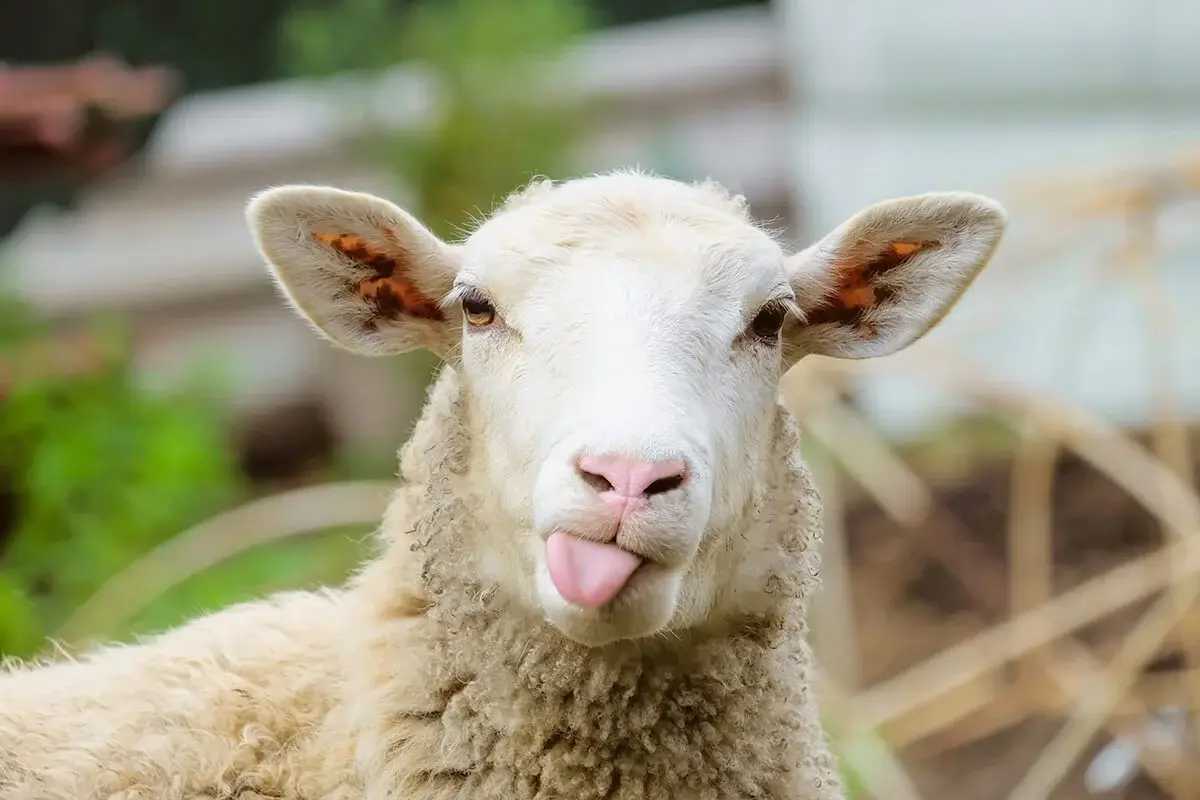
Basic terminology
Before diving into breeds and production systems, it's essential to understand the key terms used in sheep farming. These terms describe sheep at different life stages and their roles in breeding programmes. Mastering this terminology forms the foundation for understanding all aspects of sheep production.
Note
Learning sheep terminology is crucial because these terms appear throughout Agricultural Science examinations and are fundamental to understanding breeding programmes, farm management decisions, and production systems.
Life stages and classifications:
- Lamb - A young sheep under one year of age, representing the newest generation in the flock
- Hogget - A yearling sheep that is approximately one year old, transitioning from juvenile to adult
- Ewe - An adult female sheep used for breeding and milk production
- Ram - An intact adult male sheep used for breeding purposes
- Wether - A castrated male sheep, typically raised for meat production rather than breeding
Key breeding terminology:
- Prolific - Describes breeds that consistently produce multiple offspring, such as twins or triplets, in a single birthing cycle
- Sire - The male parent of an animal, contributing half the genetic material to offspring
- Dam - The female parent of an animal, also contributing half the genetic material to offspring
- Terminal sire - A ram specifically chosen to produce fast-growing, high-quality offspring destined for slaughter
- Maternal sire - A ram selected to produce daughters with excellent genetic traits, particularly good milk production and mothering ability, with these daughters often becoming replacement breeding ewes
- Carcase - The dressed body of a slaughtered animal after removal of head, feet, and internal organs
- Cast or draught ewe - An older ewe whose fertility has declined due to harsh environmental conditions, typically sold from mountain farms to lowland operations for breeding
Mountain and hill sheep breeds
Mountain and hill farming represents an extensive system where sheep must survive in challenging environments. The breeds selected for these conditions prioritise hardiness and survival over maximum production.
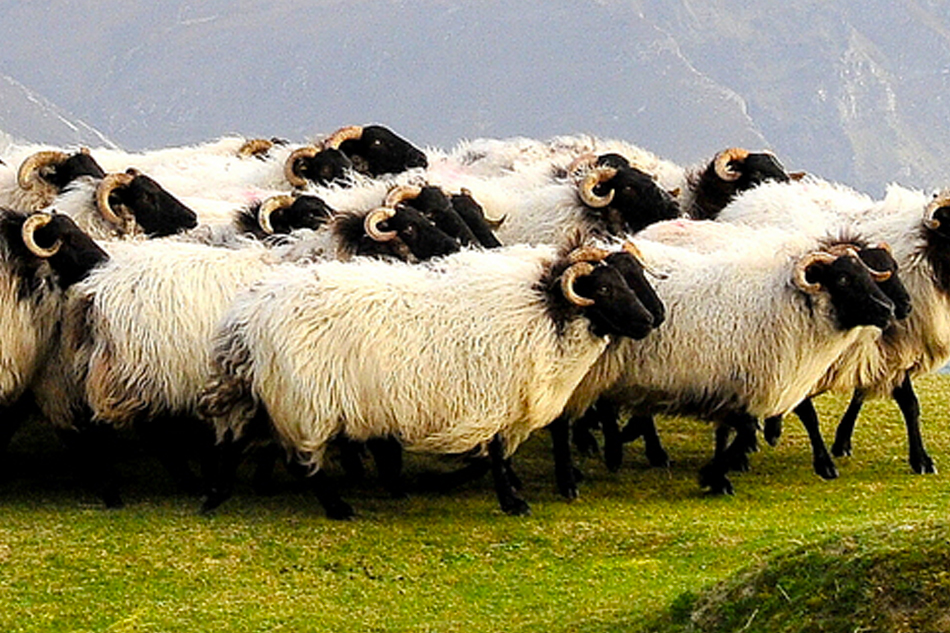
Blackface Mountain This hardy breed thrives in Ireland's mountainous regions, adapted to harsh weather conditions and rough terrain. These sheep can graze on poor-quality pasture and survive with minimal intervention from farmers.
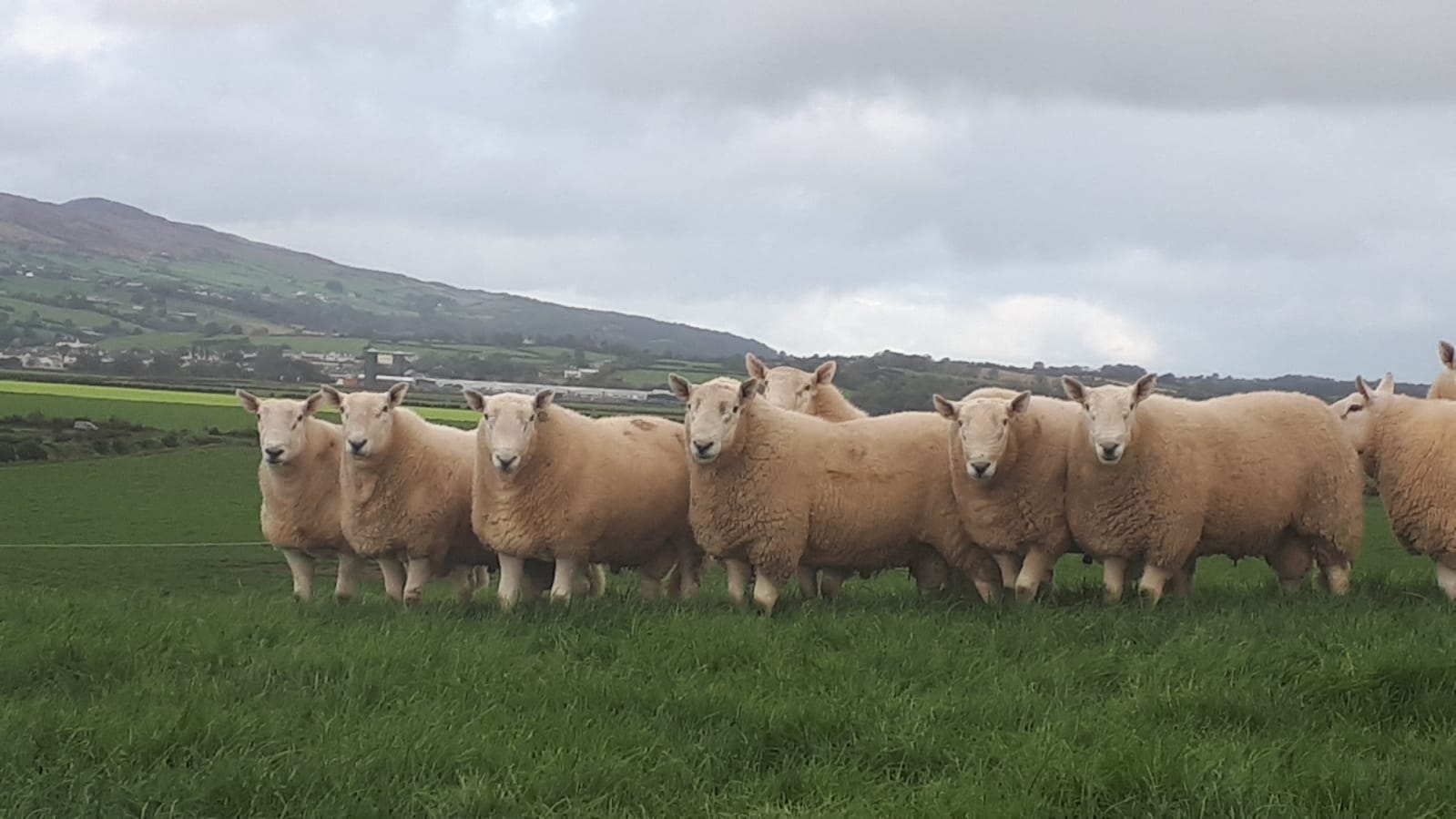
Wicklow Cheviot Another mountain breed well-suited to upland conditions, the Wicklow Cheviot demonstrates excellent survival instincts and can maintain condition on sparse vegetation typical of hill farming areas.
Important
Mountain breeds are specifically selected for their ability to survive harsh conditions rather than maximum productivity. Their hardiness makes them essential for utilising Ireland's upland areas that cannot support more intensive agriculture.
Lowland sheep breeds
Lowland farming systems support more intensive production, allowing farmers to select breeds that prioritise productivity and prolificacy over pure survival traits.
Border Leicester
- Distinctive white colouring makes identification easy in mixed flocks
- Large frame size indicates good growth potential and meat production capacity
- Polled characteristic (naturally hornless) reduces injury risks and management complications
- Long wool provides valuable fleece production alongside meat
- Upright ears suggest alertness and good health
- High prolificacy means regular production of twins and triplets

Galway Sheep Ireland's only native breed holds special significance in the country's agricultural heritage:
- Pure white appearance creates uniform flock appearance
- Large body size supports good meat production
- Polled nature reduces handling difficulties
- Long wool contributes to fleece value
- Adapted specifically to Irish climate and farming conditions

Belclare Improver This modern breed represents successful selective breeding programmes:
- Developed through careful cross-breeding of Galway sheep with other prolific breeds
- Extremely prolific, consistently producing multiple lambs
- White colouring maintains breed uniformity
- Excellent mothering instincts ensure high lamb survival rates
- Polled characteristics reduce management challenges
- Minimal lambing difficulties reduce veterinary costs and labour requirements

Note
The development of the Belclare Improver demonstrates how selective breeding can combine the best characteristics of different breeds to create animals specifically suited to Irish farming conditions and market requirements.
Ram breeds
Specialist ram breeds serve specific purposes in commercial sheep production, particularly in terminal crossing programmes designed to produce high-quality meat animals.

Suffolk and Texel represent the two most important terminal sire breeds used in Irish sheep farming. These rams impart rapid growth rates and excellent meat conformation to their offspring, making them ideal for producing lambs destined for slaughter rather than breeding.
Note
Terminal sire breeds are specifically chosen for their ability to produce fast-growing, well-muscled offspring. The choice between Suffolk and Texel often depends on market timing requirements and specific carcase characteristics desired.
Types of sheep farming systems
Irish sheep farming operates through two distinct systems, each adapted to specific geographical and economic conditions. Understanding these systems is crucial for matching breeds and management practices to environmental constraints.
Mountain and hill farming characteristics:
- Extensive management system with large areas of land per animal
- Lower production targets due to environmental constraints
- Rough grazing on natural grassland and heather
- Ewes typically produce single lambs due to nutritional limitations
- Higher ewe and lamb mortality rates due to harsh conditions
- Lower input costs but also lower output per animal
Lowland farming characteristics:
- Intensive management with higher animal density
- High production targets maximising output per hectare
- Rotational grazing on improved pastures with fertilisation
- Ewes regularly produce twins or triplets through better nutrition
- Lower mortality rates due to improved conditions and veterinary care
- Higher input costs but significantly greater returns
Important
The choice between extensive and intensive systems depends on land quality, climate conditions, and market access. Neither system is superior - each is optimised for its specific environment and economic circumstances.
Reproductive cycle of sheep
Understanding the reproductive cycle is essential for managing breeding programmes effectively.
- Sheep are seasonal breeders (short-day breeders), meaning they breed in autumn when daylight decreases
- The oestrous cycle lasts approximately 17 days
- Signs of heat include restlessness and standing to be mounted by the ram
- Gestation period is approximately 147 days
- Flushing involves increasing ewe nutrition before mating to improve ovulation rate and increase chances of twins
Important
Correct timing of mating ensures lambing occurs in spring when grass supply is highest, maximising lamb survival and growth.
Lambing management
Lambing is a critical stage in sheep production that directly affects flock productivity.
- Signs of lambing include restlessness, isolation, and swelling of the udder
- Stages of lambing:
- Dilation of cervix
- Delivery of lamb
- Expulsion of afterbirth
- Care of newborn lambs:
- Clear mucus from nose and mouth
- Dip navel in iodine to prevent infection
- Ensure intake of colostrum within first few hours
- Common problems:
- Difficult birth (dystocia)
- Weak or chilled lambs
Note
Colostrum is essential as it provides antibodies that protect the lamb from disease in early life.
Nutrition and feeding
Nutrition is a key factor influencing sheep productivity and health.
- Sheep are primarily grass-fed animals in Ireland
- Lowland systems use rotational grazing on improved pasture
- Winter feeding includes silage and concentrates
- Flushing ewes before mating improves prolificacy
- Late pregnancy feeding is critical to prevent weak lambs
- Mineral supplementation (e.g. lick blocks) prevents deficiencies
Sheep health and disease
Maintaining flock health is essential for productivity and profitability.
- Internal parasites (worms) reduce growth rates and cause weight loss
- Liver fluke affects liver function and reduces productivity
- Foot rot causes lameness and reduced grazing ability
- Vaccination programmes protect against common diseases
- Dosing (use of anthelmintics) controls parasite burdens
Important
Good health management reduces mortality rates and improves overall flock performance.
Production cycle of sheep
The sheep production cycle follows a yearly pattern:
- Mating (autumn)
- Gestation (~147 days)
- Lambing (spring)
- Rearing lambs
- Weaning
- Finishing lambs for market
- Slaughter
Note
Understanding this cycle is essential for answering long questions on sheep production systems.
Prolificacy calculations
Prolificacy measures reproductive efficiency in sheep flocks, calculated as the number of lambs successfully reared per ewe mated. This calculation helps farmers assess breeding programme success and make informed decisions about flock management.
Example
Worked Example: Calculating Prolificacy
If 100 ewes are mated and 140 lambs are successfully reared, the prolificacy calculation would be:
This means each ewe averages 1.4 lambs reared, indicating good reproductive performance.
Prolificacy typically passes from ram to offspring, making ram selection crucial for improving flock productivity. A prolificacy rate above 1.5 is considered excellent performance in commercial sheep farming.
Kill out percentage
Understanding carcase yields helps farmers evaluate the commercial value of their livestock and make informed marketing decisions. This measurement is essential for comparing different breeds and feeding systems.
Example
Worked Example: Kill Out Percentage Calculation
Kill out percentage represents the weight of the dressed carcase compared to the live weight before slaughter. The dressed carcase excludes the head, feet, and internal organs.
If a lamb weighs 35kg live weight and produces a 25kg dressed carcase:
This percentage helps farmers understand the actual meat yield from their animals.
Commonage systems
Commonage represents a traditional land use system still practised in parts of Ireland, particularly in mountainous regions like County Kildare's Curragh. Under this system, two or more farmers share grazing rights on the same piece of land, requiring cooperation and agreed management practices to prevent overgrazing and maintain land quality.
Note
Commonage systems require careful management to prevent overgrazing. Success depends on cooperation between farmers and adherence to agreed stocking rates and grazing periods.
Selecting breeding stock
Making informed decisions when purchasing sheep requires careful evaluation of multiple factors that influence both immediate productivity and long-term genetic improvement. Poor selection decisions can affect flock performance for many years.
Criteria for buying ewes:
- Age - Young ewes offer longer productive life but may lack proven performance records
- General health - Visual assessment for signs of disease or parasites
- Body condition - Target Body Condition Score (BCS) of 3.5 at mating ensures adequate nutrition reserves
- Conformation - Good structural soundness affects longevity and mobility
- Prolificacy history - Evidence of consistent multiple births increases flock productivity
- Physical soundness - Healthy mouth, teeth, and feet essential for grazing and mobility
- Udder quality - Two functioning teats without lumps or discharge ensure adequate milk supply for lambs
Criteria for buying rams:
- Breed type - Always specify breed examples in examinations to demonstrate understanding
- Pedigree and performance testing - Genetic records indicate potential for passing desirable traits
- Age considerations - Balance experience with remaining productive life
- Conformation - Structural correctness affects mating ability and longevity
- Body condition - BCS of 4 at mating ensures breeding soundness
- Physical examination - Sound feet, legs, and mouth essential for mobility and feeding
- Testicular health - Firm, uniform testicles free from lumps indicate fertility (larger testicles generally correlate with increased semen production)
Important
Body Condition Score is crucial for breeding success. Ewes with BCS below 3.5 at mating may have reduced conception rates, while rams with poor body condition may have decreased fertility and libido.
Breeding strategies
Understanding different breeding approaches allows farmers to select strategies that match their production goals, environmental conditions, and market requirements.
Mountain and hill farming approach: Mountain farming maintains breed purity by crossing pure-bred ewes exclusively with pure-bred rams of the same breed. However, the fertility of mountain ewes typically declines after several years due to harsh environmental conditions. These cast ewes are then sold to lowland farmers for continued breeding under more favourable conditions.
Lowland crossbreeding strategies: Lowland farming employs sophisticated crossbreeding programmes to maximise hybrid vigour and production efficiency. Cast mountain ewes are mated with rams from highly prolific breeds, producing crossbred offspring known as "grey-face" sheep due to their mixed colouring.
These crossbred ewes demonstrate hybrid vigour, combining the best characteristics of both parent breeds. They are subsequently mated with either Suffolk or Texel rams depending on market requirements:
- Suffolk crosses produce fast-growing lambs ready for the Easter market (early lamb production)
- Texel crosses develop more slowly, targeting mid-season markets rather than premium early sales
Note
Hybrid vigour (heterosis) occurs when crossbred animals outperform their purebred parents in traits like growth rate, disease resistance, and reproductive performance. This biological phenomenon is the foundation of successful commercial breeding programmes.
Benefits of crossbreeding in lowland systems
The use of crossbred ewes in lowland sheep farming delivers multiple advantages that justify the more complex breeding programmes. These benefits demonstrate why most commercial operations have moved away from purebred systems.
- Increased hybrid vigour - Crossbred animals often outperform their purebred parents in growth rate, disease resistance, and overall productivity
- Superior mothering ability - Crossbred ewes typically demonstrate better maternal instincts and milk production
- Enhanced carcase quality - Improved meat-to-bone ratios and better muscle development
- Higher prolificacy - Increased likelihood of multiple births per breeding cycle
- Improved milk production - Better nutrition for lambs leading to faster growth rates
Economic and sustainability considerations
Modern sheep farming must balance profitability with environmental responsibility.
- Profitability factors:
- Lamb price and market timing (e.g. Easter lamb commands premium price)
- Feed and input costs
- Mortality rates
- Stocking density
- Sustainability:
- Sheep help maintain upland landscapes
- Risk of overgrazing if poorly managed
- Contribution to greenhouse gas emissions
- Role in maintaining biodiversity
Important
Sustainable sheep farming ensures long-term productivity while protecting the environment and natural resources.
Summary
Key Points to Remember:
- Master the basic terminology - lamb, ewe, ram, wether, and hogget represent different life stages and roles in sheep production
- Mountain breeds prioritise hardiness and survival, while lowland breeds focus on productivity and prolificacy
- Crossbreeding programmes in lowland farming combine the best traits of different breeds through hybrid vigour
- Sheep are seasonal breeders with a 17-day oestrous cycle and ~147-day gestation period
- Lambing management and colostrum intake are critical for lamb survival
- Nutrition (especially flushing and late pregnancy feeding) directly affects productivity
- Disease control (worms, fluke, foot rot) is essential for flock health
- Calculate prolificacy by dividing lambs reared by ewes mated - this measures reproductive efficiency
- The production cycle follows a yearly pattern from mating to slaughter
- When selecting breeding stock, consider age, health, body condition, conformation, and proven performance records
- Body Condition Scores of 3.5 for ewes and 4.0 for rams at mating are essential for optimal fertility
- Sustainability and profitability are increasingly important in modern sheep farming