Electrical Conductors, Semi-Conductors, and Insulators (Grade 10 NSC Matric Physical Sciences): Revision Notes
📚Revision Notes
Electrical Conductors, Semi-Conductors, and Insulators
Understanding how different materials behave when electricity tries to flow through them is crucial in chemistry and physics. Materials can be classified into three main categories based on their ability to conduct electrical current.
What are electrical conductors?
Electrical conductors are substances that allow electrical current to pass through them easily. When you connect a conductor to a battery in a circuit, electricity flows freely through the material.
Most electrical conductors are metals. This happens because metals have a special structure where some electrons can move freely between atoms, creating a "sea of electrons" that can carry electrical current.
Note
The "sea of electrons" model explains why metals are such good conductors. In metallic bonding, electrons are not bound to specific atoms but instead form a mobile cloud that can move freely throughout the metal structure, carrying electrical current efficiently.
Common examples of electrical conductors
Copper is one of the most widely used electrical conductors. You'll find copper wires in most electrical appliances and house wiring because it conducts electricity very well and is relatively affordable.
Silver actually has even better electrical conductivity than copper, but it's far too expensive for everyday use. Silver is sometimes used in high-quality electronic components where the best possible conductivity is needed.
Aluminium is another important conductor, especially in power transmission lines. Although it doesn't conduct electricity quite as well as copper, it's much lighter, making it perfect for overhead power cables that need to span long distances.

Note
Aluminium power lines often have a steel core inside to make them stronger, preventing them from breaking when stretched across long distances. Sometimes gold is used in electronic components because it's very resistant to corrosion - the process where materials deteriorate when they react with oxygen and water in the air.
What are insulators?
Insulators are materials that do not allow electrical current to flow through them. These materials have all their electrons tightly bound to their atoms, so there are no free electrons available to carry electrical current.
Insulators are just as important as conductors in electrical applications. They prevent electricity from flowing where we don't want it to go, keeping us safe and ensuring electrical devices work properly.
Note
Safety First: Insulators play a crucial role in electrical safety. Without proper insulation, electrical devices would be extremely dangerous to use, as electricity could flow to any metal surface you might touch.
Common examples of insulators
Plastic is probably the most familiar insulator. The plastic coating around electrical wires prevents electricity from escaping and potentially causing harm.
Wood is another natural insulator, which is why wooden handles are often used on electrical tools and why wooden utility poles can safely carry power lines.
Other examples include rubber, glass, ceramic, and most non-metals.
What are semi-conductors?
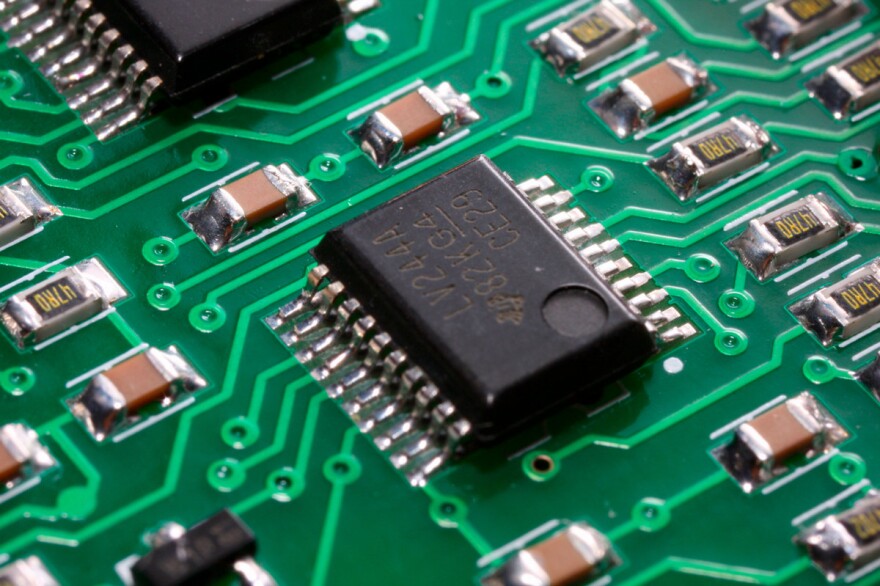
Semi-conductors are special materials that can behave like insulators when they're cold, but act like conductors when they're heated up. This unique property makes them incredibly useful in modern electronics.
The most important semi-conductor elements are silicon (Si) and germanium (Ge). These materials are essential for making computer chips, smartphones, and virtually all modern electronic devices.
Note
Modern Technology: Semi-conductors can be precisely controlled to conduct electricity only under specific conditions, making them perfect for creating the complex circuits found in computers and other digital devices. This controllability is what makes modern computing possible.
Investigating electrical conductivity - practical experiment
Understanding conductivity isn't just theoretical - you can test it yourself with a simple experiment.
Example
Practical Investigation: Testing Electrical Conductivity
Aim To investigate the electrical conductivity of different substances and classify them as conductors or insulators.
Apparatus needed
- Two or three cells (batteries)
- Light bulb
- Crocodile clips
- Wire leads
- Selection of test substances (plastic, aluminium can, metal pencil sharpener, magnet, wood, chalk, cloth)
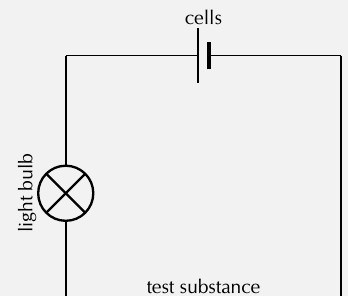
Circuit setup
Method
- Set up the circuit as shown in the diagram, ensuring the test substance is held between the two crocodile clips
- Connect the wire leads to the cells and make sure the light bulb is properly connected into the circuit
- Place each test substance one by one between the crocodile clips
- Observe what happens to the light bulb
- If the light bulb glows, it means current is flowing and the substance is an electrical conductor
- If the light bulb doesn't glow, the substance is an insulator
Recording results
| Test substance | Metal/non-metal | Does the light bulb glow? | Conductor or insulator |
|---|---|---|---|
| Plastic | Non-metal | No | Insulator |
| Aluminium can | Metal | Yes | Conductor |
| Wood | Non-metal | No | Insulator |
| Iron nail | Metal | Yes | Conductor |
Conclusions When you complete this experiment, you'll discover that metals conduct electricity whilst non-metals generally do not. This pattern helps us predict whether new materials will be conductors or insulators.
Exam tips and common misconceptions
Important
Critical Points to Remember for Exams:
- Remember: Most metals are conductors, most non-metals are insulators
- Don't confuse: Electrical conductivity with thermal conductivity - they're related but different properties
- Watch out for: Questions asking about semi-conductors - remember they change behaviour with temperature
- Common mistake: Thinking all non-metals are insulators - graphite (a form of carbon) is actually a conductor!
Summary
Key Points to Remember:
- Electrical conductors allow current to flow easily through them - most are metals like copper, silver, and aluminium
- Insulators prevent electrical current from flowing - examples include plastic, wood, and rubber
- Semi-conductors can act as either conductors or insulators depending on conditions like temperature
- You can test conductivity using a simple circuit with a battery, light bulb, and test material
- The general rule is: metals conduct, non-metals insulate (with some exceptions like graphite)