Structure of RNA & DNA (AQA A-Level Biology): Revision Notes
📚Revision Notes
Structure of RNA & DNA
Nucleic acids represent some of the most significant biological molecules, with ribonucleic acid (RNA) and deoxyribonucleic acid (DNA) being the most well-known examples. DNA's distinctive double helix structure makes it easily recognisable, whilst its role in genetic information transfer between generations marks it as one of biology's most extraordinary discoveries.
Nucleotide structure
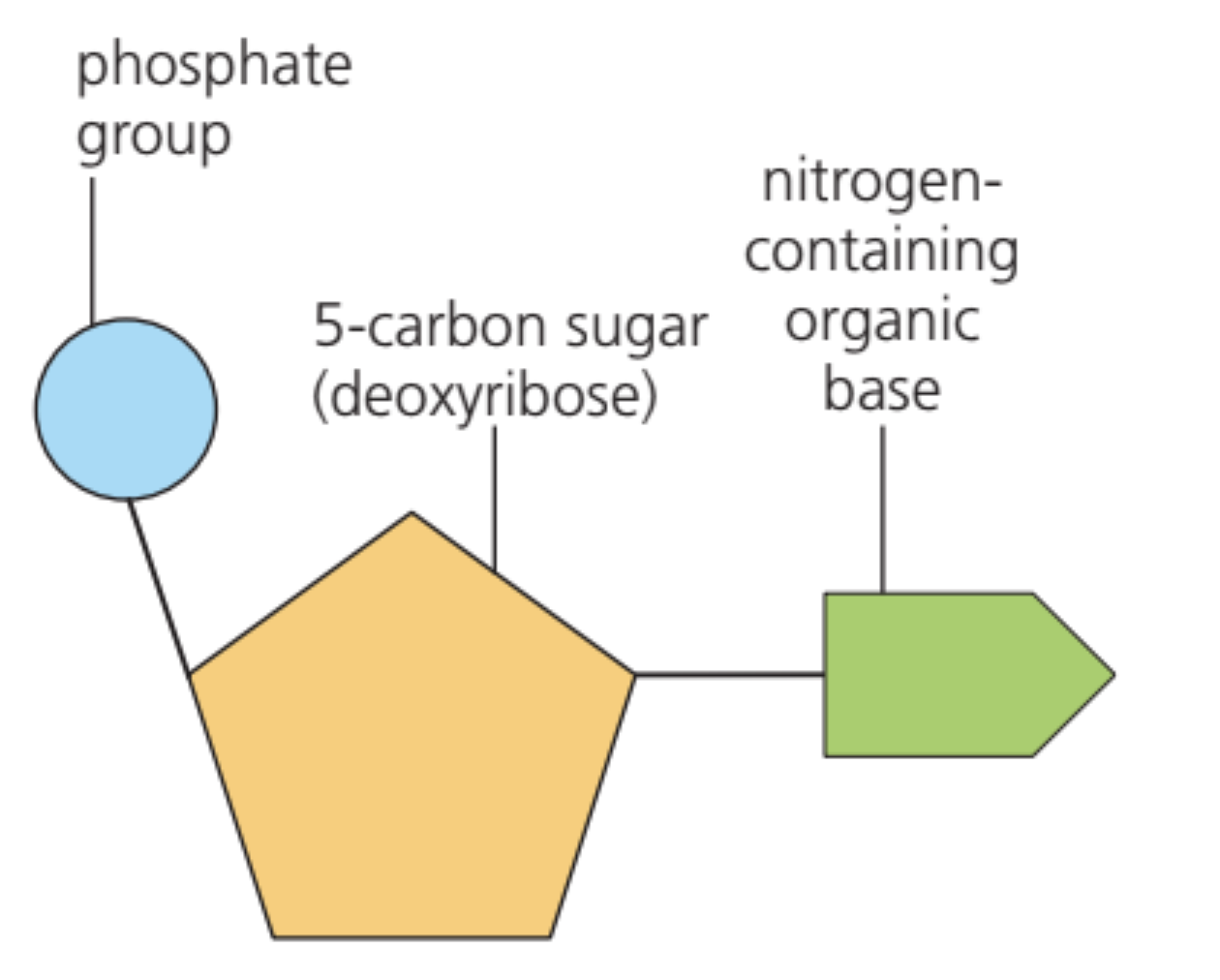
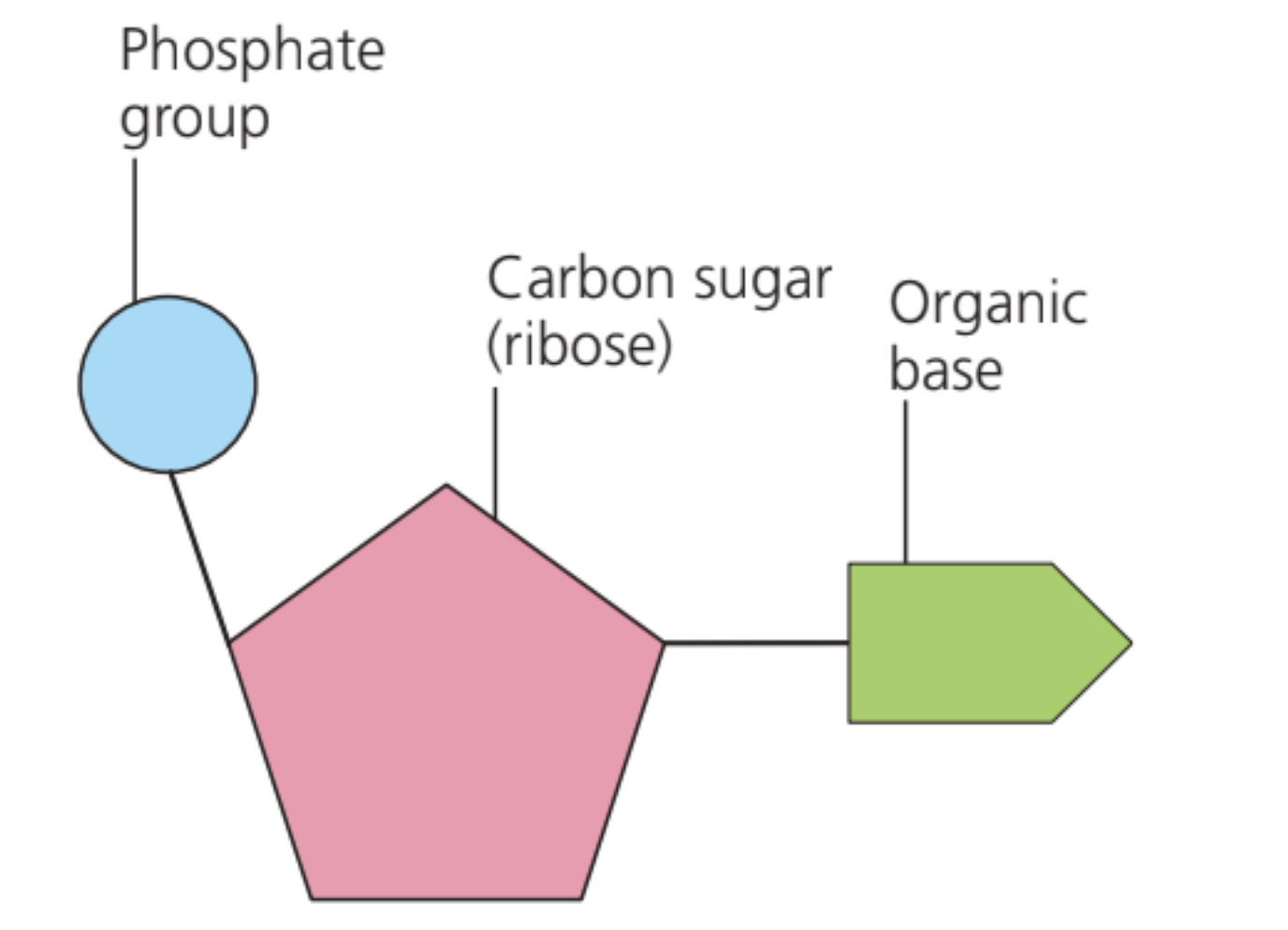
Each nucleotide functions as the fundamental building block of nucleic acids and consists of three essential components that bond together through condensation reactions.
Basic components
The three components of every nucleotide are:
- Pentose sugar - a five-carbon sugar molecule
- Phosphate group - provides the negative charge and links nucleotides together
- Nitrogenous organic base - contains nitrogen and determines the nucleotide type
The nitrogenous bases fall into five main types: cytosine (C), thymine (T), uracil (U), adenine (A), and guanine (G). Each base has a distinct structure and pairing behaviour.
Formation of larger structures
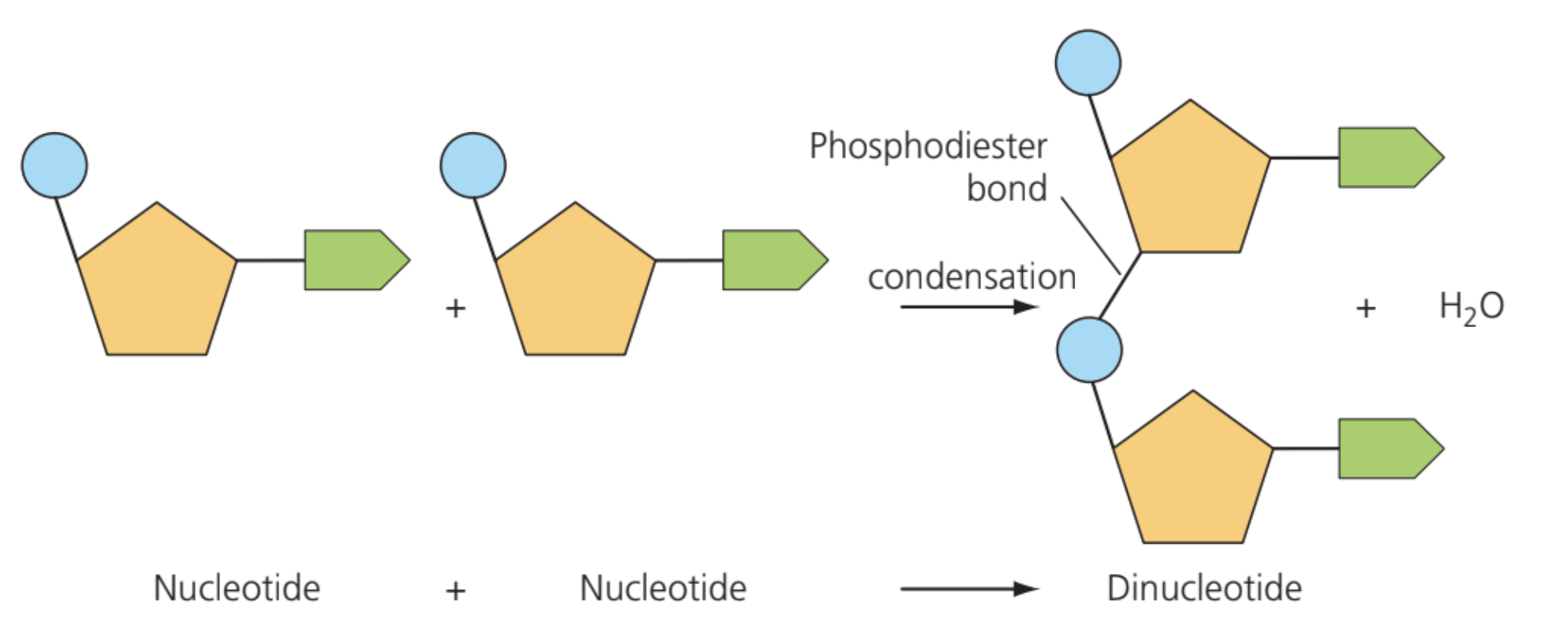
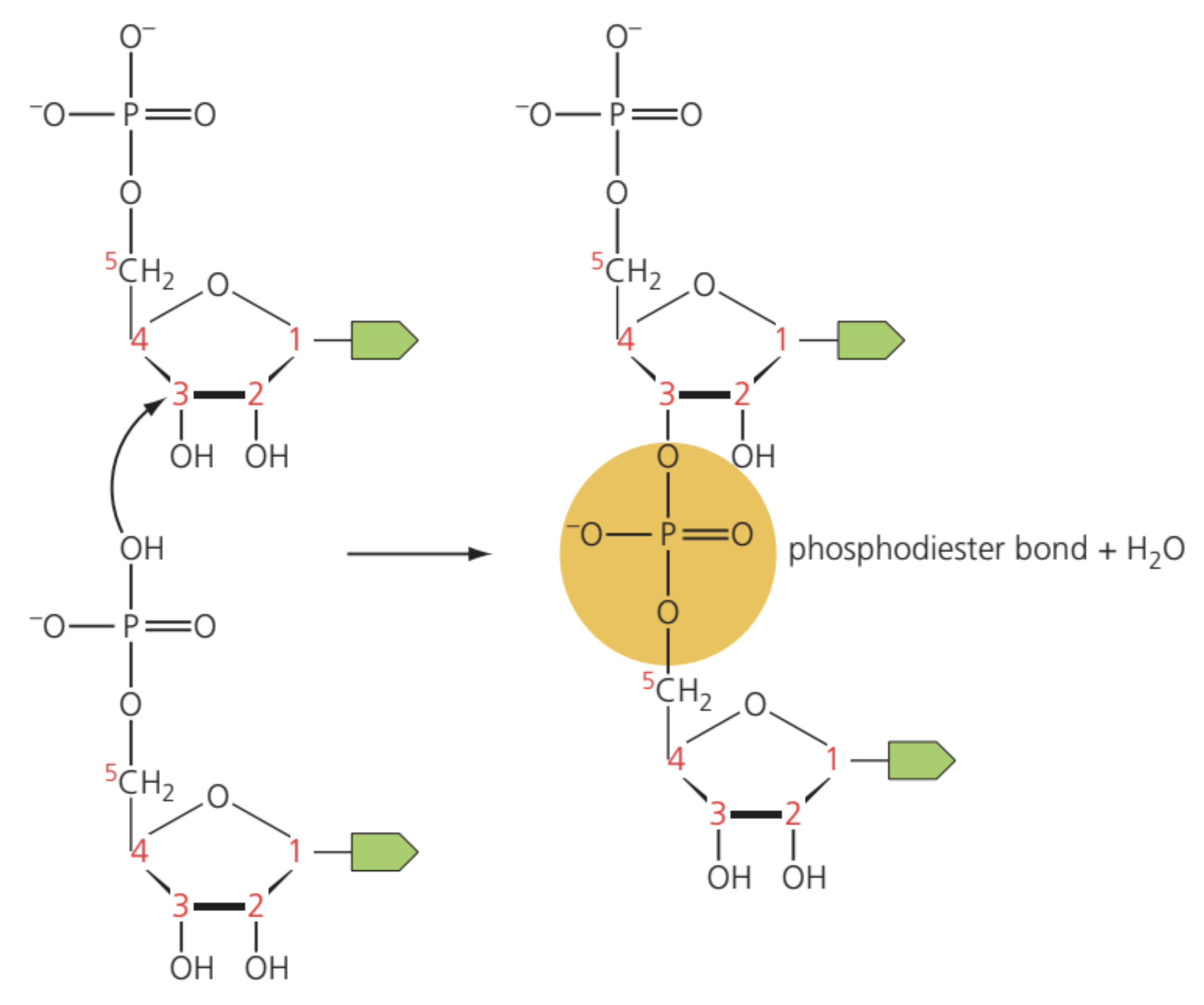
When two nucleotides join through a condensation reaction between the deoxyribose sugar of one nucleotide and the phosphate group of another, they form a dinucleotide. The covalent bond created between them is called a phosphodiester bond.
Example
Worked Example: Polynucleotide Formation
Step 1: Two nucleotides approach each other
- Nucleotide 1: Contains deoxyribose sugar, phosphate group, and base
- Nucleotide 2: Contains deoxyribose sugar, phosphate group, and base
Step 2: Condensation reaction occurs
- The phosphate group of nucleotide 2 bonds to the deoxyribose sugar of nucleotide 1
- A water molecule (H₂O) is eliminated
Step 3: Phosphodiester bond forms
- Creates a dinucleotide linked by a strong covalent bond
- Process can continue to form long polynucleotide chains
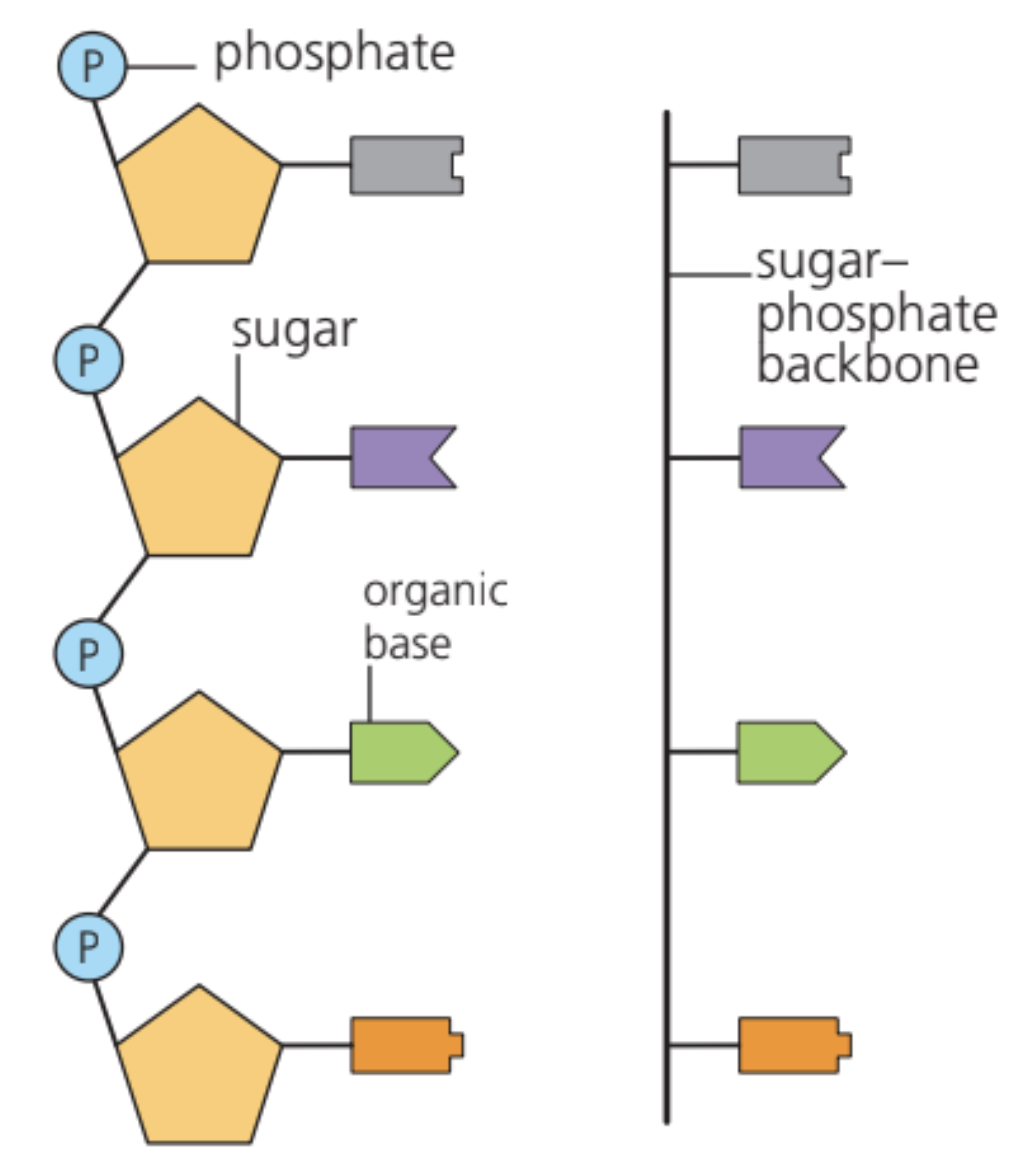
Continuing this linking process creates long chains known as polynucleotides. These polynucleotide chains form the structural backbone of both DNA and RNA molecules.
Polynucleotide strand
RNA structure
Ribonucleic acid exists as a polymer composed of nucleotides arranged in a single, relatively short polynucleotide chain. The pentose sugar in RNA is always ribose, and the organic bases present are adenine, guanine, cytosine, and uracil.
Note
RNA serves multiple functions within cells. One type transfers genetic information from DNA to ribosomes, whilst ribosomes themselves contain RNA combined with proteins. A third RNA type participates directly in protein synthesis processes.
DNA structure
Note
In 1953, James Watson and Francis Crick determined DNA's structure, building upon earlier X-ray diffraction work by Rosalind Franklin. Their discovery opened new avenues for biological research over the following decades.
Basic structure and composition
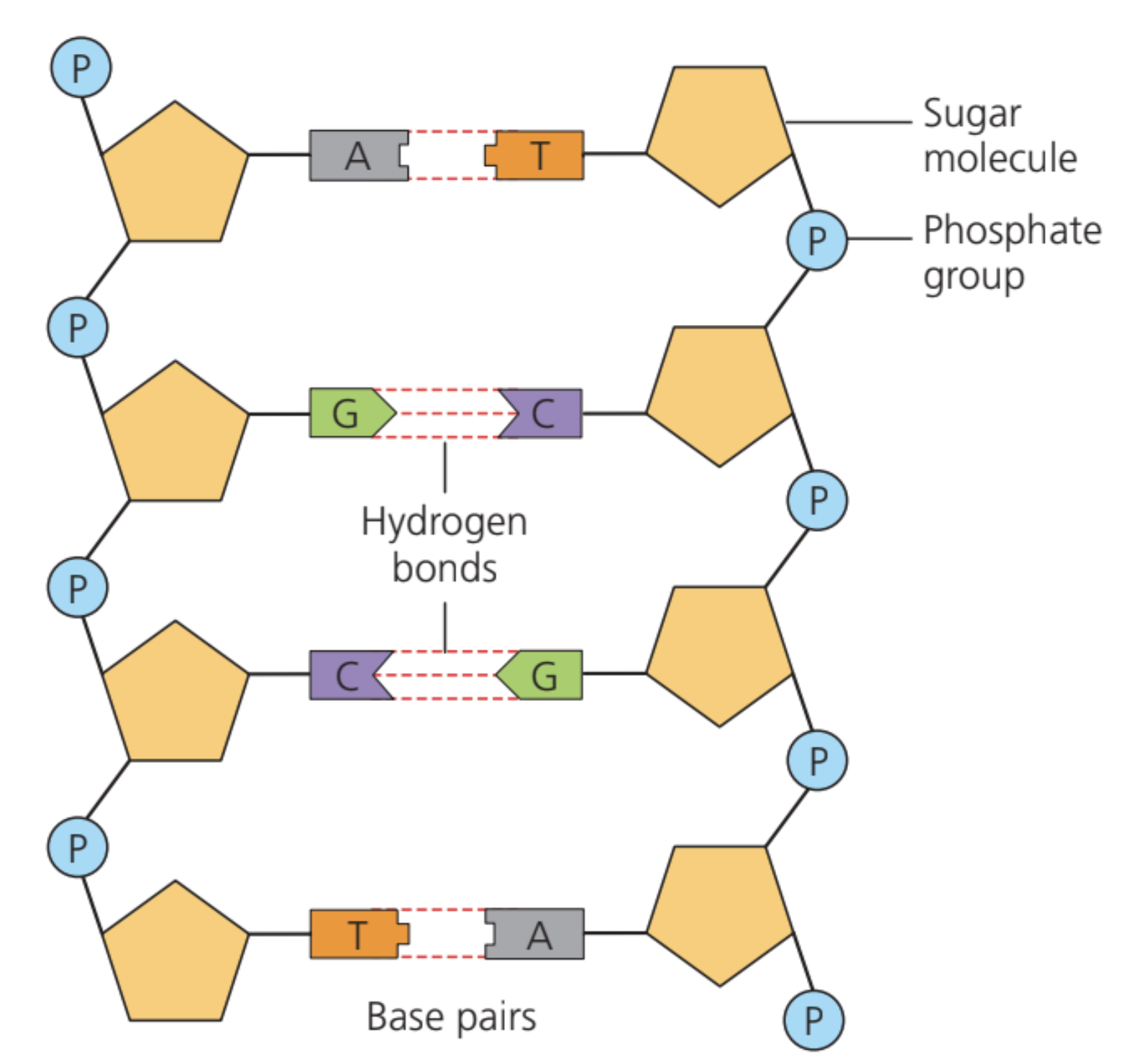
DNA contains deoxyribose as its pentose sugar, with the organic bases being adenine, thymine, guanine, and cytosine. The molecule consists of two extremely long polynucleotide strands joined together by hydrogen bonds between specific bases.
Base pairing rules
Important
Critical Base Pairing Rules
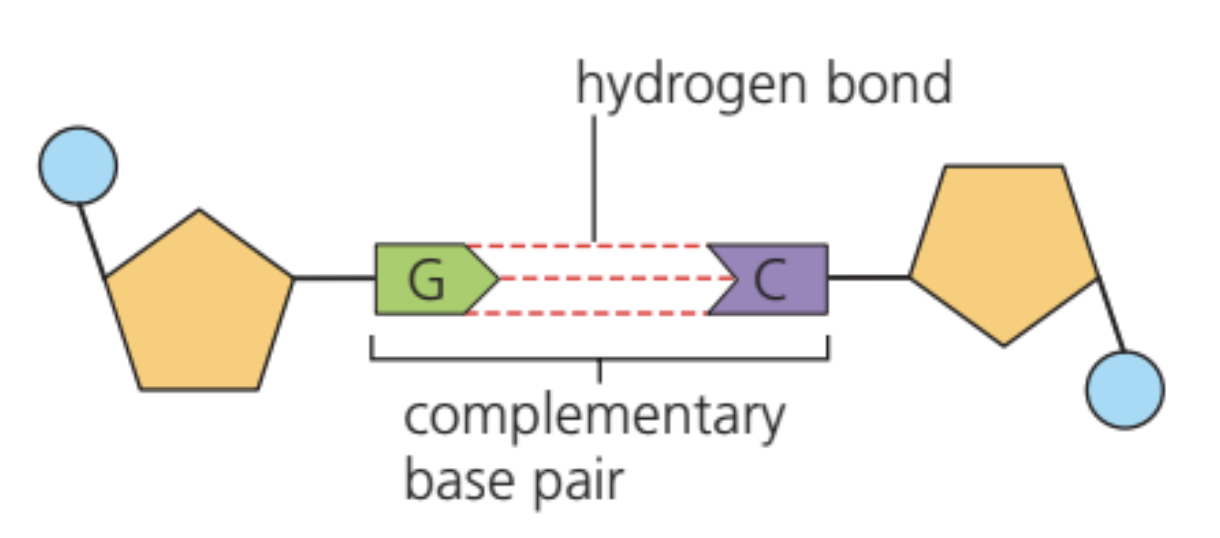
The bases on opposing DNA strands attach to each other through hydrogen bonds following strict pairing rules:
- Adenine always pairs with thymine
- Guanine always pairs with cytosine
Due to these specific pairings, adenine is described as complementary to thymine, whilst guanine is complementary to cytosine. This complementarity means that adenine and thymine quantities in DNA are always equal, as are guanine and cytosine quantities.
However, the ratio of adenine plus thymine to guanine plus cytosine varies between different species.
The double helix
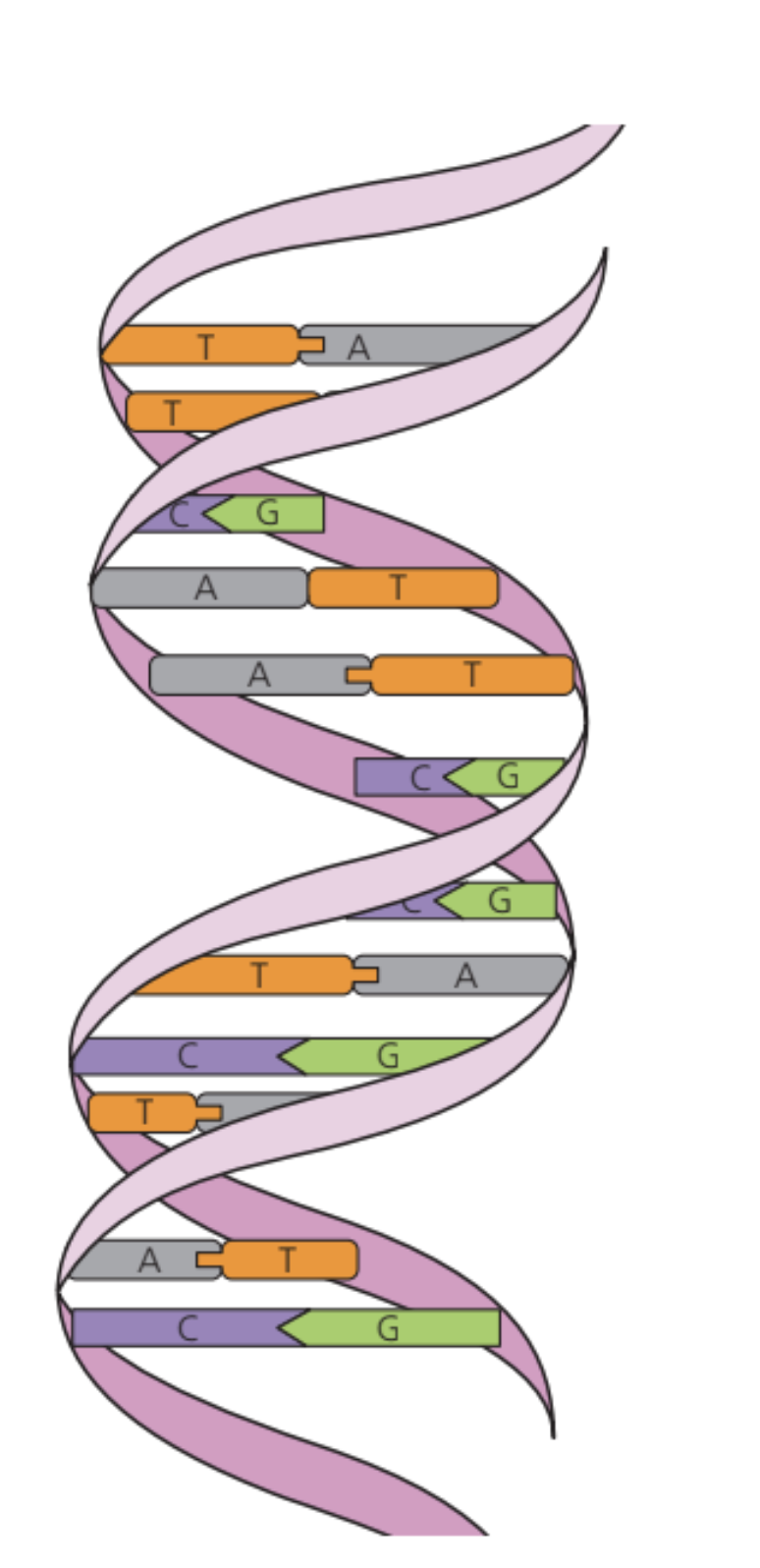
DNA's structure resembles a twisted ladder, where the phosphate and deoxyribose molecules alternate to form the uprights, whilst the organic bases pair together to create the rungs. This ladder-like arrangement twists around itself to form a double helix, with the phosphate and deoxyribose components creating the structural backbone of the DNA molecule.
The two polynucleotide chains wind around each other, held together by hydrogen bonds between the complementary base pairs. This elegant structure allows DNA to store vast amounts of genetic information whilst maintaining stability and enabling replication.
Summary
Key Points to Remember:
- Nucleotides contain three components: pentose sugar, phosphate group, and nitrogenous base
- RNA is single-stranded with ribose sugar and contains uracil instead of thymine
- DNA is double-stranded with deoxyribose sugar and forms a double helix structure
- Base pairing follows strict rules: A pairs with T (or U in RNA), G pairs with C
- Phosphodiester bonds link nucleotides together through condensation reactions to form polynucleotide chains