Enzymes in breakdown & synthesis (Edexcel GCSE Biology): Revision Notes
📚Revision Notes
Enzymes in breakdown & synthesis
Note
Organisms can break down molecules into smaller ones and build small ones up into bigger ones again
Why this happens:
Many molecules we eat are too big too pass through the walls of the digestive system so digestive enzymes break them into Smaller Simpler Molecules
-
Easily passed through walls of digestive systems
-
Easily absorbed into bloodstream
-
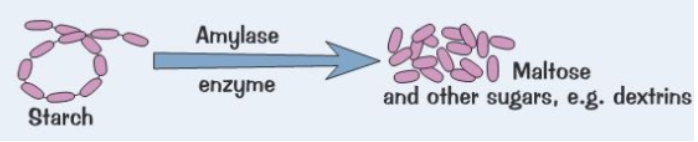
Pass into cells to be used by body Plants store energy in the form of starch, when plants need the energy, enezymes break down the starch into smaller molecules (sugars)
-
Easily respired to transfer energy to be used by cells
Enzymes called carbohydrases convert carbohydrates into simple sugars
Proteases convert proteins into amino acids

Lipases convert lipids into glycerol & fatty acids

Some enzymes join molecules together Some organisms need to synthesise them back from their smaller compounds Enzymes catalyse the reactions needed to do this
| Carbohydrates | Proteins | Lipids |
|---|---|---|
| Joining their simple sugars | Joining their amino acids | Joining fatty acids & glycerol |