Specialised cells (Edexcel GCSE Biology): Revision Notes
📚Revision Notes
Specialised cells
Multicellular organisms contain a lot of different types of cells. Cells that have a structure adapted to their function are called specialised cells.
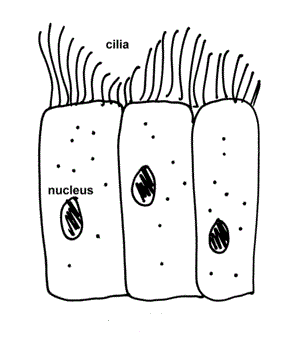
Ciliated Epithelial Cells
Note
Ciliated epithelial cells are specialised for moving materials
They line the surfaces of organs on the top surface of cell wall Function: moves substances in 1 direction along the surface of the tissue (like mucus) so it can be swallowed and don't reach the lungs
Structure and Function:
Ciliated epithelial cells have tiny hair-like structures called cilia on their surface. These cells are commonly found in the lining of the respiratory tract.
Cilia:
The cilia beat in a coordinated wave-like motion, helping to move mucus, dust, and other particles out of the respiratory system. This keeps the airways clear and helps prevent infections by removing harmful particles and pathogens.
Function in the Respiratory System:
Ciliated epithelial cells play an essential role in maintaining respiratory health by pushing mucus up towards the throat, where it can be swallowed or coughed out, removing trapped particles.
Sperm Cells
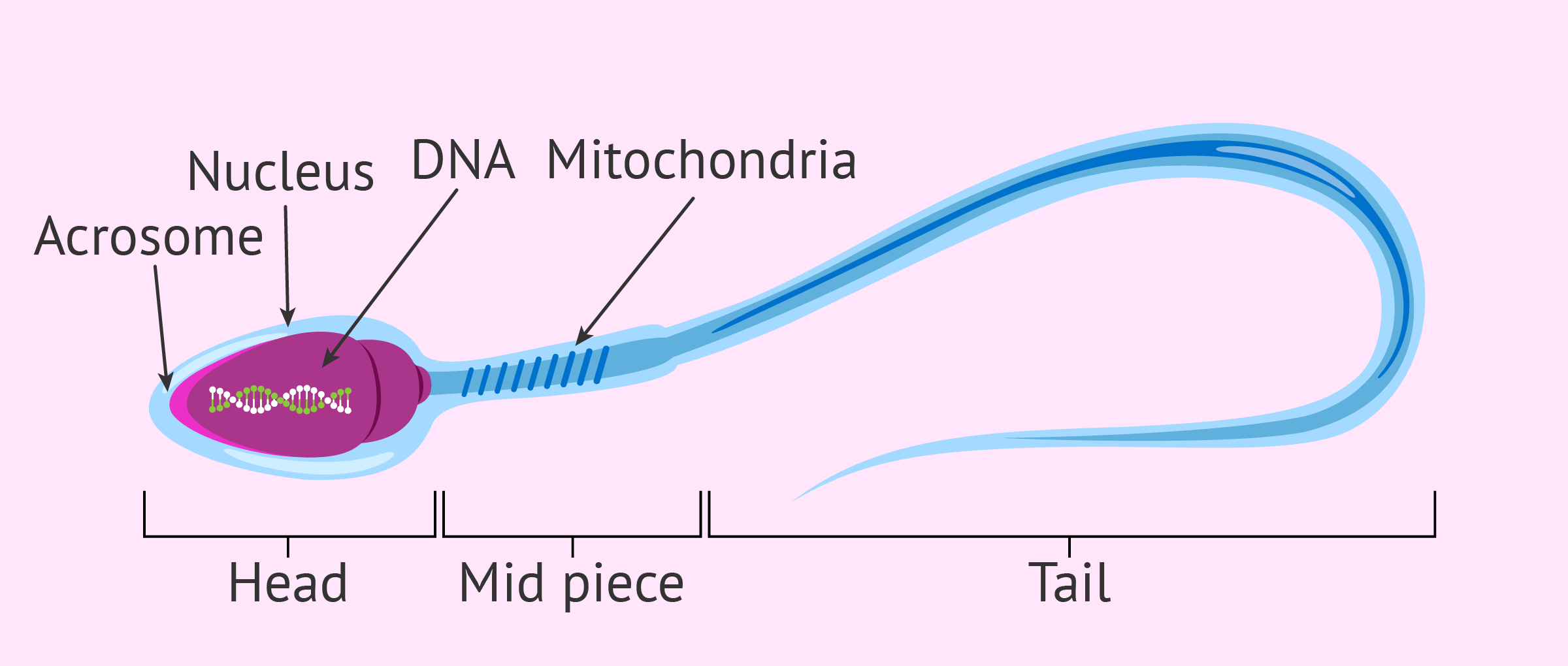
Diagram of a Sperm Cell
Haploid Nucleus:
The head of the sperm contains genetic material for fertilisation in a haploid nucleus, meaning it has half the number of chromosomes compared to a normal body cell. This ensures that when the sperm fuses with the egg, the resulting zygote has the correct number of chromosomes.
Acrosome:
The acrosome is a specialised region in the head of the sperm that contains enzymes. These enzymes are crucial because they help the sperm penetrate the egg's outer layers during fertilisation.
Mitochondria (Middle Piece):
The middle section of the sperm is packed with mitochondria, which release the energy required for the sperm to swim towards and fertilise the egg.
Tail (Flagellum):
The tail enables the sperm to swim by moving in a whip-like motion, helping the sperm navigate through the female reproductive system.
Note
Sperm cells are the smallest cells in the human body, and millions of them are produced daily.
Egg Cells
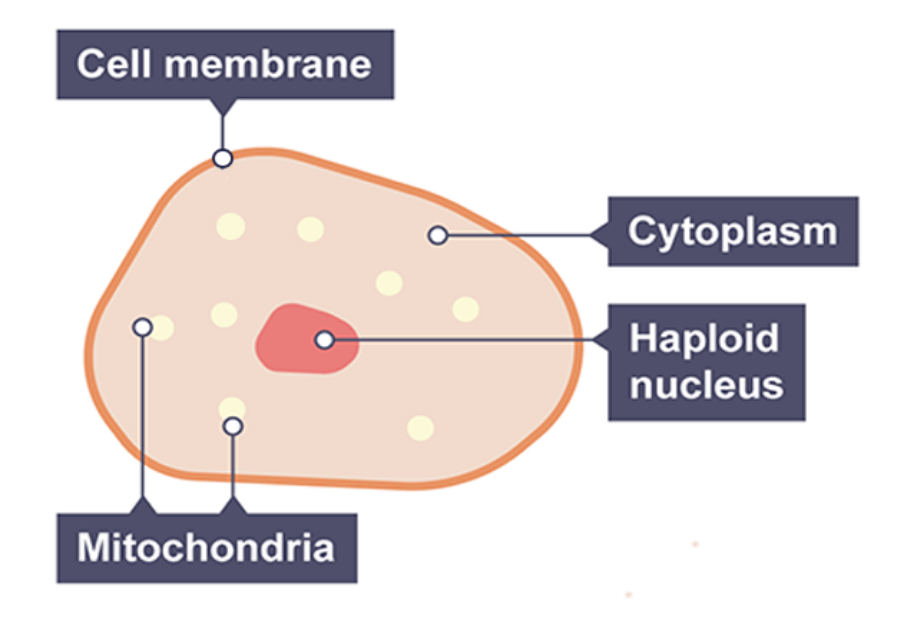
Diagram of an Egg Cell
Cytoplasm:
The cytoplasm contains nutrients that are vital for the growth of the early embryo. These nutrients support the embryo in the early stages before it can get nutrients from the mother.
Haploid Nucleus:
Like sperm cells, the egg cell has a haploid nucleus with half the number of chromosomes. This ensures that after fertilisation, the zygote has the correct number of chromosomes.
Cell Membrane:
After fertilisation by a single sperm, the cell membrane of the egg changes to prevent any more sperm from entering. This is essential to ensure the correct number of chromosomes and the development of a healthy embryo.
Note
Egg cells are one of the largest cells in the human body, and unlike sperm, only a few are produced.
In sexual reproduction, the nucleus of the egg fuses with the nucleus of the sperm to create a fertilised egg to be developed into an embryo.
| Egg cells | Sperm cells |
|---|---|
| Main function• carry female DNA, nourish embryo in early stages. | Main function• Transport male DNA to female's egg |
| Adaptations- -Contains nutrients in the cytoplasm to feed the embryo -Haploid nucleus -Changes structure to stop sperm from getting in after fertilisation. | Adaptations- -A long tale to swim to the egg -Lots of mitochondria in the middle to provide energy -Acrosome at front of the head, stored enzymes to digest membrane of egg. -Haploid nucleus. |