Stakeholders in business (OCR GCSE Business): Revision Notes
📚Revision Notes
1.5 Stakeholders in business
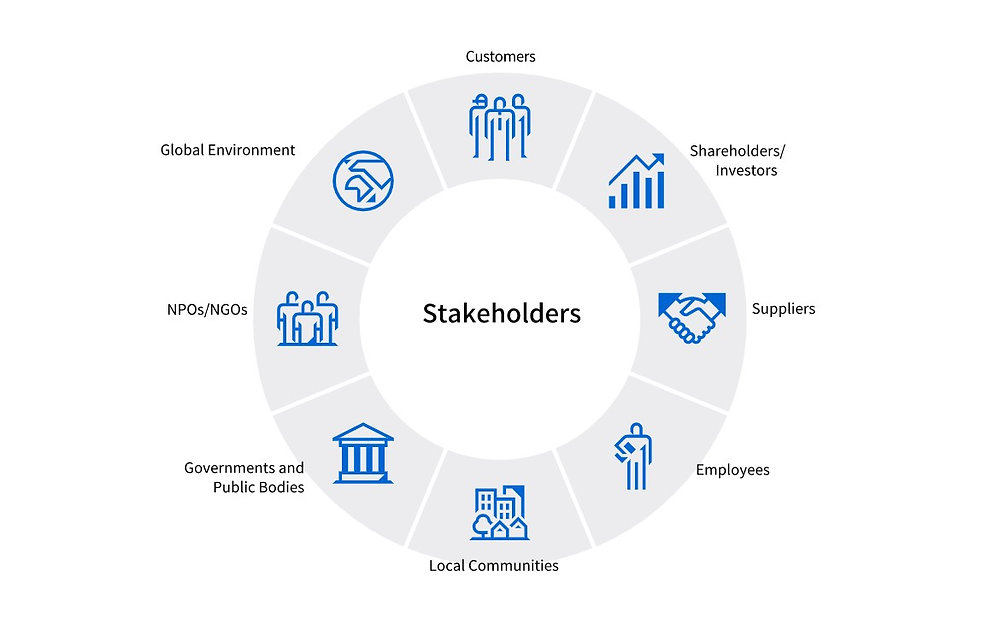
Stakeholder: Someone with an interest in the business.
Stakeholders can be internal or external.
- Internal stakeholders: People who work within the business
- External stakeholders: People outside of the business
Internal stakeholders
| Stakeholder | Why are they a stakeholder? (their objectives) |
|---|---|
| Owners | Receive profits if the business does well. |
| Employees | Employees may benefit from a pay rise if the business is doing well which provides better job security. |
External stakeholders
| Stakeholder | Why are they a stakeholder? |
|---|---|
| Customers | The actions of the business affect them as they buy goods and services. Example: If the business increases their prices then customers cannot afford to buy as many things as before Customers can leave negative reviews on social media, which can damage the brand image of a business, and in turn, reduce sales revenue. |
| Suppliers | Suppliers sell goods or make components and materials that the business may need. Example: If a business does well, they will usually need to buy more stock from suppliers, so this increases revenue for suppliers. |
| Local community | Businesses can affect local residents positively by providing goods and services, as well as jobs. However, they can have a negative impact as they might create more traffic on the roads and more noise / air / light pollution. The local community can also protest against a business in order to discourage it from doing something (e.g. polluting a local river). This can give the business a bad brand image. |
| Government | 1. The government receive tax on business' profits. 2. As businesses grow, they employ more workers which reduces unemployment, this reduces the governments need to pay unemployment benefits. 3. The government can have a big impact on businesses by introducing new laws and by putting the National Minimum Wage up. |