Nutrition & Animal Production (Leaving Cert Agricultural Science): Revision Notes
📚Revision Notes
Nutrition & Animal Production
Understanding proper nutrition is fundamental to successful animal production. Different animals at various life stages require specific nutritional programmes to achieve optimal growth, reproduction, and productivity. This knowledge helps farmers make informed decisions about feeding strategies and production systems.
Note
Proper nutrition is the cornerstone of profitable animal production. Getting the nutritional balance right affects not only animal health and welfare, but also determines the economic success of farming operations.
Feeding requirements for livestock at different stages
Animals have varying nutritional needs depending on their species, age, and production purpose. Getting these requirements right is crucial for animal health, welfare, and economic returns.
Cattle nutrition across life stages
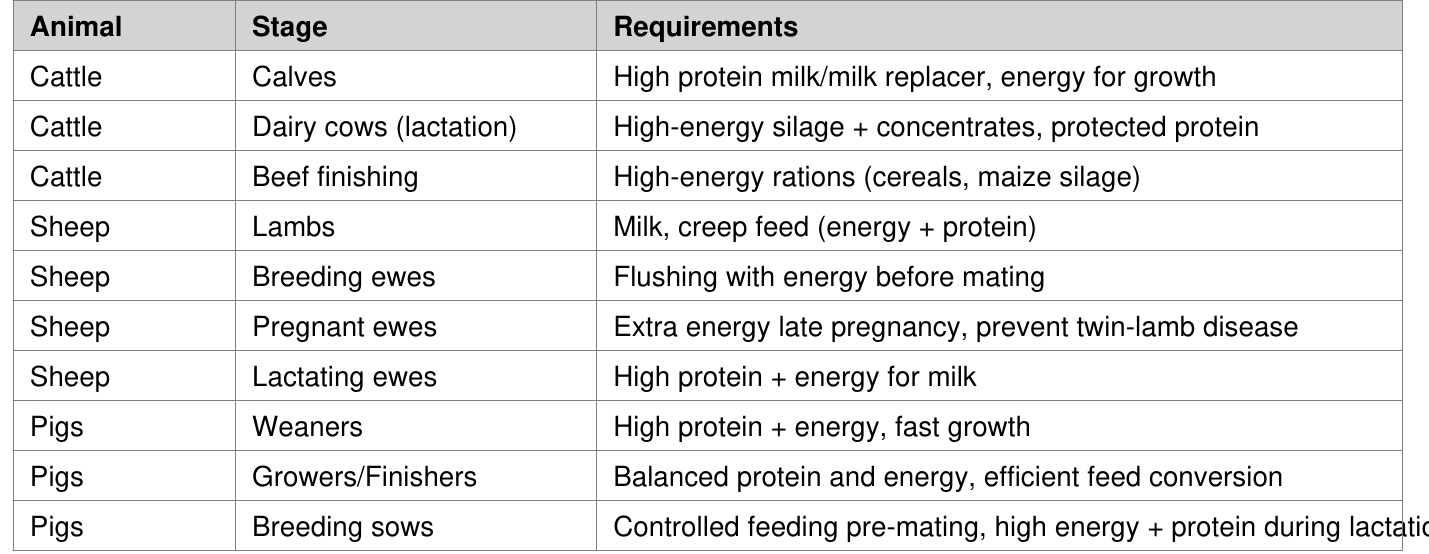
Young calves represent the most demanding stage in cattle nutrition. They require diets exceptionally high in protein, typically provided through milk or specially formulated milk replacers. This protein supports their rapid tissue development and organ growth. Energy requirements are also substantial during this period to fuel their high metabolic rate and growth potential.
Dairy cows during lactation have enormous nutritional demands as they must maintain their own body condition while producing large volumes of milk. They benefit from high-energy feeds such as quality silage combined with protein-rich concentrates. The term "protected protein" refers to protein sources that bypass rumen degradation, ensuring more protein reaches the small intestine for absorption.
Beef finishing cattle focus primarily on converting feed into muscle and fat. Their diets emphasise high-energy cereals and maize silage to promote efficient weight gain and achieve the desired carcase quality for market.
Sheep nutrition management
Lambs initially depend on their mother's milk before transitioning to creep feeding. Creep feeds provide both energy and protein in easily digestible forms, allowing lambs to supplement their milk intake while learning to consume solid food.
Breeding ewes undergo a practice called "flushing" - receiving extra energy in their diet before mating. This nutritional boost improves ovulation rates and increases the likelihood of multiple births.
Example
Practical Example: Sheep Flushing
A farmer preparing ewes for mating might increase their energy intake by 0.5-1 kg of concentrate feed daily for 2-3 weeks before introducing rams. This practice can increase lambing percentages from 120% to 150% or higher.
Pregnant ewes require additional energy during late pregnancy to support foetal development and prevent twin-lamb disease (pregnancy toxaemia), a serious metabolic disorder that can occur when energy demands exceed intake.
Lactating ewes need high levels of both protein and energy to produce sufficient milk for their lambs while maintaining their own body condition.
Important
Twin-lamb disease is a potentially fatal condition that occurs when pregnant ewes carrying multiple lambs don't receive adequate energy in late pregnancy. Prevention through proper nutrition is far more effective than treatment.
Pig nutrition strategies
Weaned piglets experience significant stress when separated from their mothers. Their diets must be rich in easily digestible proteins and energy sources to support continued growth during this critical transition period.
Growing and finishing pigs receive carefully balanced diets that promote efficient feed conversion - the ability to convert feed into body weight. This efficiency directly impacts profitability in pig production systems.
Breeding sows undergo controlled feeding regimens. Before mating, they receive specific nutrition to optimise breeding success, while during lactation they need substantial protein and energy to produce milk for large litters.
Essential nutrients and their functions
All animals require six basic categories of nutrients to maintain health and achieve production goals. Understanding these nutrients helps in formulating appropriate diets.
Carbohydrates as energy providers
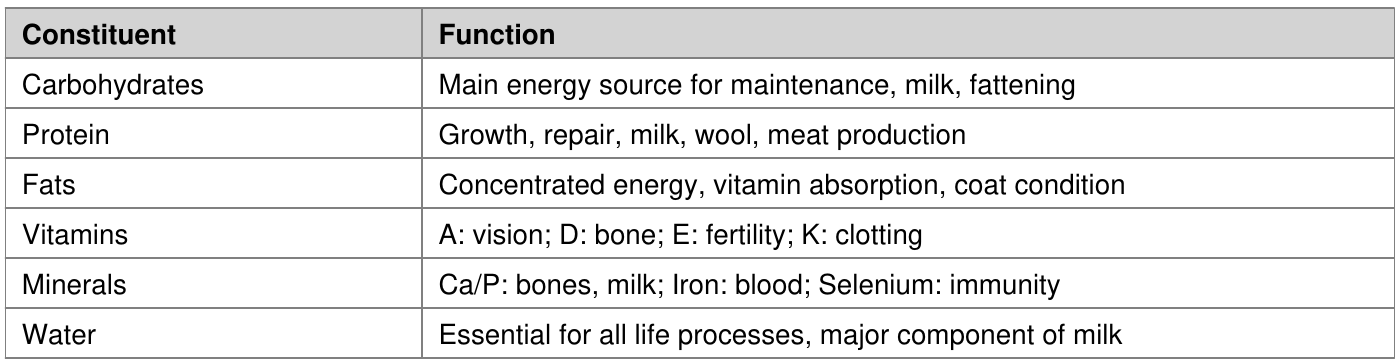
Carbohydrates serve as the primary energy source for animals, functioning like fuel in an engine. Animals use this energy for basic maintenance activities such as breathing, circulation, and temperature regulation. Additionally, carbohydrates provide the energy needed for milk production in lactating animals and for fattening in meat production systems.
Protein for growth and production
Protein functions as the building blocks of animal bodies. It supports the development of new tissues during growth periods and repairs damaged tissues throughout an animal's life. Protein is also essential for producing marketable products like milk, wool, and lean meat. Without adequate protein, animals cannot reach their genetic potential for production.
Important
Protein quality is just as important as quantity. Animals need specific amino acids (the building blocks of protein) in the right proportions. A deficiency in even one essential amino acid can limit overall protein utilisation.
Fats for concentrated energy and health
Fats provide more than twice the energy per gramme compared to carbohydrates, making them an efficient energy source. They also play crucial roles in vitamin absorption, particularly fat-soluble vitamins A, D, E, and K. Additionally, fats contribute to coat condition and skin health, giving animals a healthy appearance.
Vitamins for specific body functions
Each vitamin has distinct roles in animal health. Vitamin A maintains good vision and supports immune function. Vitamin D works with calcium and phosphorus to build strong bones and prevent rickets. Vitamin E supports fertility and reproductive success. Vitamin K enables proper blood clotting, preventing excessive bleeding from minor injuries.
Minerals for structure and metabolism
Calcium and phosphorus work together to build and maintain strong bones and teeth. They're also essential components of milk production. Iron forms the core of haemoglobin in red blood cells, enabling oxygen transport throughout the body. Selenium supports immune system function and works with vitamin E to prevent muscle disorders.
Water as the foundation of life
Water participates in virtually every biological process in an animal's body. It aids digestion, transports nutrients, removes waste products, and regulates body temperature. In lactating animals, water becomes a major component of milk, making adequate water intake essential for high milk production.
Note
Water is often the most overlooked nutrient, yet it's the most critical. Animals can survive weeks without food but only days without water. Poor water quality or inadequate access can severely impact animal performance.
Production systems in animal agriculture
Farmers can choose between different production systems, each offering distinct advantages and challenges. The choice often depends on land availability, climate, market requirements, and financial resources.
Extensive grazing systems
Extensive grazing systems rely primarily on natural pastures and grasslands to feed livestock. These systems typically require lower initial capital investment since animals spend most of their time outdoors with minimal housing infrastructure. The approach aligns with natural animal behaviours and often appeals to consumers who value animal welfare and environmental sustainability.
However, extensive systems face significant challenges. Animals grow more slowly compared to intensive systems because grass quality and quantity vary with seasons and weather conditions. Farmers have limited control over nutrition, making it difficult to achieve consistent production levels. Weather dependency means that drought, floods, or harsh winters can severely impact animal performance and farm profitability.
Intensive feedlot operations
Intensive feedlot systems concentrate animals in controlled environments where their diet, housing, and management can be precisely regulated. This approach enables rapid weight gain and efficient finishing of animals for market. Farmers can formulate specific diets to meet exact nutritional requirements, leading to predictable production outcomes and improved feed conversion ratios.
The main drawbacks include substantially higher costs for feed, housing construction, and daily management. Concerns about animal welfare arise from confining animals in smaller spaces with limited natural behaviour expression. Environmental challenges include managing waste concentration and potential pollution of soil and water resources.
Example
Comparison Example: Beef Production Systems
Extensive grazing: Cattle may take 24-30 months to reach market weight Intensive feedlot: Cattle can reach market weight in 18-20 months
While intensive systems are faster, extensive systems may achieve premium prices for "grass-fed" beef in some markets.
Summary
Key Points to Remember:
- Different life stages demand different nutrition - young animals need high protein for growth, while breeding animals may need energy flushing to improve reproductive success
- Six essential nutrients work together - carbohydrates for energy, protein for growth, fats for concentrated energy, vitamins for specific functions, minerals for structure, and water for all life processes
- Production systems involve trade-offs - extensive grazing offers lower costs and natural conditions but slower growth, while intensive feedlots provide faster growth but at higher financial and environmental costs
- Proper nutrition directly impacts profitability - well-fed animals achieve better growth rates, reproduction success, and feed conversion efficiency
- Nutritional requirements are species and stage specific - what works for dairy cows differs significantly from requirements for finishing pigs or breeding sheep