Post-School Transition (Grade 12 NSC Matric Life Orientation): Revision Notes
📚Revision Notes
Post-School Transition
Understanding change in your circumstances
When you reach Grade 12, you're experiencing the end of one major life chapter and the beginning of many new adventures. This period brings significant changes in your circumstances - which refers to your situation and status in life.
After completing school, your life circumstances will shift dramatically. You'll move from the security of being in a structured school environment with teachers, friends, and family support to a new reality where you may find yourself alone, with new people, away from family, and needing to earn your own income. This represents a major step towards becoming independent and starting your own life adventures.
Note
People respond to change in different ways. Some individuals embrace change and adapt quickly, using it as an opportunity for personal growth. However, others may fear change and try to resist it, or even panic when faced with new situations, missing out on the opportunities that change can bring.
Skills for adapting to growth and change
Here are practical strategies to help you navigate transitions successfully:
- Plan ahead: Understand what changes are coming and create a plan to handle each aspect. Where possible, prepare before the change happens.
- Learn from experience: Reflect on previous changes in your life and how you coped with them. Use successful strategies again if they worked for you.
- Seek support: Talk to someone you trust about how you feel regarding the upcoming changes.
- Focus on positives: Make a list of the good aspects that the change will bring.
- Embrace a positive mindset: View change as a challenge and opportunity for personal development and growth, rather than something to fear.
- Face your fears: Don't resist change or let fear of the unknown overwhelm you. Talk about your concerns with friends, family members, or teachers.
- Gather information: Change often involves moving from a familiar situation to an unknown one. The more information you have about the new situation, the easier it will be to cope.
- Give yourself time: Allow yourself adequate time to adjust to the changes.
- Use your support systems: Turn to your religion or belief system for guidance, comfort, and support during transitions.
Major differences between school and post-school life
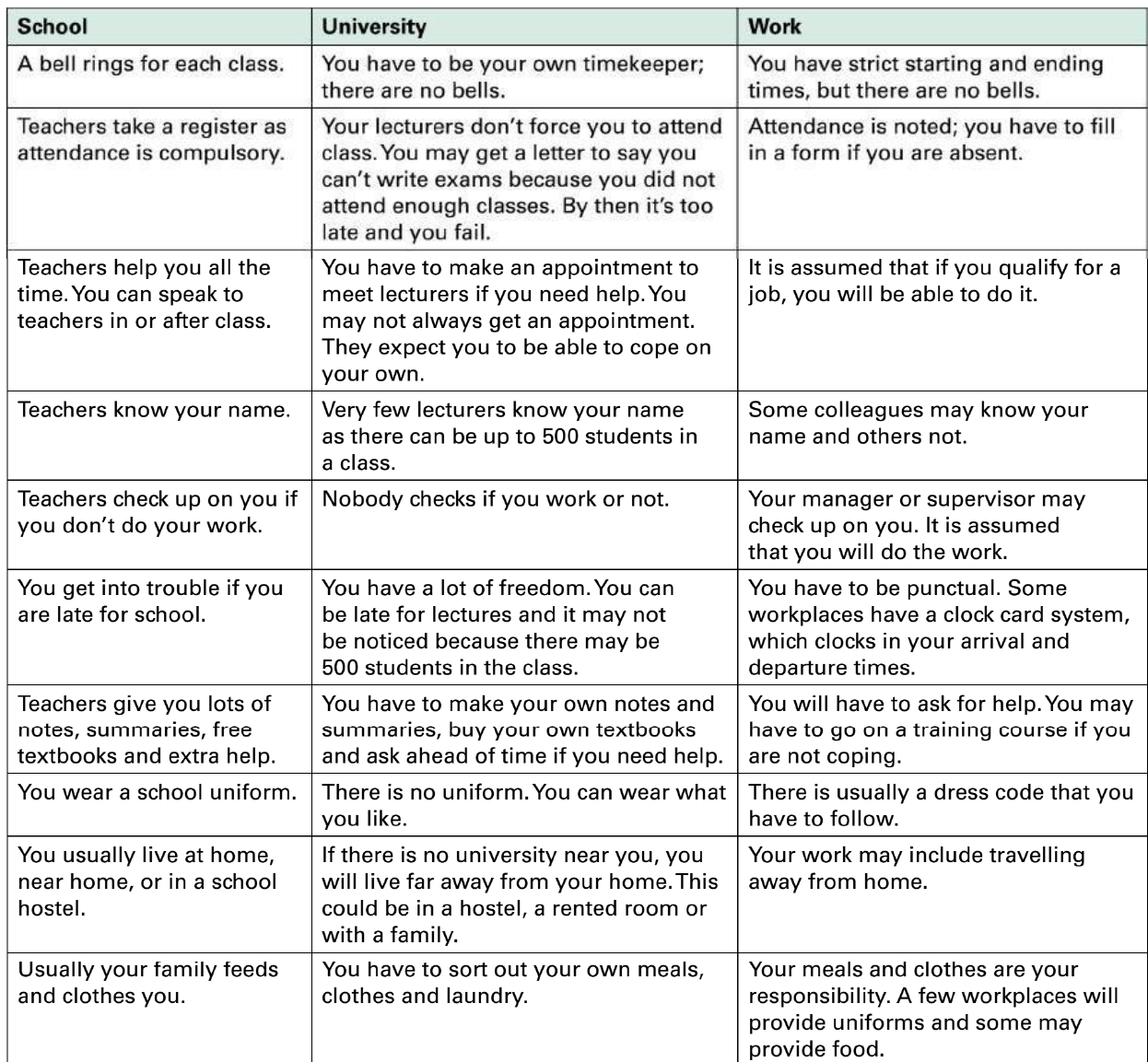
The transition (movement from one stage to another) from school to your post-school destination involves major adjustments. Whether you're heading to university, college, or the workplace, you'll encounter significant differences in expectations and responsibilities.
Important
The comparison above shows how dramatically your environment and expectations change across these three phases of life. At school, you operate within a highly structured system with external support and supervision. University requires much more self-management and independence, whilst the workplace demands professional accountability and complete self-reliance.
Key areas where you'll notice the biggest changes include:
- Time management: Moving from bell-scheduled classes to self-regulated study or strict professional schedules
- Personal responsibility: Shifting from teacher supervision to complete independence in managing your commitments
- Social dynamics: Transitioning from familiar classmates to new peer groups or professional colleagues
- Living arrangements: Potentially moving away from home and managing your own accommodation
- Financial independence: Taking responsibility for your own expenses, meals, and clothing

Positive and negative aspects of change
Change is a normal part of life that happens constantly. Nothing remains the same forever. Change can be small and everyday (like switching from white bread to brown bread) or major and life-altering (like leaving school at the end of Grade 12).
Understanding that change brings both positive and negative aspects can help you approach transitions with a balanced perspective.
Positive aspects of change
Change can be incredibly beneficial for your personal development:
- Exciting and motivating: New experiences can energise you and give you fresh goals to work towards
- Leads to better opportunities: Change often opens doors to improved circumstances and possibilities
- Develops flexibility: Adapting to change builds your ability to handle future challenges
- Keeps you mentally sharp: New situations require you to think differently and stay alert
- Reveals hidden potential: You may discover talents and abilities you never knew you had
- Creates opportunities: Change brings new possibilities for growth, learning, and success
- Prevents boredom: Imagine if everything always stayed exactly the same - life would become very dull
Negative aspects of change
However, change can also present challenges:
- Causes stress: Facing new situations can create anxiety and pressure
- Uncertainty: Change doesn't always lead to improvements - sometimes things may not work out as hoped
- Feelings of insecurity: New environments can make you feel unsure and lacking confidence
- Can be irritating: Especially when you're comfortable with current arrangements
- Involves loss: Change often means leaving behind familiar people, places, or routines
- Fear of the unknown: Not knowing what lies ahead can be frightening
- May feel threatening: Change can seem overwhelming or dangerous
- Can be painful: Some changes, like dealing with illness or death, bring genuine hardship and sorrow
Example
Student Experience Example: Mixed Feelings About Change
Consider how different students approach post-school transitions. Some may feel excited about new opportunities while simultaneously worrying about leaving familiar surroundings. Others might focus on the adventure ahead while also feeling anxious about practical challenges like language barriers or being away from family.
These mixed feelings are completely normal. Most students experience both positive anticipation and genuine concerns when facing major life transitions.
Note
The key is acknowledging both sets of feelings while focusing on practical preparation and positive coping strategies.
Strategies for successful transition
To cope effectively with the transition from school to your post-school destination:
- Acknowledge your feelings: Recognise that feeling both excited and nervous is perfectly normal
- Prepare practically: Research your new environment, gather necessary information, and plan for practical needs
- Build support networks: Connect with others who are going through similar transitions
- Focus on growth opportunities: View challenges as chances to develop new skills and independence
- Stay connected: Maintain relationships with family and friends while being open to new connections
- Be patient with yourself: Allow time to adjust and don't expect to feel completely comfortable immediately
Summary
Key Points to Remember:
- Change is normal and inevitable - Grade 12 marks a major transition that brings both opportunities and challenges
- Preparation is key - Planning ahead and gathering information makes transitions much easier to manage
- Independence grows gradually - The shift from school's structure to post-school freedom requires developing new self-management skills
- Both positive and negative feelings are normal - It's natural to feel excited and worried at the same time about major changes
- Support systems matter - Don't hesitate to seek help from trusted friends, family members, or professionals during transitions