Marketing Process (HSC SSCE Business Studies): Revision Notes
📚Revision Notes
Marketing Process
The marketing process is a systematic approach businesses use to identify customer needs, develop strategies, and achieve business objectives. For Kathmandu, this process involves analysing their current position, researching customer needs, setting clear objectives, and identifying target markets. As a business in the mature stage of the product lifecycle, Kathmandu must invest heavily in marketing strategies and adapt products to maintain its competitive advantage.
Note
The marketing process provides a structured framework for businesses to navigate competitive markets. For mature businesses like Kathmandu, this systematic approach is crucial for maintaining market position and identifying growth opportunities.
Situational analysis
Situational analysis is the first step in the marketing process. It involves examining the current business environment by assessing both internal and external factors that affect business performance.
SWOT analysis
SWOT analysis is a strategic planning tool that evaluates four key areas:
- Strengths (internal positive factors)
- Weaknesses (internal negative factors)
- Opportunities (external positive factors)
- Threats (external negative factors)
Important
This framework helps businesses understand their competitive position and identify strategic directions. By examining both internal capabilities and external market conditions, SWOT analysis provides a comprehensive view of strategic options available to the business.
Internal assessment
The internal assessment examines factors within the business's control.
Strengths
Kathmandu possesses several competitive advantages:
- Established brand identity that customers recognise and trust
- Quality products that meet customer expectations for outdoor equipment
- Diversified product line covering both apparel (clothing) and equipment, reducing dependence on single product categories
- Skilled product designers who understand customer needs and technical requirements
- Experienced management team with industry knowledge
- Established customer loyalty program (Summit Club) that encourages repeat purchases
- Strong financial performance indicating business health
- Sales growth across all channels (online and physical stores)
Note
The diversified product line is particularly important for risk management. By offering both apparel and equipment, Kathmandu reduces vulnerability to seasonal fluctuations and changes in consumer preferences within any single product category.
Weaknesses
However, Kathmandu also faces internal challenges:
- Outsourced production means less direct control over manufacturing processes and quality
- Reliance on price discounting can erode profit margins and damage brand perception
- Narrow market for some products limits potential customer base
- Exchange rate vulnerability affects costs when importing products and selling internationally
- High overhead costs, particularly for physical stores (bricks and mortar), which include rent, utilities, and staffing
Important
The reliance on price discounting is a critical weakness that can create long-term brand damage. When customers become accustomed to discounts, they may delay purchases waiting for sales, and the brand may be perceived as lower quality compared to competitors that maintain premium pricing.
External assessment
The external assessment examines factors outside the business's direct control.
Opportunities
External factors that Kathmandu can potentially exploit:
- International expansion into new geographical markets beyond Australia and New Zealand
- Increasing affluence in emerging markets such as China and Europe, creating new customer bases with disposable income
- Baby boomer generation represents a significant market segment with substantial disposable income, particularly in Australia, who have time and resources for outdoor activities
Note
The baby boomer opportunity is particularly significant for Kathmandu. This demographic has high disposable income, available leisure time, and a strong interest in health and outdoor activities. They represent a substantial market for both serious outdoor equipment and casual adventure products.
Threats
External factors that could harm business performance:
- Competition from travel and fashion businesses that offer similar products
- International expansion risk, including unfamiliar markets, regulations, and consumer preferences
- Challenging retail sales environment with changing consumer shopping habits and economic conditions
- New businesses entering the outdoor equipment market, increasing competition
Market research
Market research is the systematic process of gathering, analysing, and interpreting information about customers and markets. It helps businesses understand what customers want and expect from products, enabling better decision-making.
The role of loyalty programs in market research
Kathmandu uses its loyalty program, the Summit Club, as a primary market research tool. This program collects valuable data that informs both product improvements and new product development.
The Summit Club database provides insights into four key areas:
- Who is purchasing active products (customer demographics and profiles)
- When purchases were made (seasonal trends and timing patterns)
- Where products are most popular (which stores have highest sales)
- What else customers buy at the same time (product combinations and cross-selling opportunities)
Note
Loyalty programs serve a dual purpose: they reward customers for repeat purchases while simultaneously collecting valuable data. This data transforms transactional information into strategic insights that guide product development and marketing decisions.
Applying research insights
This data allows the marketing team to create focus groups — small groups of customers who discuss their experiences and preferences in detail. These discussions help identify areas requiring improvement.
Example
Worked Example: Trail Running Range Development
This case demonstrates how Kathmandu transformed market research into successful product development:
Step 1: Research Phase Focus groups revealed potential to attract young customers interested in trail running activities.
Step 2: Strategic Planning This insight informed a new business strategy focusing on younger demographics and active outdoor pursuits.
Step 3: Product Development Kathmandu developed a more contemporary range emphasising trail running, with designs and features specifically for this activity.
Step 4: Marketing Integration The company combined product development with:
- Targeted sponsorship of New Zealand's most iconic adventure race
- Engagement of known trail runners as brand ambassadors
Step 5: Results Increased product awareness and sales growth in these categories, demonstrating the effectiveness of research-driven product development.
This example demonstrates how market research directly influences product development and marketing strategy, creating a clear link between customer insights and business outcomes.
Market objectives
Market objectives are specific, measurable goals that guide marketing activities. They translate broader business goals into actionable marketing targets.
Kathmandu's specific marketing objectives include:
- Increased brand awareness — making more people recognise and remember the brand
- New product development — creating innovative products that meet evolving customer needs
- Pricing and promotion strategies — determining optimal prices and promotional activities
- Increased Summit Club membership — growing the loyalty program database
- Enhanced use of social media and digital channels — expanding online presence and engagement
- New store openings — geographical expansion through additional retail locations
- Improved in-store customer experience — enhancing service quality and shopping environment
- Global expansion — entering new international markets
- Strong environmental position — focusing on sustainable products to appeal to environmentally conscious consumers
Important
These objectives reflect both growth ambitions (expansion, new products) and quality improvements (customer experience, sustainability). The environmental positioning is particularly important as it differentiates Kathmandu from competitors and aligns with customer values, especially among younger, environmentally conscious consumers.
Target markets
A target market is the specific group of consumers a business aims to reach with its products and marketing messages. Understanding target markets allows businesses to tailor their offerings and communications effectively.
Market segmentation
Kathmandu recognises that its customer base is diverse, not homogeneous. The company has segmented its market into six distinct groups based on two criteria: age and level of seriousness about outdoor activities.
Age categories:
- Young
- Middle aged
- Older
Engagement levels:
- Serious (committed outdoor enthusiasts)
- Casual (occasional participants)
Note
This two-dimensional segmentation creates six unique customer profiles. Each segment has different needs, preferences, and purchasing behaviours, requiring tailored marketing approaches and product offerings.
The six target market segments:
- Young and serious (aspirational achievers) — younger customers pursuing challenging outdoor goals
- Young and casual (fun seekers) — younger customers seeking recreational outdoor experiences
- Middle aged and serious (experienced enthusiasts) — established outdoor participants with significant experience
- Middle aged and casual (family adventurers) — families seeking outdoor experiences together
- Older and serious (rediscovers) — mature customers returning to or maintaining serious outdoor pursuits
- Older and casual (appreciators) — mature customers enjoying relaxed outdoor activities
This broad segmentation reflects the diversity of Kathmandu's product range and allows targeted marketing strategies for different customer groups.
Adapting strategies to market conditions
Kathmandu's marketing strategies vary depending on external factors, particularly seasonal changes. For example:
- Traditional Christmas sales in major cities like Sydney and Melbourne
- Diversification into summer clothing ranges to counter the perception of being primarily a winter brand
Product differentiation
Product differentiation is the strategy of distinguishing products from competitors through unique features, superior quality, or distinctive characteristics. This helps justify premium pricing and build customer loyalty.
Kathmandu differentiates its products through three key attributes:
- Contemporary style — modern, attractive designs that appeal to fashion-conscious consumers
- Functionality — practical features that enhance product performance
- Quality — durable, well-made products that last
Growing sales demonstrate that this differentiation strategy is effective, proving that customers value these distinctive attributes and are willing to pay premium prices for them.
Examples of differentiated products:
Example
Worked Example: Multi-functional Jacket
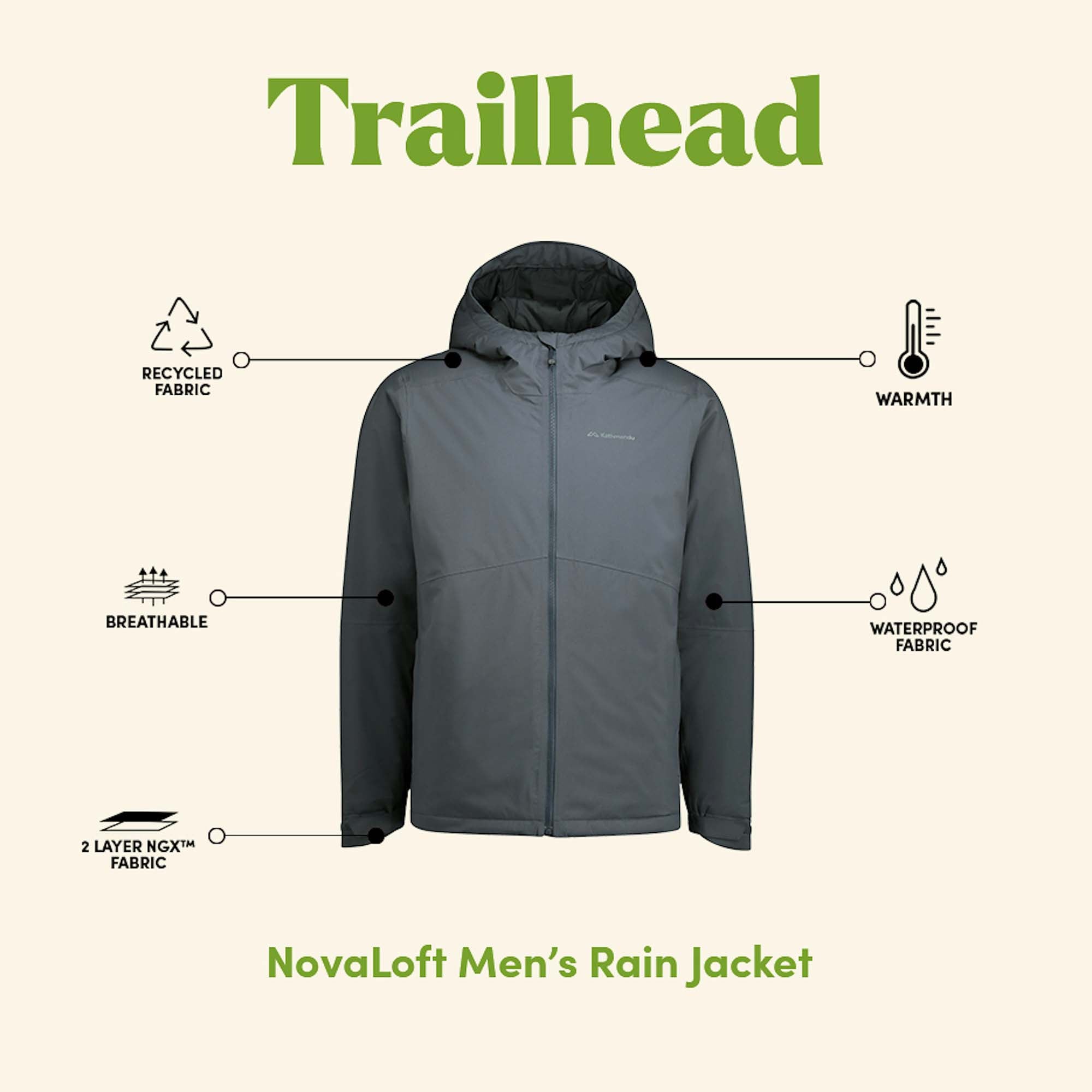
Kathmandu's 5-in-1 rain jacket demonstrates differentiation through versatility:
- Multiple layers for different weather conditions
- Removable sleeves allowing conversion between jacket styles
- Removable hood for adaptability
- GORE-TEX waterproof technology
- Features like adjustable fit, ventilation zips, and fleece-lined collar
Value Proposition: This single product serves multiple purposes, offering better value than purchasing several separate items. The customer pays once but receives functionality equivalent to multiple specialized jackets.
Example
Worked Example: Adaptable Backpack
The 65L backpack shows differentiation through design innovation:
- Detachable 15L daypack providing flexibility
- Luggage-style opening for easy packing
- Adjustable harness system for comfort
- Security features like lockable zips
- Weather protection through storm flap
Value Proposition: These features address multiple customer needs (travel, day trips, security, comfort) in one product, distinguishing it from basic backpacks and justifying premium pricing through enhanced functionality.
Summary
Key Points to Remember:
- SWOT analysis examines internal Strengths and Weaknesses alongside external Opportunities and Threats to assess strategic position
- Market research through the Summit Club loyalty program provides data on who buys products, when, where, and what else they purchase
- Focus groups transform loyalty program data into actionable insights, as demonstrated by the successful trail running range development
- Market objectives cover multiple areas including brand awareness, product development, digital channels, customer experience, and sustainability
- Target market segmentation divides customers into six groups based on age and engagement level (serious vs casual)
- Product differentiation through contemporary style, functionality, and quality helps Kathmandu maintain competitive advantage in a mature market