Genetic Engineering (VCE SSCE Biology): Revision Notes
📚Revision Notes
Genetic Engineering
What is genetic engineering?
Genetic engineering is the process of deliberately changing an organism's genome using biotechnology techniques. Scientists use these methods to give organisms desirable characteristics that they didn't originally have, such as larger size, better ability to survive drought, or brighter colours.
Note
Genes can be modified in several ways to achieve desired outcomes:
- Silenced – prevented from being expressed
- Inserted – added to the genome
- Removed – deleted from the genome
- Altered – changed by replacing specific nucleotides
Any organism that has undergone genetic modification using these technologies is called a genetically modified organism (GMO). The organism receiving the modified genes is known as the host organism. The aim is typically to give the host a useful trait that was previously missing from its genetic makeup.
Understanding GMOs and transgenic organisms
GMOs as an umbrella term
Because there are multiple ways to create genetically modified organisms, it's helpful to think of "GMO" as an umbrella term that covers different categories of modified organisms. The two main types are:
Cisgenic organisms are GMOs that have genes from the same species (or a very closely related, sexually compatible species) inserted into their genome. This process, called cisgenesis, involves transferring genes between organisms that could potentially breed together naturally.
Transgenic organisms are GMOs that have genes from a different species inserted into their genome. This process, known as transgenesis, creates an organism containing foreign DNA transplanted from a separate species. These organisms can produce proteins that were never part of their species' normal repertoire because their genome now includes genetic material from another organism.
The relationship between GMOs and transgenic organisms
Important
Think of GMOs as a large circle, with transgenic organisms and cisgenic organisms as two smaller circles inside it. Both transgenic and cisgenic organisms are types of GMOs, but they differ in where their inserted genetic material comes from.
Key distinction: Transgenic organisms specifically involve DNA from different species, whilst cisgenic organisms use DNA from the same or very closely related species.
It's important to note that this distinction isn't always clear-cut. For example, transgenic organisms may also include cases where DNA from the same species has been manipulated in a laboratory before being reintroduced. The key feature of transgenic organisms is that they contain foreign genetic material that wouldn't normally be present.
Transgenic salmon: a real-world example
In 1989, scientists created genetically modified salmon that could grow throughout the entire year, rather than only during spring and summer as normal salmon do. This modification was designed to allow the salmon to reach market size more quickly, making them cheaper to produce compared to non-GM salmon.

Example
Worked Example: Creating Transgenic Salmon
Scientists created these transgenic salmon by inserting a special DNA construct into fertilised salmon eggs. This construct contained two components:
- A growth hormone gene from Chinook salmon
- A promoter sequence from ocean pout (a different type of fish)
The promoter from the ocean pout increases how actively the growth hormone gene is expressed. When this DNA construct was injected into newly fertilised salmon eggs, it became incorporated into the salmon's genome. The result was salmon that produced growth hormone in all their tissues, leading to year-round growth.
Classification: Because this salmon contains genetic material from two different fish species (Chinook salmon and ocean pout), it is classified as a transgenic organism.
Agricultural uses of GMOs
Scientists have been genetically modifying organisms for various purposes since the early 1970s, with applications spanning medicine, industry, and agriculture. In the context of Australian VCE Biology, the focus is specifically on agricultural uses of GMOs, particularly two important applications:
- Increasing crop productivity
- Improving disease resistance in crops
How transgenic plants are produced
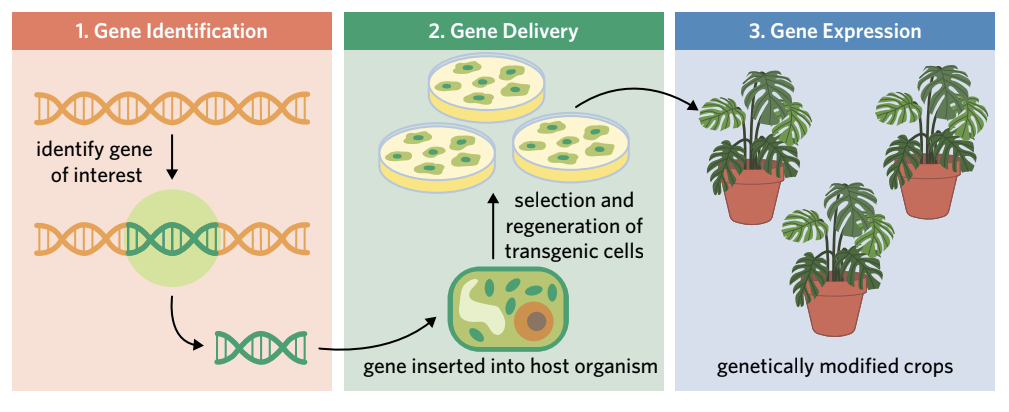
Before examining specific agricultural uses, it's important to understand the general process for creating transgenic plants. This typically involves three stages:
Note
Three-Stage Process for Creating Transgenic Plants
1. Gene identification
First, scientists identify and isolate a specific gene of interest. This gene is usually found in the genome of another species and possesses characteristics that would benefit the host plant. For example, the gene might help the plant:
- Take up soil nutrients more efficiently
- Require less fertiliser
- Tolerate drought conditions better
2. Gene delivery
Next, the isolated gene must be delivered into the host plant's cells. This can happen in two ways:
- Direct insertion of the DNA into the plant's genome
- Using a bacterial plasmid as a vector to transfer DNA between the bacterium and the plant
3. Gene expression
Finally, the transformed plant cell is grown repeatedly (regenerated) using plant tissue culture techniques. Plant tissue culture involves growing plant cells, tissues, or organs under sterile conditions using a special nutrient medium (such as agar plates or nutrient broth). Once the transgenic plants have been successfully cultured, they can be grown in agricultural fields where they will express the new transgene and produce proteins they couldn't make before.
Increasing crop productivity
One major agricultural use of GMO technology is to increase crop productivity. This means producing more crops per unit of farmland, whilst also potentially improving the nutritional quality of those crops.
Why is this important?
The world's population is growing rapidly. Currently, there are approximately 7.9 billion people on Earth, but the United Nations predicts this could reach 9.2 billion by 2040. This creates increasing demand for food.
However, our food supply isn't keeping pace. The availability of suitable farmland is decreasing due to environmental challenges, whilst grain and animal protein supplies are stagnating. Much of the population growth is expected to occur in developing countries that already face economic, political, and social challenges affecting nutrition. Traditional crop breeding methods alone are unlikely to meet this growing demand, so GMO technology helps fill this gap.
Golden rice: improving nutritional content
Golden rice is an excellent example of a transgenic crop developed to improve crop productivity by enhancing nutritional value. Scientists created golden rice to combat vitamin A deficiency (VAD), which is a leading cause of preventable blindness in children, particularly in developing countries where people lack access to expensive vitamin A-rich foods like eggs, dairy products, and liver.

Example
Worked Example: Golden Rice Development
Since rice is a staple food in many developing countries, scientists developed a rice strain with increased vitamin A content. They inserted two genes into normal rice:
- The PSY gene from daffodils (Narcissus pseudonarcissus)
- The CRTI gene from a soil bacterium (Pantoea ananatis)
These genes cause the rice to store beta-carotene (a vitamin A precursor) in the rice grains instead of just in the leaves as normal rice does. This gives the rice its distinctive golden-yellow colour and much higher beta-carotene content.
Classification: Because the inserted genes come from different species (a plant and a bacterium), golden rice is classified as a transgenic organism.
Biofortified rice: an exam example
Important
The VCAA has previously examined students' understanding of biofortified rice. Here's important information about this example:
| Nutrient | Normal white rice (ppm) | Biofortified rice (ppm) |
|---|---|---|
| Iron | 2-5 | 15 |
| Zinc | 16 | 46 |
This biofortified rice was created by inserting two specific genes into normal rice:
| Inserted gene | Protein function | Source of gene |
|---|---|---|
| Rice nicotianamine synthase (OsNAS2) | Assists iron uptake by roots of rice plants | Rice plants |
| Soybean ferritin (Sfer-H1) | Binds and stores large amounts of iron | Soybean plants |
The biofortified rice plants responded as if they were iron deficient, which caused them to permanently "switch on" another gene that helps them take up iron and zinc from the soil. This demonstrates how genetic engineering can be used to combat malnutrition by improving the nutritional content of staple crops.
Increasing disease resistance
A second crucial agricultural use of GMOs is to increase crops' resistance to disease and other harmful factors. By developing crops less affected by plant pathogens, scientists can improve global food security by reducing crop destruction and preventing disease spread. GMOs can also increase resistance to other damaging factors like drought and herbivorous pests.
Why is this important?
Current estimates suggest that approximately 30% of global crop production is lost due to plant pathogens and pests. These losses are highest in regions that already suffer from severe food insecurity. This is particularly concerning given that food production needs to increase by at least 60% by 2050 to feed the growing population, using the same amount of farmland we currently have.
Note
Beyond year-on-year losses, there's also the danger of widespread disease outbreaks that can devastate entire harvests. For example, Asian soybean rust is a fungal disease caused by Phakopsora pachyrhizi that was first reported in Brazil in 2001. Epidemics of this disease are common and can cause crop yield losses of up to 90%. Such diseases are devastating, especially for developing countries that depend heavily on agriculture.
Genetically engineering disease-resistant plants helps reduce the risk of crop loss and ensures a more stable food supply.
Bt crops: protecting against insect pests
Example
Worked Example: Bt Crops for Pest Resistance
Bt crops are an important example of GMOs designed to increase pest resistance. These crops contain genes that produce crystal toxin proteins originally found in the bacterium Bacillus thuringiensis (Bt).
How it works: The Bt bacterium naturally produces protein crystals that are toxic to many crop-damaging insect species. Importantly, these toxic proteins are safe for human consumption and don't affect us. However, when certain insects ingest the toxin, it activates in their intestines and causes death within a couple of days.
Creating Bt crops: Scientists have isolated the crystal toxin genes from Bt bacteria and inserted them into crop plants. This creates transgenic plants that can produce their own Bt toxin, making them insect-resistant. When insects eat these plants, the toxins activate and the insects stop feeding within a few hours.
Examples: Many plant species have been modified to contain Bt toxins, including canola, cotton, maize, tobacco, rice, and eggplant.
Exam tips about GMOs
Important
What VCAA Exams Test
The VCAA exams typically focus on your understanding of concepts rather than memorising specific facts about particular GM crops like golden rice or Bt crops. When presented with information about a GM crop in an exam, you should be able to identify:
- Whether the crop is transgenic or not – Does it contain genes from a different species, or has DNA from the same species been manipulated before insertion?
- Why the GM crop was developed – What problem or issue is it designed to address?
- The implications surrounding the GM crop – What are the biological, social, and ethical considerations?
Around 90% of students correctly answered questions about biofortified rice in a recent exam, successfully identifying it as transgenic and understanding its purpose in combating malnutrition. This shows that with proper understanding of the concepts, these questions are very achievable.
Issues surrounding GMOs
Whilst GMOs have proven extremely beneficial for increasing crop yields and disease resistance, they remain controversial. Some people in the community view them as potentially unsafe or unnatural. Genetically modified organisms, especially those intended for human consumption (foods and medicines), raise important biological, social, and ethical questions that continue to be debated today.
Biological implications
Benefits:
- GM crops typically have better productivity than non-GM crops, meaning more food can be grown on less land, which reduces habitat loss from land clearing
- Insect-resistant GM plants need fewer chemical pesticides, which benefits the environment
- GM foods can be engineered to have improved nutritional content, improving the health of people who consume them
Concerns:
- GM crops might lose their effectiveness if weeds or pests evolve resistance to them
- Widespread use of GM crops could reduce genetic diversity within crop populations, making them more vulnerable to diseases
- Cross-pollination between GM crops and wild species or weeds could cause genes to spread in unexpected ways, leading to unforeseen consequences
Social implications
Benefits:
- Increased crop productivity means more food can be produced, improving food security
- Crops that grow in adverse conditions (such as drought-tolerant varieties) protect against famine, enhancing food security
- Herbicide-tolerant crops reduce labour demands because farmers can spray chemicals that kill weeds but not crops, rather than pulling weeds by hand
- Higher crop yields result in larger profits for farmers
- GM foods can be engineered to have better flavour and texture, making them more appealing to consumers
- Improved nutritional content in GM foods reduces nutritional deficiencies, creating healthier populations
Concerns:
- Farmers may need to purchase new seeds each season, which can be expensive
- Complex legal regulations surrounding GM products may cause farmers stress and anxiety
- Strict packaging and marketing regulations exist for GMO producers, and these may not be followed if producers or consumers lack education about them
Ethical implications
Benefits:
- Some people believe using genetic modification is ethically necessary given its potential for widespread benefits, including improved nutrition, wealth, and overall health of humanity, especially in developing nations
Concerns:
- Some people consider GMOs unnatural or feel that scientists are "playing God"
- Some people believe GM foods are unsafe to eat and choose to avoid them, especially when there's limited long-term evidence of safe use
- Some people believe that genetically modifying animals for human benefit is inhumane (though many of these arguments also apply to conventional animal agriculture)
- Corporate ownership of GM crop patents raises ethical concerns about unfair treatment of farmers, including:
- Non-GM farmers being sued if their crops are cross-pollinated by nearby GM crops
- Farmers being unable to reuse seeds from some GM crops, forcing them to buy expensive new seeds each year from biotechnology companies
Golden rice: examining the implications
Consider the specific case of golden rice, which we discussed earlier:
Note
Potential benefits:
- Increased beta-carotene content may help people in developing countries avoid vitamin A deficiency
- Golden rice seeds can be saved and replanted the next season, making them significantly cheaper than other GM seeds
- Trials have shown golden rice is safe to eat, and cross-pollination with non-GM rice is unlikely since rice plants mainly self-pollinate
- Reducing vitamin A deficiency means lower rates of preventable blindness and fewer deaths
Potential concerns:
- Some groups argue that widespread use could reduce crop biodiversity
- Some groups argue that golden rice produces too little beta-carotene to completely eliminate vitamin A deficiency, and other approaches that address the underlying social, economic, and cultural causes of vitamin A deficiency might be better
- Golden rice programmes might interfere with existing vitamin A supplementation programmes, such as UNICEF's programme that improves child survival rates by 12-24% and costs only a few cents per child
Summary
Key Points to Remember:
-
Genetic engineering is the process of modifying an organism's genome using biotechnology to confer desirable traits.
-
All transgenic organisms are GMOs, but not all GMOs are transgenic. GMO is the umbrella term; transgenic organisms specifically contain foreign DNA from a different species.
-
Two main agricultural uses of GMOs are increasing crop productivity (producing more nutritious food) and increasing disease resistance (protecting crops from pathogens and pests).
-
The three-stage process for creating transgenic plants involves: (1) identifying and isolating the gene of interest, (2) delivering it into the host plant cells, and (3) culturing the transformed cells and growing them into plants that express the new gene.
-
GMOs raise important implications across three dimensions: biological (environmental effects, effectiveness), social (food security, farmer economics), and ethical (naturalness, corporate control, animal welfare).
-
In exams, focus on understanding whether an organism is transgenic, why it was developed, and what implications it carries – rather than memorising facts about specific examples.