Market Positioning (Edexcel A-Level Business): Revision Notes
📚Revision Notes
Competitive advantage and product differentiation
What is competitive advantage?
A business is more likely to succeed if it can establish a competitive advantage in its market. This refers to a set of unique characteristics of a company and its products that customers view as meaningfully better than what competitors offer. These advantages might allow a product to save customers time or money, improve their health, provide better taste, or offer greater convenience and comfort.
Note
Competitive advantage is not just about being different—it's about being meaningfully better in ways that customers truly value and are willing to pay for.
Gaining competitive advantage is essential in markets where many firms compete with similar offerings. Businesses can establish this advantage through several strategic approaches.
Methods of developing competitive advantage
Product design
Superior product design can appeal to a significant portion of the market. Businesses may highlight specific design features to differentiate from rivals. This could emphasise:
- Functionality: The product might be ergonomically designed to improve user experience
- Aesthetics: The visual appeal of the product, commonly used by jewellery producers
Example
Worked Example: Design-Based Differentiation
Apple products are known for their distinctive design that combines aesthetics with functionality. The sleek, minimalist appearance paired with intuitive user interfaces creates a strong competitive advantage that customers recognise and value, allowing Apple to charge premium prices.
Product quality
Offering high-quality products is a common method of gaining a competitive edge. The main advantage is the ability to charge premium prices. However, this approach typically involves higher costs due to superior raw materials and stricter quality standards.
Example
Worked Example: Quality-Based Pricing
Savile Row tailors in London have built their reputation on high-quality, hand-made suits that command premium prices. While a standard suit might cost $500, a Savile Row bespoke suit can cost $5,000 or more, justified by superior craftsmanship and materials.
Promotion
Creative and effective advertising can give businesses a competitive edge. Persuasive advertising can change consumer perceptions and increase their likelihood of purchase.
Example
Worked Example: Promotional Differentiation
TV adverts for pain relief products often use persuasive techniques to convince consumers of their effectiveness. By showing rapid relief and satisfied customers, these advertisements create a perceived advantage even when the active ingredients may be similar to competitors' products.
Customer service
Some businesses focus less on the product itself and more on delivering exceptional customer service. This can involve convenience features that competitors don't offer.
Example
Worked Example: Service-Based Advantage
Enterprise car hire delivers and collects vehicles from customers' chosen locations (such as their home), making the service more convenient than competitors who require customers to visit rental offices. This added convenience justifies slightly higher prices and builds customer loyalty.
Delivery times
When speed is important to customers, providing prompt delivery becomes a source of competitive advantage. This is particularly relevant in business-to-business markets.
Example
Worked Example: Time-Based Competitive Advantage
Component suppliers in the automotive industry can gain advantage by guaranteeing just-in-time delivery, ensuring parts arrive exactly when needed in the production process. This reduces inventory costs for manufacturers and minimises production delays.
Economies of scale
Firms that can produce efficiently at low cost can charge lower prices than competitors, becoming a cost leader in their market. Larger firms are typically better positioned to exploit this advantage because they can spread fixed costs over greater output volumes.
Note
Understanding Cost Leadership
Cost leadership doesn't mean compromising on quality—it means operating more efficiently than competitors. This allows businesses to offer competitive prices while maintaining healthy profit margins.
This strategy allows businesses to compete on price while maintaining profitability through efficient operations.
Flexibility
Some customers value a flexible service highly. For businesses supplying other companies, this might mean:
- Ability to change designs or specifications during production
- Capacity to accelerate production to meet urgent delivery requirements
- Willingness to adapt to changing customer needs
Ethical stance
Adopting a particular ethical position can attract customers who value responsible business practices. This might involve:
- Fairtrade: Dealing ethically and fairly with commodity producers
- Ethical sourcing: A furniture-maker might attract environmentally conscious consumers by avoiding wood from threatened tree species
- Sustainability: Demonstrating commitment to environmental protection
Note
Ethical positioning has become increasingly important as consumers, particularly younger generations, actively seek brands that align with their values. This can create strong competitive advantages and customer loyalty that competitors struggle to replicate.
Focusing on a particular market segment
Businesses can gain competitive advantage by targeting audiences that competitors typically overlook.
Example
Worked Example: Niche Market Targeting
A gym could focus on demographics not usually catered for by fitness clubs, such as over-60s or parents with young children, tailoring facilities and services specifically to their needs. This might include gentle exercise classes, childcare facilities, and non-intimidating equipment, creating a competitive advantage in an underserved market segment.
Understanding product differentiation
Product differentiation is the strategy businesses use to make their products stand out in competitive markets. Where many firms produce similar items, differentiation involves creating goods and services with distinctive features or physical attributes.
Real vs perceived differences
Product differences can be categorised as either real or perceived:
Real differences: The products have genuinely different characteristics—they look different, have different technical specifications, or offer different capabilities and performance levels.
Example
Worked Example: Real Product Differentiation
Energizer claims its AA lithium batteries last longer than any other AA batteries—a measurable, real difference. Independent testing can verify battery life, making this a tangible competitive advantage based on actual product performance.
Perceived differences: Consumers believe there is a difference even when it doesn't exist or isn't significant. Customers attach value to products based on information they receive through advertising, packaging, or brand messaging.
Example
Worked Example: Perceived Product Differentiation
Perfumes are often associated with glamorous celebrities to create a perception of luxury and mystique. Consumers may not realise that production costs are relatively low, allowing manufacturers to charge high prices based on perceived rather than real value. A perfume that costs $5 to produce might retail for $100 or more.
Important
Understanding the difference between real and perceived differentiation is crucial for businesses. While real differences provide defensible advantages, perceived differences can be equally powerful if supported by effective marketing—and often cost less to create.
Purposes of product differentiation
Flexible pricing
When businesses can demonstrate clear physical differences from competitors, they may charge higher prices. With perceived differences, consumers sometimes attach value to products priced well above production costs.
Example
Worked Example: Pricing Through Differentiation
Perfume manufacturers use elaborate advertising campaigns to create strong brand images, allowing them to charge premium prices despite relatively low production costs. The same fragrance in a luxury bottle with celebrity endorsement might sell for ten times more than an identical scent in plain packaging.
Recognition
Product differentiation helps businesses gain recognition in the marketplace. Consumers often find products more appealing when they stand out from competitors.
Example
Worked Example: Visual Differentiation
Confectionery products are packaged in attractive and colourful wrappings to catch consumers' attention and differentiate from competing sweets. Cadbury's distinctive purple packaging or Toblerone's triangular box create instant brand recognition on crowded supermarket shelves.
Additionally, some consumers actively seek products that are explicitly different from rivals because they "like to be different."
Extend product range
Successfully differentiating products enables businesses to serve multiple market segments within the same industry.
Example
Worked Example: Market Segmentation Through Differentiation
Cruise ships offer different standards of cabin accommodation for consumers with varying spending power. They also differentiate through destinations, cruise lengths, and on-board facilities, allowing them to appeal to different customer segments simultaneously. A single cruise line might offer budget-friendly Caribbean cruises, luxury Mediterranean tours, and adventure expeditions to Antarctica.
Example
Worked Example: Product Range Extension
In the biscuits market, producers supply a very wide range of different products to appeal to different tastes and compete aggressively with rivals. McVitie's, for instance, offers digestives, chocolate digestives, hobnobs, rich tea, and many more varieties—each differentiated to appeal to specific customer preferences.
Brand development
Businesses that successfully differentiate products over a sustained period can develop strong brands. Initial product differentiation, supported by consistent promotion, can build powerful brand recognition.
Example
Worked Example: Long-Term Brand Building
The Coca-Cola Company started with a distinctive formula and has built one of the world's strongest brands through sustained product differentiation combined with constant advertising and promotion. The brand's value is estimated at over $80 billion, built over more than a century of consistent differentiation.
Overcome competition
Differentiation is ultimately about outcompeting rivals. By creating real or perceived differences, businesses can:
- Attract new customers
- Win larger market shares
- Achieve economies of scale through increased production
- Lower costs and raise profits as scale increases
Important
Product differentiation is not a one-time effort—it requires continuous innovation and marketing to maintain competitive advantage. Competitors can copy successful differentiation strategies, so businesses must constantly evolve to stay ahead.
Adding value to products and services
In highly competitive markets, businesses often try to add value to their products. This means providing extra features or services that go beyond customers' standard expectations.
Example
Worked Example: Basic Value Addition
A car MOT centre might valet a customer's car as part of a $50 MOT inspection. Since the inspection normally costs $50, the car valet represents added value for the customer. The actual cost to the business might only be $5 for cleaning supplies and 15 minutes of labour.
Methods of adding value
Bundling
Businesses can add value by creating packages that combine multiple benefits or services into one product offering. This can make the overall package more attractive and convenient.
Example
Worked Example: Service Bundling
Tour operators may offer flights, accommodation, transfers, insurance, childcare facilities, and excursions all for one price. The product may be presented to suggest some services (like insurance and excursions) are free within the package, adding perceived value. A $1,500 package might include $800 in flights, $500 in accommodation, and $200 worth of "free" extras.
Customer service
Staff who directly interact with customers can significantly add value. Well-groomed, friendly, attentive, and professional staff create a positive image and make customers feel at ease. Staff with sound product knowledge and willingness to help customers represent a source of added value.
After-sales service is also important for adding value. This might include:
- Operating a helpdesk for customer queries
- Making follow-up calls to ensure satisfaction
- Offering free maintenance services
Note
Exceptional customer service can transform a commodity product into a premium offering. The product itself might be identical to competitors', but the service experience creates differentiation and justifies higher prices.
Speed of response to customers
Many people dislike waiting—whether queuing at checkouts, waiting for appointments, or waiting for deliveries. Businesses can add value by reducing or eliminating waiting times.
Example
Worked Example: Time-Based Value Addition
Airlines allow first-class passengers to disembark first, adding value to premium tickets. This simple benefit costs the airline nothing but provides tangible value to customers who may save 10-15 minutes.
Example
Worked Example: Service Speed Differentiation
A customer might choose a particular dry-cleaning service because it can return garments within four hours rather than the standard 24 hours. Even if the price is 50% higher, the convenience for busy professionals justifies the premium.
Packaging
The presentation of products can add significant value. Many businesses invest in attractive wrappings to enhance product appeal.
Example
Worked Example: Packaging as Value
Jewellery retailers might offer to gift-wrap products, adding value for customers buying presents. The cost of gift wrapping might be $2-3, but customers perceive much higher value.
Example
Worked Example: Agricultural Value Addition
In agriculture, farms add value by packing produce (such as vegetables) in customised bags for supermarkets, making products shelf-ready. Pre-washed, pre-packaged salad leaves might cost three times more than loose lettuce, but the convenience justifies the price for many consumers.
Frequent buyer offers
Rewarding customers for repeated purchases adds value by providing benefits to loyal customers. These might include:
- More valuable service levels
- Preferential pricing
- Free products or services
Example
Worked Example: Loyalty Programme Value
Regular travellers collect air miles, which accumulate and can be redeemed for free flights, adding value to each journey they take. A business traveller might earn enough miles for a free family holiday, creating significant perceived value and encouraging loyalty to one airline.
Customisation
Adapting products to meet specific customer requirements adds value. This might involve:
- Embedding a customer's logo or brand in the product
- Using customised wrapping to distinguish products from competitors
- Changing or adapting product designs to suit individual customer needs
Note
Customisation is particularly valuable in business-to-business markets where clients have specific requirements. The ability to tailor products precisely to customer needs can command substantial premiums and create strong competitive barriers.
Benefits of adding value for businesses
Higher prices: Businesses may charge more for value-added products. However, they often disguise these higher prices so the added value appears free.
Example
Worked Example: Disguised Price Increases
Tour operators offering "free" holiday insurance when customers purchase a package—the insurance cost is incorporated into the overall price. A package advertised at $1,200 with "free" $100 insurance is simply priced at $1,300 total.
Product differentiation: Adding value helps differentiate products and gain competitive edge.
Example
Worked Example: Service-Based Differentiation
Customers may prefer retailers offering high-quality customer service, even if prices are slightly higher. John Lewis, a UK department store, has built its reputation on excellent service and a "never knowingly undersold" price promise, allowing it to compete with cheaper online retailers.
Protection from price competition: Added value can protect businesses from competitors who try to win customers purely through lower prices. Customers may remain loyal despite lower-priced alternatives because they value the extra features or services.
Important
Value addition creates a buffer against price-based competition. When customers perceive genuine added value, they become less price-sensitive and more loyal, protecting businesses from aggressive price-cutting by competitors.
Targeted market focus: Businesses can focus more precisely on their target market segment by adding value that specifically meets those customers' needs. This allows them to serve their chosen segment more effectively than competitors.
Market positioning maps
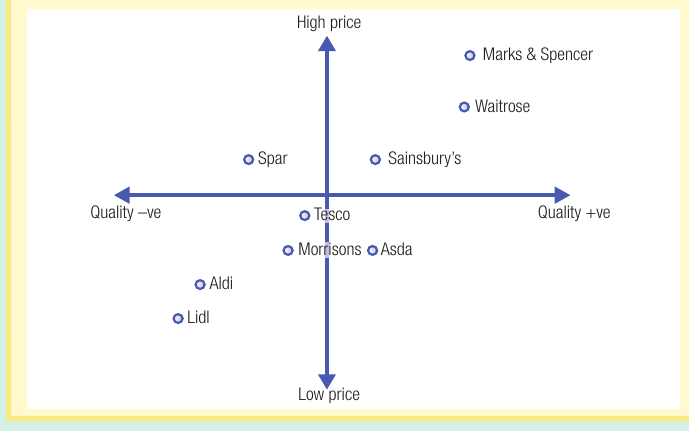
Perceptual maps (or market positioning maps) are visual tools that show how different brands are positioned relative to competitors based on two key attributes. They help businesses understand:
- Where their brand sits in the market
- How competitors are positioned
- Potential gaps or opportunities in the market
- Whether repositioning might be necessary
The supermarket positioning map above shows how different UK supermarket brands are perceived in terms of price and quality. Businesses entering a market can use such maps to identify positioning strategies—for example, identifying underserved market segments or deciding whether to compete directly with established players.
Note
Understanding Perceptual Maps
Perceptual maps are based on customer perceptions, not necessarily objective measurements. This means two competing products with identical specifications might appear in different positions on the map based solely on brand image and marketing effectiveness.
However, perceptual maps have limitations:
Important
Limitations of Perceptual Maps
- They only show two dimensions at a time, while customers often consider many factors
- Information can be expensive to obtain through market research
- Consumer perceptions may differ from actual product benefits
- They may be more relevant for individual brands than corporate brand images
- Perceptions can change quickly, requiring frequent updates
Summary
Key Points to Remember:
-
Competitive advantage is about having unique features that customers perceive as superior to competitors—this can be achieved through design, quality, service, ethics, or cost leadership
-
Product differentiation creates either real differences (actual physical or performance variations) or perceived differences (customers believe products differ based on marketing and branding)
-
The main purposes of differentiation are to enable flexible pricing, gain recognition, extend product ranges, build strong brands, and overcome competition
-
Adding value means providing extras beyond standard expectations—this can justify higher prices, protect against price competition, and strengthen customer loyalty
-
Common value-adding methods include bundling, superior customer service, fast response times, attractive packaging, loyalty rewards, and customisation
-
Successfully adding value allows businesses to charge premium prices, differentiate from competitors, and focus more effectively on target market segments
-
Perceptual maps help visualise competitive positioning but have limitations in scope and accuracy