Place (Distribution) (AQA GCSE Business): Revision Notes
📚Revision Notes
Place (Distribution)
What is place in marketing?
Place, also known as distribution, focuses on how businesses get their products from where they're made to where customers can buy them. It's not just about having a great product at the right price - if customers can't find it or get hold of it easily, your business will struggle.
Think about these common problems:
- What if customers live far from shops selling your product?
- What if competing products are available in many more places?
- What if competitors have better-trained sales teams meeting customers directly?
Distribution is essential for businesses of all sizes because it forms a vital part of the marketing mix. The main goal is clear and simple: to make products available in the right place at the right time in the right quantities.
Note
Distribution Objective
The primary purpose of distribution is to ensure products reach customers efficiently. This means considering location accessibility, timing of availability, and having sufficient stock to meet demand.
Understanding distribution channels
A distribution channel represents all the organisations that a product passes through on its journey from being produced to reaching the final customer. These organisations are called intermediaries because they sit between the producer and the consumer.
You might wonder why businesses would give the job of selling their products to other companies. After all, using intermediaries means giving up some control over how products are sold and sharing profits with others. However, intermediaries are specialists in selling - they have the contacts, experience, and scale that often allow them to achieve better sales results than if the producing business tried to handle everything themselves.
Note
Why Use Intermediaries?
Intermediaries are specialists in selling with established networks, customer relationships, and distribution expertise. Even though they take a share of profits, they often generate higher overall sales than producers could achieve alone.
The primary purpose of any distribution channel is to create a connection between production and the consumer who will ultimately use the product.
Types of distribution channels
Distribution channels can have different numbers of stages depending on how many organisations are involved in the process.
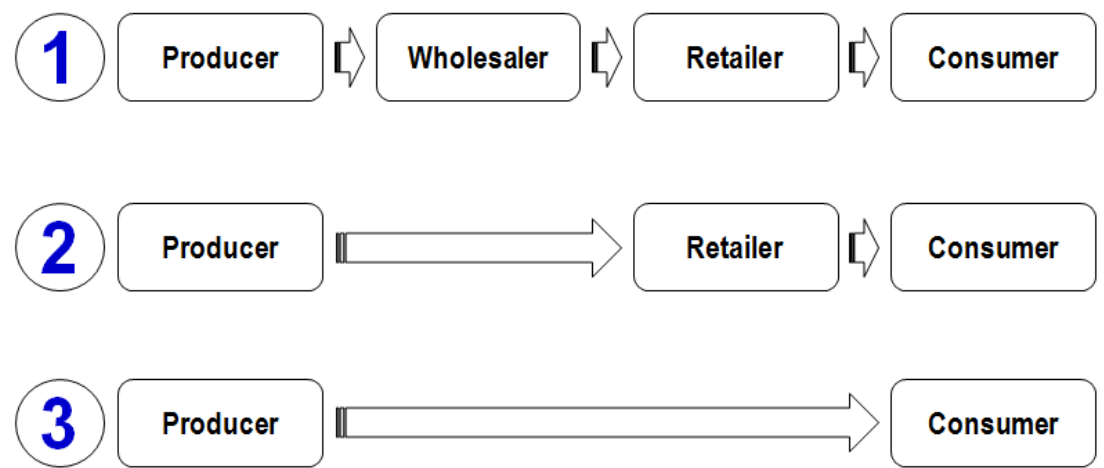
Looking at the different channel options:
Channel 1 includes two intermediaries between producer and consumer - a wholesaler and a retailer. Wholesalers typically purchase and store large quantities of products from multiple producers, then break these down into smaller deliveries for retailers. This arrangement makes economic sense for small retailers with limited storage space, such as local corner shops.
Channel 2 uses one intermediary - a retailer. This is common in the consumer electronics market, where manufacturers like Sony, Panasonic, and Canon sell their products directly to large retailers such as Currys, Tesco, and Amazon, who then sell to final consumers.
Channel 3 represents direct marketing, where manufacturers sell straight to customers without any intermediary levels. Examples include farm shops, many holiday companies that bypass traditional travel agents, and telesales operations. This direct approach eliminates the "middle man" entirely.
Note
Channel Length
The number of intermediaries determines channel length:
- Direct (Channel 3): Producer → Consumer
- Short (Channel 2): Producer → Retailer → Consumer
- Long (Channel 1): Producer → Wholesaler → Retailer → Consumer
Key intermediaries
Retailers
Retailers are the most common type of distribution channel for consumer goods. They operate shops that sell directly to household customers and can be classified in several ways:
- Type of goods sold (clothing, groceries, furniture)
- Service level (self-service versus counter-service)
- Size (corner shops versus superstores)
- Ownership (independent versus part of large retail chains)
- Location (rural, city centre, out-of-town)
- Brand recognition (national chains versus local shop names)
Retailers help producers reach wider audiences, especially when major retail chains provide broad coverage. However, the main drawback is reduced profit margins - high street retailers typically take 40-50% of the final consumer price, depending on the product type and how quickly stock moves.
Wholesalers
Wholesalers purchase ranges of products from several producers and sell them on to retailers. They usually specialise in particular product categories, such as food products.
The key advantage of wholesalers is that they "break the bulk" - they receive large deliveries from producers and split these into smaller quantities for retailers. This means retailers can maintain smaller stock levels and don't need as much storage space.
However, costs increase because of the wholesaler's profit requirements - they act as a "middle-man" adding their own margin to the price.
Agents
Agents sell products and services for producers in exchange for commission - a percentage of the sales revenue. They're particularly common in the service sector, with good examples including travel agents, insurance agents, and party-based selling events like Tupperware parties.
Note
Benefits of Using Intermediaries
Several advantages explain why businesses often choose to work with intermediaries:
- More efficient distribution logistics - intermediaries specialise in moving products effectively
- Lower costs - even after paying intermediaries' profits or commissions, total costs may be reduced
- Greater consumer choice - customers can compare products and brands from many producers in one location
- Limited resources - producers may lack sufficient resources or expertise to sell directly themselves
Selling direct
A crucial decision for any business is whether to sell directly to customers or use intermediaries.
Direct marketing involves selling products by dealing directly with consumers rather than through other businesses. Traditional direct methods include mail order, telesales, and door-to-door calling. More recently, telemarketing, magazine and TV advertising, and online computer shopping (e-commerce) have become popular.
The main advantages of direct selling include keeping all profit margins and maintaining complete control over the sales process. Products aren't sold alongside competitors' offerings either.
Important
Factors Encouraging Direct Selling
Specific market factors that might encourage direct selling include:
- Need for expert sales teams to demonstrate products and provide detailed information
- Reluctance of retailers and other intermediaries to stock the product
- Existing distribution channels being controlled by competing producers
However, direct selling often involves significant costs that may exceed those of using intermediaries to achieve the same sales levels.
Choosing the right distribution channel
Several factors should influence the choice of distribution channel:
Product characteristics - Complex or technical products often work better with specialist distributors or agents who can provide expert guidance. Cars typically use this approach, while customised products often benefit from direct distribution to meet specific customer requirements.
Customer needs - Direct distribution often works best for products requiring distinct specifications. Examples include wedding cakes, bespoke clothing, or even double glazing.
Product image - When using intermediaries, it's essential they're suitable for the product. Premium clothing and cosmetics brands prefer selling through upmarket retailers like John Lewis rather than discount stores like Primark.
Market geography - Is the market spread across different regions or countries? Overseas sales might require local agents to distribute and sell products effectively.
Competition - Which distribution channels do competitors use? Companies like Apple might avoid selling through shops that also stock Samsung products.
Business size - Smaller businesses may need to use wholesalers because they can't store large amounts of stock or afford their own sales teams.
Business objectives - Are you focused on revenue growth or profit maximisation?
Control requirements - How much control do you want over distribution? Longer channels mean less control. Some manufacturers want to control product display, pricing, and promotional methods.
Note
Channel Selection Factors
The choice of distribution channel depends on multiple interconnected factors. Businesses must weigh product complexity, customer requirements, brand image, market reach, competitive landscape, and internal resources when making this strategic decision.
E-commerce and M-commerce
Digital technology has massively impacted how businesses distribute products. E-commerce (buying and selling through the internet) and M-commerce (using wireless mobile devices like smartphones) have become commonplace.
E-commerce has evolved to include auction sites like eBay, specialist internet retailers like Amazon, and traditional high street retailers developing online presence. Both e-commerce and m-commerce show strong growth trends, with forecasts indicating continued expansion.
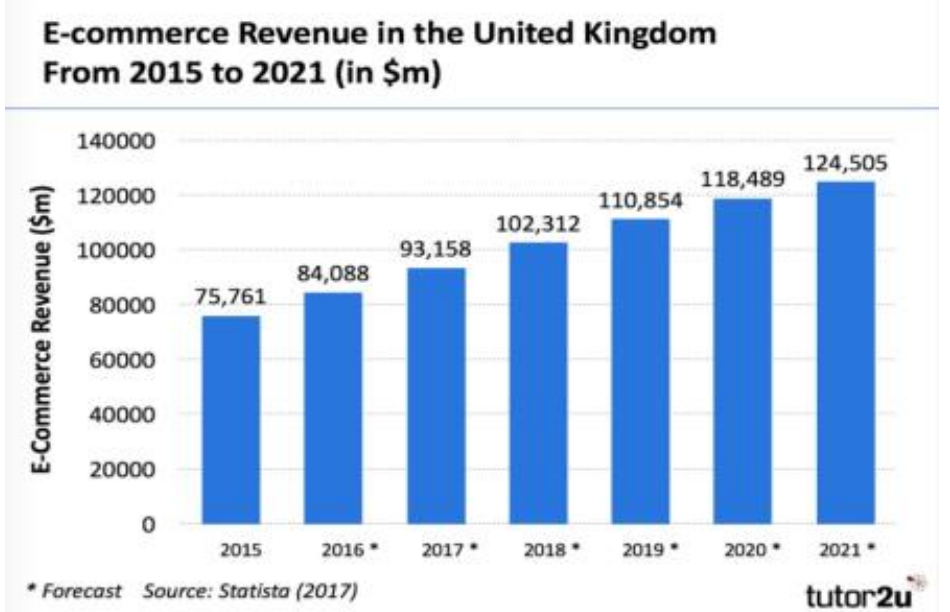
 These digital distribution methods offer significant advantages and disadvantages for different stakeholders:
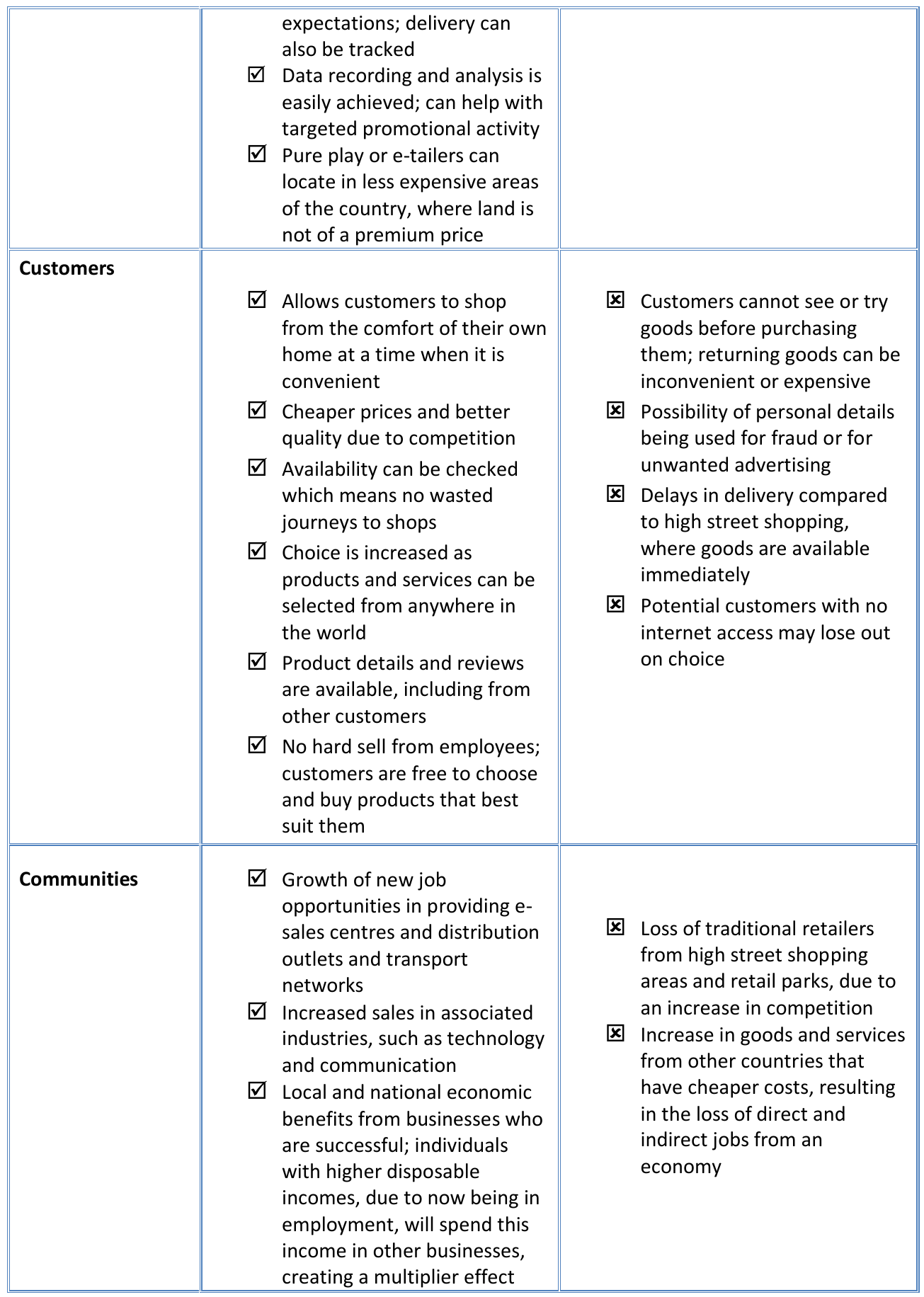 For businesses, digital distribution allows 24/7 sales, reduced premises costs, and expanded market reach nationally and internationally. Setup can be quick and easy, with the business easily transferable to a limited company structure. Quality improvements result from constant customer scrutiny and online feedback systems, and order processing can be fast with delivery tracking capabilities.
Note
Business Challenges in Digital Distribution
However, businesses face challenges including lack of personal customer contact, required ICT system investments, rapidly increasing distribution costs across wider geographical areas, and intense international competition. Not all customers have internet access, some fear online fraud, and providing good customer service including returns can be expensive.
For customers, digital shopping offers convenience from home, competitive pricing, global product selection, detailed information and reviews, and freedom from sales pressure. Products can be checked for availability without travelling to shops, and there's increased choice from worldwide suppliers.
Note
Customer Considerations
Customer disadvantages include inability to physically examine products before purchase, potential personal data misuse, delivery delays compared to immediate high street availability, and exclusion of those without internet access.
For communities, digital commerce creates new employment opportunities in e-commerce infrastructure, distribution networks, and transport systems. It generates growth in related technology and communication industries, with economic multiplier effects from successful businesses and higher disposable incomes leading to increased spending elsewhere.
Important
Community Impact
However, communities may experience loss of traditional high street retailers and retail parks due to increased competition, plus job losses from cheaper international suppliers competing more effectively in local markets.
Summary
Key Points to Remember:
- Distribution gets products to customers - it's about making products available in the right place, at the right time, and in the right quantities
- Distribution channels vary in length - from direct (producer to consumer) to indirect (using wholesalers and retailers as intermediaries)
- Each intermediary type has specific roles - retailers serve end customers, wholesalers break bulk for smaller retailers, and agents earn commission on sales
- Channel choice depends on multiple factors - including product complexity, customer needs, market geography, and business objectives
- Digital distribution is growing rapidly - e-commerce and m-commerce offer new opportunities but also present challenges for businesses, customers, and communities