Menstrual cycle (Edexcel GCSE Biology Combined Science): Revision Notes
📚Revision Notes
Menstrual cycle
Note
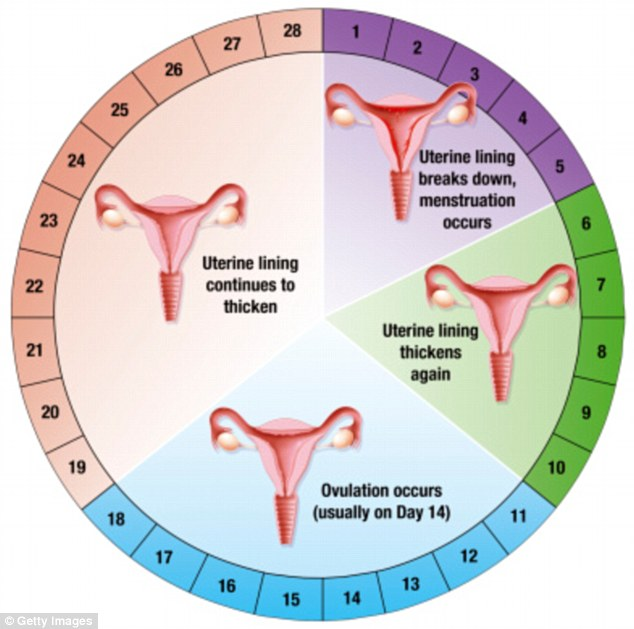
The menstrual cycle is a recurring process that occurs approximately every 28 days in females between puberty (around age 12) and menopause (around age 50). Its purpose is to prepare the uterus for a potential pregnancy. The cycle involves the build up and breakdown of the uterus lining and is controlled by several key hormones, including oestrogen, progesterone, FSH (Follicle Stimulating Hormone), and LH (Luteinising Hormone).
Stages of the Menstrual Cycle:
- Day 1-5: Menstruation (Period)
- The first day of the menstrual cycle is marked by menstruation, where the lining of the uterus (endometrium) breaks down and exits the body through the vagina as blood.
- This occurs when no fertilised egg has implanted in the uterus, and the hormone levels of oestrogen and progesterone are low.
- This phase usually lasts 3-7 days.
- Day 6-13: Uterus Lining Repairs
- After menstruation, the hormone oestrogen starts to rise.
- Oestrogen is produced by the ovaries and helps the uterus lining repair and thicken in preparation for a fertilised egg.
- FSH from the pituitary gland stimulates the growth of follicles in the ovaries, with one developing into a mature egg.
- Day 14: Ovulation
- Around day 14, a surge in LH (luteinising hormone) triggers ovulation—the release of a mature egg from a follicle in the ovaries.
- This is the most fertile phase of the cycle, when a woman is most likely to become pregnant if the egg is fertilised by sperm.
- Oestrogen levels peak just before ovulation.
- Day 15-28: Uterus Lining Maintained
- After ovulation, the empty follicle in the ovary transforms into the corpus luteum, which produces the hormone progesterone.
- Progesterone maintains the thickened lining of the uterus, making it ready for the possible implantation of a fertilised egg.
- If pregnancy occurs, progesterone levels remain high, preventing further ovulation and menstruation.
- If the egg is not fertilised, progesterone levels drop, leading to the breakdown of the uterine lining, and the cycle starts again with menstruation.
Roles of Hormones in the Menstrual Cycle:
Oestrogen:
-
Produced by the ovaries.
-
Stimulates the repair and growth of the uterus lining after menstruation.
-
Increases before ovulation to trigger the release of an egg. Progesterone:
-
Produced by the corpus luteum after ovulation.
-
Maintains the lining of the uterus during the second half of the menstrual cycle.
-
If pregnancy does not occur, progesterone levels fall, leading to menstruation. FSH (Follicle Stimulating Hormone):
-
Produced by the pituitary gland.
-
Stimulates the maturation of an egg in the ovaries and the production of oestrogen. LH (Luteinising Hormone):
-
Produced by the pituitary gland.
-
A surge in LH triggers ovulation (the release of the egg from the ovary).
Note
Summary:
The menstrual cycle is controlled by a balance of hormones that regulate the preparation of the uterus for pregnancy. Oestrogen helps rebuild the uterus lining after menstruation, while progesterone maintains the lining after ovulation. If no pregnancy occurs, hormone levels drop, leading to menstruation, and the cycle repeats.