Fighting disease (Edexcel GCSE Biology Combined Science): Revision Notes
📚Revision Notes
Fighting disease
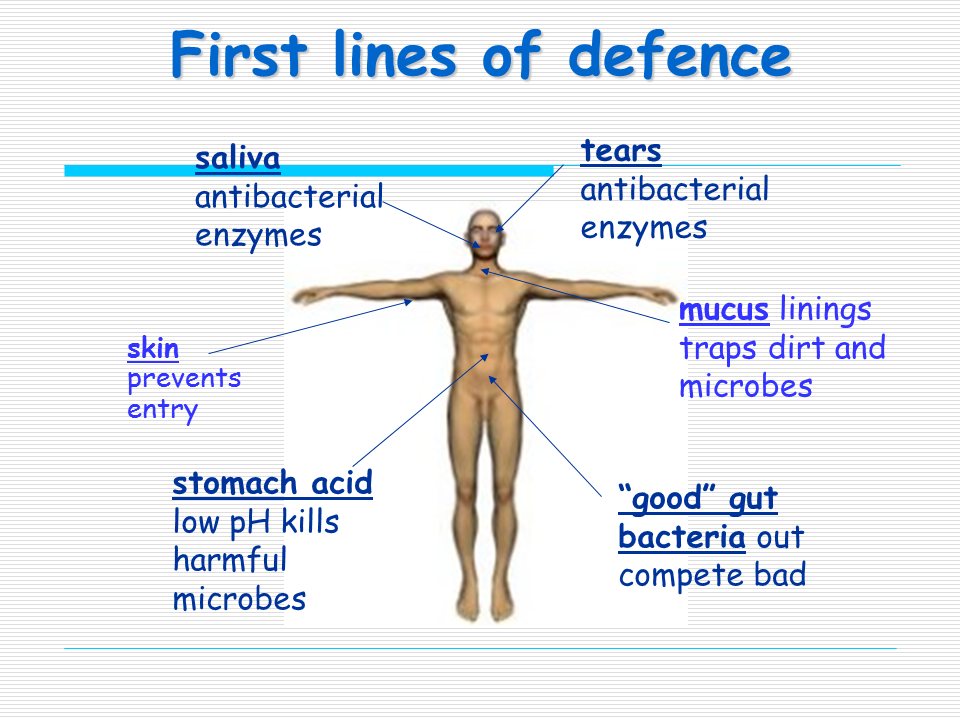
The non-specific defence system works to prevent pathogens from entering the body.
- The skin
- Acts as a physical barrier
- It produces antimicrobial secretions to kill pathogens
- Good microorganisms known as skin flora compete with the bad microorganisms for space and nutrients
- The nose
- Has hairs and mucus (sticky substance) which prevent particles from entering your lungs
- The trachea and bronchi
- Secrete mucus in order to trap pathogens
- Cilia (hair-like structures on cells) beat to waft mucus upwards so it can be swallowed
- The stomach
- Produces hydrochloric acid that kills any pathogens in your mucus, or food and drink
Note
The specific immune system acts to destroy any pathogens which pass through the non-specific immune system to the body. A large part of the specific immune system is white blood cells, which can act in three different ways:
| Mode of action | How it protects you |
|---|---|
| Phagocytosis (engulfing\ and consuming pathogens) | This destroys them, meaning they can no longer make you feel ill. |
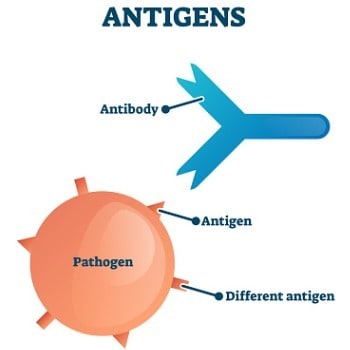
| Producing antibodies | Each pathogen has an antigen on their surface, which is a structure which a specific complementary antibody can bind to. Once antibodies begin to bind to the pathogen, the pathogens start to clump together, resulting in it being easier for white blood cells to find them. If you become infected again with the same pathogen, the specific complementary antibodies will be produced at a faster rate. The individual will not feel the symptoms of the illness. They are said to be immune. |
| Producing antitoxins |
Lysozyme- enzyme that destroys microorganisms discovered by Alexander Fleming 1921 Secreted in tears, saliva & mucus
- Breaks down the cell wall of some types of bacteria
| Chemical barriers | |
|---|---|
| Stomach | Produces HCL: Kills most pathogens that are swallowed |
| sweat | Acid in sweat that can destroy pathogens |
| eyes | Produces LYSOZYME (in tears): Kills bacteria on eye surface |