Memory lymphocytes (Edexcel GCSE Biology Combined Science): Revision Notes
📚Revision Notes
Memory lymphocytes
Note
Memory cells are a crucial part of the body's long-term defence against specific pathogens. These memory lymphocytes help the immune system respond more quickly and effectively if the same pathogen invades the body again.
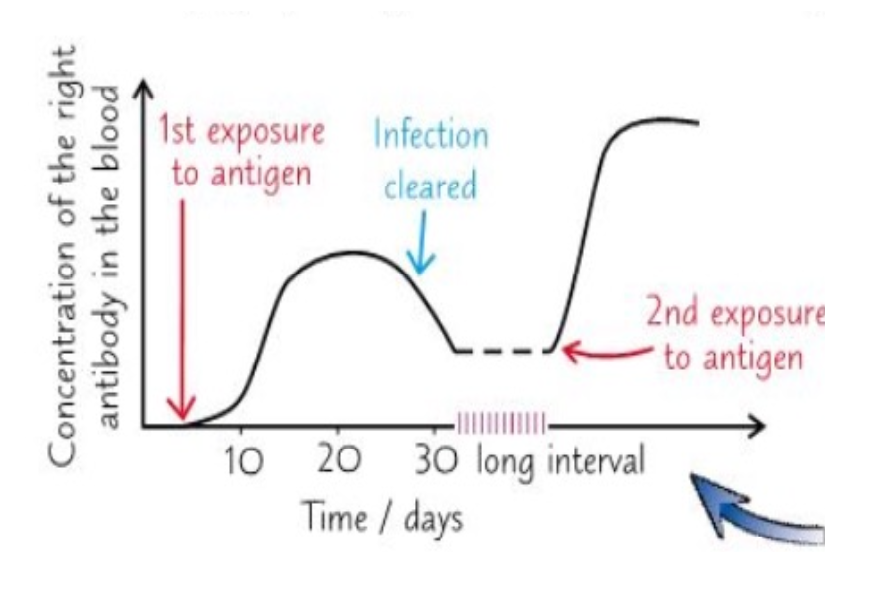
- When a pathogen enters our body the response is slow as there are many B-Lymphocytes that can make the antibody needed to lock on to the antigen.
- Eventually the body will produce enough of the right antigen to overcome infection meanwhile the person shows symptoms.
Production of Memory Lymphocytes:
- During an initial infection, the immune system responds to the specific antigens on the surface of the pathogen.
- Lymphocytes (a type of white blood cell) produce antibodies to fight the infection.
- After the infection is cleared, some of these lymphocytes remain in the body as memory cells.
Role of Memory Lymphocytes in the Secondary Response:
- If the body is exposed to the same pathogen again in the future, the memory lymphocytes are already present.
- The memory lymphocytes can multiply rapidly and produce large numbers of the specific antibodies required to fight the pathogen.
Faster and Stronger Immune Response:
- The secondary immune response is much faster and more effective than the first response.
- Memory lymphocytes clone themselves and produce antibodies quickly, often eliminating the pathogen before symptoms appear.
Summary:
- Memory lymphocytes are created after the first exposure to a pathogen and remain in the immune system for a long time.
- If the same pathogen enters the body again, these memory cells ensure a faster and stronger immune response, preventing illness in many cases. This is the principle behind immunity and how vaccines work.