Second line of defence (Edexcel GCSE Biology Combined Science): Revision Notes
📚Revision Notes
Second line of defence
Note
This is what your body then does when bacteria passes through first line of defence
Phagocyte (type of white blood cell)
They digest pathogens

Immune System
- White blood cells: travel everywhere in body in blood& patrol for pathogens
- B-Lymophocytes: type of blood cell involved in the specific immune response
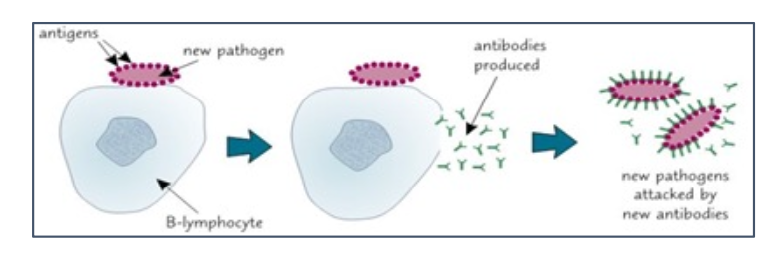
- Antigen: on the bacteria
- Antibodies: produced by white blood cells
Antigens & antibodies
Antigens are found on cell membrane of pathogens and are specific to each species
How it destroys
- Punches holes in microbes
- Sticking them together so they cant move & can be engulfed by phagocyte
Produce Anti-Toxins
Toxins released that counteract the toxins produced by pathogen
Exposure to Pathogens:
Pathogens are microorganisms that cause disease, such as bacteria, viruses, and fungi.
- When a pathogen enters the body, it carries antigens on its surface. Antigens are unique molecules or proteins that the immune system can recognise as foreign.
Antigens Trigger an Immune Response:
Recognition of Antigens:
-
The specific immune system recognises the antigens present on the pathogen.
-
White blood cells called lymphocytes (a type of white blood cell) play a key role in identifying these antigens. Activation of Immune Response:
-
Once a lymphocyte recognises the antigens, it activates and starts the immune response.
-
The immune response is targeted specifically at the pathogen with these unique antigens.
Production of Antibodies:
What are Antibodies?:
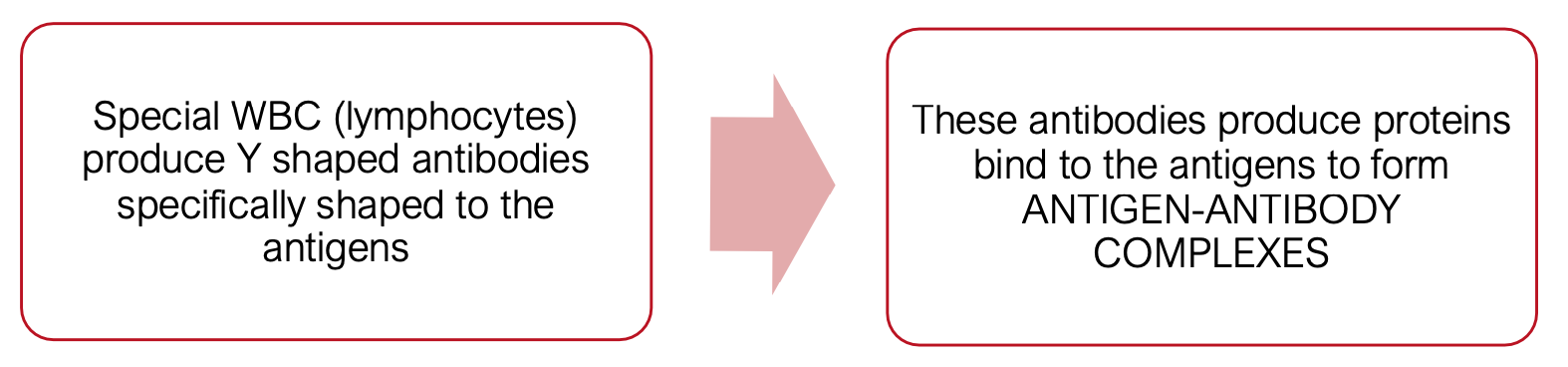
Antibodies are proteins produced by a type of lymphocyte called B cells.
- Each antibody is specific to a particular antigen, meaning that it will only bind to and neutralise the pathogen that has that specific antigen. How Antibodies Work:
Once produced, antibodies bind to the antigens on the surface of the pathogen.
This can:
- Neutralise the pathogen, preventing it from harming the body.
- Mark the pathogen for destruction by other white blood cells (such as phagocytes) which engulf and destroy the pathogen.